Dyed Fur Skins Whole (Without Tail)
CN → US| HS Code | Tariff Rate | Origin | Destination | Doc |
|---|---|---|---|---|
| 4302194570 | 37.2% | CN | US | Official Doc |
| 4302194530 | 37.2% | CN | US | Official Doc |
| 4303100060 | 39.0% | CN | US | Official Doc |
| 4303900000 | 35.0% | CN | US | Official Doc |
| 4107111020 | 35.0% | CN | US | Official Doc |
Product Images
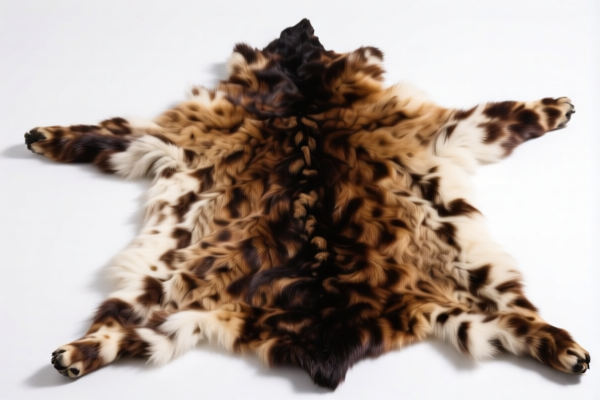
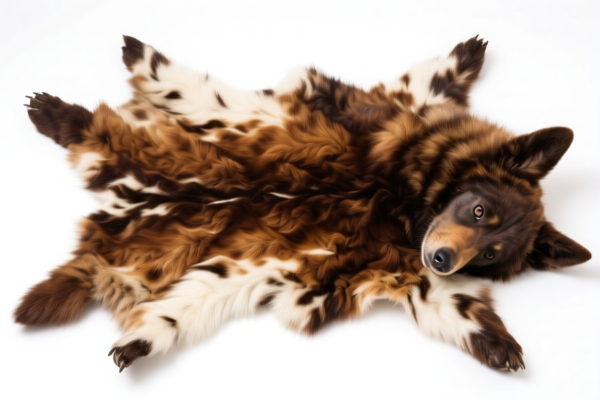
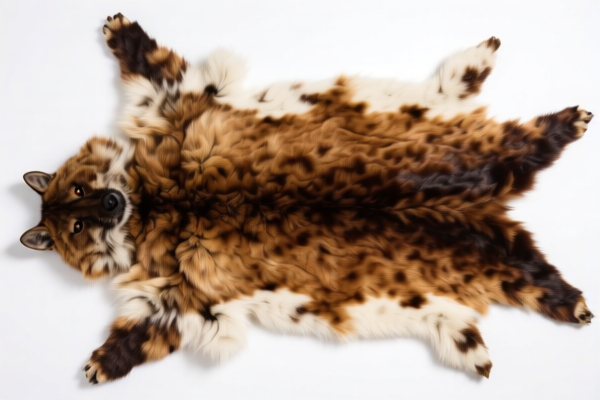
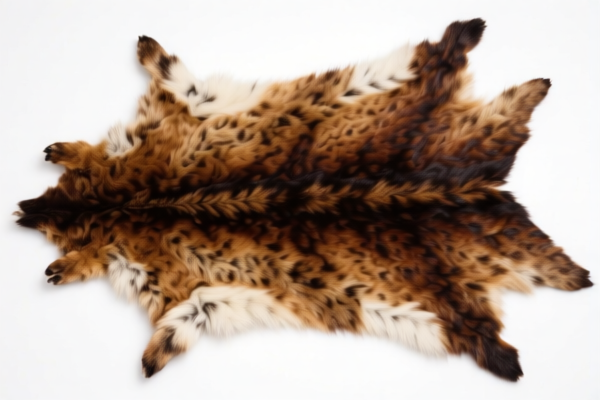
AI Analysis
🦊 Dyed Fur Skins Whole (Without Tail) – The Ultimate Importer’s Guide to US Customs Clearance
🌐 HS Code Reference & Customs Clearance Guide | 2026 Latest Tariff Analysis | Professional Clearance Strategy
📌 I. Product Definition & Classification: Do You Really Understand "Dyed Fur Skins"?
"Dyed Fur Skins Whole (Without Tail)" are raw or semi-processed animal pelts that have undergone dyeing processes but remain in their whole skin form, excluding the tail. In international trade, these materials are critical for luxury fashion, coat manufacturing, and fur accessories.
In the context of US Customs and Border Protection (CBP), these goods fall under Chapter 43 (Furskins and Furs), but the exact classification depends heavily on the animal type, processing level, and intended use.
⚠️ Key Distinction Points:
- Are they raw/unprocessed skins or tanned/dyed? → Dictates Chapter 41 vs. Chapter 43.
- Are they whole skins or cut pieces? → "Whole" implies specific subheadings.
- Is the animal mink or other fur? → Mink has specific codes; others fall under general headings.
- Are they used for garments or raw materials? → Can affect duty rates via general rules of interpretation.
📦 II. HS Code Classification Details (2026 Latest Tariff Authority Match)
Based on the provided data <DATA>, here are the precise HS Codes, summaries, and tax rates for "Dyed Fur Skins Whole (Without Tail)".
| HS Code | Product Description & Summary | Application Scenario | Total Tax Rate |
|---|---|---|---|
4302.19.45.70 |
Dyed whole fur skins without head (Material and form attributes are highly consistent) |
Raw dyed pelts, ready for further processing; high consistency in material/form. | 37.2% |
4302.19.45.30 |
Dyed whole fur skins for garments (Complies with description of dyed fur) |
Skins specifically intended for clothing manufacturing; matches "dyed fur" criteria. | 37.2% |
4303.10.00.60 |
Dyed fur制品 for garment making (Other than mink fur) |
Garment accessories or partially processed fur items; non-mink origin. | 39.0% |
4303.90.00.00 |
Garments and accessories of furskin (Material: Fur, Purpose: Garment) |
Finished or semi-finished fur garments/accessories; material is fur, purpose is clothing. | 35.0% |
4107.11.10.20 |
Dyed whole hides/skins (Further processed leather raw material) |
Misclassification Risk: If classified as "leather" (Chapter 41) instead of "fur" (Chapter 43). Represents further-processed leather raw material. | 35.0% |
🔍 Critical Note:
- Chapter 43 (Furskins) is the primary chapter for fur. Chapter 41 (Leather) is for processed hides/skins of bovine/equine animals, NOT fur.
- Mink vs. Other Fur:4302.19typically covers non-mink furs. If the product is mink, it may have different subheadings (e.g.,4302.30). The provided data suggests these are non-mink or general fur skins.
- "Without Head/Tail": This specific preparation often leads to codes ending in.19or similar non-precisely specified headings, unless they are "prepared for jewelry" or "sewn".
💰 III. 2026 Latest Tariff Rate Breakdown (Including Additional Duties)
✅ Applicable Country: United States (US)
✅ Origin: China (CN) (Implied by the inclusion of Section 301 and IEEPA tariffs in the data)
✅ Effective Date: Current rates apply as of 2025/2026.
🎯 1. 4302.19.45.70 & 4302.19.45.30 — Dyed Whole Fur Skins (Non-Mink)
These two codes share the same tax structure, reflecting their similar nature as dyed fur skins.
| Item | Content |
|---|---|
| Base Duty Rate | 2.2% |
| Section 301 Additional Tariff | +25.0% |
| Section 122 Tariff (IEEPA) | +10.0% |
| Total Tax Rate | 37.2% |
| Tax Calculation | CIF Value × 37.2% |
| De Minimis Exemption | ❌ Not Eligible |
| Legal Basis Path | HTSUS:4302.19.45.70 → USITC Footnote 9903.88.01 (301) → IEEPA:9903.01.25 (Section 122) |
📌 Explanation:
- Base Duty (2.2%): Standard MFN rate for dyed fur skins.
- Section 301 (25%): Trump-era tariff, still in place for Chinese-origin goods.
- Section 122 / IEEPA (10%): Additional punitive tariff under International Emergency Economic Powers Act, targeting specific Chinese goods.
- Total 37.2%: A very high tariff burden. Importers must price accordingly.
🎯 2. 4303.10.00.60 — Dyed Fur Products (Other than Mink) for Garments
| Item | Content |
|---|---|
| Base Duty Rate | 4.0% |
| Section 301 Additional Tariff | +25.0% |
| Section 122 Tariff (IEEPA) | +10.0% |
| Total Tax Rate | 39.0% |
| Tax Calculation | CIF Value × 39.0% |
| De Minimis Exemption | ❌ Not Eligible |
| Legal Basis Path | HTSUS:4303.10.00.60 → USITC Footnote 9903.88.01 → IEEPA:9903.01.25 |
📌 Note:
- Slightly higher total rate (39.0%) due to a higher base duty (4.0%).
- Applies to fur制品 (products) made from dyed fur, not just raw skins, but used for garments.
🎯 3. 4303.90.00.00 — Garments and Accessories of Furskin
| Item | Content |
|---|---|
| Base Duty Rate | 0.0% |
| Section 301 Additional Tariff | +25.0% |
| Section 122 Tariff (IEEPA) | +10.0% |
| Total Tax Rate | 35.0% |
| Tax Calculation | CIF Value × 35.0% |
| De Minimis Exemption | ❌ Not Eligible |
| Legal Basis Path | HTSUS:4303.90.00.00 → USITC Footnote 9903.88.01 → IEEPA:9903.01.25 |
📌 Insight:
- Lowest Total Rate (35.0%) among fur codes in the data.
- Reason: Base duty is 0%, but additional tariffs are standard.
- Classification Risk: This code is for garments/accessories, not raw skins. If you import raw skins but classify them here, you risk misdeclaration. However, if you import pre-sewn fur pieces or accessories, this is the correct and cheapest option.
🎯 4. 4107.11.10.20 — Dyed Whole Hides/Skins (Leather)
| Item | Content |
|---|---|
| Base Duty Rate | 0.0% |
| Section 301 Additional Tariff | +25.0% |
| Section 122 Tariff (IEEPA) | +10.0% |
| Total Tax Rate | 35.0% |
| Tax Calculation | CIF Value × 35.0% |
| De Minimis Exemption | ❌ Not Eligible |
| Legal Basis Path | HTSUS:4107.11.10.20 → USITC Footnote 9903.88.01 → IEEPA:9903.01.25 |
📌 Warning:
- This is a misclassification risk. Chapter 41 is for leather (bovine, equine), NOT fur.
- If "Fur Skins" are declared as "Hides/Skins" (Chapter 41), CBP may seize goods for false declaration.
- Use only if the material is actual leather (e.g., sheepskin tanned as leather, not fur).
🛠️ IV. Customs Clearance Practical Advice (Battle-Tested Pitfall Avoidance)
✅ 1. Documentation Checklist (Non-Negotiable)
| Document | Mandatory? | Description |
|---|---|---|
| ✅ Product Specification Sheet | ✔️ | Must specify: Animal type (e.g., rabbit, fox, mink), processing (dyed, tanned), form (whole, no head/tail). |
| ✅ Commercial Invoice | ✔️ | Clearly state: "Dyed Fur Skins, Whole, Without Head/Tail, Material: [Animal Type]". |
| ✅ Packing List | ✔️ | Weight, number of skins, dimensions. |
| ✅ Certificate of Origin | ✔️ | Required for Section 301 and IEEPA assessment. |
| ✅ Photo of Samples | ✔️ | Show skin texture, dye color, and lack of head/tail to prove classification. |
| ✅ Tanning/Dyeing Process Description | ✔️ | To distinguish from Chapter 43 (fur) vs. Chapter 41 (leather). |
✅ 2. Declaration Tips (Key Mantra)
🔥 "Fur is Chapter 43, Leather is Chapter 41. Wrong Chapter = Seizure!"
| Scenario | Correct Declaration | Incorrect Declaration |
|---|---|---|
| Raw dyed fur skins (no head/tail) | 4302.19.45.70 or 4302.19.45.30 |
4107... (Leather) → High Risk |
| Pre-sewn fur collars/accessories | 4303.90.00.00 |
4302... (Skins) → May Lead to Audit |
| Mink fur skins | Check specific Mink codes (e.g., 4302.30) |
4302.19... (Non-mink) → Misclassification |
| Fur garments | 4303.10.00.60 or 4303.90.00.00 |
4302... (Skins) → Wrong |
✅ 3. Special Cases & Mitigation
| Situation | Handling Advice |
|---|---|
| CITES Permits | If the fur is from endangered species (e.g., certain foxes, martens), CITES permits are mandatory. Without them, goods will be seized. |
| Animal Welfare Claims | Ensure compliance with US laws regarding cruel treatment. Provide declarations of humane harvesting if required. |
| "Without Head/Tail" Clarification | Explicitly state in the description to avoid confusion with "whole skins with head/tail," which may have different duty rates or restrictions. |
| Mixed Shipments | If a shipment contains both skins and garments, separate declarations are required to avoid misclassification penalties. |
🌍 V. Global Market Comparison (2026 Update)
| Country/Region | Recommended HS Code | Duty Rate (China Origin) | Certifications Required | Notes |
|---|---|---|---|---|
| 🇺🇸 USA | 4302.19.45.70 |
37.2% | CITES (if applicable), Origin Cert | High tariffs due to 301/IEEPA. |
| 🇨🇳 China | 4302.19.45.70 |
~5-10% (Varies) | N/A | Lower duty, no additional US tariffs. |
| 🇪🇺 EU | 4302.19.90 |
0-10% (Varies) | CITES, REACH | Check specific country rules. |
| 🇬🇧 UK | 4302.19.90 |
0-10% | CITES | Post-Brexit rules apply. |
| 🇯🇵 Japan | 4302.19.90 |
0-5% | N/A | Generally low tariffs. |
📌 Conclusion:
- USA is the most expensive market for Chinese-origin fur skins due to 37.2% total duty.
- EU and Asia offer significantly lower duty burdens.
- CITES compliance is universal for many fur types across all regions.
📌 VI. Common Errors & Pitfall Avoidance (Lessons from Experience)
❌ Error 1: Classifying fur skins as Leather (Chapter 41)
👉 Consequence: Seizure, fines, and potential criminal charges for false declaration. Fur ≠ Leather.
❌ Error 2: Ignoring CITES Regulations
👉 Consequence: Goods held indefinitely, destroyed, or returned. Many fur species are protected.
❌ Error 3: Misdeclaring Mink as Other Fur
👉 Consequence: Duty rate errors. Mink often has different subheadings. If you underpay, you face back-taxes and penalties.
❌ Error 4: Failing to disclose "Without Head/Tail"
👉 Consequence: CBP may request additional info, causing delays. Clear description prevents ambiguity.
✅ Correct Practice:
"Dyed Fox Fur Skins, Whole, Without Head/Tail, Tanned and Dyed, for Garment Manufacturing, HS Code: 4302.19.45.70, Origin: China"
🎯 VII. Conclusion: Professional Declaration, Save Money, Avoid Delays!
🎯 Remember the Mantra:
🔹 "Fur is 43, Leather is 41. Don't Mix!"
🔹 "37.2% in USA, CITES is Key, Describe Clearly, Avoid Trouble!"
📌 Pro Tip:
If your fur skins are not of Chinese origin (e.g., from Canada, Denmark, or the US), Section 301 and IEEPA tariffs do NOT apply. The total duty may drop to just 2.2% (Base Rate).
Recommendation: Always verify the Country of Origin and apply for Pre-Ruling (Advance Ruling) if the classification is complex.
📣 Immediate Action:
📞 Contact a licensed customs broker + Provide product photos + Verify CITES status
🚀 Ensure your fur skins clear customs smoothly, legally, and cost-effectively!
✨ Professional clearance starts with accurate classification!
💼 Every dollar saved is a dollar earned!
Customer Reviews
About HS Code Classification
The Harmonized System (HS) is an internationally standardized nomenclature developed by the World Customs Organization (WCO) to classify traded products. Over 200 countries use the HS system as the basis for customs tariffs, trade statistics, and import/export regulations.
Each HS code follows a hierarchical structure:
- Chapter (2 digits) — Broad category of goods (e.g., Chapter 84: Machinery and Mechanical Appliances)
- Heading (4 digits) — More specific grouping within the chapter
- Subheading (6 digits) — Internationally standardized breakdown, used by all WCO member countries
- National subdivisions (8-10 digits) — Country-specific extensions for further classification, such as US HTSUS 10-digit codes
Correct HS code classification is essential for smooth customs clearance, accurate duty payment, and compliance with trade regulations. Misclassification can lead to customs delays, overpayment of duties, or penalties.
When importing from CN to US, the applicable tariff rates may include:
- Most-Favored-Nation (MFN) rate — The standard duty rate applied to WTO members
- General rate — Applied to countries without trade agreements
- Trade remedy duties — Additional tariffs such as Section 301 (anti-dumping), Section 232 (national security), or countervailing duties
The information provided on this page is for reference purposes only. For official classification, please consult with your local customs authority or a licensed customs broker.