Dyed Whole Animal Hide (No Claws)
CN → US| HS Code | Tariff Rate | Origin | Destination | Doc |
|---|---|---|---|---|
| 4104491020 | 35.0% | CN | US | Official Doc |
| 4104192000 | 37.4% | CN | US | Official Doc |
| 4107111020 | 35.0% | CN | US | Official Doc |
| 4107111040 | 35.0% | CN | US | Official Doc |
| 4104491020 | 35.0% | CN | US | Official Doc |
Product Images
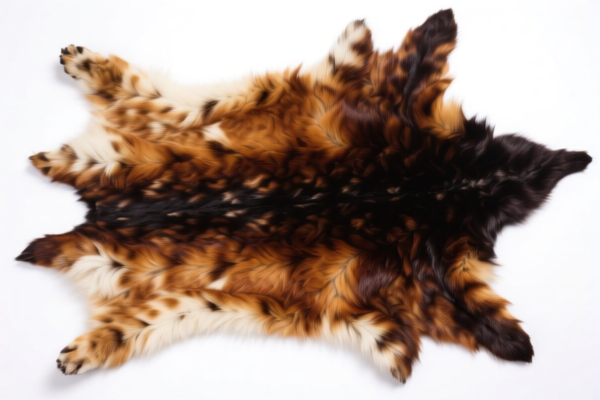
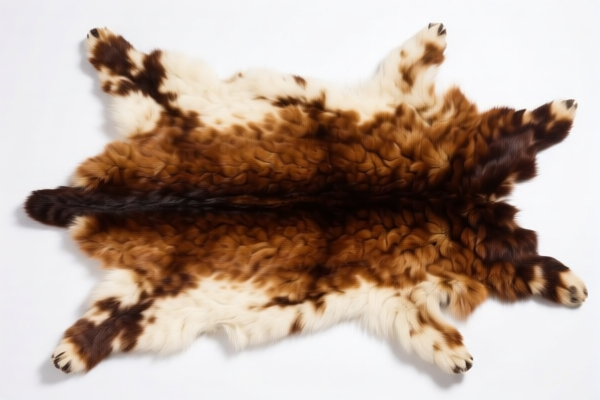
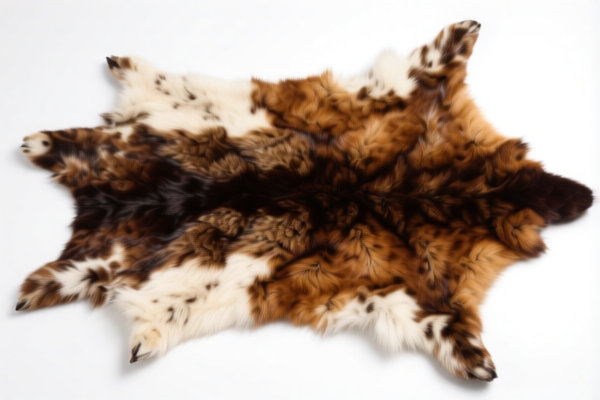
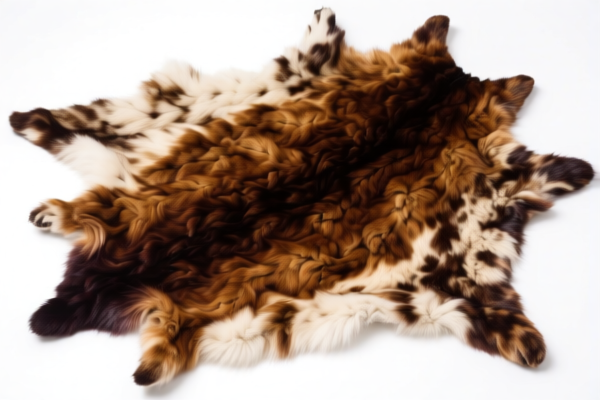
AI Analysis
🐂 Dyed Whole Animal Hide (No Claws) | Bovine & Equine Leather Crust
🌐 HS Code Reference & Customs Clearance Guide | 2026 Tariff Analysis | Professional Entry Strategy
📌 1. Product Definition & Classification: What is "Dyed Whole Animal Hide"?
"Dyed Whole Animal Hide" in the context of international trade refers to tanned or crust leather that has undergone initial tanning processes but has not yet been finalized for specific end-uses (like shoes or bags). The key identifier here is "No Claws", which implies the hides are whole, unsplit, and preserved from bovine (cow/buffalo) or equine (horse) animals, excluding those with claws (thus ruling out cat/dog skins, though bovine is the primary category for "hide").
⚠️ Critical Distinction:
- "Wet-State" vs. "Dry-State (Crust)": The tax treatment varies drastically based on moisture content and final preparation stage.
- "Whole" vs. "Split": The data specifies "Whole bovine leather", meaning the hide has not been split into layers (e.g., top grain vs. suede).
- "Dyed": In customs terminology, "dyed" often falls under "Crust" if the dyeing is part of the basic tanning process and not the final finishing for a specific article.
📦 2. HS Code Classification Matrix (2026 Latest Tariff Data)
Based on the provided <DATA>, there are two distinct classifications depending on the state of the hide:
| HS Code | Product Description | State | Surface Area Limit | Tax Rate | Key Condition |
|---|---|---|---|---|---|
4104.19.20.00 |
Tanned/Crust Hides, Bovine/Equine, No Hair, Whole, ≤ 28 sq. ft. | Wet-State (including Wet-Blue) | ≤ 2.6 m² | 27.4% | Base: 2.4% + Additional: 25.0% |
4104.49.10.20 |
Upper Leather; Lining Leather (Upper Leather) | Dry-State (Crust) | ≤ 2.6 m² | 0.0% | Base: 0.0% + Additional: 0.0% |
🔍 Explanation of Data Mapping:
- HS Code4104.19.20.00: Matches "Dyed" if the dyeing occurs in the wet-state (e.g., wet-blue, a common intermediate stage). It is classified as "Other" whole bovine leather under wet-state.
- HS Code4104.49.10.20: Matches "Dyed" if the product is fully dried and classified as "Upper leather" or "Lining leather" in the dry crust stage. This is a specialized sub-category with 0% tariff.
💰 3. Detailed Tariff Breakdown (US Customs & Trade Policy)
✅ Applicable Country: United States (US)
✅ Origin: China (CN) (Assumed based on "Additional Tax" context in data)
✅ Effective Date: Current Trade Policy (Section 301 / IEEPA)
🎯 1. HS Code 4104.19.20.00 — Wet-State Bovine Leather (Whole)
| Item | Details |
|---|---|
| Base Tariff | 2.4% (ad valorem) |
| Additional Tariff | +25.0% (Section 301 / USITC) |
| Total Tax Rate | 27.4% |
| Tax Calculation | CIF Value × 27.4% |
| De Minimis Exemption? | ❌ No (Not eligible for de minimis) |
| Legal Basis | USITC Heading 4104.19.20.00 |
📌 Why This Rate?
- Wet-state hides (including wet-blue) are subject to the 25% additional duty under US trade policy due to their strategic importance and potential for downstream manufacturing.
- The 2.4% base duty is the standard Most Favored Nation (MFN) rate for "Other" wet-blue leather.
🎯 2. HS Code 4104.49.10.20 — Dry-State Upper/Lining Leather (Crust)
| Item | Details |
|---|---|
| Base Tariff | 0.0% (ad valorem) |
| Additional Tariff | 0.0% (Section 301 / USITC) |
| Total Tax Rate | 0.0% |
| Tax Calculation | CIF Value × 0.0% |
| De Minimis Exemption? | N/A (0% tax) |
| Legal Basis | USITC Heading 4104.49.10.20 |
📌 Why 0%?
- This specific code is for "Upper leather; lining leather" in the dry crust stage.
- It is classified as a specialized product with preferential tariff treatment (0% base + 0% additional).
- Crucial: The hide must be explicitly identified as "Upper leather" or "Lining leather" in the declaration and meet the dry-state (crust) definition.
🛠️ 4. Customs Clearance Strategy & Practical Advice
✅ 1. Critical Documentation Checklist
| Document | Requirement | Purpose |
|---|---|---|
| Commercial Invoice | Must specify "Wet-State" or "Dry-State (Crust)" clearly. | Determines correct HS Code. |
| Product Description | Must include "Whole Bovine Hide", "No Claws", "≤ 28 sq. ft.". | Matches HS Code description. |
| State of Goods | Explicitly state "Wet" (e.g., wet-blue) or "Dry". | Avoids misclassification penalties. |
| Surface Area Proof | Provide calculations showing unit surface area ≤ 2.6 m². | Qualifies for sub-category. |
| End-Use Statement | If claiming 4104.49.10.20, state "For Upper/Lining Leather Production". |
Justifies 0% rate. |
✅ 2. Classification Decision Tree
mermaid
graph TD
A[Dyed Whole Animal Hide] --> B{What is the State?}
B -->|Wet-State
e.g., Wet-Blue| C[HS: 4104.19.20.00]
B -->|Dry-State
e.g., Crust| D{Is it Upper/Lining Leather?}
D -->|Yes| E[HS: 4104.49.10.20]
D -->|No| F[Other Dry Hides
⚠️ Check other HTS codes]
C --> G[Tax: 27.4%]
E --> H[Tax: 0.0%]
📌 Key Advice:
- If you can control the production stage, declare as Dry-State Upper/Lining Leather (4104.49.10.20) to achieve 0% tariff.
- If the goods are wet (e.g., wet-blue), you must use4104.19.20.00and pay 27.4%.
- Do not mix wet and dry goods in the same declaration line.
✅ 3. Common Pitfalls & Risks
| Risk | Consequence | Prevention |
|---|---|---|
| Misdeclaring Wet as Dry | Customs reclassifies → 27.4% tax + penalties | Provide moisture content test results. |
| Wrong Surface Area | Disqualified from sub-category | Use standardized measurement methods. |
| "No Claws" Ambiguity | Customs questions origin/type | Specify "Bovine (Cow/Buffalo) or Equine (Horse)" explicitly. |
| Split Leather Misclassification | Higher tax if split | Confirm "Whole" (not split) in description. |
🌍 5. Market-Specific Insights (2026)
| Market | Recommended HS Code | Tax Rate | Notes |
|---|---|---|---|
| 🇺🇸 USA | 4104.49.10.20 (Dry) |
0.0% | Ideal for cost-saving if product qualifies. |
| 🇺🇸 USA | 4104.19.20.00 (Wet) |
27.4% | High cost; consider shifting to dry stage. |
| 🇨🇳 China | 4104.19.20.00 |
Varies | Export from China may have different rules. |
| 🇪🇺 EU | 4104.19.20 |
Varies | EU does not have Section 301 additional duties. |
📌 Conclusion:
- USA is the only market in the data with "Additional Tax", making classification critical.
- Shift production to "Dry-State Upper/Lining Leather" to save 27.4% in duties.
- Ensure all documentation reflects "Whole", "No Claws", and "≤ 28 sq. ft." to qualify for sub-categories.
📌 6. Final Recommendations
🔥 Pro Tip: Optimize for 0% Tariff
If your product can be processed to dry crust upper leather, classify under
4104.49.10.20.
- Tax Savings: 27.4% vs. 0.0%
- Documentation: Emphasize "Upper Leather" use.
- State: Ensure goods are dry at time of export.
🚫 Avoid: Wet-State Declaration Unless Necessary
- Tax Cost: 27.4%
- Risk: High scrutiny due to high tariff.
- Alternative: Can you dry-treat before export?
🎯 Summary Table for Quick Reference
| Product Feature | HS Code | Tax Rate | Strategy |
|---|---|---|---|
| Wet-State, Whole Bovine, ≤ 28 sq. ft. | 4104.19.20.00 |
27.4% | High cost; minimize use. |
| Dry-State, Upper/Lining Leather, ≤ 28 sq. ft. | 4104.49.10.20 |
0.0% | Preferred; maximize use. |
📢 Action Item:
- Contact your supplier to confirm if goods can be declared as "Dry-State Upper/Lining Leather".
- Update invoices to reflect precise HS Code and description.
- Consult a customs broker for pre-classification ruling if unsure.
✨ Professional clearance starts with precise classification!
💼 Save 27.4% on every hide by choosing the right HS Code.
Customer Reviews
About HS Code Classification
The Harmonized System (HS) is an internationally standardized nomenclature developed by the World Customs Organization (WCO) to classify traded products. Over 200 countries use the HS system as the basis for customs tariffs, trade statistics, and import/export regulations.
Each HS code follows a hierarchical structure:
- Chapter (2 digits) — Broad category of goods (e.g., Chapter 84: Machinery and Mechanical Appliances)
- Heading (4 digits) — More specific grouping within the chapter
- Subheading (6 digits) — Internationally standardized breakdown, used by all WCO member countries
- National subdivisions (8-10 digits) — Country-specific extensions for further classification, such as US HTSUS 10-digit codes
Correct HS code classification is essential for smooth customs clearance, accurate duty payment, and compliance with trade regulations. Misclassification can lead to customs delays, overpayment of duties, or penalties.
When importing from CN to US, the applicable tariff rates may include:
- Most-Favored-Nation (MFN) rate — The standard duty rate applied to WTO members
- General rate — Applied to countries without trade agreements
- Trade remedy duties — Additional tariffs such as Section 301 (anti-dumping), Section 232 (national security), or countervailing duties
The information provided on this page is for reference purposes only. For official classification, please consult with your local customs authority or a licensed customs broker.