Electric Motor (HS Code 8501325540)
CN → US| HS Code | Tariff Rate | Origin | Destination | Doc |
|---|---|---|---|---|
| 8501106040 | 37.8% | CN | US | Official Doc |
| 8501514040 | 37.5% | CN | US | Official Doc |
| 8501516020 | 37.5% | CN | US | Official Doc |
| 8501322000 | 37.9% | CN | US | Official Doc |
| 8501325540 | 35.0% | CN | US | Official Doc |
Product Images
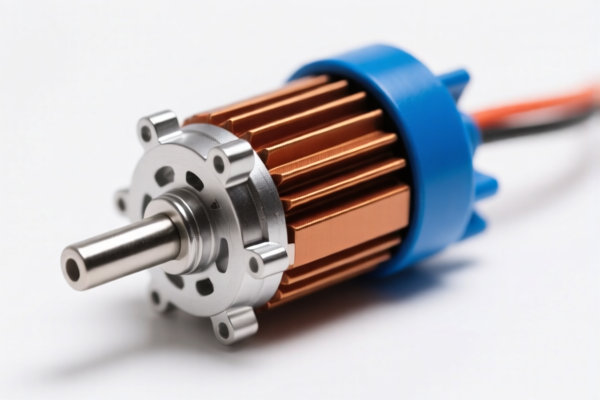
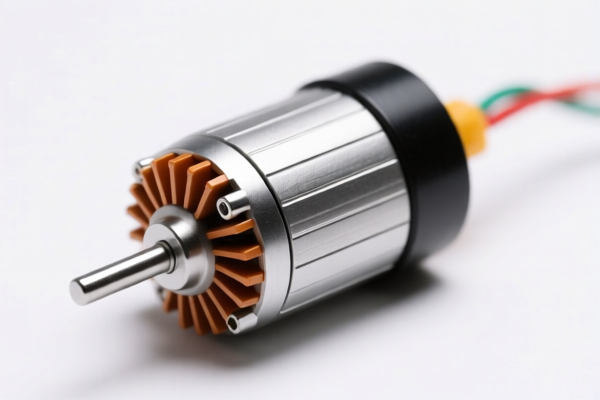
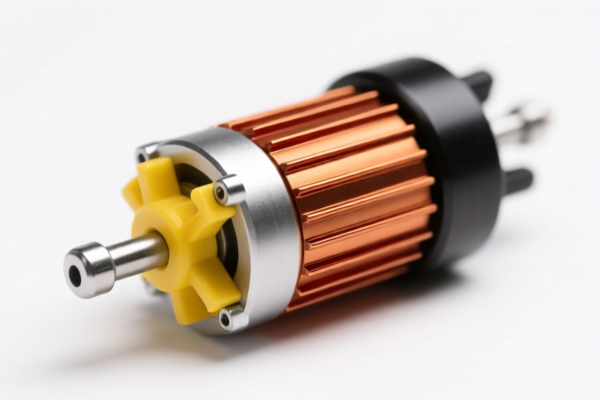
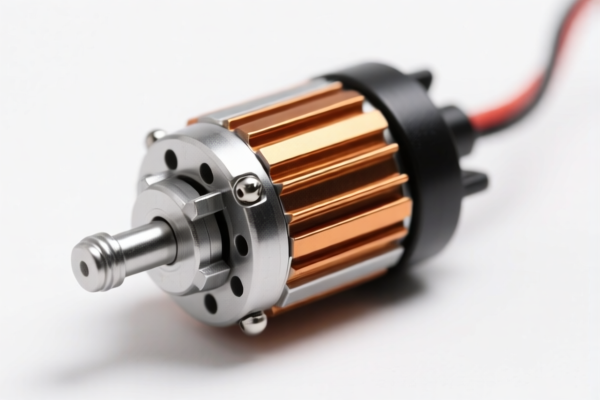
AI Analysis
⚡ Electric Motor (HS Code 8501.32.55.40)
🌐 HS Code Reference & Customs Clearance Guide | 2026 Latest Tariff Analysis | Strategic Compliance Strategy
📌 I. Product Definition & Classification: Do You Truly Understand "Electric Motors"?
The Electric Motor is the heart of modern industrial automation, consumer electronics, and green energy systems. In international trade, specifically under HTS Code 8501.32.55.40, it refers to a specific category of DC Motors that meet precise technical and functional criteria.
Key Distinction:
Unlike general AC motors or high-power industrial DC motors, this specific HS code targets motors that fit into a narrow operational window defined by their application attributes rather than just raw power output or physical material. It is distinct from brushed DC motors (8501.31/32 series with different power ranges) and AC motors (8501.51/53 series).
⚠️ Critical Classification Criteria:
- Type: DC Motor (Direct Current).
- Attributes: Must align with specific "use attribute" definitions in the tariff schedule.
- Conflicts: No conflict with material composition or physical form factors allowed in this sub-heading.
- Exclusion: Does not include motors with gearboxes (which may fall under 8501.51.60.20) or specific low-power brushless variants (8501.10.60.40).
📦 II. HS Code Breakdown & Tax Detail (2026 Latest Tariff Authority)
Based on the provided dataset, here is the precise classification and tax breakdown for HS Code 8501.32.55.40.
| HS Code | Product Description | Total Tax Rate | Tax Composition Breakdown |
|---|---|---|---|
8501.32.55.40 |
Electric Motor, DC, Meeting Specific Use Attributes Summary: "Motor, conforms to classification use attributes, no material or form conflict." |
35.0% | Base Duty: 0.0% Section 301 (Added): 25.0% Section 122 (Added): 10.0% |
🔍 Why This Code?
- Base Duty is 0%: This is a significant advantage. The base Most-Favored-Nation (MFN) rate for this specific subheading is zero.
- High Added Duties: Despite the 0% base, the total burden is 35% due to US trade policy measures (Section 301 and Section 122).
- Attribute-Specific: This code is not for "any DC motor." It is for those that satisfy the specific "use attribute" definition within the 8501.32 hierarchy, often implying specific industrial or commercial applications distinct from high-power machinery or small consumer appliances.
💰 III. Detailed Tariff Structure & Legal Basis
✅ Applicable Country: United States (US)
✅ Origin: China (CN) (Implied by the specific Section 122 and Section 301 combination in the data)
✅ Total Effective Rate: 35.0%
🎯 Breakdown of the 35% Tariff
| Component | Rate | Legal/Policy Source | Explanation |
|---|---|---|---|
| 1. Base Tariff (MFN) | 0.0% | HTSUS 8501.32.55 | The standard international trade baseline for this specific DC motor sub-category. |
| 2. Section 301 Duty | +25.0% | US Trade Act § 301 | Additional tariffs imposed on Chinese goods to address unfair trade practices. This is a broad-based penalty on many Chinese-origin mechanical/electrical goods. |
| 3. Section 122 Duty | +10.0% | IEEPA / Section 122 | Additional tariffs specifically targeting imports from China under the International Emergency Economic Powers Act, often linked to national security or economic competition concerns. |
📌 Calculation Example:
If you import $10,000 worth of goods classified under8501.32.55.40:
- Base Duty: $0
- Sec 301 Duty: $2,500
- Sec 122 Duty: $1,000
- Total Tax Payable: $3,500 (35%)
🛠️ IV. Customs Clearance Practical Advice (Avoiding Pitfalls)
✅ 1. Documentation Checklist (Non-Negotiable)
| Document | Required? | Purpose & Tips |
|---|---|---|
| ✅ Product Datasheet | ✔️ | Must explicitly state: DC Motor, Power Output, Voltage, RPM, and Intended Use. Proves it fits the "Use Attribute" of 8501.32.55.40. |
| ✅ Technical Drawing | ✔️ | Shows no gears (to avoid 8501.51.60.20) and confirms physical form. |
| ✅ Commercial Invoice | ✔️ | Must clearly declare "DC Electric Motor" and origin. Do not use vague terms like "Motor" or "Engine Part." |
| ✅ Certificate of Origin (CO) | ✔️ | Critical to prove Chinese origin (triggering 35%) or non-Chinese origin (potentially 0% if eligible for exemptions). |
| ✅ FCC/CE Certification | ✔️ | Electrical safety compliance. Required for US customs and market access. |
✅ 2. Strategic Classification Tips
🔥 “Attributes Define Value, Form Defines Code!”
| Scenario | Correct Classification | Incorrect Classification | Risk |
|---|---|---|---|
| DC Motor, Standard Use, No Gears | 8501.32.55.40 (35%) |
Misclassified as 8501.32.20.00 (37.9%) |
Overpayment of 2.9% |
| DC Motor with Gearbox | 8501.51.60.20 (37.5%) |
Classified as 8501.32.55.40 |
Underpayment/Smuggling Risk |
| Brushless DC Motor, 18-37.5W | 8501.10.60.40 (37.8%) |
Classified as 8501.32.55.40 |
Classification Error |
| AC Motor, Multi-phase | 8501.51.40.40 (37.5%) |
Classified as DC Motor | Major Misclassification |
✅ 3. Cost-Saving & Exemption Strategies
| Strategy | Action | Potential Benefit |
|---|---|---|
| Supply Chain Diversification | Source motors from Vietnam, Mexico, or Thailand instead of China. | 0% Total Duty (if eligible for IEEPA exemption/USMCA). |
| Pre-Ruling Application | Apply for an Advance Ruling from US CBP. | Confirms 8501.32.55.40 is correct, avoiding audits and penalties. |
| Value Engineering | If the motor is <18.65W or >37.5W (for brushless), check if it fits other brackets. | May shift to different duty percentages, but Section 301/122 usually still apply to Chinese goods. |
🌍 V. Global Market Comparison (2026 Outlook)
| Market | HS Code | Base Duty | Total Duty (China Origin) | Key Requirement |
|---|---|---|---|---|
| 🇺🇸 USA | 8501.32.55.40 |
0.0% | 35.0% | FCC, High Compliance Docs |
| 🇪🇺 EU | 8501.31/32 |
~1.7% | ~1.7% | CE, RoHS, REACH |
| 🇨🇳 China | 8501.32.55 |
0.0% | 0.0% | CCC (if applicable) |
| 🇯🇵 Japan | 8501.31/32 |
0.0% - 3.0% | 0.0% - 3.0% | PSE Mark |
📌 Insight:
The 35% tariff in the US is a significant barrier. For US-bound goods, consider:
1. Duty Exemption Requests: File for exclusions under Section 301 if the motor is not available from US/ally sources.
2. Transshipment Caution: Never simply relabel Chinese motors as "Made in Vietnam" without substantial transformation. Customs aggressively audits this.
📌 VI. Common Mistakes & Pitfalls (Blood Lessons)
❌ Mistake 1: Assuming "DC Motor" always means 8501.32.55.40.
👉 Reality: If it has gears, it’s likely 8501.51.60.20 (37.5%). If it’s brushless and low power, it’s 8501.10.60.40 (37.8%).
💡 Fix: Check for gearboxes and brushless technology first.
❌ Mistake 2: Ignoring the "Use Attribute" clause.
👉 Reality: The code specifies "conforms to classification use attributes." If the motor is for a specialized medical device or aerospace, it might need a different code (e.g., 9018.xxxx).
💡 Fix: Provide detailed application statements.
❌ Mistake 3: Underestimating the Impact of Section 122.
👉 Reality: Even if Base Duty is 0%, the 10% + 25% add-ons make it expensive.
💡 Fix: Factor the 35% total into your FOB pricing immediately.
🎯 VII. Conclusion: Strategic Sourcing & Compliance
🎯 Key Takeaway:
🔹 HS Code 8501.32.55.40 is a low-base, high-added-tariff code.
🔹 Total Cost of Duty: 35% for Chinese-origin goods.
🔹 Critical Success Factor: Accurate declaration of DC type, no gears, and specific use attributes.
📌 Pro Tip:
If your supply chain is not exclusively Chinese, leverage USMCA (Mexico/Canada) or ASEAN benefits. A motor made in Mexico may qualify for 0% total duty under USMCA, saving you $3,500 per $10,000 shipment.
📣 Immediate Action Items:
- Verify if your motor has gears or is brushless.
- Calculate landed cost using 35% duty (if CN origin).
- Consult a customs broker for an Advance Ruling if the "use attribute" is ambiguous.
- Explore alternative sourcing to avoid the Section 301/122 burden.
✨ Precision in Classification, Profit in Clearance!
💼 Don’t let a 35% tariff eat your margin. Classify right, clear fast.
Customer Reviews
About HS Code Classification
The Harmonized System (HS) is an internationally standardized nomenclature developed by the World Customs Organization (WCO) to classify traded products. Over 200 countries use the HS system as the basis for customs tariffs, trade statistics, and import/export regulations.
Each HS code follows a hierarchical structure:
- Chapter (2 digits) — Broad category of goods (e.g., Chapter 84: Machinery and Mechanical Appliances)
- Heading (4 digits) — More specific grouping within the chapter
- Subheading (6 digits) — Internationally standardized breakdown, used by all WCO member countries
- National subdivisions (8-10 digits) — Country-specific extensions for further classification, such as US HTSUS 10-digit codes
Correct HS code classification is essential for smooth customs clearance, accurate duty payment, and compliance with trade regulations. Misclassification can lead to customs delays, overpayment of duties, or penalties.
When importing from CN to US, the applicable tariff rates may include:
- Most-Favored-Nation (MFN) rate — The standard duty rate applied to WTO members
- General rate — Applied to countries without trade agreements
- Trade remedy duties — Additional tariffs such as Section 301 (anti-dumping), Section 232 (national security), or countervailing duties
The information provided on this page is for reference purposes only. For official classification, please consult with your local customs authority or a licensed customs broker.