Electric Vegetable Cutter
CN → US| HS Code | Tariff Rate | Origin | Destination | Doc |
|---|---|---|---|---|
| 8509400040 | 14.2% | CN | US | Official Doc |
| 8509400025 | 14.2% | CN | US | Official Doc |
| 8438600000 | 35.0% | CN | US | Official Doc |
| 8438800000 | 35.0% | CN | US | Official Doc |
| 8438800000 | 35.0% | CN | US | Official Doc |
Product Images
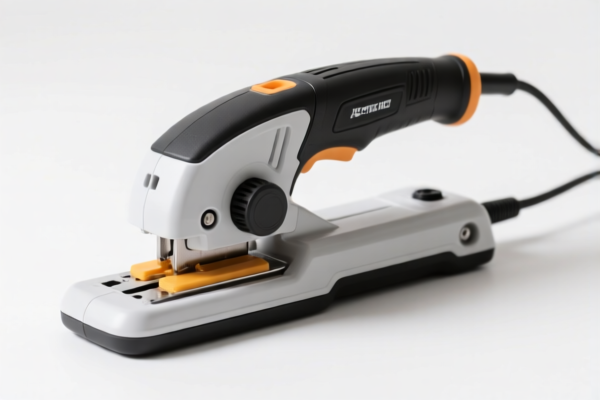
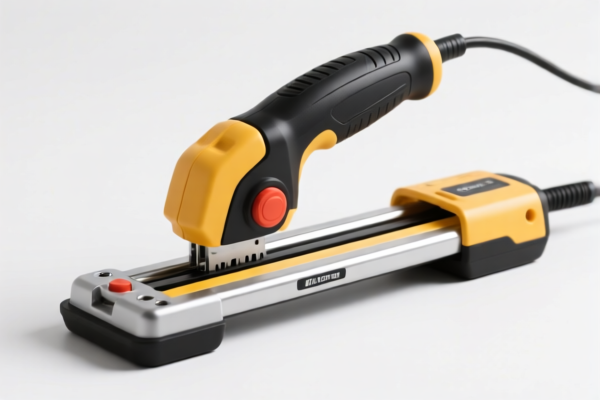
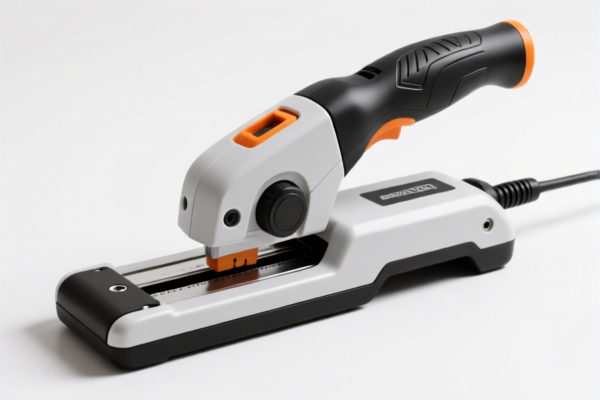
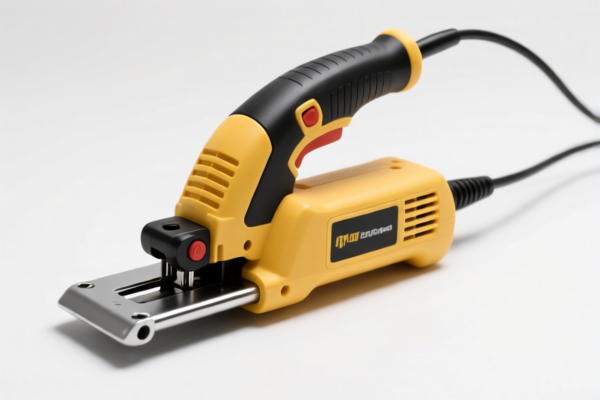
AI Analysis
🔪 Electric Vegetable Cutter (Food Processors & Choppers)
🌐 HS Code Reference & Customs Clearance Guide | 2026 Latest Tariff Analysis | Professional Strategy for US Imports
📌 Part 1: Product Definition & Classification Logic
An Electric Vegetable Cutter is a household or commercial appliance designed for slicing, chopping, mincing, or processing vegetables. In international trade, the critical distinction lies between Household Electric Appliances (Chapter 85) and Industrial/Commercial Food Preparation Machinery (Chapter 84).
Key Classification Criteria: * Household/Small Commercial (8509): If the device is portable, relatively low power, and primarily for home or small-scale kitchen use. It fits the description of "electric mechanical household appliances." * Industrial/Heavy Duty (8438): If the device is robust, stationary, or designed for continuous high-volume industrial food preparation. It fits the description of "machinery for the industrial preparation of food."
⚠️ Critical Distinction:
- If it’s a plug-in countertop unit (like a standard kitchen chopper) → Likely 8509.
- If it’s a heavy-duty industrial slicer or part of a large production line → Likely 8438.
📦 Part 2: HS Code Classification Matrix (Based on Provided Data)
The following codes are derived from the specific product attributes: Electric, Vegetable Cutting/Processing, and Household/General Mechanical nature.
| HS Code | Product Description & Logic | Tax Profile (China Origin → US) | Primary Use Case |
|---|---|---|---|
| 8509.40.00.40 | Electric Household Food Processor Logic: Matches "electric mechanical household appliances" and "food processor" usage. Color ("green") is cosmetic and ignored. Form: Portable/Home use. |
14.2% (Base 4.2% + 122-Clause 10%) |
Home kitchens, small cafes, portable choppers. |
| 8509.40.00.25 | Electric Food Processor/Chopper Logic: Matches "electric" attribute and "cutting/grinding" function. Material (plastic/metal housing) is standard. Form: General electric appliance. |
14.2% (Base 4.2% + 122-Clause 10%) |
General purpose electric choppers, salad spinners with motors. |
| 8438.60.00.00 | Machinery for Preparing Vegetables Logic: Categorized under "machinery for preparing vegetables." No material conflict. Form: Mechanical/Industrial grade. |
35.0% (Base 0% + Section 301 25% + 122-Clause 10%) |
Industrial vegetable prep lines, heavy-duty slicers. |
| 8438.80.00.00 | Other Food Preparation Machinery Logic: "Electric vegetable cutter" falls under machinery for food preparation. Metal/plastic construction is consistent. Form: Industrial/Commercial machinery. |
35.0% (Base 0% + Section 301 25% + 122-Clause 10%) |
Large-scale food processing plants, commercial kitchens. |
| 8438.80.00.00 | Industrial Food Preparation Machine Logic: Specifically matches "machinery for industrial preparation or manufacture of food/drink." Mechanical form factor. Form: Dedicated industrial equipment. |
35.0% (Base 0% + Section 301 25% + 122-Clause 10%) |
High-volume manufacturing, automated food lines. |
🔍 Key Insight:
- The 14.2% rate (8509 series) applies to household/light commercial electric devices.
- The 35.0% rate (8438 series) applies to industrial/heavy-duty mechanical preparation equipment.
- Do not confuse with simple manual knives or non-electric tools.
💰 Part 3: 2026 Tariff Rate Breakdown (Detailed Analysis)
✅ Applicable Country: United States (US)
✅ Country of Origin: China (CN)
✅ Effective Date: Post-November 2025 (Current Policy)
🎯 Option A: Household/Light Commercial (HS 8509.40.00.40 / .25)
Total Duty: 14.2%
| Component | Rate | Legal Basis | Explanation |
|---|---|---|---|
| Base MFN Duty | 4.2% | HTSUS General Rate | Standard duty for electric household appliances. |
| Section 301 Duty | 0.0% | USITC List 3/4 | Note: Some 8509 subheadings may have exemptions or lower rates, but data indicates 0% here. |
| 122-Clause Duty | 10.0% | IEEPA / EO 14024 | Additional duty on Chinese electronics/appliances under specific executive orders. |
| Total Landed Duty | 14.2% | Calculated on CIF Value. |
📌 Why it's lower:
- Classified as a household appliance rather than heavy industrial machinery.
- Lower base tariff (4.2% vs 0%) is offset by the lack of the massive 25% Section 301 tariff found in Chapter 84.
- Strategy: If your product is small, portable, and marketed for home use, aim for 8509.
🎯 Option B: Industrial/Heavy Duty (HS 8438.60.00.00 / 80.00)
Total Duty: 35.0%
| Component | Rate | Legal Basis | Explanation |
|---|---|---|---|
| Base MFN Duty | 0.0% | HTSUS General Rate | Often 0% for general food processing machinery. |
| Section 301 Duty | 25.0% | USITC Footnote 9903.88.01 | Major Cost Driver. Heavy machinery from China faces this additional tariff. |
| 122-Clause Duty | 10.0% | IEEPA / EO 14024 | Additional duty applies to industrial goods from China. |
| Total Landed Duty | 35.0% | Calculated on CIF Value. |
📌 Why it's higher:
- The 25% Section 301 tariff is the dominant factor.
- Even though the base rate is 0%, the 25% + 10% additions make it significantly more expensive than household appliances.
- Risk: Misclassifying an industrial machine as a household appliance (to get 14.2%) can lead to severe penalties and back-taxes.
🛠️ Part 4: Customs Clearance Practical Advice
✅ 1. Documentation Checklist (Must-Have)
| Document | Required? | Purpose |
|---|---|---|
| Product Specification Sheet | ✅ Yes | Must clearly state: Voltage, Wattage, Dimensions, and Intended Use (Home vs. Industrial). |
| Photos of Product & Label | ✅ Yes | Show the motor, blades, and power cord. Labels must show "Made in China" and electrical ratings. |
| Bill of Materials (BOM) | ✅ Optional but Recommended | Helps justify if parts are plastic (household) vs. heavy steel (industrial). |
| Commercial Invoice | ✅ Yes | Description must match HS Code logic (e.g., "Electric Kitchen Chopper" vs. "Industrial Vegetable Slicer"). |
| FCC Certification | ✅ Yes (If 8509) | Required for electric household appliances in the US. |
| UL/ETL Listing | ✅ Yes (Highly Recommended) | Safety certification for electric products. Lack thereof can cause detention. |
✅ 2. Classification Strategy & Pitfalls
| Scenario | Recommended HS Code | Pitfall to Avoid |
|---|---|---|
| Small, plug-in, home use | 8509.40.00.40 |
Don't label it "Industrial Food Processor" → Triggers 35% tax. |
| Heavy, stationary, commercial | 8438.80.00.00 |
Don't label it "Home Appliance" → Customs will reclassify and charge 35%. |
| Mixed Kit (Knife + Base) | 8509 or 8438 |
Declare as a complete set. Do not split knife and motor into different HS codes. |
| Spare Blades | 8214 or 8438.90 |
If shipped separately, blades may have different duties. |
🔥 Golden Rule:
"If it plugs into a home outlet and fits on a counter, argue 8509. If it plugs into 220V/440V industrial power and weighs >50lbs, expect 8438."
✅ 3. Special Case: "Green" or Colored Products
- Cosmetic Features: The summary data explicitly states that color (e.g., "Green") does not affect classification.
- Marketing Tip: Use color in marketing, but ensure technical specs drive the HS Code.
🌍 Part 5: Global Market Comparison (2026)
| Region | Recommended HS Code | Estimated Total Duty (China Origin) | Notes |
|---|---|---|---|
| 🇺🇸 USA | 8509.40.00.40 |
14.2% | Best option for light duty. Avoid 8438 if possible. |
| 🇺🇸 USA | 8438.80.00.00 |
35.0% | Only for genuine industrial machinery. |
| 🇨🇳 China (Import) | 8509.40 |
~5-10% | Varies by specific subheading. |
| 🇪🇺 EU | 8543.70 |
~2.7% + VAT | Different classification logic. |
| 🇬🇧 UK | 8509.40 |
~0% (Post-Brexit) | Check UK Global Tariff. |
📌 Conclusion:
For Electric Vegetable Cutters exported to the US, HS Code 8509.40.00.40 is the most cost-effective strategy if the product is suitable for home or light commercial use. It saves you 20.8% in duties compared to industrial classification.
📌 Part 6: Common Mistakes & Blood-Sweating Lessons
❌ Mistake 1: Declaring a heavy-duty commercial chopper as a "Home Appliance" to save tax.
👉 Consequence: Customs inspection reveals industrial-grade motor and build quality. Result: Back taxes + Penalties.
❌ Mistake 2: Shipping blades separately from the motor unit.
👉 Consequence: Blades may be classified under 8214 (knives), which might have different duties. Always ship as a complete functional unit if intended for immediate use.
❌ Mistake 3: Ignoring FCC/UL Certifications.
👉 Consequence: Electric goods (8509) must have FCC (and often UL/ETL) for US clearance. Missing docs = Detention & Return.
✅ Correct Practice:
"Electric Food Processor, 500W, 120V, Home Kitchen Use, Green, with FCC Cert. Model: VC-100."
🎯 Part 7: Conclusion: Professional Declaration Saves Money!
🎯 Remember the Mantra:
🔹 "Home Use = 8509 (14.2%). Industrial = 8438 (35.0%)."
🔹 "Describe function, not just color."
🔹 "Certifications are not optional for electric goods."
📌 Pro Tip:
If you are unsure if your product is "Home" or "Industrial," provide detailed photos and specs to a customs broker for an Advance Ruling. It is cheaper than paying 35% and fighting a dispute later.
📣 Immediate Action:
📞 Contact your freight forwarder with:
1. Product Photos (Inside/Out).
2. Wattage & Voltage.
3. Target User (Home vs. Factory).
🚀 Get your HS Code pre-confirmed to ensure smooth US Customs Clearance!
✨ Precision in Classification = Profit in Your Pocket!
💼 Don't let tariffs chop your margins!
Customer Reviews
About HS Code Classification
The Harmonized System (HS) is an internationally standardized nomenclature developed by the World Customs Organization (WCO) to classify traded products. Over 200 countries use the HS system as the basis for customs tariffs, trade statistics, and import/export regulations.
Each HS code follows a hierarchical structure:
- Chapter (2 digits) — Broad category of goods (e.g., Chapter 84: Machinery and Mechanical Appliances)
- Heading (4 digits) — More specific grouping within the chapter
- Subheading (6 digits) — Internationally standardized breakdown, used by all WCO member countries
- National subdivisions (8-10 digits) — Country-specific extensions for further classification, such as US HTSUS 10-digit codes
Correct HS code classification is essential for smooth customs clearance, accurate duty payment, and compliance with trade regulations. Misclassification can lead to customs delays, overpayment of duties, or penalties.
When importing from CN to US, the applicable tariff rates may include:
- Most-Favored-Nation (MFN) rate — The standard duty rate applied to WTO members
- General rate — Applied to countries without trade agreements
- Trade remedy duties — Additional tariffs such as Section 301 (anti-dumping), Section 232 (national security), or countervailing duties
The information provided on this page is for reference purposes only. For official classification, please consult with your local customs authority or a licensed customs broker.