Electronic Components (HS 8549990000)
CN → US| HS Code | Tariff Rate | Origin | Destination | Doc |
|---|---|---|---|---|
| 8549990000 | 35.0% | CN | US | Official Doc |
| 8534000020 | 35.0% | CN | US | Official Doc |
| 8532900000 | 35.0% | CN | US | Official Doc |
| 8548000000 | 35.0% | CN | US | Official Doc |
Product Images
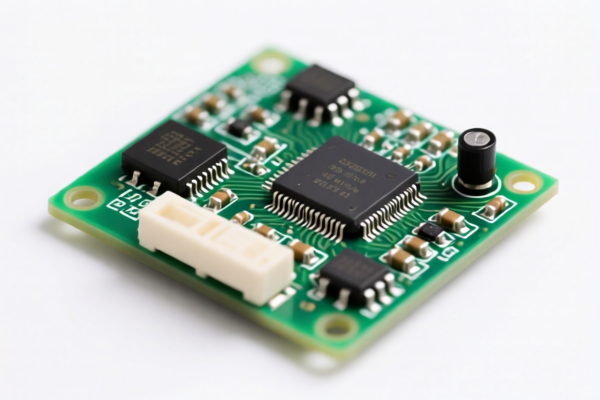
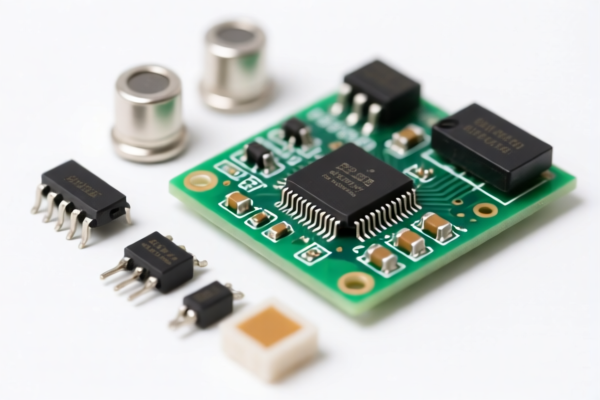
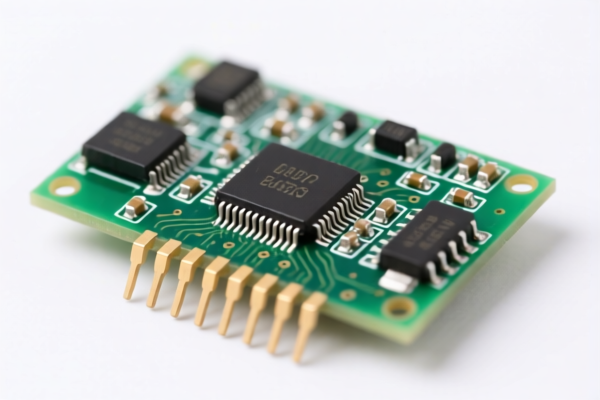
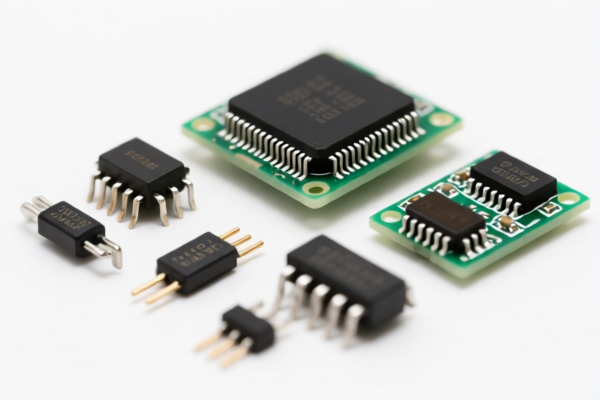
AI Analysis
🔌 Electronic Components / Electrical Parts (HS 8549.99.00.00)
🌐 HS Code Reference & Customs Clearance Guide | 2026 Latest Tariff Analysis | Professional Strategy
📌 Part 1: Product Definition & Classification: Do You Know What "Other Electrical Apparatus" Really Means?
"Electronic Components" is a broad umbrella term. In international trade (specifically under HS 8549.99.00.00), this code is a catch-all category for electrical apparatus and parts that are not specifically listed elsewhere in Chapter 85 (e.g., not capacitors, not printed circuits, not switches).
It typically includes: * Generic electrical assemblies without specific functional classification. * Custom electrical parts not covered by more specific headings (like 8534 for PCBs or 8532 for capacitors). * "Residual" electrical items: If it’s electrical, it’s not flexible PCB, it’s not a standard capacitor, and it doesn’t have a specific 8-digit code, it often falls here.
⚠️ Critical Distinction:
- 8534.00.00.20 / .40: Specifically for Printed Circuits (PCBs). If your item is a PCB, do NOT use 8549.99.00.00. Misclassification leads to severe penalties.
- 8532.90.00.00 / 8532.25.00.45: Specifically for Capacitors. If it’s a capacitor, use the capacitor code.
- 8549.99.00.00: The "Other" bucket. Use only when the item genuinely doesn’t fit the specific descriptions above.
📦 Part 2: HS Code Classification Details (From Provided Data)
Based strictly on the provided , here is the breakdown of relevant HS Codes and their tax implications. Note that 8549.99.00.00 is explicitly listed.
| HS Code | Product Description | Key Characteristics | Tax Status (Total) |
|---|---|---|---|
8549.99.00.00 |
Other electrical apparatus and parts thereof, not specified or included elsewhere in this chapter | Generic electrical parts, assemblies, or devices with no specific sub-heading in Ch. 85. | 25.0% |
8534.00.00.20 |
Printed circuits: Base wholly of impregnated glass; With 3+ layers of conducting materials | Multi-layer rigid PCBs (Glass/Plastic base). | 25.0% |
8534.00.00.40 |
Printed circuits: Base wholly of impregnated glass; Other | Other rigid PCBs (Glass/Plastic base) not meeting the 3-layer spec above. | 0.0% |
8548.00.00.00 |
Electrical parts of machinery or apparatus, not specified elsewhere | Parts for specific machinery (not general electrical apparatus). | 25.0% |
8532.90.00.00 |
Electrical capacitors: Parts thereof | Parts for capacitors. | 25.0% |
8532.25.00.45 |
Fixed capacitors: Dielectric of paper/plastics; Leadless SMD | Surface Mount Capacitors (SMD). | 25.0% |
🔍 Key Insight for 8549.99.00.00:
- This code carries a 25% total tax rate (Base 0% + Additional 25%).
- It is often used for custom electrical assemblies, generic connectors (if not specified elsewhere), or electrical control boxes that don’t fit into specific consumer or industrial machine categories.
- Avoid using 8549.99.00.00 for PCBs or Capacitors. Using it for PCBs (8534.xxxx) that qualify for 0% tax (Code8534.00.00.40) is a major financial error.
💰 Part 3: 2026 Latest Tariff Rate Breakdown
✅ Applicable Country: United States (US)
✅ Origin: China (CN)
✅ Effective Date: 2025+ (Post-2026 Tariff Policy)
🎯 1. 8549.99.00.00 —— Other Electrical Apparatus and Parts
| Item | Content |
|---|---|
| Base Tariff | 0% (Ad Valorem) |
| Additional Tariff (Section 301 / USITC) | +25.0% |
| Total Tax Rate | 25.0% |
| Tax Calculation | CIF Value × 25% |
| De Minimis Exemption? | ❌ Not Applicable (Typically, Section 301 tariffs apply regardless of value if not de minimis eligible, but generally high-risk items are scrutinized) |
| Legal Basis Path | USITC:8549.99.00.00 → FOOTNOTE:301 |
📌 Explanation:
- The 25% rate is a direct result of Section 301 tariffs on Chinese-made electrical goods.
- Since the base rate is 0%, the entire tax burden is the 25% additional tariff.
- This is significantly higher than the 0% rate for certain PCBs (8534.00.00.40).
- Cost Impact: For every $10,000 of goods, you pay $2,500 in tariffs.
🛠️ Part 4: Customs Clearance Practical Advice (Pitfall Avoidance Guide)
✅ 1. Documentation Checklist (Do Not Skip)
| Document | Required | Notes |
|---|---|---|
| ✅ Detailed Product Description | ✔️ | Must clearly state "Other electrical apparatus" and why it doesn’t fit 8534/8532. |
| ✅ Technical Schematic/Block Diagram | ✔️ | Crucial to prove it is NOT a simple PCB or capacitor. |
| ✅ Composition List | ✔️ | Breakdown of materials (e.g., housing, internal wiring, chips). |
| ✅ Commercial Invoice | ✔️ | Must match the HS Code description exactly. |
| ✅ Origin Certificate (CO) | ✔️ | To confirm CN origin and apply correct tariff. |
| ✅ Photos (Internal & External) | ✔️ | Show that it is not a standard PCB or capacitor. |
✅ 2. Classification Strategy (Critical!)
🔥 "Don't Force It: If it's a PCB or Capacitor, Use the Specific Code!"
| Scenario | Correct HS Code | Tax Rate | Why? |
|---|---|---|---|
| Generic Electrical Box/Assembly | 8549.99.00.00 |
25% | No specific heading in Ch. 85 fits. |
| Multi-layer PCB (3+ layers, Glass Base) | 8534.00.00.20 |
25% | Specific PCB classification. |
| Simple PCB (2-layer or Other Glass Base) | 8534.00.00.40 |
0% | Tax Savings Opportunity! |
| Capacitor Parts | 8532.90.00.00 |
25% | Specific capacitor classification. |
| SMD Capacitors | 8532.25.00.45 |
25% | Specific capacitor classification. |
| Parts of Machinery (e.g., Motor Parts) | 8548.00.00.00 |
25% | Parts for specific machinery, not general apparatus. |
📌 Pro Tip:
- If your "Electronic Component" is a Printed Circuit Board (PCB), check if it qualifies for8534.00.00.40(0% tax).
- Only use8549.99.00.00if the item is truly "other" (e.g., a complex electrical assembly with mixed components that cannot be classified as a PCB or capacitor alone).
✅ 3. Special Cases & Handling
| Scenario | Handling Advice |
|---|---|
| Mixed Packaging (PCB + Capacitors) | Declare separately! Do not lump into 8549. PCBs might get 0%, capacitors 25%. |
| Custom Electrical Assemblies | Provide detailed schematics to justify 8549.99.00.00. |
| Parts for Specific Machines | Check if 8548.00.00.00 is more appropriate than 8549.99.00.00. Both are 25%, but accuracy matters for audits. |
| Flexible PCBs | Note: The data provided refers to "not flexible type". If flexible, different codes may apply (not in this dataset). |
🌍 Part 5: Global Market Comparison (2026)
| Country/Region | Recommended HS Code | Tariff (China Origin) | Notes |
|---|---|---|---|
| 🇺🇸 USA | 8549.99.00.00 |
25% | High tariff due to Section 301. |
| 🇨🇳 China | 8549.99.00.00 |
Varies (MFN Rate) | Import duty into China may differ. |
| 🇪🇺 EU | 8549.99.00.00 |
~4.5% (Varies) | No Section 301 equivalent; standard MFN. |
| 🇬🇧 UK | 8549.99.00.00 |
~4.5% | Post-Brexit tariff structure. |
📌 Conclusion:
- The USA has the highest tariff impact (25%) for generic electrical parts (8549.99.00.00).
- Cost Optimization: If your product is a PCB, ensure it is classified under8534.00.00.40(0%) if it meets the "other" criteria. This is the biggest opportunity for tax savings.
📌 Part 6: Common Errors & Pitfalls (Lessons Learned)
❌ Error 1: Classifying PCBs as 8549.99.00.00
👉 Consequence: You pay 25% instead of potentially 0% (for 8534.00.00.40). Overpayment!
❌ Error 2: Classifying Capacitors as 8549.99.00.00
👉 Consequence: No savings. Both are 25%, but misclassification triggers customs audits for inaccurate descriptions.
❌ Error 3: Using 8549.99.00.00 for items that fit 8548.00.00.00
👉 Consequence: Both are 25%, but 8548 is for "parts of machinery." If it's not a part of machinery, 8549 is correct. If it is, 8549 might be challenged.
✅ Correct Approach:
"Generic Electrical Assembly, Model XYZ, Consisting of Housing, Wiring, and Basic Circuitry, Not Specifically Classified as PCB or Capacitor."
🎯 Part 7: Conclusion: Precision Saves Money
🎯 Remember:
🔹 "PCB? Check 8534. Capacitor? Check 8532. Only then, go to 8549."
🔹 "0% vs 25%: A 25% difference is huge. Don't guess!"
📌 Pro Tip:
- For PCBs, verify if they meet the criteria for 8534.00.00.40 (0% tax).
- For all other electrical parts, 8549.99.00.00 incurs a 25% tariff.
- Always provide technical documentation to justify the classification.
📣 Immediate Action:
📞 Consult with a customs broker if unsure.
📤 Provide detailed schematics and material lists.
🚀 Save 25% on your PCBs by classifying them correctly!
✨ Professional Customs Clearance Starts with Accurate Classification!
💼 Your Cost Efficiency Depends on It!
Customer Reviews
About HS Code Classification
The Harmonized System (HS) is an internationally standardized nomenclature developed by the World Customs Organization (WCO) to classify traded products. Over 200 countries use the HS system as the basis for customs tariffs, trade statistics, and import/export regulations.
Each HS code follows a hierarchical structure:
- Chapter (2 digits) — Broad category of goods (e.g., Chapter 84: Machinery and Mechanical Appliances)
- Heading (4 digits) — More specific grouping within the chapter
- Subheading (6 digits) — Internationally standardized breakdown, used by all WCO member countries
- National subdivisions (8-10 digits) — Country-specific extensions for further classification, such as US HTSUS 10-digit codes
Correct HS code classification is essential for smooth customs clearance, accurate duty payment, and compliance with trade regulations. Misclassification can lead to customs delays, overpayment of duties, or penalties.
When importing from CN to US, the applicable tariff rates may include:
- Most-Favored-Nation (MFN) rate — The standard duty rate applied to WTO members
- General rate — Applied to countries without trade agreements
- Trade remedy duties — Additional tariffs such as Section 301 (anti-dumping), Section 232 (national security), or countervailing duties
The information provided on this page is for reference purposes only. For official classification, please consult with your local customs authority or a licensed customs broker.