Engineering Grade Reflective Film
CN → US| HS Code | Tariff Rate | Origin | Destination | Doc |
|---|---|---|---|---|
| 3926909925 | 22.8% | CN | US | Official Doc |
| 3926909989 | 22.8% | CN | US | Official Doc |
| 3920991000 | 41.0% | CN | US | Official Doc |
| 3919905010 | 40.8% | CN | US | Official Doc |
| 3919901000 | 41.5% | CN | US | Official Doc |
Product Images

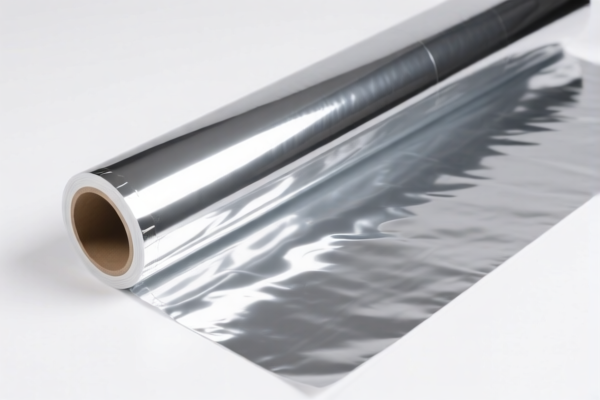


AI Analysis
🌟 Engineering Grade Reflective Film (工程级反光膜)
🌐 HS Code Reference & Customs Clearance Guide | 2026 Latest Tariff Analysis | Professional Leveling Strategy
📌 I. Product Definition & Classification Logic: What is "Engineering Grade"?
Engineering Grade Reflective Film (EG Film) is a high-intensity retroreflective material primarily used for traffic signs, vehicle markings, and safety barriers. Its core classification in international trade hinges on two factors: Material Composition (typically polymer/plastic substrate) and Physical Form (film/sheet/flexible plate).
⚠️ Critical Distinction Point:
- If classified strictly as a flexible plastic film or sheet without rigid backing → Often falls under Chapter 39 (Plastics).
- If classified as a finished reflective product or specialized sheet → May fall under different subheadings depending on thickness, adhesive backing, and specific chemical structure.
- Note: Under US HTSUS (Harmonized Tariff Schedule of the United States), these codes carry significant additional tariffs due to trade policies.
📦 II. HS Code Classification Details (Based on Provided Data)
| HS Code | Summary/Logic | Total Tax Rate | Tax Breakdown |
|---|---|---|---|
| 3926.90.99.25 | Considered a reflective material with a plastic/polymer substrate. Fits the logic of "Plastic Articles." | 22.8% | Base: 5.3% Additional: 7.5% Section 122: 10% |
| 3926.90.99.89 | Material is mainly plastic (polymer). Fits "Other Plastic Articles" regarding shape and material logic. | 22.8% | Base: 5.3% Additional: 7.5% Section 122: 10% |
| 3920.99.10.00 | Considered a plastic film form. Material is typically Polyester or plastic base. Fits "Other Plastic Plates, Sheets, Film." | 41.0% | Base: 6.0% Additional: 25.0% Section 122: 10% |
| 3919.90.50.10 | Use matches "Reflective Sheets." Form is flat. Material inferred as plastic. No conflict. | 40.8% | Base: 5.8% Additional: 25.0% Section 122: 10% |
| 3919.90.10.00 | Fits morphological characteristics. Material is plastic containing glass beads for reflection. | 41.5% | Base: 6.5% Additional: 25.0% Section 122: 10% |
🔍 Key Observation:
- Codes starting with 3926 ("Other articles of plastics") generally incur a lower total tariff (22.8%).
- Codes starting with 3919/3920 ("Self-adhesive plates/sheets" or "Plastic films") incur a higher total tariff (~41%) due to the higher "Additional Tariff" (25% vs 7.5%).
- Why the difference? Customs may view "Reflective Film" as a functional adhesive sheet (3919) or a raw plastic film (3920) rather than a "finished plastic article" (3926). Proper classification is critical to save ~18% in duties.
💰 III. 2026 Tariff Rate Breakdown (Detailed Tax Clauses)
✅ Applicable Country: United States (US)
✅ Origin: China (CN)
✅ Effective Time: 2025 onwards (Current trade policy)
🎯 Scenario A: Lower Tariff Path (HS Codes 3926.90.99.25 / .89)
| Item | Content |
|---|---|
| Base Tariff | 5.3% (General Rate) |
| Additional Tariff (Section 301/122 Context) | +7.5% (Targeted additional duty) |
| Section 122 Tariff | +10% (Specific policy tariff) |
| Total Weighted Rate | 22.8% |
| Tax Calculation | CIF Value × 22.8% |
| De Minimis Exemption | ❌ Not Eligible (High tariff goods usually excluded from de minimis) |
| Legal Basis Path | USITC:3926.90.99.25 → Additional Tariff: 7.5% → Section 122: 10% |
📌 Explanation:
- This classification treats the film as a "Plastic Article" rather than a specific plastic sheet or film.
- The 7.5% additional tariff is significantly lower than the 25% seen in other codes.
- Strategy: If the film can be demonstrated to be a "finished article" or "other plastic article" rather than a raw film, this code offers substantial savings.
🎯 Scenario B: Higher Tariff Path (HS Codes 3920.99.10.00, 3919.90.50.10, 3919.90.10.00)
| Item | Content |
|---|---|
| Base Tariff | 5.8% – 6.5% |
| Additional Tariff | +25.0% (Standard Section 301 Additional Duty) |
| Section 122 Tariff | +10% |
| Total Weighted Rate | 40.8% – 41.5% |
| Tax Calculation | CIF Value × ~41% |
| De Minimis Exemption | ❌ Not Eligible |
| Legal Basis Path | USITC:3920.99.10.00 → Additional Tariff: 25% → Section 122: 10% |
📌 Explanation:
- These codes classify the product as Plastic Film or Self-Adhesive Sheets.
- The 25% Additional Tariff is the standard heavy penalty for Chinese-origin plastic sheets/films.
- Risk: If customs inspectors view the reflective film as a "sheet" (3919) or "film" (3920) rather than an "article" (3926), the cost nearly doubles.
🛠️ IV. Customs Clearance Practical Advice (Pitfall Avoidance Guide)
✅ 1. Preparation Checklist (Must-Haves)
| Document | Required | Purpose |
|---|---|---|
| Product Spec Sheet | ✔️ | Detail material (e.g., PET, PVC), structure (beads, reflective layer), and usage. |
| Photos (Clear & Detailed) | ✔️ | Show cross-section (if possible) to prove it's a film/sheet vs. rigid plate. |
| Commercial Invoice | ✔️ | Must clearly state "Engineering Grade Reflective Film" and correct HS Code. |
| Material Declaration | ✔️ | Confirm polymer type (e.g., Polyester/PET) to support Chapter 39 classification. |
| Bill of Lading | ✔️ | Ensure description matches invoice. |
✅ 2. Classification Strategy (Key Advice)
🔥 “Argue for ‘Article,’ Not ‘Film’ if Possible!”
| Scenario | Recommended Approach | Risk of Wrong Classification |
|---|---|---|
| Rolls of Reflective Film | Attempt to justify 3926.90.99 (Other Plastic Articles) if it has pre-applied adhesive or is a finished reflective product. | If deemed "Plastic Film" (3920), tax jumps from 22.8% to 41%. |
| Raw Plastic Film (No Reflection) | Must use 3920/3919. | N/A (No alternative). |
| Reflective Film with Adhesive Backing | Strong case for 3919 (Self-adhesive sheets) but high tax. | Dispute with customs to see if it qualifies as "Article" (3926) to save 18%. |
| Finished Signage (Rigid) | Not reflective film; consider Chapter 39 or 73. | Misclassification leads to delays. |
✅ 3. Special Handling Tips
- Adhesive vs. Non-Adhesive: If the film is non-adhesive, 3926 is more likely. If it has a pressure-sensitive adhesive, 3919 is technically correct but expensive. Consult a broker on whether "Engineering Grade" implies a specific finished state.
- Section 122: All these codes attract an extra 10%. There is no exemption for standard reflective films from Section 122.
- Pre-Ruling: Given the 18% difference between 3926 and 3919/3920, apply for an Advance Ruling from US Customs (CBP) if importing large volumes.
🌍 V. Global Market Comparison (Quick Reference)
| Market | Typical HS Code Range | Est. Total Duty | Note |
|---|---|---|---|
| 🇺🇸 USA | 3926 / 3920 / 3919 | 22.8% – 41.5% | Heavy Section 301 + Section 122 tariffs. |
| 🇪🇺 EU | 3920 / 3919 | ~5% - 8% | Lower base duty, no 25% penalty. |
| 🇨🇳 China | 3920 / 3926 | 5% - 8% | Base import duty only. |
| 🇮🇳 India | 3920 / 3926 | 10% - 20% | BCD + SWS + IGST. |
📌 Conclusion:
The US market is the most expensive for Engineering Grade Reflective Film due to layered tariffs.
Saving Tip: If your product can be classified under 3926.90.99, you save ~18% compared to 3920/3919. Ensure your product description emphasizes "Plastic Article" characteristics over "Raw Film" characteristics.
📌 VI. Common Mistakes & Pitfalls
❌ Mistake 1: Automatically using 3920 (Plastic Film)
👉 Consequence: Pay 41% instead of 22.8%.
👉 Fix: Check if the film is a "finished article" (e.g., pre-cut, adhesive-backed for immediate sign application).
❌ Mistake 2: Ignoring Section 122
👉 Consequence: Unexpected 10% tariff at the border.
👉 Fix: Plan for the full 22.8% or ~41% in cost calculations.
❌ Mistake 3: Vague Description "Reflective Material"
👉 Consequence: CBP may reclassify to the highest applicable code.
👉 Fix: Use precise language: "Engineering Grade Reflective Film, Polymer Base, Non-Rigid."
✅ Correct Approach:
"Engineering Grade Reflective Film, Polymeric Material, Used for Traffic Signage, Flexible Sheet/Film"
🎯 VII. Conclusion: Classify Smartly, Save Big!
🎯 Remember the Mantra:
🔹 “Plastic Article (3926) = 22.8% | Plastic Film/Sheet (3919/3920) = ~41%”
🔹 “The 18% Difference is Worth the Argument!”
📌 Pro Tip:
If you are a high-volume importer, file for a CBP Binding Ruling before your first shipment. The cost of a ruling is minimal compared to paying an extra 18% on every container.
📣 Action Required:
📞 Contact a Licensed Customs Broker today.
📄 Provide Technical Data Sheets to negotiate for 3926.90.99.
🚀 Minimize Duty Burden, Maximize Profit Margins!
✨ Professional Classification Starts with Precision!
💼 Every Percent Saved is Pure Profit!
Customer Reviews
About HS Code Classification
The Harmonized System (HS) is an internationally standardized nomenclature developed by the World Customs Organization (WCO) to classify traded products. Over 200 countries use the HS system as the basis for customs tariffs, trade statistics, and import/export regulations.
Each HS code follows a hierarchical structure:
- Chapter (2 digits) — Broad category of goods (e.g., Chapter 84: Machinery and Mechanical Appliances)
- Heading (4 digits) — More specific grouping within the chapter
- Subheading (6 digits) — Internationally standardized breakdown, used by all WCO member countries
- National subdivisions (8-10 digits) — Country-specific extensions for further classification, such as US HTSUS 10-digit codes
Correct HS code classification is essential for smooth customs clearance, accurate duty payment, and compliance with trade regulations. Misclassification can lead to customs delays, overpayment of duties, or penalties.
When importing from CN to US, the applicable tariff rates may include:
- Most-Favored-Nation (MFN) rate — The standard duty rate applied to WTO members
- General rate — Applied to countries without trade agreements
- Trade remedy duties — Additional tariffs such as Section 301 (anti-dumping), Section 232 (national security), or countervailing duties
The information provided on this page is for reference purposes only. For official classification, please consult with your local customs authority or a licensed customs broker.