Ethylene Polymer Mixture For Injection Molding
CN → US| HS Code | Tariff Rate | Origin | Destination | Doc |
|---|---|---|---|---|
| 3902900050 | 41.5% | CN | US | Official Doc |
| 3902300000 | 41.5% | CN | US | Official Doc |
| 3901101000 | 41.5% | CN | US | Official Doc |
| 3901201000 | 41.5% | CN | US | Official Doc |
| 3901101000 | 41.5% | CN | US | Official Doc |
Product Images

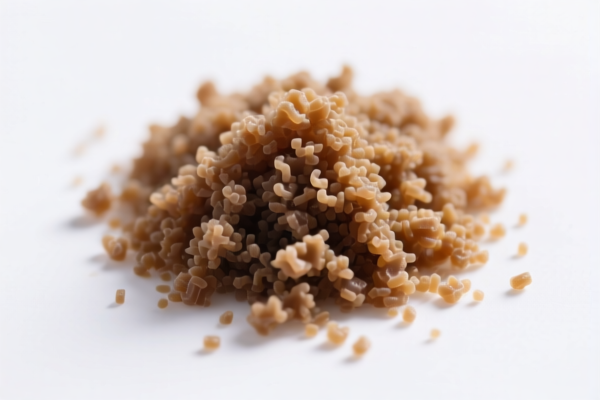
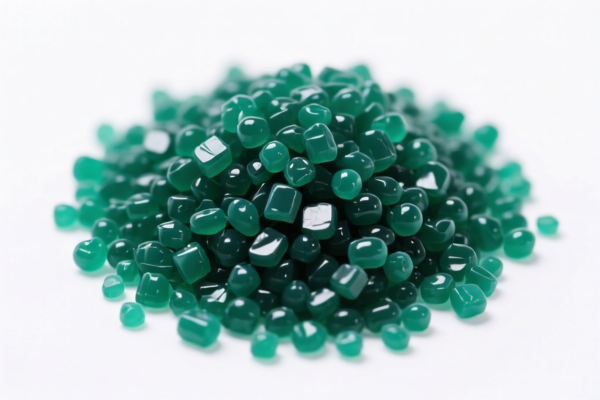
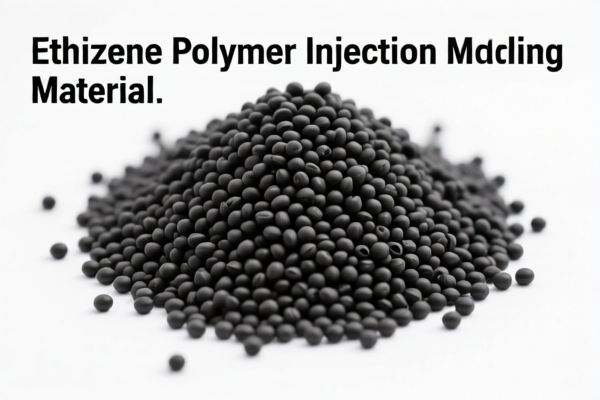
AI Analysis
🧪 Ethylene Polymer Mixture for Injection Molding
🌐 HS Code Reference & Clearance Guide | 2026 Latest Tariff Analysis | Professional Clearance Strategy
📌 I. Product Definition & Classification: Do You Understand "Ethylene Polymer Mixtures"?
Ethylene Polymer Mixture for Injection Molding refers to raw plastic materials primarily composed of ethylene units, designed for processing via injection molding machines. In international trade, these materials are classified under Chapter 39 (Plastics and Articles Thereof), specifically within the sub-heading for Polymers of Ethylene.
Despite the generic name "Mixture," customs classification depends heavily on the dominant polymer type and the physical form (usually primary forms like pellets, granules, or powders).
⚠️ Key Distinction Points:
- If the material is primarily Ethylene → Classify under Heading 3901.
- If the material is primarily Propylene or other olefins → Classify under Heading 3902.
- If the composition is complex/mixed without a single dominant olefin → May fall under 3902.90.
- Form Matters: All entries in the provided data specify "Primary Form" (pellets, granules, raw state), which is standard for injection molding feeds.
📦 II. HS Code Classification Details (Based on Provided Data)
| HS Code | Product Description | Application Scenario | Physical Form |
|---|---|---|---|
3902.90.00.50 |
Ethylene polymer mixture, for injection molding, classified under ethylene-type olefin polymers, primary form | Complex blends, non-specific olefin mixes | Primary Form (Pellets/Granules) |
3902.30.00.00 |
Ethylene polymer mixture, for injection molding, conforms to propylene or other olefin polymers category, primary form | Propylene-rich blends or specific olefin copolymers | Primary Form (Raw Shape) |
3901.10.10.00 |
Ethylene polymer mixture, for injection molding, material is ethylene polymer, primary form | Standard Polyethylene (PE) resins | Primary Form |
3901.20.10.00 |
Ethylene polymer mixture, for injection molding, material is ethylene polymer, pellet or raw material state | Pelletized Polyethylene for industrial use | Pellets/Raw Material |
3901.10.10.00 |
Ethylene polymer injection material, material is ethylene polymer, primary form | General PE injection molding grade | Primary Form |
🔍 Important Note:
- Although the product name suggests "Ethylene," codes under 3902 (Propylene/Other Olefins) are listed in the data. This implies the "Mixture" may contain significant propylene or other alpha-olefins, or the classification strategy allows flexibility based on specific supplier declarations.
- Do Not Split Shipments: If the goods are a homogeneous mixture, they must be declared under one HS code. Do not split into multiple lines to manipulate tariffs.
💰 III. 2026 Latest Tariff Rate Breakdown (Including Surcharges & Policy Add-ons)
✅ Applicable Country: United States (US)
✅ Country of Origin: China (CN)
✅ Effective Date: Rates apply to imports from China
🎯 Unified Tariff Structure for All Listed Codes
According to the provided data, all listed HS codes share the exact same tax structure for Chinese-origin goods.
| Item | Detail |
|---|---|
| HS Codes Covered | 3902.90.00.50, 3902.30.00.00, 3901.10.10.00, 3901.20.10.00 |
| Basic Customs Duty (MFN) | 6.5% |
| Section 301 Surcharge (Additional Tariff) | 25.0% |
| Section 122 Tariff (IEEPA/Specific Clause) | 10.0% |
| Total Tax Rate | 41.5% |
| Tax Calculation | CIF Value × 41.5% |
| De Minimis Exemption | ❌ Not Eligible (These are bulk industrial raw materials, not de minimis shipments) |
📌 Explanation of Tax Components:
- Basic Duty (6.5%): The standard Most Favored Nation (MFN) tariff rate for plastics/polyethylene/propylene under the Harmonized Tariff Schedule (HTS).
- Section 301 Surcharge (25%): Imposed under US Trade Law Section 301 on goods from China, targeting industrial inputs like polymers.
- Section 122 Tariff (10%): A specific additional tariff clause (often related to national security or trade remedies under IEEPA) applied to this category.
- Total Burden: 41.5% is a high tariff burden. This significantly impacts cost competitiveness for US importers.
🛠️ IV. Clearance Operational Advice (Practical Pitfall Avoidance Guide)
✅ 1. Documentation Checklist (Mandatory)
| Document | Required | Description |
|---|---|---|
| ✅ Commercial Invoice | ✔️ | Must clearly state: "Ethylene Polymer Mixture for Injection Molding," CIF value, and HS Code. |
| ✅ Packing List | ✔️ | Detail net weight, gross weight, and package count (bags/pallets). |
| ✅ Certificate of Origin (CO) | ✔️ | Crucial: Must confirm Chinese origin to apply Section 301 & 122 correctly. |
| ✅ Product Specification Sheet | ✔️ | Must include: Polymer type (PE/PP), Melt Flow Index (MFI), density, and intended use (Injection Molding). |
| ✅ Material Safety Data Sheet (MSDS) | ✔️ | Required for chemical compliance and safe handling during customs inspection. |
| ✅ Bill of Lading (B/L) | ✔️ | Ensure commodity description matches invoice exactly. |
✅ 2. Declaration Tips (Key Mantras)
🔥 "Describe Accurately, Don't Hide Origins, Match the Code, Avoid Penalties!"
| Scenario | Correct Declaration | Incorrect Practice |
|---|---|---|
| Pure Polyethylene (PE) | 3901.10.10.00 or 3901.20.10.00 |
Misdeclaring as "Plastic Granules" under generic code → Risk of audit |
| Propylene/Olefin Mix | 3902.30.00.00 |
Forcing declaration into 3901 → Classification error |
| Complex Mixture | 3902.90.00.50 |
Ambiguous description "Plastic Mix" → Customs delay |
| OEM Private Label | Include Buyer Info + Supplier Info | Missing supplier details → Prohibited by US CBP for origin verification |
✅ 3. Special Case Handling
| Situation | Handling Advice |
|---|---|
| Multi-Component Blends | If the mixture contains >10% other non-olefin polymers, re-evaluate HS Code. If it’s still primarily olefin-based, current codes apply. |
| Colorants/Additives | If additives make up <5% by weight, classify by base polymer. If >5%, consult customs broker for potential reclassification. |
| Recycled Content | If using post-consumer recycled ethylene polymers, ensure documentation supports "Recycled" status if claiming any preferential treatment (though 41.5% likely still applies). |
| Free Trade Agreements (FTA) | ❌ No FTA Benefit: China is not part of US FTAs (like USMCA). No tariff reduction possible via FTA. |
🌍 V. Global Market Clearance Comparison (2026 Latest)
| Country/Region | Recommended HS Code | Tariff (China Origin) | Certification Requirements | Notes |
|---|---|---|---|---|
| 🇺🇸 United States | 3901.10.10.00 / 3902.30.00.00 |
41.5% | None for plastics | High tariff burden; Section 301 & 122 apply |
| 🇨🇳 China | 3901.10.10.00 |
~1% - 6.5% | None | Low import duty for foreign polymers |
| 🇪🇺 European Union | 3901.10.90 |
~6.5% | REACH Registration | REACH compliance is mandatory for chemical substances |
| 🇯🇵 Japan | 3901.10.000 |
~0% - 6% | Food Safety (if applicable) | Generally lower tariffs than US |
| 🇻🇳 Vietnam | 3901.10.90 |
~0% - 5% | None | Potential for supply chain shift to avoid US tariffs |
📌 Conclusion:
- The US is the most expensive market for this product due to the 41.5% total tax rate.
- EU and Japan have significantly lower baseline tariffs.
- Strategic Suggestion: If targeting the US market, consider supply chain diversification (e.g., sourcing from Vietnam, Malaysia, or Middle East) to mitigate Section 301 duties, provided the Rules of Origin are met.
📌 VI. Common Errors & Pitfall Guide (Lessons Learned)
❌ Error 1: Declaring "Plastic Pellets" without specifying "Ethylene Polymer"
👉 Consequence: Customs may detain shipment for classification review → Delay & Storage Fees
❌ Error 2: Ignoring the "Section 122" and "301" surcharges in cost calculation
👉 Consequence: Under-quoting CIF value → Budget Overrun & Profit Loss
❌ Error 3: Using generic "Polymer" in the description
👉 Consequence: CBP may assess highest possible duty rate → Audit Risk
❌ Error 4: Claiming FTA benefit for Chinese goods
👉 Consequence: Penalty & Fraud Accusations → China has no US FTA.
✅ Correct Practice:
"Ethylene Copolymer Resin, Injection Molding Grade, Pellets, 1000 Bags, Origin: China, HS: 3901.10.10.00"
🎯 VII. Conclusion: Professional Declaration, Save Costs, Ensure Compliance
🎯 Remember the Mantra:
🔹 "41.5% is the number, 301 & 122 are the traps, Don't split the shipment, Origin is the key!"
🔹 "HS Code determines tax, 41.5% is steep, Declare honestly, sleep at night!"
📌 Pro Tip:
If your polymer mixture is not exclusively from China (e.g., blended with US-sourced or third-country material), consult a customs attorney for substantial transformation rules. However, if 100% Chinese, the 41.5% rate is mandatory.
📣 Immediate Action:
📞 Contact a licensed US Customs Broker
📤 Provide Product Spec Sheet + MSDS
📊 Calculate Landed Cost with 41.5% Duty before placing orders
✨ Professional Clearance Starts with Precise Classification!
💼 Every cent of tax is a cent of profit lost—optimize your supply chain today!
Customer Reviews
About HS Code Classification
The Harmonized System (HS) is an internationally standardized nomenclature developed by the World Customs Organization (WCO) to classify traded products. Over 200 countries use the HS system as the basis for customs tariffs, trade statistics, and import/export regulations.
Each HS code follows a hierarchical structure:
- Chapter (2 digits) — Broad category of goods (e.g., Chapter 84: Machinery and Mechanical Appliances)
- Heading (4 digits) — More specific grouping within the chapter
- Subheading (6 digits) — Internationally standardized breakdown, used by all WCO member countries
- National subdivisions (8-10 digits) — Country-specific extensions for further classification, such as US HTSUS 10-digit codes
Correct HS code classification is essential for smooth customs clearance, accurate duty payment, and compliance with trade regulations. Misclassification can lead to customs delays, overpayment of duties, or penalties.
When importing from CN to US, the applicable tariff rates may include:
- Most-Favored-Nation (MFN) rate — The standard duty rate applied to WTO members
- General rate — Applied to countries without trade agreements
- Trade remedy duties — Additional tariffs such as Section 301 (anti-dumping), Section 232 (national security), or countervailing duties
The information provided on this page is for reference purposes only. For official classification, please consult with your local customs authority or a licensed customs broker.