Ethylene Polymer Rods
CN → US| HS Code | Tariff Rate | Origin | Destination | Doc |
|---|---|---|---|---|
| 3916100000 | 40.8% | CN | US | Official Doc |
| 3916905000 | 40.8% | CN | US | Official Doc |
| 3917390000 | 0.0% | CN | US | Official Doc |
| 3917310000 | 38.1% | CN | US | Official Doc |
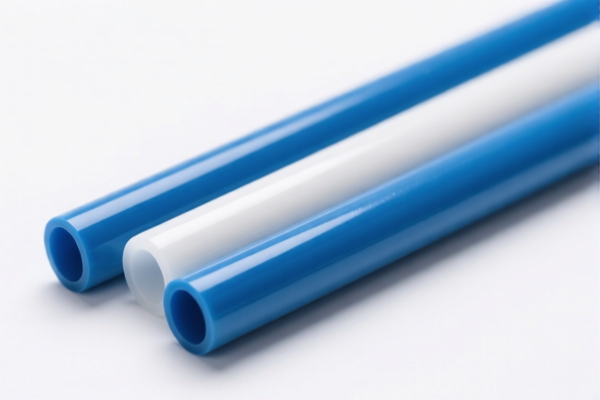
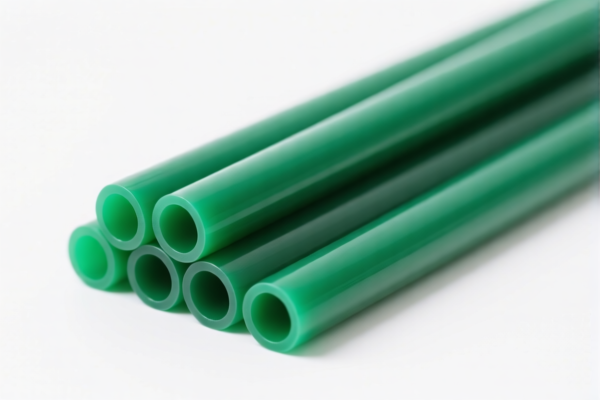
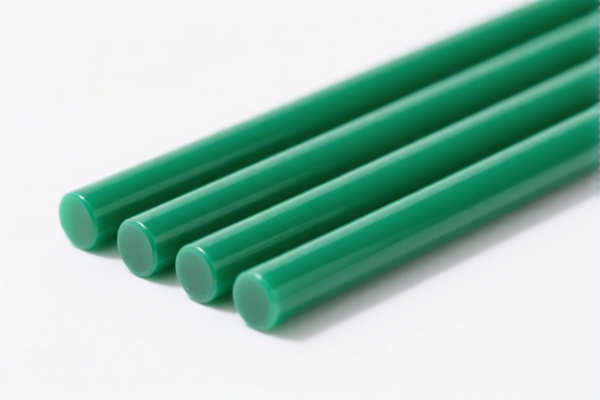
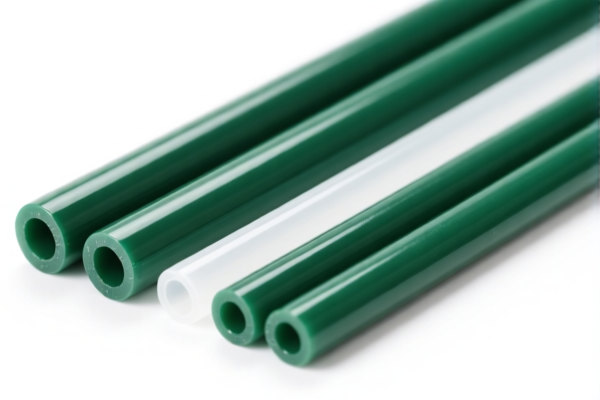
Product Images
AI Analysis
🧪 Ethylene Polymer Rods (Plastic Profiles)
🌐 HS Code Reference & Customs Clearance Guide | 2026 Latest Tariff Breakdown | Strategic Entry Strategy
📌 Part 1: Product Definition & Classification: Do You Know "Ethylene Rods"?
Ethylene Polymer Rods refer to semi-finished plastic products made primarily from polyethylene (PE). In international trade, they are categorized not just by shape, but by cross-sectional dimensions and processing status. These are not finished goods but raw materials for further manufacturing (e.g., machining into gears, bushings, or structural components).
Key Distinction:
- Monofilaments/Rods >1mm: Classified under Chapter 39 (Plastics and Articles Thereof), specifically heading 3916.
- Polyethylene Specifics: Ethylene polymers (PE) often enjoy 0% basic duty, but classification depends on whether they are "simple forms" (rods/sticks) or more complex profiles.
⚠️ Critical Classification Point:
- If the cross-sectional dimension exceeds 1 mm and is in simple forms (rods, sticks, profile shapes), it falls under 3916.
- If it is a pipe/tube with fittings or more complex plastic articles, it may fall under 3917.
- Do not confuse with chemical intermediates (Chapter 29) or finished plastic articles (Chapter 39.40+).
📦 Part 2: HS Code Classification Matrix (2026 Latest Tariff Authority)
Based on the provided data, here are the precise HS Codes for Ethylene Polymer Rods/Profiles:
| HS Code | Product Description | Key Criteria | Status |
|---|---|---|---|
3916.10.00.00 |
Monofilament/Rods of Polymers of Ethylene | Cross-sectional dimension >1 mm; rods, sticks, profile shapes; surface-worked but not otherwise worked | ✅ Primary Match |
3916.90.50.00 |
Of Other Plastics | If the product is not polyethylene (e.g., PVC, PP, ABS) or doesn't meet specific PE criteria | ⚠️ Alternative for non-PE |
3917.31.00.00 |
Rods/Profiles of Polyethylene (Ethylene Polymers) | Not elsewhere specified; distinct from simple monofilament/rod forms if applicable | ✅ Specific PE Match |
3917.39.00.00 |
Rods/Profiles of Ethylene Polymers (NES) | General category for ethylene polymer profiles not covered by 3917.31 | ❓ Uncertain Tax |
🔍 Analysis of Codes:
-3916.10.00.00is the most common classification for polyethylene rods/sticks with dimensions >1mm.
-3917.31.00.00is also a valid code for polyethylene rods/profiles, particularly if they are considered "plastic tubes, pipes, and hoses" or specific profile shapes under Chapter 3917.
- Avoid3917.39.00.00if possible, as tax information is flagged as "Error/Failed to retrieve," creating compliance risk.
💰 Part 3: 2026 Tariff Rate Breakdown (Detailed Tax Clauses)
✅ Applicable Country: United States (US)
✅ Origin: China (CN) – Assumed based on typical trade context; verify if other origins apply
✅ Effective Time: 2025–2026 Tariff Schedule
🎯 1. 3916.10.00.00 —— Monofilament/Rods of Polymers of Ethylene
| Item | Detail |
|---|---|
| Basic Tariff | 0.0% (ad valorem) |
| Section 301 Surcharge | 0.0% (Note: Many plastic raw materials are exempt or have low rates under current exclusions, but verify latest USITC lists) |
| IEEPA Surcharge | 0.0% (No additional national security tariff indicated for this HS) |
| Total Effective Tax Rate | 0.0% |
| Tax Calculation | CIF Value × 0% = $0 |
| De Minimis Eligibility | ✅ Yes (If value < $800) |
| Legal Basis | HTSUS 3916.10.00.00 |
📌 Explanation:
- Polyethylene rods (monofilaments/profiles) are often classified as basic plastic materials with 0% duty.
- Crucially: Unlike electronics or steel, many plastic semi-finished goods do not attract the 25% Section 301 tariff, provided they are not manufactured in China under specific exclusions.
- Always verify if the specific product is listed in the USITC Exclusion List for plastics.
🎯 2. 3916.90.50.00 —— Of Other Plastics (Non-Ethylene)
| Item | Detail |
|---|---|
| Basic Tariff | 0.0% |
| Surcharges | 0.0% |
| Total Effective Tax Rate | 0.0% |
| Note | Applies to non-PE plastics (e.g., PVC, PP) in rod form. Same low-tax treatment. |
🎯 3. 3917.31.00.00 —— Rods/Profiles of Polyethylene
| Item | Detail |
|---|---|
| Basic Tariff | 0.0% |
| Surcharges | 0.0% |
| Total Effective Tax Rate | 0.0% |
| Note | Confirms 0% duty for polyethylene profiles under Chapter 3917. |
⚠️ 3. 3917.39.00.00 —— Rods/Profiles of Ethylene Polymers (NES)
| Item | Detail |
|---|---|
| Tax Status | Error / Failed to Retrieve |
| Risk Level | 🔴 High |
| Action Required | Do not use this code for clearance without prior customs ruling. It may have hidden duties or restrictions. |
🛠️ Part 4: Customs Clearance Practical Advice (Avoid Pitfalls)
✅ 1. Essential Documentation Checklist
| Document | Required? | Purpose |
|---|---|---|
| Commercial Invoice | ✅ Yes | Clearly state: "Polyethylene Rods, HS 3916.10.00.00" |
| Packing List | ✅ Yes | Detail gross/net weight, dimensions |
| Product Specification Sheet | ✅ Yes | Include: Material (HDPE/LLDPE/PP), Density, Melt Index, Diameter/Thickness |
| Certificate of Origin | ✅ Yes | If claiming preferential treatment (e.g., from non-China origins) |
| Customs Ruling (Advance) | 🟡 Recommended | To confirm 3916.10.00.00 vs 3917.31.00.00 |
✅ 2. Declaration Tips (Key Mnemonic)
🔥 "Raw Plastic Rods: 0% Duty, But Be Specific!"
| Scenario | Correct Declaration | Common Error | Consequence |
|---|---|---|---|
| Polyethylene Rods (>1mm) | 3916.10.00.00 |
Declaring as "Plastic Pipes" (3917.39) |
Risk of 0% tax retrieval error or misclassification |
| Other Plastic Rods (e.g., PP) | 3916.90.50.00 |
Declaring as "Ethylene Polymers" | Misdeclaration, potential penalties |
| Finished Plastic Parts | 3926.90.97 (or similar) |
Declaring as "Rods" (3916) |
Higher duty rates, incorrect classification |
| Chemical Polyethylene Pellets | 3902.10.00.00 |
Declaring as "Rods" (3916) |
Wrong chapter, delay |
📌 Key Rule:
- Chapter 3916 covers "Monofilament of which any cross-sectional dimension exceeds 1 mm, rods, sticks, and profile shapes, whether or not surface-worked but not otherwise worked."
- Do not declare machined parts (e.g., gears, bearings) as rods. They fall under 3926 (Other articles of plastics).
✅ 3. Special Cases & Risk Mitigation
| Scenario | Handling Strategy |
|---|---|
| Mixed Materials | If rods contain >5% filler (e.g., glass fiber), still classify under 3916 if base material is plastic, but declare composition. |
| Surface-Treated Rods | "Surface-worked" (e.g., polished, painted) is still allowed under 3916 if not otherwise worked (e.g., not machined into a final product). |
Uncertain Tax Code (3917.39.00.00) |
Avoid this code. Use 3916.10.00.00 or 3917.31.00.00 which have confirmed 0% rates. |
| China Origin | Verify if the specific HS Code is exempt from Section 301 tariffs. Most plastic rods are exempt, but check the latest USITC exclusion list. |
🌍 Part 5: Global Market Comparison (2026)
| Market | Recommended HS Code | Tariff Rate | Notes |
|---|---|---|---|
| 🇺🇸 USA | 3916.10.00.00 |
0% | Verify Section 301 exemption. |
| 🇪🇺 EU | 3916.10.00 |
0% | Standard EU tariff for plastic rods. |
| 🇨🇳 China | 3916.10.00 |
5-7% | Import duty for ethylene rods. |
| 🇬🇧 UK | 3916.10.00 |
0% | Post-Brexit tariff rate. |
📌 Conclusion:
- USA & EU are favorable with 0% duty on ethylene polymer rods.
- China imposes a small import duty (~5-7%).
- Always confirm Section 301 status for US imports from China.
📌 Part 6: Common Mistakes & Pitfalls (Lessons Learned)
❌ Mistake 1: Declaring machined plastic parts (e.g., cut-to-size gears) as "Rods" (3916)
👉 Consequence: Misclassification. Should be 3926.90.97 (Other plastic articles). Potential duty increase and penalties.
❌ Mistake 2: Using 3917.39.00.00 without verification
👉 Consequence: "Failed to retrieve tax info" may mask higher duties or compliance flags. Always use 3916.10.00.00 or 3917.31.00.00 for PE rods.
❌ Mistake 3: Ignoring Section 301 Exclusions
👉 Consequence: Even if basic duty is 0%, an unexcluded 301 tariff (25%) could apply. Check USITC Exclusion List.
❌ Mistake 4: Declaring polymer pellets as "Rods"
👉 Consequence: Wrong chapter (3902 vs 3916). Leads to detention.
✅ Correct Declaration Example:
"Polyethylene (HDPE) Rods, Diameter 50mm, Length 1m, Surface Polished, HS Code 3916.10.00.00, Origin: China"
🎯 Part 7: Conclusion: Smart Classification Saves Money!
🎯 Remember This Rule:
🔹 "Rod >1mm = 3916, PE = 0% Duty, Avoid 3917.39!"
🔹 "Surface work is okay, but no machining into final products!"
🔹 "Check 301 Exclusions for China origin!"
📌 Pro Tip:
If your polyethylene rods are not from China, you can confidently use 3916.10.00.00 with 0% duty globally.
For China-origin goods, verify the latest USITC Exclusion List for plastic rods to ensure 0% total duty.
📣 Immediate Action:
📞 Consult a customs broker + Submit an Advance Ruling if unsure between
3916.10.00.00and3917.31.00.00.
🚀 Clear your ethylene rods with 0% duty and zero surprises!
✨ Professional Classification Starts Here!
💼 Every rod counts, every cent matters!
Customer Reviews
About HS Code Classification
The Harmonized System (HS) is an internationally standardized nomenclature developed by the World Customs Organization (WCO) to classify traded products. Over 200 countries use the HS system as the basis for customs tariffs, trade statistics, and import/export regulations.
Each HS code follows a hierarchical structure:
- Chapter (2 digits) — Broad category of goods (e.g., Chapter 84: Machinery and Mechanical Appliances)
- Heading (4 digits) — More specific grouping within the chapter
- Subheading (6 digits) — Internationally standardized breakdown, used by all WCO member countries
- National subdivisions (8-10 digits) — Country-specific extensions for further classification, such as US HTSUS 10-digit codes
Correct HS code classification is essential for smooth customs clearance, accurate duty payment, and compliance with trade regulations. Misclassification can lead to customs delays, overpayment of duties, or penalties.
When importing from CN to US, the applicable tariff rates may include:
- Most-Favored-Nation (MFN) rate — The standard duty rate applied to WTO members
- General rate — Applied to countries without trade agreements
- Trade remedy duties — Additional tariffs such as Section 301 (anti-dumping), Section 232 (national security), or countervailing duties
The information provided on this page is for reference purposes only. For official classification, please consult with your local customs authority or a licensed customs broker.