Ethylene Vinyl Acetate (EVA) Copolymer
CN → US| HS Code | Tariff Rate | Origin | Destination | Doc |
|---|---|---|---|---|
| 6406903060 | 15.3% | CN | US | Official Doc |
| 3901302000 | 35.0% | CN | US | Official Doc |
| 3901306000 | 40.3% | CN | US | Official Doc |
| 3901909000 | 41.5% | CN | US | Official Doc |
Product Images

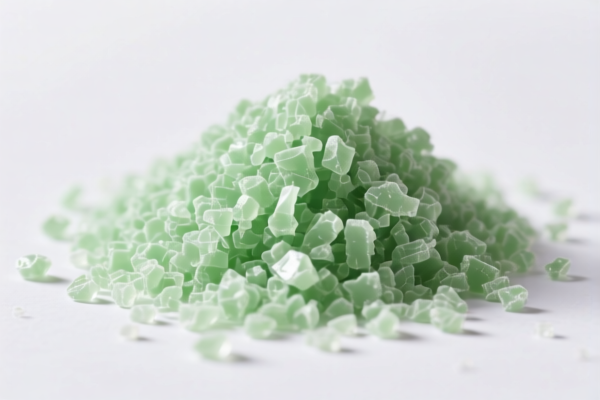

AI Analysis
🧪 Ethylene Vinyl Acetate (EVA) Copolymer – Precision HS Code Classification & Tax Strategy
🌐 HS Code Reference & Customs Clearance Guide | 2026 Latest Tariff Analysis | Professional Compliance Strategy
📌 Part 1: Product Definition – Do You Truly Understand “EVA”?
Ethylene Vinyl Acetate (EVA) is a versatile thermoplastic polymer renowned for its flexibility, transparency, and shock absorption. In international trade, it is classified under Chapter 39 (Plastics and Articles Thereof), specifically as “Polymers of Ethylene, in Primary Forms”.
However, not all EVA is created equal. The customs classification depends heavily on the Vinyl Acetate (VA) content and the specific copolymer type. Misclassification can lead to severe penalties due to the significant tax difference between general EVA and specialized terpolymers.
⚠️ Critical Distinction Point:
- General EVA Copolymers: Standard Ethylene-Vinyl Acetate mixtures → HS 3901.30.60.00
- Specialized Terpolymers (VA-VC-Ethylene): Containing Vinyl Chloride, with <50% VA content → HS 3901.30.20.00
- Footwear Parts: If the EVA is already shaped into shoe uppers/parts → HS 6406.xxxxxxxx (Different Chapter!)
📦 Part 2: HS Code Classification Details (2026 Authorized Tariff Match)
Based on the provided data, here are the exact HS Codes and their corresponding tax implications:
| HS Code | Product Description | Tax Rate (Total) | Key Classification Criteria |
|---|---|---|---|
3901.30.60.00 |
Polymers of ethylene: Ethylene-vinyl acetate copolymers: Other | 0.0% | ✅ Standard EVA copolymers (primary form). ✅ No specific VA limit mentioned beyond general EVA definition. ✅ Most common for general industrial EVA. |
3901.30.20.00 |
Ethylene-vinyl acetate-vinyl chloride terpolymers: <50% VA by weight, non-aromatic | 25.0% | ⚠️ Specific Terpolymer: Contains Vinyl Chloride. ⚠️ VA Content: Must be less than 50%. ⚠️ Monomers: Must not be polymerized from aromatic/modified aromatic monomers. |
6406.10.45.00 |
Parts of footwear: Uppers... Of rubber/plastics >90%... Not suitable to be finished into footwear | 0.0% | ✅ Pre-formed Upper: Already shaped into a shoe upper. ✅ Material: >90% rubber/plastics. ✅ Condition: NOT suitable for finishing into footwear (i.e., it’s a finished component or rejects). ✅ Design: Has foxing-like band or designed as protection overlay. |
6406.90.30.60 |
Parts of footwear: Other: Of other materials: Of rubber or plastics | 0.0% | ✅ Other Footwear Parts: Not uppers (e.g., heels, midsoles, decorative parts). ✅ Material: Rubber or Plastics. ✅ Category: “Other” materials not covered in specific upper categories. |
🔍 Key Takeaway:
- If you are exporting raw EVA pellets/boards → Check VA content and monomer type.
- If you are exporting finished shoe parts → Classify under Chapter 64, not Chapter 39.
- Tax Gap: 0% vs. 25% is massive! Do not confuse standard EVA with VA-VC-Ethylene terpolymers.
💰 Part 3: 2026 Tariff Rate Breakdown (Detailed Tax Clauses)
✅ Applicable Market: United States (US)
✅ Origin: China (CN)
✅ Data Source: Provided XML Data
🎯 1. 3901.30.60.00 – Standard Ethylene-Vinyl Acetate Copolymers
| Item | Details |
|---|---|
| Product | General EVA Copolymers (Primary Form) |
| Base Tariff | 0.0% |
| Additional Tariff | 0.0% |
| Total Tax Rate | 0.0% |
| Tax Detail | 基础关税: 0.0%, 加征关税: 0.0% |
| Legal Basis | Chapter 39 Note 2 (Copolymers) + HTSUS 3901.30 |
📌 Explanation:
- This is the default category for most EVA resins, films, and sheets used in packaging, footwear midsoles, and adhesives.
- Zero Duty Advantage: No base or additional tariffs apply. Ideal for high-volume, standard EVA exports.
🎯 2. 3901.30.20.00 – Specialized Terpolymers (VA-VC-Ethylene)
| Item | Details |
|---|---|
| Product | Ethylene-Vinyl Acetate-Vinyl Chloride Terpolymers |
| Base Tariff | 0.0% |
| Additional Tariff | 25.0% |
| Total Tax Rate | 25.0% |
| Tax Detail | 基础关税: 0.0%, 加征关税: 25.0% |
| Legal Basis | Chapter 39 Note 2 + HTSUS 3901.30.20 |
📌 Explanation:
- Why 25%? This specific classification targets terpolymers with <50% VA content. These are often used in industrial coatings or specialized plastics where vinyl chloride adds durability.
- Crucial Condition: If the VA content is ≥50%, or if aromatic monomers are used, this code does not apply.
- Risk: Many exporters mislabel terpolymers as standard EVA to avoid tariffs. Customs may challenge this if lab tests show Vinyl Chloride presence.
🎯 3 & 4. Footwear Parts (HS 6406.10.45.00 & 6406.90.30.60)
| Item | Details |
|---|---|
| Product | Footwear Parts (Uppers/Other) made of Rubber/Plastics |
| Base Tariff | 0.0% |
| Additional Tariff | 0.0% |
| Total Tax Rate | 0.0% |
| Tax Detail | 基础关税: 0.0%, 加征关税: 0.0% |
📌 Explanation:
- These items are not classified as “Plastics” (Chapter 39) because they are recognizable as parts of footwear (Chapter 64).
- Condition for 6406.10.45.00: The upper must be pre-formed and not suitable for finishing into footwear (e.g., it’s a finished component or a protective overlay).
- Condition for 6406.90.30.60: Applies to other footwear parts (heels, soles, etc.) made of rubber/plastics.
🛠️ Part 4: Customs Clearance Practical Advice (Pitfall Avoidance Guide)
✅ 1. Documentation Checklist (Non-Negotiable)
| Document | Required | Purpose |
|---|---|---|
| ✅ Product Specification Sheet | ✔️ | Must specify Monomer Type (Ethylene + VA vs. Ethylene + VA + VC) and VA Content %. |
| ✅ Laboratory Test Report | ✔️ | Critical for HS 3901.30.20.00. Proves VA content is <50% and identifies Vinyl Chloride presence. |
| ✅ Product Photos | ✔️ | Show form factor: Pellets/Sheets (Ch39) vs. Pre-formed Shoe Uppers (Ch64). |
| ✅ Commercial Invoice | ✔️ | Clearly state “Ethylene-Vinyl Acetate Copolymer” or “Terpolymer” – Do not use vague terms like “Plastic Granules”. |
| ✅ COO (Certificate of Origin) | ✔️ | Required for tariff verification. |
✅ 2. Classification Strategy (Key Rules)
🔥 “Raw Material? Check Monomers! Finished Shoe Part? Check Chapter 64!”
| Scenario | Correct HS Code | Tax | Why? |
|---|---|---|---|
| Standard EVA Pellets (General use) | 3901.30.60.00 |
0% | No Vinyl Chloride; General EVA definition. |
| EVA-VC Terpolymer (VA < 50%, Non-aromatic) | 3901.30.20.00 |
25% | Specific legal definition triggers additional tariff. |
| Pre-formed Shoe Upper (EVA/Plastic, >90%) | 6406.10.45.00 |
0% | Classified as footwear part, not raw plastic. |
| Other EVA Shoe Parts (Heels/Soles) | 6406.90.30.60 |
0% | Footwear parts fall under Chapter 64. |
⚠️ Warning:
- Do NOT classify pre-formed shoe uppers under3901.30.60.00. Even if made of EVA, Chapter 64 prevails for recognizable parts.
- Do NOT assume all EVA is 0%. If your formula includes Vinyl Chloride and VA is <50%, you are liable for 25%.
✅ 3. Special Handling Tips
| Situation | Recommendation |
|---|---|
| OEM EVA Pellets for Footwear Makers | Declare as Chapter 39. Provide formula to prove VA >50% or no VC. |
| Exporting Pre-Made Shoe Uppers | Declare as Chapter 64. Include tech pack showing it’s a “finished upper.” |
| Mixed Shipment (Pellets + Shoe Parts) | Split Declaration! Do not lump together. Different HS Codes = Different taxes. |
| Lab Test Dispute | If customs questions VA content, provide ISO/IEC 17025 certified lab report showing exact monomer ratios. |
🌍 Part 5: Global Market Comparison (2026 Context)
| Market | Recommended HS Code | Tax Rate (China Origin) | Notes |
|---|---|---|---|
| 🇺🇸 USA | 3901.30.60.00 |
0% | Zero duty for standard EVA. |
| 🇺🇸 USA | 3901.30.20.00 |
25% | High tariff for VA-VC-ET terpolymers. |
| 🇺🇸 USA | 6406.xxxx |
0% | Footwear parts are duty-free. |
| 🇪🇺 EU | 3901.30.60 |
6.5% | Standard duty for EVA (not 0%). |
| 🇨🇳 China | 3901.30.60 |
1.2% | Low import duty for raw EVA. |
📌 Conclusion:
- USA is duty-free for standard EVA, but 25% for specific terpolymers.
- EU and other markets may charge 6-8% on EVA, so US is the most favorable for standard EVA exports.
- Footwear parts are generally 0% in the US, making Chapter 64 classification advantageous if applicable.
📌 Part 6: Common Mistakes & Pitfalls (Lessons Learned)
❌ Mistake 1: Calling “EVA-VC Terpolymer” just “EVA Copolymer”
👉 Consequence: Customs detects Vinyl Chloride → Reassigned to 3901.30.20.00 → 25% back-tariff + penalties!
❌ Mistake 2: Classifying pre-formed shoe uppers under Chapter 39
👉 Consequence: Even if tax is 0%, it’s a classification error. May delay shipment or trigger audit for “misdescription.”
❌ Mistake 3: Ignoring VA Content in Terpolymers
👉 Consequence: If VA content is ≥50%, it may not fit 3901.30.20.00 but might fall into a different unlisted category with unclear tariffs. Provide precise specs.
✅ Correct Practice:
“Ethylene-Vinyl Acetate Copolymer, Primary Form, VA Content: 28%, No Vinyl Chloride” →
3901.30.60.00(0%)
“EVA Shoe Upper, Pre-formed, Plastic Material” →6406.10.45.00(0%)
🎯 Part 7: Final Advice – Professional Declaration, Cost Optimization!
🎯 Remember the Mantra:
🔹 “Raw EVA? Check VA & VC! <50% VA + VC = 25%!”
🔹 “Shoe Part? Chapter 64 Always! 0% Duty!”
🔹 “Be Precise, Avoid Penalties!”
📌 Pro Tip:
- If your product is a standard EVA resin, emphasize “No Vinyl Chloride” and “General Purpose” in the invoice.
- If it’s a specialty terpolymer, ensure your lab report is ready to prove VA <50% and non-aromatic status.
- Always declare footwear parts separately from raw plastics to avoid confusion.
📣 Action Item:
📞 Contact Your Customs Broker
📄 Provide Lab Reports & Technical Specs
🚀 Secure 0% Duty on Standard EVA, Pay Only 25% When Required by Law!
✨ Professional Customs Clearance Starts with Accurate Classification!
💼 Every Percent Saved is Profit Gained!
Customer Reviews
About HS Code Classification
The Harmonized System (HS) is an internationally standardized nomenclature developed by the World Customs Organization (WCO) to classify traded products. Over 200 countries use the HS system as the basis for customs tariffs, trade statistics, and import/export regulations.
Each HS code follows a hierarchical structure:
- Chapter (2 digits) — Broad category of goods (e.g., Chapter 84: Machinery and Mechanical Appliances)
- Heading (4 digits) — More specific grouping within the chapter
- Subheading (6 digits) — Internationally standardized breakdown, used by all WCO member countries
- National subdivisions (8-10 digits) — Country-specific extensions for further classification, such as US HTSUS 10-digit codes
Correct HS code classification is essential for smooth customs clearance, accurate duty payment, and compliance with trade regulations. Misclassification can lead to customs delays, overpayment of duties, or penalties.
When importing from CN to US, the applicable tariff rates may include:
- Most-Favored-Nation (MFN) rate — The standard duty rate applied to WTO members
- General rate — Applied to countries without trade agreements
- Trade remedy duties — Additional tariffs such as Section 301 (anti-dumping), Section 232 (national security), or countervailing duties
The information provided on this page is for reference purposes only. For official classification, please consult with your local customs authority or a licensed customs broker.