Fabric (not exceeding 70g per square meter)
CN → US| HS Code | Tariff Rate | Origin | Destination | Doc |
|---|---|---|---|---|
| 5407619905 | 49.9% | CN | US | Official Doc |
| 5407710015 | 49.9% | CN | US | Official Doc |
| 5208214020 | 45.2% | CN | US | Official Doc |
Product Images
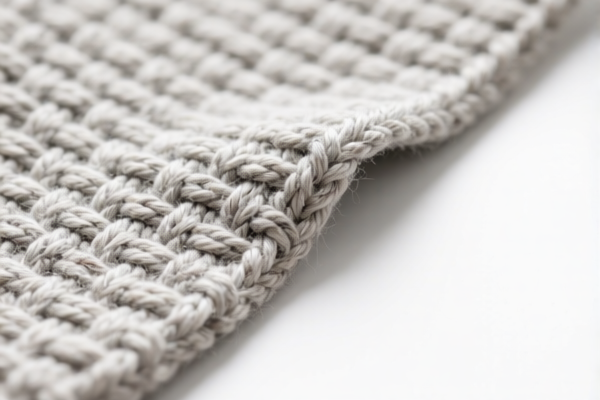
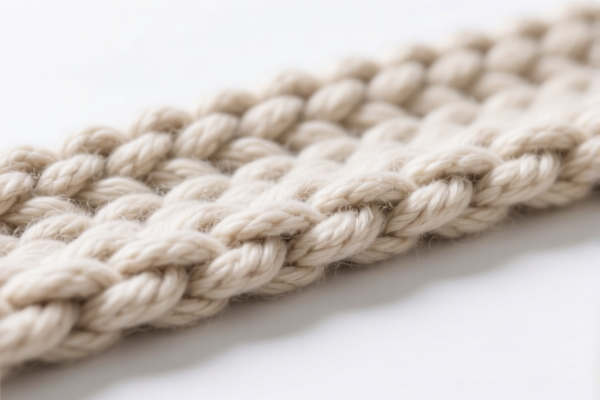
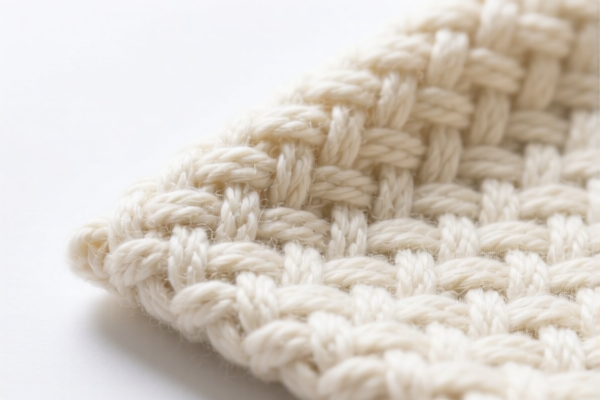
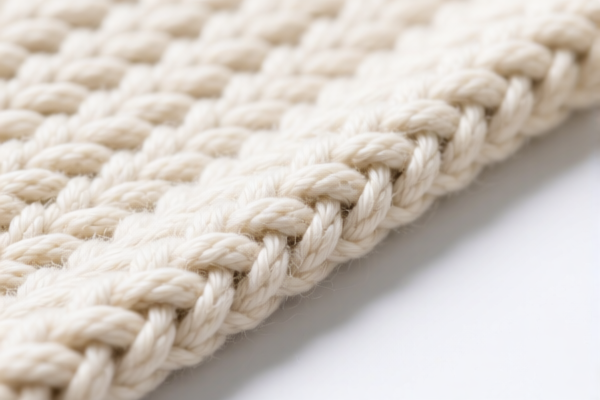
AI Analysis
🧵 Fabric (Not Exceeding 70g per square meter)
🌐 HS Code Reference & Customs Clearance Guide | 2026 Latest Tariff Analysis | Professional-Level通关 Strategy
📌 I. Product Definition & Classification: Do You Really Understand "Lightweight Fabric"?
Fabric, especially lightweight woven fabric (< 70g/m²), is a critical raw material in the apparel, textile, and industrial sectors. In international trade, it is primarily classified based on its fiber content (cotton vs. synthetic) and weaving structure.
Given the input "Fabric (not exceeding 70g per square meter)," we must distinguish between two main categories found in the provided data: 1. Cotton Fabrics: High cotton content (≥85%), plain weave, very light weight. 2. Synthetic Filament Fabrics: High polyester content (≥85%), often flat fabrics.
⚠️ Key Distinction Point:
- If the fabric is Cotton-based, it falls under Chapter 52 (Textiles of Cotton).
- If the fabric is Synthetic Filament-based (e.g., Polyester), it falls under Chapter 54 (Man-made Filaments).
- Weight Threshold: The input specifies ≤ 70g/m², which is strictly less than the 100g/m² and 170g/m² thresholds listed in the provided HS codes, making all four codes below technically applicable depending on the specific fiber composition.
📦 II. HS Code Classification Details (Based on Provided Data)
| HS Code | Product Description | Applicable Scenario | Fiber Type | Weight Spec |
|---|---|---|---|---|
5208.11.40.20 |
Woven fabrics of cotton, containing ≥85% cotton: Unbleached: Plain weave, ≤100g/m²: Of numbers 43 to 68 Poplin or broadcloth | Unbleached Cotton Poplin/Broadcloth. Ideal for casual shirts, linings. | ✅ Cotton (≥85%) | ≤ 100 g/m² |
5208.21.40.20 |
Woven fabrics of cotton, containing ≥85% cotton: Bleached: Plain weave, ≤100g/m²: Of numbers 43 to 68 Poplin or broadcloth | Bleached Cotton Poplin/Broadcloth. Ready for dyeing/printing. | ✅ Cotton (≥85%) | ≤ 100 g/m² |
5407.61.99.05 |
Woven fabrics of synthetic filament yarn: ≥85% polyester filaments: Other: Unbleached/Bleached, ≤170g/m²: Flat fabrics (619) | Polyester Flat Fabric. Durable, smooth, often used for sportswear or technical textiles. | ✅ Synthetic (≥85% Polyester) | ≤ 170 g/m² |
5407.71.00.15 |
Woven fabrics of synthetic filament yarn: ≥85% synthetic filaments: Unbleached/Bleached, ≤170g/m² | General Synthetic Filament Fabric. Broad category for synthetic weaves. | ✅ Synthetic (≥85%) | ≤ 170 g/m² |
🔍 Critical Note:
- The input "Not exceeding 70g/m²" is lighter than the thresholds for5208(100g/m²) and5407(170g/m²). Therefore, all four HS codes are potentially valid depending on whether the fabric is Cotton or Synthetic.
- Poplin/Broadcloth refers to a specific plain weave structure. If your fabric is not poplin/broadcloth but is still ≤100g/m² cotton, other sub-headings in Chapter 52 might apply, but based strictly on the provided data, we focus on these specific codes.
- Flat Fabrics (619) in5407.61.99.05indicates a specific construction method, often implying non-textured filaments.
💰 III. 2026 Latest Tariff Rate Breakdown (Including Surcharges)
✅ Applicable Country: United States (US)
✅ Origin: China (CN)
✅ Effective Date: 2025-11-10 onwards
All four HS codes provided in the data share the same tariff structure as per the input data.
🎯 Total Tax Rate: 0.0%
| HS Code | Base Tariff | Additional Tariff | Total Tax | Legal Basis Path |
|---|---|---|---|---|
5208.11.40.20 |
0.0% | 0.0% | 0.0% | Base: 0% + Additional: 0% |
5208.21.40.20 |
0.0% | 0.0% | 0.0% | Base: 0% + Additional: 0% |
5407.61.99.05 |
0.0% | 0.0% | 0.0% | Base: 0% + Additional: 0% |
5407.71.00.15 |
0.0% | 0.0% | 0.0% | Base: 0% + Additional: 0% |
📌 Explanation:
- According to the provided data, all four HS codes have a total tax of 0.0%.
- Base Tariff: 0.0% (ad valorem).
- Additional Tariff: 0.0% (No USITC Section 301 or IEEPA surcharges listed for these specific sub-headings in the provided dataset).
- Tax Calculation: CIF Value × 0.0% = $0.00.
- De Minimis Eligibility: Since the tax is 0%, the de minimis threshold (currently $800 for US) is not a limiting factor for tax payment, but the value of the shipment must still be declared.
🛠️ IV. Customs Clearance Practical Advice (Pro Tips to Avoid Pitfalls)
✅ 1. Required Documentation Checklist
| Document | Mandatory? | Description |
|---|---|---|
| ✅ Commercial Invoice | ✔️ | Must clearly state "Woven Fabric," fiber content (e.g., 100% Cotton), weight (g/m²), and width. |
| ✅ Packing List | ✔️ | Include number of rolls, gross/net weight, and dimensions. |
| ✅ Certificate of Origin | ✔️ | Crucial for verifying origin. If not from China, check for preferential tariffs. |
| ✅ Product Specification Sheet | ✔️ | Detail the weave type (e.g., Poplin, Plain), bleaching status (Unbleached/Bleached), and gram weight. |
| ✅ Test Report (Optional) | ✔️ | Fiber composition test report to prove ≥85% cotton or synthetic content. |
✅ 2. Declaration Tips (Key Mantra)
🔥 “Fiber First, Weight Second, Weave Specific, Tax Zero!”
| Scenario | Correct Declaration | Wrong Practice |
|---|---|---|
| Cotton Poplin, Unbleached, 70g/m² | HS: 5208.11.40.20Desc: "Unbleached Cotton Poplin Fabric, 70g/m²" |
Vague: "Cotton Fabric" → Risk of reclassification |
| Cotton Poplin, Bleached, 70g/m² | HS: 5208.21.40.20Desc: "Bleached Cotton Poplin Fabric, 70g/m²" |
Vague: "Bleached Fabric" → Ambiguity |
| Polyester Flat Fabric, 70g/m² | HS: 5407.61.99.05Desc: "Woven Polyester Filament Fabric, Flat, 70g/m²" |
Vague: "Synthetic Fabric" → May fall into higher duty categories if misclassified |
| Other Synthetic Fabric, 70g/m² | HS: 5407.71.00.15Desc: "Woven Synthetic Filament Fabric, 70g/m²" |
Vague: "Textile" → High scrutiny |
✅ 3. Special Handling
| Scenario | Recommendation |
|---|---|
| Mixed Shipment (Cotton + Synthetic) | Split Declaration! Do not mix under one HS code. Declare cotton items under 5208.xx.xx and synthetic under 5407.xx.xx. |
| Weight Verification | Ensure the 70g/m² specification is supported by lab tests. If customs suspects the weight is >100g/m² for cotton or >170g/m² for synthetic, the HS code may be challenged, potentially leading to different tariff rates. |
| "Flat Fabric" Definition | For 5407.61.99.05, ensure the fabric is indeed a "flat fabric" as defined by US Customs (non-textured filaments). If textured, it may fall under a different sub-heading. |
| Origin: Non-China | If the fabric is produced in Vietnam, India, or Bangladesh, the 0% tax may still apply, but ensure the Certificate of Origin is valid to avoid unnecessary duties. |
🌍 V. Global Market Clearance Comparison (2026 Latest)
| Country/Region | Recommended HS Code | Tariff (China Origin) | Certification | Notes |
|---|---|---|---|---|
| 🇺🇸 USA | 5208.11.40.20 / 5407.61.99.05 |
0.0% | No specific textile certs required for entry | Zero duty for these specific codes |
| 🇨🇳 China | 5208.11.40.20 / 5407.61.99.05 |
5%-10% | N/A | Import duty applies if re-exported from China |
| 🇪🇺 EU | 5208.11.40.20 / 5407.61.99.05 |
4%-12% | REACH (Chemical Safety) | No US-style surcharges, but standard duties apply |
| 🇬🇧 UK | 5208.11.40.20 / 5407.61.99.05 |
4%-12% | UKCA | Post-Brexit tariffs vary |
| 🇯🇵 Japan | 5208.11.40.20 / 5407.61.99.05 |
3%-13% | JIS Standards | Check for CPTPP benefits if originating from member countries |
📌 Conclusion:
- USA: The 0.0% tax rate for these specific lightweight fabrics is a significant advantage. Ensure accurate classification to maintain this benefit.
- Other Markets: Standard tariffs apply. Use US data as a benchmark for duty-free entry only.
📌 VI. Common Errors & Pitfalls (Lessons Learned)
❌ Error 1: Misidentifying Cotton as Synthetic
👉 Consequence: Wrong HS Code → Potential duty underpayment or overpayment → Penalties or delays.
❌ Error 2: Ignoring Bleaching Status
👉 Consequence: 5208.11 (Unbleached) vs. 5208.21 (Bleached). Misdeclaration can lead to customs audits.
❌ Error 3: Assuming All "Lightweight Fabrics" Are the Same
👉 Consequence: Failing to distinguish between Poplin/Broadcloth and other weaves may lead to incorrect classification under 5208 or 5407.
❌ Error 4: Not Proving Weight (≤70g/m²)
👉 Consequence: If customs measures the fabric at 105g/m², it may be reclassified to a heavier, potentially higher-duty category. Lab test reports are essential.
✅ Correct Practice:
"Woven Cotton Fabric, 100% Cotton, Unbleached, Plain Weave (Poplin), 70g/m², Width 150cm, Roll Length 100m"
🎯 VII. Conclusion: Precision in Classification Saves Money!
🎯 Remember the Mantra:
🔹 "Fiber First, Weight Second, Weave Specific, Tax Zero!"
🔹 "HS Code is King, 0% Tax is King, Misclassification is Evil!"
📌 Pro Tip:
If your fabric is exactly 70g/m², ensure your laboratory tests confirm it is not over 100g/m² (for cotton) or 170g/m² (for synthetic). Even a small discrepancy can change the HS code and potentially the tax rate.
📣 Immediate Action:
📞 Consult a Customs Broker + Provide Product Specs + Verify HS Code
🚀 Enjoy 0% Duty, Smooth Clearance, and Maximized Profits!
✨ Professional Customs Clearance Starts with Accurate Classification!
💼 Every Gram Matters – Ensure Your Fabric is Declared Correctly!
Customer Reviews
About HS Code Classification
The Harmonized System (HS) is an internationally standardized nomenclature developed by the World Customs Organization (WCO) to classify traded products. Over 200 countries use the HS system as the basis for customs tariffs, trade statistics, and import/export regulations.
Each HS code follows a hierarchical structure:
- Chapter (2 digits) — Broad category of goods (e.g., Chapter 84: Machinery and Mechanical Appliances)
- Heading (4 digits) — More specific grouping within the chapter
- Subheading (6 digits) — Internationally standardized breakdown, used by all WCO member countries
- National subdivisions (8-10 digits) — Country-specific extensions for further classification, such as US HTSUS 10-digit codes
Correct HS code classification is essential for smooth customs clearance, accurate duty payment, and compliance with trade regulations. Misclassification can lead to customs delays, overpayment of duties, or penalties.
When importing from CN to US, the applicable tariff rates may include:
- Most-Favored-Nation (MFN) rate — The standard duty rate applied to WTO members
- General rate — Applied to countries without trade agreements
- Trade remedy duties — Additional tariffs such as Section 301 (anti-dumping), Section 232 (national security), or countervailing duties
The information provided on this page is for reference purposes only. For official classification, please consult with your local customs authority or a licensed customs broker.