Faucet Valve Core
CN → US| HS Code | Tariff Rate | Origin | Destination | Doc |
|---|---|---|---|---|
| 8481909081 | 35.0% | CN | US | Official Doc |
| 8481909060 | 85.0% | CN | US | Official Doc |
| 8481909085 | 85.0% | CN | US | Official Doc |
| 8481909060 | 85.0% | CN | US | Official Doc |
| 7326908688 | 87.9% | CN | US | Official Doc |
Product Images
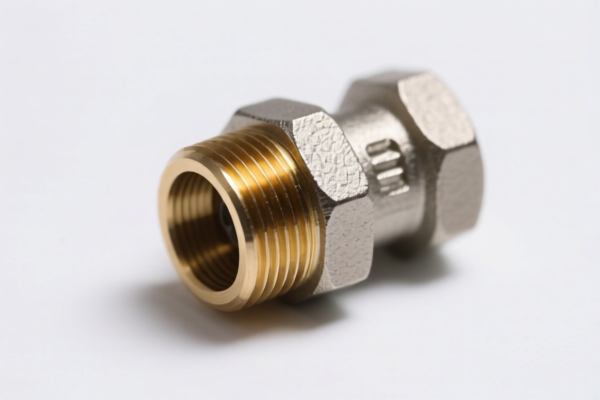
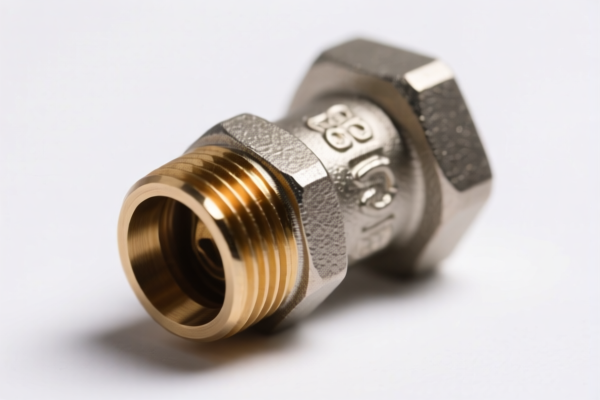
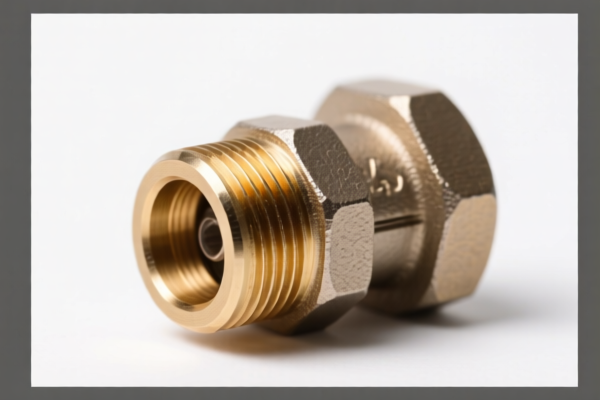
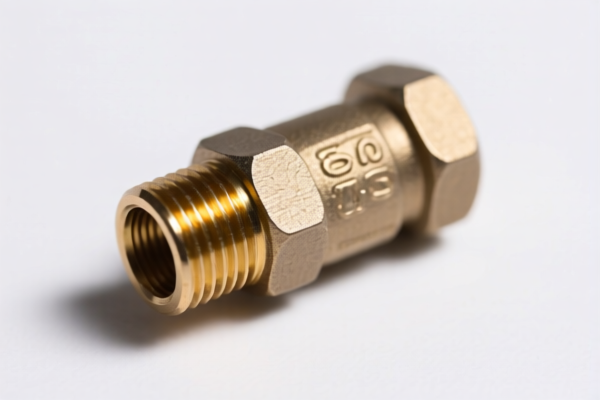
AI Analysis
🚿 Faucet Valve Core (Valve Cartridge/Spool)
🌐 HS Code Reference & Customs Clearance Guide | 2024/2025 Latest Tariff Analysis | Professional Entry Strategy
📌 I. Product Definition & Classification: Do You Really Understand the "Faucet Valve Core"?
The Faucet Valve Core (also known as a cartridge, spool, or stem) is the heart of any faucet, controlling water flow and temperature. In international trade, its classification depends heavily on two factors: Material (Metal vs. Non-metal) and Specificity.
Key Distinctions: 1. Metal Valve Cores (Steel/Aluminum/Copper): Often classified under specific steel/aluminum articles (7326) or specific valve parts (8481) with heavy surcharges due to USITC Section 301 and IEEPA rules. 2. Plastic/Composite Valve Cores: Classified as general valve parts under 8481.90, but still subject to significant US tariffs if made in China. 3. General "Other" Parts: If not specifically described elsewhere, they fall under residual categories, but tax implications vary wildly based on material surcharges.
⚠️ Critical Warning:
- Material Matters: Steel/Aluminum parts attract an additional 50% surcharge on top of standard 301 tariffs.
- Total Tariff Shock: For metal cores, the total effective tax rate can exceed 85-88%.
- No De Minimis Exemption: These goods are NOT eligible for the $800 de minimis exemption (Section 321) if subject to specific trade remedy duties.
📦 II. HS Code Classification Details (Based on Provided Data)
| HS Code | Product Description & Logic | Material/Type | Total Tax Rate* | Key Tariff Components |
|---|---|---|---|---|
| 8481.90.90.81 | General Valve Part (Metal) Inferred as a generic metal part for valves. |
Metal (General) | 35.0% | Base: 0% +301: 25% +122 Clause: 10% (No additional 50% steel/aluminum surcharge mentioned in this specific entry) |
| 8481.90.90.60 | Valve Assembly/Part (Metal or Plastic) Generic valve component. Covers both plastic and metal cores generally. |
Mixed (Metal/Plastic) | 85.0% | Base: 0% +301: 25% +122 Clause: 10% +Steel/Al/Cu Surcharge: 50% |
| 8481.90.90.85 | Stainless Steel Valve Core Specifically identified as stainless steel valve part. |
Stainless Steel | 85.0% | Base: 0% +301: 25% +122 Clause: 10% +Steel/Al/Cu Surcharge: 50% |
| 8481.90.90.60 | Stainless Steel Core (Alternative View) Treated as a core component of the valve. |
Stainless Steel | 85.0% | Base: 0% +301: 25% +122 Clause: 10% +Steel/Al/Cu Surcharge: 50% |
| 7326.90.86.88 | Other Articles of Iron/Steel Classified as a general steel article/part rather than a valve part. |
Steel/Iron | 87.9% | Base: 2.9% +301: 25% +122 Clause: 10% +Steel/Al/Cu Surcharge: 50% |
*Total Tax Rate includes Base Duty, Section 301 (25%), Section 122 (10%), and Specific Material Surcharges (50%) where applicable. All data sourced from provided XML.
💰 III. 2024/2025 Tariff Rate Breakdown (Detailed Policy Explanation)
✅ Applicable Market: United States (US)
✅ Origin: China (CN)
✅ Status: Active (High Risk/High Cost Category)
🎯 1. The "85%+" Trap: Steel/Aluminum/Copper Parts (HS 8481.90.90.60 / 8481.90.90.85)
This is the most common classification for Stainless Steel or Brass/Chrome-plated faucet cores.
| Item | Detail |
|---|---|
| Base Duty | 0.0% |
| USITC Section 301 Surcharge | +25.0% |
| Section 122 Surcharge | +10.0% |
| Special Material Surcharge | +50.0% (Applies to Steel, Aluminum, Copper products) |
| Total Effective Tax Rate | 85.0% |
| Calculation Basis | CIF Value × 85% |
| De Minimis Eligibility | ❌ NO (Denied under current enforcement for these specific codes/tariffs) |
📌 Explanation:
- The 50% surcharge is the killer. Even if the base duty is 0%, the combination of 301 tariffs (25%) + Section 122 (10%) + Material Surcharge (50%) creates a nearly prohibitive tax barrier. - Legal Basis: Combined enforcement of USITC Footnotes for Section 301, IEEPA authorities, and specific Customs rulings on metal articles.
🎯 2. The "87.9%" Risk: Classified as General Steel Articles (HS 7326.90.86.88)
If Customs rejects the "Valve Part" classification and treats the core as a "miscellaneous steel article," the base duty kicks in, but the surcharges remain.
| Item | Detail |
|---|---|
| Base Duty | 2.9% |
| USITC Section 301 Surcharge | +25.0% |
| Section 122 Surcharge | +10.0% |
| Special Material Surcharge | +50.0% |
| Total Effective Tax Rate | 87.9% |
| Calculation Basis | CIF Value × 87.9% |
📌 Explanation:
- This is the wor-case scenario. It adds the base 2.9% to the 85% structure above. - Risk arises if the product lacks clear valve-specific markings or documentation, leading Customs to default to "Other Articles of Iron or Steel."
🎯 3. The "35%" Anomaly: HS 8481.90.90.81
This entry is unique in the data. It suggests a metal part without the 50% material surcharge, resulting in a much lower (but still high) rate.
| Item | Detail |
|---|---|
| Base Duty | 0.0% |
| USITC Section 301 Surcharge | +25.0% |
| Section 122 Surcharge | +10.0% |
| Total Effective Tax Rate | 35.0% |
📌 Explanation:
- This classification seems to exclude the 50% steel/aluminum surcharge. - Caution: This may only apply to specific non-ferrous metals or if the Customs officer determines the "metal" component is minor or coated in a way that doesn't trigger the surcharge. Do not assume this applies to all stainless steel cores. Verify with a binding ruling.
🛠️ IV. Customs Clearance Practical Advice (Avoiding Pitfalls)
✅ 1. Documentation Checklist (Mandatory)
| Document | Requirement | Purpose |
|---|---|---|
| ✅ Product Specification Sheet | ✔️ Must detail: Material (e.g., 304 Stainless Steel, Plastic, Brass), Dimensions, Valve Type (Ceramic Disc, Ball, etc.). | Proves material composition. |
| ✅ Material Test Report | ✔️ Third-party lab report confirming alloy content (e.g., ASTM standard for stainless steel). | Crucial for proving/disproving the 50% surcharge applicability. |
| ✅ Product Photos | ✔️ High-res images showing the core, any markings, and packaging. | Visual verification for customs officers. |
| ✅ Commercial Invoice | ✔️ Clearly state: "Faucet Valve Core," "Cartridge," "Spool." Avoid vague terms like "Metal Part." | Ensures correct HTS coding. |
| ✅ Packing List | ✔️ Net/Gross weight accurate. | Standard requirement. |
✅ 2. Classification Strategy (Key Tactics)
🔥 "Material First, Function Second, Specificity Wins!"
| Scenario | Recommended Action | Risk |
|---|---|---|
| Plastic Valve Core | Aim for 8481.90.90.60 but Beware: If Customs deems the plastic housing negligible and focuses on internal metal springs/pins, they may apply steel surcharges. Check if the 50% surcharge applies to "mixed" goods. | Medium |
| Stainless Steel Core | Likely 8481.90.90.85 or 8481.90.90.60. High probability of 85% total tax. Consider if 7326.90.86.88 is riskier (87.9%). | High |
| Generic "Metal Part" | Try to justify 8481.90.90.81 (35%) if the product has ambiguous composition or if you can argue it's not primarily steel/aluminum/copper. | Low (but risky if audited) |
✅ 3. Critical Warnings
| Warning | Consequence |
|---|---|
| ❌ Misdeclaring Material | If you declare "Plastic" but it's "Stainless Steel," you face fraud penalties, seizure, and back-taxes. |
| ❌ Ignoring Section 122 | Assuming only 301 tariffs (25%) apply. Section 122 (10%) is also active. Total is not 25%, it's higher. |
| ❌ Assuming De Minimis Applies | Packages under $800 WILL be audited and taxed for these HS codes. Do not rely on informal entry. |
| ❌ Using Vague Descriptions | "Hardware Part" or "Faucet Accessory" will lead to manual examination and potential misclassification to the highest taxable code. |
🌍 V. Market Comparison & Cost Impact
| Market | HS Code Example | Approx. Total Duty | Notes |
|---|---|---|---|
| 🇺🇸 USA | 8481.90.90.60 / .85 | 85.0% - 87.9% | Extremely high due to 50% metal surcharge. |
| 🇨🇳 China | 8481.90.90 | ~5-10% | Low import duty, no US-style surcharges. |
| 🇪🇺 EU | 8481.90.90 | ~2.7% | Standard MFN rate. No aggressive surcharges. |
| 🇬🇧 UK | 8481.90.90 | ~2.7% | Post-Brexit alignment with EU standards. |
📌 Conclusion:
The US market is hostile to metal faucet valve cores from China due to layered tariffs.
- Cost Impact: A $10 core becomes $18.50 - $18.79 in duties alone.
- Strategy: Suppliers must either absorb the cost (raising ex-factory price) or buyers must source from non-China origins (e.g., Vietnam, Thailand) if possible, or negotiate DDP terms carefully.
📌 VI. Common Mistakes & How to Avoid Them
❌ Mistake 1: Declaring as "Plastic" to avoid steel tariffs.
👉 Result: Customs inspection reveals metal internals → Penalty + 85% Tax + Seizure.
❌ Mistake 2: Not declaring Section 122.
👉 Result: Underpayment by 10% → Back taxes + Interest.
❌ Mistake 3: Using the same HS code for plastic and steel cores.
👉 Result: If audited, the steel ones will be reclassified with the 50% surcharge.
👉 Solution: Always distinguish materials in your invoice and specs.
✅ Best Practice:
Explicitly state material composition.
Example: "Stainless Steel Faucet Cartridge, Model XYZ, 1/2 Inch, Ceramic Disc Type, Made in China."
🎯 VII. Final Recommendation
🎯 For Importers into the US: 1. Audit Your HS Code: Verify if your core is classified under 8481.90.90.81 (35%) or 8481.90.90.60/.85 (85%). 2. Challenge the 50% Surcharge: If your core is predominantly plastic with minor metal springs, consult a customs broker to see if you can argue for a classification that avoids the "Steel/Aluminum/Copper" surcharge. 3. Consider Origin Diversification: If your margin cannot absorb 85% duty, explore sourcing from countries not subject to these specific surcharges (subject to anti-circumvention rules). 4. Get a Binding Ruling: For high-volume shipments, apply for a CBP Binding Ruling to lock in the correct HS code and tax rate.
📌 Remember:
"In the US, Metal Valves are Expensive. Plastic Valves are Safer. Documentation is Your Shield."
✨ Pro Tip: Always request a Material Test Certificate from your supplier. It is your best defense in case of a customs audit.
💼 Professional Customs Clearance is Key to Survival in the US Market!
Customer Reviews
About HS Code Classification
The Harmonized System (HS) is an internationally standardized nomenclature developed by the World Customs Organization (WCO) to classify traded products. Over 200 countries use the HS system as the basis for customs tariffs, trade statistics, and import/export regulations.
Each HS code follows a hierarchical structure:
- Chapter (2 digits) — Broad category of goods (e.g., Chapter 84: Machinery and Mechanical Appliances)
- Heading (4 digits) — More specific grouping within the chapter
- Subheading (6 digits) — Internationally standardized breakdown, used by all WCO member countries
- National subdivisions (8-10 digits) — Country-specific extensions for further classification, such as US HTSUS 10-digit codes
Correct HS code classification is essential for smooth customs clearance, accurate duty payment, and compliance with trade regulations. Misclassification can lead to customs delays, overpayment of duties, or penalties.
When importing from CN to US, the applicable tariff rates may include:
- Most-Favored-Nation (MFN) rate — The standard duty rate applied to WTO members
- General rate — Applied to countries without trade agreements
- Trade remedy duties — Additional tariffs such as Section 301 (anti-dumping), Section 232 (national security), or countervailing duties
The information provided on this page is for reference purposes only. For official classification, please consult with your local customs authority or a licensed customs broker.