Film Roll (Scientific Use)
CN → US| HS Code | Tariff Rate | Origin | Destination | Doc |
|---|---|---|---|---|
| 3707100090 | 38.0% | CN | US | Official Doc |
| 3707903290 | 35.0% | CN | US | Official Doc |
| 3702390100 | 38.7% | CN | US | Official Doc |
| 3702320130 | 38.7% | CN | US | Official Doc |
Product Images

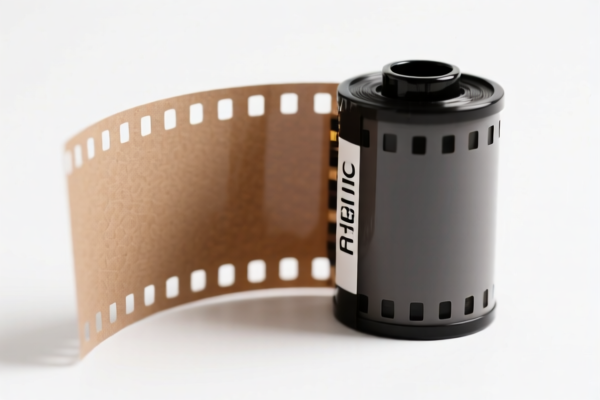
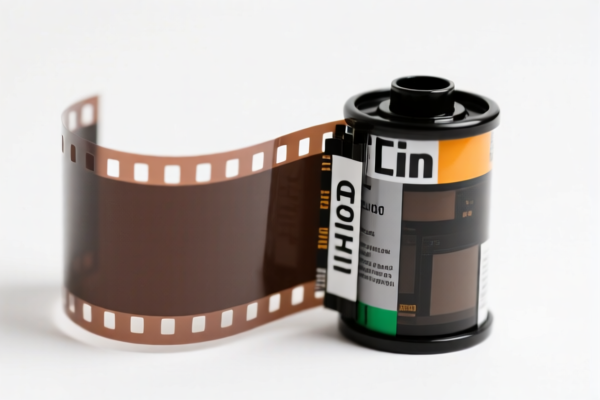
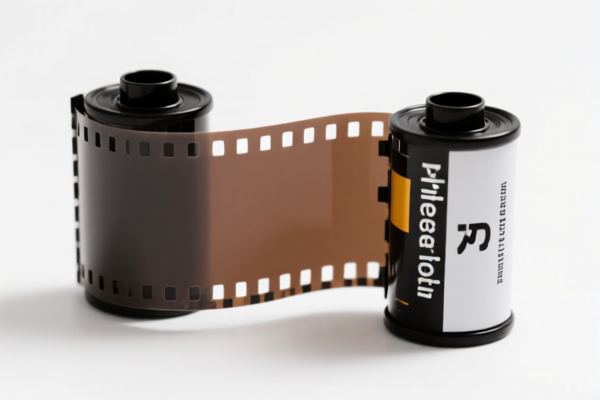
AI Analysis
🎞️ Film Roll (Scientific Use)
🌐 HS Code Reference & Customs Clearance Guide | 2026 Latest Tariff Full Analysis | Professional Clearance Strategy
📌 1. Product Definition & Classification: Do You Really Understand "Scientific Film Rolls"?
Film Roll (Scientific Use) refers to photographic film rolls specifically designed for scientific, medical, or industrial imaging applications (such as radiography, microscopy, or industrial non-destructive testing). Unlike standard consumer photography film, these rolls are engineered for high precision, specific spectral sensitivity, and durability under scientific conditions.
In international trade, the classification hinges on three critical factors: 1. Material/Nature: Is it unexposed photographic film? 2. Form: Is it in rolls? 3. Purpose: Is it for scientific use or general photography?
⚠️ Key Distinction Point:
- If the film is unexposed, unprocessed, and in rolls for scientific imaging → It may fall under 3707.10.00.90 (Prepared photographic plates/film) or 3707.90.32.90 (Other chemical preparations/materials).
- If the film is classified as a "sensitized" photographic film roll (standard imaging roll) → It may fall under 3702.39.01.00 or 3702.32.01.30 (Sensitized unexposed photographic film of any material in rolls).
- Critical Note: The term "Scientific Use" does not automatically exempt the product from standard photographic film classifications. If it functions as photographic film (light-sensitive), it generally falls under Chapter 37.
📦 2. HS Code Classification Details (2026 Latest Tariff Authority Comparison)
| HS Code | Product Description | Application Scenario | Tax Rate (US/CN) | Notes |
|---|---|---|---|---|
3707.10.00.90 |
Prepared photographic plates and film, unexposed, not sensitized; other photographic goods | Specialized scientific imaging plates/films; non-standard chemical photographic materials | 38.0% | Matches "scientific use" attribute; base tax 3%, Trump Tariff 25%, Section 301 (122) 10% |
3707.90.32.90 |
Other chemical preparations (photographic); other | Photographic chemical materials; non-standard film categories; no material/form conflict | 35.0% | Base tax 0%; Trump Tariff 25%; Section 301 (122) 10%. Lower base rate. |
3702.39.01.00 |
Sensitized unexposed photographic film of any material, in rolls, other than hard film | General scientific/industrial film rolls; "Roll" matches form; "Film" matches material | 38.7% | Base tax 3.7%; Trump Tariff 25%; Section 301 (122) 10%. High base tax. |
3702.32.01.30 |
Sensitized unexposed photographic film, microfilm or similar, other than hard film | Microfilm; scientific documentation film; "Roll" and "Film" match form/material | 38.7% | Base tax 3.7%; Trump Tariff 25%; Section 301 (122) 10%. Specific for microfilm-type scientific docs. |
🔍 Key Reminder:
- "Scientific Use" is often a descriptor, not a separate HS category. If the product is light-sensitive film, it is likely classified under 3702 (Sensitized Film) or 3707 (Prepared/Chemical Film).
- Base Tariff Difference:3707.90.32.90has a 0% base rate, while others have 3.0%-3.7%. This significantly impacts the total cost.
- Section 301 Applicability: All listed codes are subject to additional tariffs due to US-China trade tensions.
💰 3. 2026 Latest Tariff Rate Details (Including Additional Taxes, Policy Surcharges)
✅ Applicable Country: United States (US)
✅ Origin: China (CN)
✅ Effective Time: 2025 Nov 10 onwards (including subsequent imports)
🎯 1. 3707.10.00.90 —— Prepared Photographic Plates/Film (Scientific Use)
| Item | Content |
|---|---|
| Base Tariff | 3.0% (ad valorem) |
| Section 301 Tariff (122) | +10% (Specific to Chinese origin under Section 122 of the Trade Act) |
| USITC Surcharge (Trump Tariff) | +25% (From USITC Footnote, typically linked to Trade Act Section 301) |
| Total Tariff Rate | 38.0% |
| Tax Calculation | CIF Value × 38.0% |
| De Minimis Exemption Available? | ❌ No (deny_de_minimis) |
| Legal Basis Path | IEEPA:9903.01.25 → IEEPA:9903.01.24 → USITC:3707.10.00.90 → FOOTNOTE:3707.10.00.90 |
📌 Explanation:
- "Base Tariff 3.0%": Standard MFN rate for prepared photographic goods.
- "Section 301 Tariff 10%": Additional duty under Section 122 of the Trade Act of 1974 (often cited in recent tariff lists).
- "USITC Surcharge 25%": Standard 301 tariff rate for many Chinese imports.
- Total 38.0%: High tariff burden. Must be factored into cost structure.
🎯 2. 3707.90.32.90 —— Other Chemical Preparations (Photographic)
| Item | Content |
|---|---|
| Base Tariff | 0.0% |
| Section 301 Tariff (122) | +10% |
| USITC Surcharge (Trump Tariff) | +25% |
| Total Tariff Rate | 35.0% |
| Tax Calculation | CIF Value × 35.0% |
| De Minimis Exemption Available? | ❌ No |
| Legal Basis Path | IEEPA:9901.25 → IEEPA:9903.01.24 → USITC:3707.90.32.90 → FOOTNOTE:3707.90.32.90 |
📌 Note:
- This code has a 0% base rate, making it the most cost-effective option among the listed codes if the product can be legally classified here.
- Suitable for photographic chemical materials that don't fit standard "sensitized film" definitions.
- Caution: Misclassification risk is higher; must prove it's not a standard photographic film roll.
🎯 3. 3702.39.01.00 & 3702.32.01.30 —— Sensitized Unexposed Photographic Film (Rolls)
| Item | Content |
|---|---|
| Base Tariff | 3.7% |
| Section 301 Tariff (122) | +10% |
| USITC Surcharge (Trump Tariff) | +25% |
| Total Tariff Rate | 38.7% |
| Tax Calculation | CIF Value × 38.7% |
| De Minimis Exemption Available? | ❌ No |
| Legal Basis Path | IEEPA:9903.01.25 → IEEPA:9903.01.24 → USITC:3702.39.01.00 / 3702.32.01.30 → FOOTNOTE:3702.39.01.00 |
📌 Explanation:
- These codes cover sensitized, unexposed photographic film in rolls.
- If your "Scientific Use Film" is light-sensitive (e.g., X-ray film, microfilm for scanning), it likely falls here.
- Total 38.7%: The highest tariff rate among the options.
- 3702.32.01.30 is specifically for microfilm/similar scientific documentation rolls.
🛠️ 4. Customs Clearance Practical Suggestions (Battle-Tested Pitfall Guide)
✅ 1. Documentation Checklist (Non-Negotiable)
| Document | Required | Description |
|---|---|---|
| ✅ Product Specification Sheet | ✔️ | Details: Material (acetate/polyester), thickness, sensitivity, width, length, "Scientific Use" declaration. |
| ✅ Product Photos | ✔️ | Clear images showing roll form, packaging, and any labeling (e.g., "For Scientific Use Only"). |
| ✅ Commercial Invoice | ✔️ | Clearly state: "Photographic Film Rolls for Scientific Use," HS Code, and Country of Origin. |
| ✅ Packing List | ✔️ | Specify net/gross weight, number of rolls, dimensions. |
| ✅ Third-Party Test Report | Optional | If claimed as "non-photographic," provide chemical analysis to support classification under 3707.90. |
| ✅ Origin Certificate (CO) | ✔️ | Proof of Chinese origin (triggers additional tariffs). |
✅ 2. Declaration Tips (Key Mantra)
🔥 “Form matches HS, Purpose clarifies, Base rate matters, Tariff adds cost!”
| Scenario | Correct Declaration | Wrong Practice |
|---|---|---|
| Standard Light-Sensitive Roll | 3702.39.01.00 or 3702.32.01.30 |
Declaring as "Chemical Material" → Audit risk |
| Non-Sensitized Prepared Plate/Film | 3707.10.00.90 |
Declaring as "Sensitized Film" → Over-taxation (38.7% vs 38.0%) |
| Photographic Chemical/Accessory | 3707.90.32.90 |
Declaring as "Film Roll" → Under-taxation risk (35.0%) |
| OEM Custom Scientific Film | Provide Design/Usage Proof | Generic "Film" description → Delays/Rejection |
✅ 3. Special Case Handling
| Situation | Handling Advice |
|---|---|
| Microfilm for Archival Science | Use 3702.32.01.30. Provide documentation that it's for archival/microform purposes. |
| X-Ray/Fluorescence Film | If sensitized, use 3702.39.01.00. If it's a detector panel, it may be 9022 (but not in this dataset). Stick to 3707 if it's a film product. |
| "Scientific Use" vs. "Consumer" | Customs may inspect for consumer-grade features. Emphasize industrial/scientific specs (e.g., high resolution, specific spectral response). |
| Origin Circumvention | Avoid transshipment via Vietnam/Mexico without substantial transformation. US Customs is strict on "Section 301" evasion. |
🌍 5. Global Main Market Clearance Comparison (2026 Latest)
| Country/Region | Recommended HS Code | Tariff (CN Origin) | Certification Requirements | Notes |
|---|---|---|---|---|
| 🇺🇸 United States | 3707.10.00.90 or 3702.39.01.00 |
38.0% - 38.7% | No special certs, but precise classification critical | High tariffs due to Section 301 + 122. |
| 🇨🇳 China | 3707.10.00.90 or 3702.39.01.00 |
3.0% - 3.7% | None | Low base tax, no additional surcharges. |
| 🇪🇺 European Union | 3707.10.00.90 or 3702.39.01.00 |
0% - 4.5% | CE (if applicable), REACH | No additional political tariffs. |
| 🇯🇵 Japan | 3707.10.00.90 or 3702.39.01.00 |
0% - 3.5% | PSE (if electronic component) | Generally favorable. |
📌 Conclusion:
- The US market imposes a heavy tariff burden (35%-38.7%) on Chinese-origin photographic/scientific film.
- EU and Japan are more favorable with low or zero tariffs.
- Cost Optimization: If possible, classify under3707.90.32.90(35.0%) by demonstrating it's a "chemical preparation" rather than standard film, but ensure legal compliance.
📌 6. Common Mistakes & Pitfall Guide (Lessons Learned)
❌ Mistake 1: Declaring all scientific film under one HS Code without checking sensitivity
👉 Consequence: Misclassification → Penalties + Back Taxes.
👉 Fix: Determine if film is sensitized (3702) or prepared/non-sensitized (3707).
❌ Mistake 2: Ignoring the "Roll" form factor
👉 Consequence: If it's sheets, 3702 codes don't apply. Use 3701/3703.
👉 Fix: Confirm product form. "Roll" is critical for 3702 classification.
❌ Mistake 3: Underestimating "Section 301" and "122" Tariffs
👉 Consequence: Unexpected 35%-38.7% cost.
👉 Fix: Include full tariff cost in pricing. Check for exclusions (none currently listed for these codes).
❌ Mistake 4: Using "Photographic Film" generically without specifying "Scientific Use"
👉 Consequence: Customs may assume consumer goods, leading to different scrutiny.
👉 Fix: Explicitly state "For Scientific/Industrial Use" in documentation.
✅ Correct Approach:
"Sensitized Unexposed Photographic Film Rolls, 35mm Width, 100ft Length, For Microscopy Scientific Use, Model XYZ, Made in China"
🎯 7. Conclusion: Professional Declaration, Save Time, Reduce Costs!
🎯 Remember the Mantra:
🔹 "Sensitized? Go 3702. Prepared? Go 3707. Roll Form? Check 3702. Base Rate Matters!"
🔹 "US Tariffs are High (38%+), EU/Japan are Low. Declare Accurately!"
📌 Pro Tip:
If your film is not light-sensitive (e.g., clear acetate rolls for scientific display), it may fall under 3920 (Plastics) with much lower tariffs. Ensure the product is indeed "photographic/film" as defined by HS Chapter 37.
Consider Advance Ruling from US Customs (CBP) to lock in the HS Code before shipment.
📣 Immediate Action:
📞 Contact Professional Customs Broker + Provide Product Specs + Apply for HS Code Advance Ruling
🚀 Ensure Your Scientific Film Rolls, Clear Customs Smoothly, Maximize Profit!
✨ Professional Clearance Starts with Accurate Classification!
💼 Every Cents of Cost, Deserves Precise Calculation!
Customer Reviews
About HS Code Classification
The Harmonized System (HS) is an internationally standardized nomenclature developed by the World Customs Organization (WCO) to classify traded products. Over 200 countries use the HS system as the basis for customs tariffs, trade statistics, and import/export regulations.
Each HS code follows a hierarchical structure:
- Chapter (2 digits) — Broad category of goods (e.g., Chapter 84: Machinery and Mechanical Appliances)
- Heading (4 digits) — More specific grouping within the chapter
- Subheading (6 digits) — Internationally standardized breakdown, used by all WCO member countries
- National subdivisions (8-10 digits) — Country-specific extensions for further classification, such as US HTSUS 10-digit codes
Correct HS code classification is essential for smooth customs clearance, accurate duty payment, and compliance with trade regulations. Misclassification can lead to customs delays, overpayment of duties, or penalties.
When importing from CN to US, the applicable tariff rates may include:
- Most-Favored-Nation (MFN) rate — The standard duty rate applied to WTO members
- General rate — Applied to countries without trade agreements
- Trade remedy duties — Additional tariffs such as Section 301 (anti-dumping), Section 232 (national security), or countervailing duties
The information provided on this page is for reference purposes only. For official classification, please consult with your local customs authority or a licensed customs broker.