Fingerless Rubber Coated Gloves
CN → US| HS Code | Tariff Rate | Origin | Destination | Doc |
|---|---|---|---|---|
| 4015129000 | 49.0% | CN | US | Official Doc |
| 3926201020 | 10.0% | CN | US | Official Doc |
| 3926204010 | 16.5% | CN | US | Official Doc |
| 6307909875 | 24.5% | CN | US | Official Doc |
| 6307909891 | 24.5% | CN | US | Official Doc |
Product Images
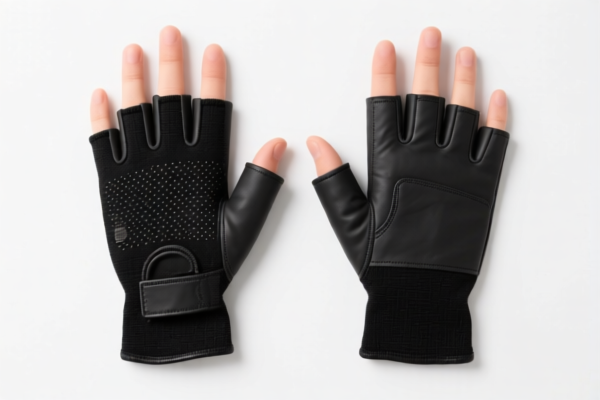
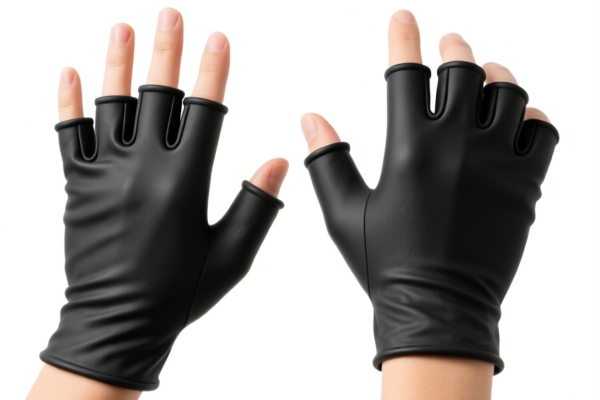
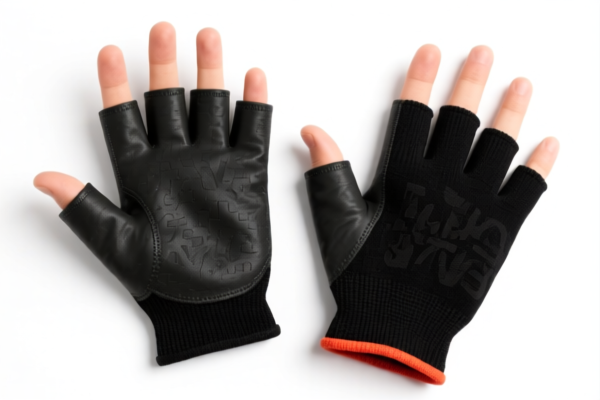
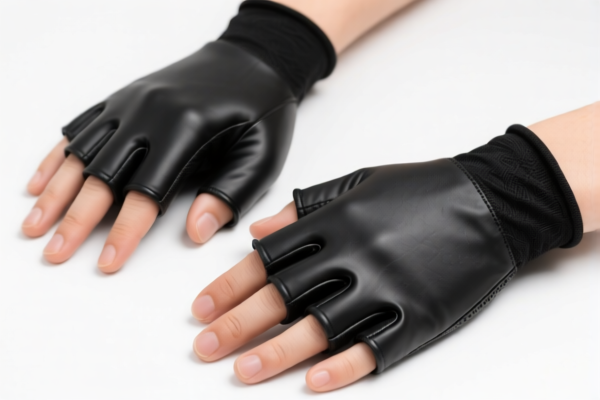
AI Analysis
🧤 Fingerless Rubber Coated Gloves: The Ultimate HS Code & Tariff Guide | 2026 Customs Clearance Strategy
🌐 HS Code Reference & Clearance Guide | 2026 Latest Tariff Analysis | Professional-Level Compliance Strategy
📌 Part 1: Product Definition & Classification – Do You Really Know "Fingerless Rubber Coated Gloves"?
Fingerless rubber-coated gloves are versatile protective gear used in construction, automotive repair, industrial maintenance, and light medical scenarios. They combine the dexterity of fingerless designs with the grip and protection of rubber/synthetic coatings.
In international trade, they are not a single unified category. They are split based on material composition (textile vs. plastic/synthetic) and specific chemical composition (natural rubber vs. synthetic). Misclassification can lead to massive tariff discrepancies (up to 45% difference!).
⚠️ Key Distinction Points:
- If the base material is cotton/textile and the coating is vulcanized rubber → It falls under Chapter 40 (Rubber).
- If the base material is fiber/textile but classified as a general "made-up article" without specific rubber heading preference → It may fall under Chapter 63 (Other Made-Up Textile Articles).
- If the coating is plastic/synthetic polymer (not classified as "rubber" under Chapter 40 definitions) → It falls under Chapter 39 (Plastics).
📦 Part 2: HS Code Classification Details (2026 Latest Tariff Authority Comparison)
Based on the provided data, here are the exact HS Codes and their corresponding tax structures. We will analyze why each applies.
| HS Code | Product Description | Material/Base | Why This Code Applies? |
|---|---|---|---|
4015.12.90.00 |
Rubber-coated cotton gloves, vulcanized rubber, for medical or protective use | Cotton + Vulcanized Rubber | Specifically covers "Gloves, gauntlets and mittens, of vulcanized rubber other than hard rubber," including those coated on textile bases (cotton). This is the most accurate for traditional rubber-coated work gloves. |
3926.20.10.20 |
Coated gloves, plastic/synthetic coating | Plastic/Synthetic Polymer | Falls under "Articles of plastics... gloves." Used if the coating is technically classified as plastic (e.g., PVC, PU) rather than "vulcanized rubber" under Chapter 40. |
3926.20.40.10 |
Coated gloves, plastic/synthetic material | Plastic/Synthetic Material | Similar to above, but different sub-heading for specific plastic compositions or types of coated articles. |
6307.90.98.75 |
Fiber fingerless gloves, other made-up articles | Fiber/Textile (General) | If the product is deemed a "fingerless glove" primarily as a textile article, and the coating doesn't change its essential character to "rubber glove," it may fall here. Often used for fashion/light utility fiber gloves with minor coating. |
6307.90.98.91 |
Fiber fingerless gloves, other made-up articles | Fiber/Textile (General) | Another sub-heading for "Other made-up articles" under Chapter 63, for fiber-based fingerless gloves. |
🔍 Critical Reminder:
-4015.12.90.00has the highest tax burden due to being classified as a "rubber" product subject to multiple surcharges.
-3926.20.10.20has the lowest base tax (0%) but is still subject to IEEPA surcharges.
-6307.90.98.xxare classified as "other made-up textile articles," which may be subject to different duty rates but still incur high surcharges.
💰 Part 3: 2026 Latest Tariff Rate Breakdown (Including Surcharges, Policy Add-ons)
✅ Applicable Country: United States (US)
✅ Origin: China (CN)
✅ Effective Time: Ongoing (including post-Nov 2025 imports)
🎯 1. 4015.12.90.00 —— Rubber-Coated Cotton Gloves (Vulcanized Rubber)
| Item | Content |
|---|---|
| Base Tariff Rate | 14.0% |
| Section 301 Surcharge | +25.0% |
| IEEPA Surcharge | +10.0% (China/HK origin) |
| Total Tax Rate | 49.0% |
| Tax Calculation | CIF Value × 49% |
| De Minimis Eligibility | ❌ No (High risk of seizure if under $800) |
| Legal Basis Path | USITC:4015.12.90.00 → 301:Footnote 9903.01.24 → IEEPA:9903.01.25 |
📌 Explanation:
- This code is classified under Chapter 40 (Rubber), which is heavily targeted by US trade policies.
- The 49% total rate makes this the most expensive option for importers.
- Must ensure the product is indeed "vulcanized rubber" to justify this code; misclassification can lead to penalties.
🎯 2. 3926.20.10.20 —— Coated Gloves (Plastic/Synthetic)
| Item | Content |
|---|---|
| Base Tariff Rate | 0.0% |
| Section 301 Surcharge | 0.0% |
| IEEPA Surcharge | +10.0% |
| Total Tax Rate | 10.0% |
| Tax Calculation | CIF Value × 10% |
| De Minimis Eligibility | ❌ No (Still subject to IEEPA) |
| Legal Basis Path | USITC:3926.20.10.20 → IEEPA:9903.01.25 |
📌 Note:
- Lowest total tariff among the options.
- Suitable if the coating is technically plastic (e.g., PVC, PU) rather than rubber.
- Requires careful material declaration to avoid being reclassified as rubber (4015).
🎯 3. 3926.20.40.10 —— Coated Gloves (Plastic/Synthetic Material)
| Item | Content |
|---|---|
| Base Tariff Rate | 6.5% |
| Section 301 Surcharge | 0.0% |
| IEEPA Surcharge | +10.0% |
| Total Tax Rate | 16.5% |
| Tax Calculation | CIF Value × 16.5% |
| De Minimis Eligibility | ❌ No |
| Legal Basis Path | USITC:3926.20.40.10 → IEEPA:9903.01.25 |
📌 Note:
- Mid-range option.
- Applies to specific plastic-coated glove types.
- Still significantly cheaper than the rubber classification (4015).
🎯 4. & 5. 6307.90.98.75 & 6307.90.98.91 —— Fiber Fingerless Gloves (Textile)
| Item | Content |
|---|---|
| Base Tariff Rate | 7.0% |
| Section 301 Surcharge | +7.5% |
| IEEPA Surcharge | +10.0% |
| Total Tax Rate | 24.5% |
| Tax Calculation | CIF Value × 24.5% |
| De Minimis Eligibility | ❌ No |
| Legal Basis Path | USITC:6307.90.98.xx → 301:Footnote 9903.88.01 → IEEPA:9903.01.25 |
📌 Note:
- Classified as textile articles, not rubber or plastic.
- Suitable for fingerless gloves where the fiber base is dominant.
- Higher base tax than plastic (3926), but lower than rubber (4015).
🛠️ Part 4: Customs Clearance Practical Advice (Battle-Tested Pitfall Avoidance)
✅ 1. Documentation Checklist (Non-Negotiable)
| Document | Required | Notes |
|---|---|---|
| ✅ Product Spec Sheet | ✔️ | Must clearly state: Base material (Cotton/Fiber/Plastic), Coating material (Vulcanized Rubber/PVC/PU), Fingerless design |
| ✅ Material Composition Report | ✔️ | Lab test confirming % of rubber vs. textile vs. plastic |
| ✅ Product Photos | ✔️ | Show cross-section if possible, label, and fingerless design |
| ✅ Commercial Invoice | ✔️ | Use precise description: e.g., "Fingerless Gloves, Cotton Base, PVC Coating" NOT just "Gloves" |
| ✅ Packing List | ✔️ | Detail weight, dimensions, and quantity |
| ✅ Certificate of Origin | ✔️ | For verifying China origin and applying correct IEEPA rates |
✅ 2. Declaration Tips (Key Mnemonics)
🔥 “Material Dictates Code, Code Dictates Cost!”
| Scenario | Correct HS Code | Risk if Wrong |
|---|---|---|
| Cotton base + Vulcanized Rubber | 4015.12.90.00 (49%) |
If declared as plastic → Severe penalty for misdeclaration |
| Fiber base + PVC/PU Coating | 3926.20.10.20 (10%) |
If declared as rubber → Overpayment of 39% |
| Fiber base + Light Coating (Textile dominant) | 6307.90.98.75 (24.5%) |
If declared as plastic → 14.5% underpayment → Audit risk |
| Plastic base + Plastic Coating | 3926.20.40.10 (16.5%) |
If declared as rubber → 32.5% overpayment |
✅ 3. Special Handling Cases
| Case | Handling Advice |
|---|---|
| Mixed Materials | If glove has rubber fingers and fabric palm, consult a customs broker. Likely 4015 if rubber is essential character. |
| Medical vs. Industrial | 4015.12.90.00 mentions "medical or protective." If for medical use, ensure compliance with FDA if applicable, but tariff remains same. |
| Fingerless Design | Critical for 6307 codes. If full-fingered, 6307 may not apply. Ensure description explicitly states "Fingerless." |
| Origin Marking | Must be "Made in China." Failure to mark properly can lead to additional duties under 19 U.S.C. § 1304. |
🌍 Part 5: Global Market Comparison (2026 Latest)
| Country/Region | Recommended HS Code | Est. Total Duty | Notes |
|---|---|---|---|
| 🇺🇸 USA | Varies by material (see above) | 10% – 49% | Highest complexity due to Section 301 & IEEPA. |
| 🇨🇳 China | Varies | ~5-10% | Lower duties, but imports into China have different rules. |
| 🇪🇺 EU | 4015 or 3926 |
~4-7% | No equivalent to US Section 301 surcharges. |
| 🇬🇧 UK | 4015 or 3926 |
~4-6% | Post-Brexit tariffs similar to EU but independent. |
| 🇨🇦 Canada | 4015 or 3926 |
~0-6% | CUSMA may apply for US-origin goods, not CN. |
📌 Conclusion:
- USA is the most challenging market due to layered surcharges.
- Material declaration is critical. A 0.5% difference in rubber vs. plastic classification can save thousands of dollars per container.
📌 Part 6: Common Mistakes & Pitfalls (Lessons Learned)
❌ Mistake 1: Calling all coated gloves "Rubber Gloves"
👉 Consequence: If made of PVC, you pay 49% instead of 10%. Overpayment!
❌ Mistake 2: Ignoring "Fingerless" in description
👉 Consequence: If declared as "Gloves" without specifying "Fingerless," customs may classify under broader, higher-tariff categories.
❌ Mistake 3: Assuming "Coated" means "Plastic"
👉 Consequence: If coating is natural rubber, it must go under 4015. Misclassification leads to back taxes and penalties.
✅ Correct Practice:
"Fingerless Gloves, Cotton Base, PVC Coating, Industrial Use, Model XYZ, China Origin"
🎯 Part 7: Conclusion – Professional Declaration, Save Time & Money!
🎯 Remember the Motto:
🔹 "Material is King, Code is Queen, Tariff is the Throne!"
🔹 "One small classification error can cost you 39% in tariffs!"
📌 Pro Tip:
If your gloves are originating from Vietnam, Thailand, or Malaysia, you may qualify for IEEPA exemptions or lower rates under FTAs.
Recommend Advance Ruling from CBP to lock in the HS Code and avoid post-clearance audits.
📣 Immediate Action:
📞 Contact a licensed customs broker.
📸 Provide high-res photos and material composition sheets.
🚀 Get a Pre-Ruling from CBP before shipping.
✨ Professional Clearance Starts with Precise Classification!
💼 Every Dollar of Tariff Saved is Pure Profit!
Customer Reviews
About HS Code Classification
The Harmonized System (HS) is an internationally standardized nomenclature developed by the World Customs Organization (WCO) to classify traded products. Over 200 countries use the HS system as the basis for customs tariffs, trade statistics, and import/export regulations.
Each HS code follows a hierarchical structure:
- Chapter (2 digits) — Broad category of goods (e.g., Chapter 84: Machinery and Mechanical Appliances)
- Heading (4 digits) — More specific grouping within the chapter
- Subheading (6 digits) — Internationally standardized breakdown, used by all WCO member countries
- National subdivisions (8-10 digits) — Country-specific extensions for further classification, such as US HTSUS 10-digit codes
Correct HS code classification is essential for smooth customs clearance, accurate duty payment, and compliance with trade regulations. Misclassification can lead to customs delays, overpayment of duties, or penalties.
When importing from CN to US, the applicable tariff rates may include:
- Most-Favored-Nation (MFN) rate — The standard duty rate applied to WTO members
- General rate — Applied to countries without trade agreements
- Trade remedy duties — Additional tariffs such as Section 301 (anti-dumping), Section 232 (national security), or countervailing duties
The information provided on this page is for reference purposes only. For official classification, please consult with your local customs authority or a licensed customs broker.