Fir Logs (Cross Section 15cm or More)
CN → US| HS Code | Tariff Rate | Origin | Destination | Doc |
|---|---|---|---|---|
| 4403230142 | 35.0% | CN | US | Official Doc |
| 4407120058 | 35.0% | CN | US | Official Doc |
| 4407120059 | 35.0% | CN | US | Official Doc |
| 4409109040 | 35.0% | CN | US | Official Doc |
| 4403210125 | 35.0% | CN | US | Official Doc |
Product Images
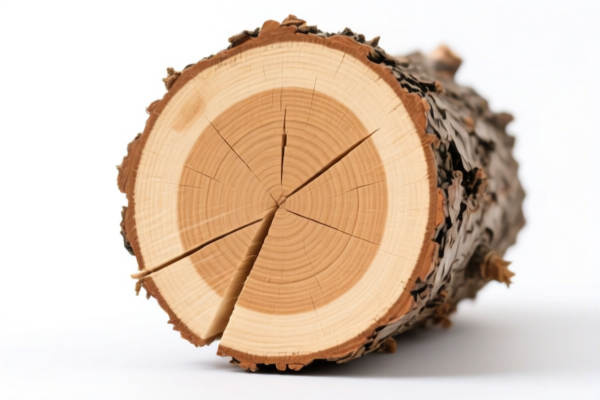
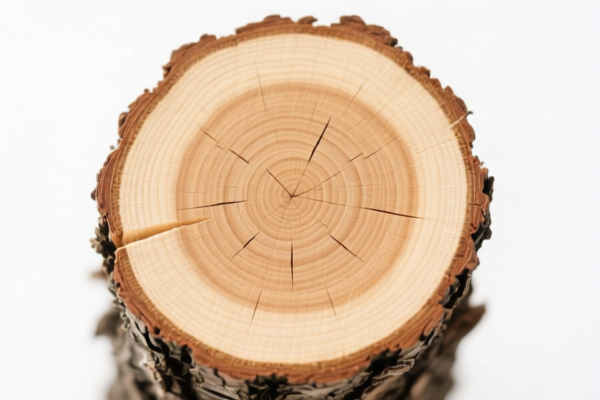
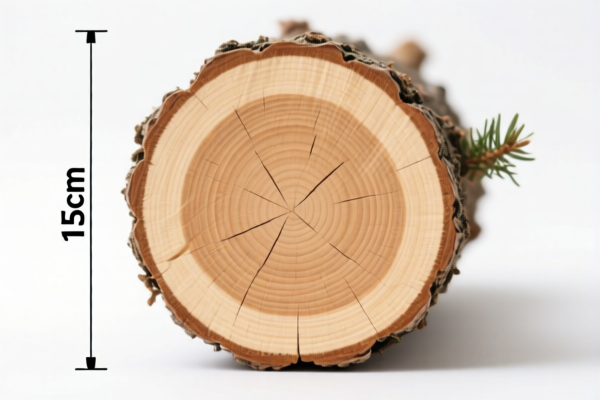
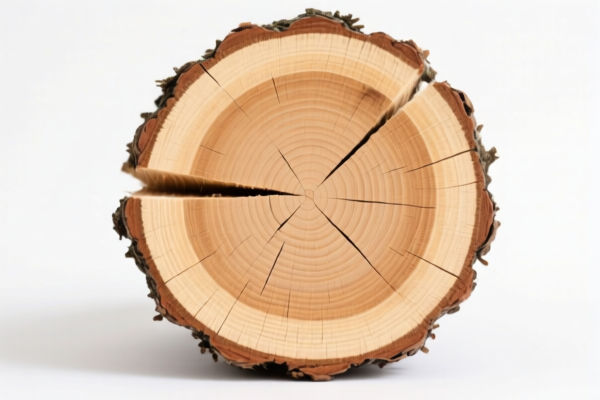
AI Analysis
🌲 Fir Logs (Cross Section ≥ 15cm)
🌐 HS Code Reference & Customs Clearance Guide | 2026 Latest Tariff Analysis | Professional Transit Strategy
📌 I. Product Definition & Classification: Do You Really Understand "Fir Logs"?
Fir Logs, specifically those with a cross-section of 15 centimeters or more, are the raw, unprocessed timber stems derived from fir trees (typically Abies species). In international trade, they are distinguished from sawn timber or processed wood by their natural, round shape and lack of planing or shaping.
Key Characteristics: * Material: Solid wood of fir species. * State: Raw, bark-on or debarked, but not further worked than squaring, sawing, or chipping at the ends. * Dimension: The critical threshold is the cross-section diameter ≥ 15cm. Logs smaller than this may fall into different sub-categories or be treated as "minor wood."
⚠️ Key Distinction Point:
- If the log has been planed, grooved, or shaped beyond simple cutting → It is No Longer a Log (e.g., Sawn Timber4407or Processed Wood4409).
- If the cross-section is < 15cm → It may not qualify for the specific heavy-duty log HS codes listed below, potentially affecting duty calculations or regulatory compliance.
- Fir vs. Pine: Ensure the species is correctly identified. Pine logs have their own HS codes (4403.21). Misclassification leads to severe penalties.
📦 II. HS Code Classification Details (2026 Latest Tariff Authority Match)
Based on the provided data, the following HS Codes apply to Fir Logs and related processed fir products. Note that the data includes both raw logs and processed versions; strict adherence to physical state is required.
| HS Code | Product Description | Applicable Scenario | Key Physical Characteristic |
|---|---|---|---|
4403.23.01.42 |
Fir Logs, cross-section 15cm or more | Raw timber import, construction base material | ✅ Raw Log, Diameter ≥ 15cm |
4407.12.00.58 |
Fir Sawn Timber, cross-section 15cm or more | Planed or sawn boards/planks, large gauge | ✅ Processed (Sawn), Large Cross-Section |
4407.12.00.59 |
Fir Sawn Timber, Other Coniferous | Standard sawn fir lumber, smaller sections | ✅ Processed (Sawn), Other Sizes |
4409.10.90.40 |
Fir Turned/Woodwork, Other Coniferous | Molded edges, tongue-and-groove, shaped wood | ✅ Deeply Processed (Machined) |
4403.21.01.25 |
Pine Logs, cross-section 15cm or more | ERROR CHECK: Pine species, NOT Fir | ❌ Wrong Species (Pine vs. Fir) |
🔍 Critical Reminder:
- The user input is "Fir Logs". Therefore, the only strictly correct HS Code for raw logs is4403.23.01.42.
- Codes4407...and4409...refer to Sawn Timber and Processed Wood, respectively. If you are importing raw logs, declaring them as4407or4409is a misclassification error.
- Code4403.21.01.25is for Pine. Do not use this for Fir. Using it for Fir is a serious species misdeclaration.
💰 III. 2026 Latest Tariff Rate Breakdown (Including Surcharges & Policy Add-ons)
✅ Applicable Country: United States (US)
✅ Origin: China (CN)
✅ Effective Date: Current Trade Restrictions Apply
All relevant HS Codes for Fir products in the provided dataset carry the same high tariff structure due to Section 301 and IEEPA measures.
🎯 1. 4403.23.01.42 —— Fir Logs (Cross Section ≥ 15cm)
(This is the primary code for your input)
| Item | Content |
|---|---|
| Base Duty Rate | 0.0% (ad valorem) |
| Section 301 Surcharge | +25.0% (USITC Footnote for Chinese-origin wood products) |
| 122 Provision Tariff | +10.0% (Specific statutory provision on Chinese imports) |
| Total Tax Rate | 35.0% |
| Tax Calculation | CIF Value × 35% |
| De Minimis Eligibility | ❌ NOT ELIGIBLE (Wood products generally excluded from $800 exemption under current rules) |
| Legal Authority Path | HTSUS:4403.23.01.42 → Section 301: Footnote 9903.88.01 → IEEPA: 122 Provision |
📌 Explanation:
- "Base Tariff 0%": Normal Most Favored Nation (MFN) rate is zero, but this is irrelevant due to surcharges.
- "Section 301 Surcharge 25%": Imposed on a wide range of Chinese goods, including wood products, to address unfair trade practices.
- "122 Provision Tariff 10%": An additional layer of tariff targeting specific Chinese imports under current executive orders.
- Combined Rate: 35%. This is a high tariff for raw materials. Cost planning must include this fully.
🎯 2. Processed Alternatives (4407 & 4409 Codes)
(Referenced for completeness if product state changes)
| HS Code | Description | Total Tax Rate | Components |
|---|---|---|---|
4407.12.00.58 |
Fir Sawn Timber (≥15cm) | 35.0% | Base 0% + Sec 301 25% + 122 Prov 10% |
4407.12.00.59 |
Fir Sawn Timber (Other) | 35.0% | Base 0% + Sec 301 25% + 122 Prov 10% |
4409.10.90.40 |
Fir Processed Wood | 35.0% | Base 0% + Sec 301 25% + 122 Prov 10% |
📌 Note:
- All listed HS Codes in the<DATA>share the exact same 35% total tax rate.
- This simplifies cost forecasting: whether importing logs or processed timber, the duty burden is identical.
- However, misclassifying logs as processed timber to avoid inspection risks is illegal and carries heavy fines.
🛠️ IV. Customs Clearance Practical Advice (Real-World Pitfall Guide)
✅ 1. Required Documentation Checklist (Mandatory)
| Document | Must Provide | Description |
|---|---|---|
| ✅ Commercial Invoice | ✔️ | Must clearly state "Fir Logs" (not "Pine" or "Lumber"), Cross-Section, Quantity, CIF Value. |
| ✅ Packing List | ✔️ | Detail log dimensions, bark status (debarked/undebarked), and total weight. |
| ✅ Phytosanitary Certificate | ✔️ | CRITICAL: Issued by the exporting country's plant protection agency. Must confirm no pests (e.g., Emerald Ash Borer, Pine Beetles). |
| ✅ Fumigation Certificate | ✔️ | If wood is not treated, fumigation proof is required by USDA APHIS. |
| ✅ Species Identification Letter | ✔️ | From a botanist or authorized lab proving the species is Abies (Fir), NOT Pine or other restricted species. |
| ✅ Bill of Lading/Air Waybill | ✔️ | Standard transport document. |
✅ 2. Declaration Tips (Key Mantras)
🔥 "Species Correct, Size Measured, Phytosanitary Ready!"
| Scenario | Correct Declaration | Incorrect Practice |
|---|---|---|
| Raw Fir Logs | 4403.23.01.42 |
Declaring as 4407 (Sawn Timber) → Misclassification Penalty |
| Fir + Pine Mix | Separate lines for each | Mixing in one line → Rejection/Fines |
| Logs < 15cm | Verify correct sub-code | Assuming 4403.23 applies → Potential Error |
| Bark On vs. Off | Specify in description | Vague description → Customs Hold for Inspection |
✅ 3. Special Situations
| Situation | Handling Advice |
|---|---|
| Suspect Pests | Immediate quarantine. Have a fumigation plan ready at port. |
| Species Dispute | If Customs doubts it's Fir, they may require DNA testing. Provide botanical proof upfront. |
| Value Dispute | 35% tax is significant. Ensure CIF value is accurate. Undervaluation leads to audits. |
| Transshipment | If routed through a third country, ensure no "substantial transformation" occurs, or origin rules change. |
🌍 V. Global Main Market Customs Comparison (2026 Latest)
| Country/Region | Recommended HS Code | Tariff (China Origin) | Certification Requirement | Notes |
|---|---|---|---|---|
| 🇺🇸 USA | 4403.23.01.42 |
35% (0% Base + 25% Sec 301 + 10% 122 Prov) | USDA APHIS + Phytosanitary | High Tariff. Strict IPQ (Import Permit for Quality) controls. |
| 🇨🇳 China | 4403.23.01.42 |
~5-10% | N/A | Standard import duties apply. |
| 🇪🇺 EU | 4403.23.01.42 |
0% (if FLEGT/EUTR compliant) | EUTR / FLEGT License | No Section 301 tariffs. Focus on sustainability proof. |
| 🇨🇦 Canada | 4403.23.01.42 |
0% (Most Favored Nation) | CFIA Phytosanitary | Low duty. Strict biosecurity. |
📌 Conclusion:
- USA is the highest-cost market for Fir Logs due to the 35% combined tariff.
- Phytosanitary compliance is non-negotiable globally.
- Ensure your supplier provides valid phytosanitary certificates to avoid port detention.
📌 VI. Common Errors & Pitfall Guide (Lessons Learned)
❌ Error 1: Declaring "Fir" when logs are actually "Pine"
👉 Consequence: HS Code 4403.21 vs 4403.23. While tax rate is similar, species misdeclaration can lead to biosecurity flags and fines.
❌ Error 2: Declaring "Sawn Timber" for Raw Logs
👉 Consequence: Misclassification. Customs may reclassify, delay cargo, and apply penalties for incorrect entry type.
❌ Error 3: Ignoring Cross-Section Size
👉 Consequence: If logs are <15cm, 4403.23.01.42 is incorrect. This may require a different sub-code or trigger different inspection protocols.
❌ Error 4: Missing Phytosanitary Certificate
👉 Consequence: Cargo Rejected or Returned. No exceptions for urgent shipments without this document.
✅ Correct Practice:
"Fir Logs (Abies spp.), Cross-Section ≥ 15cm, Debarked, Fumigated, Phytosanitary Certificate Attached, CIF Value $X, HS Code 4403.23.01.42"
🎯 VII. Conclusion: Professional Declaration Saves Money & Time!
🎯 Remember the Mantra:
🔹 "Fir is 4403.23, Pine is 4403.21. 15cm is the limit. Phytosanitary is key. 35% is the cost. Don't guess!"
🔹 "HS Code determines duty, Species determines legality, Documents determine speed."
📌 Tip:
If your Fir Logs are sourced from Canada or Europe, the tariff may be 0% (depending on FTAs).
For US imports from China, budget for 35%.
Consider pre-classification rulings from CBP if your shipment volume is large.
📣 Take Action Now:
📞 Contact your freight forwarder + Provide Phytosanitary Certs + Verify Species
🚀 Ensure smooth clearance, avoid delays, and manage your 35% tax liability accurately!
✨ Professional Clearance Starts with Accurate Classification!
💼 Every Percentage Point Counts in Wood Trade!
Customer Reviews
About HS Code Classification
The Harmonized System (HS) is an internationally standardized nomenclature developed by the World Customs Organization (WCO) to classify traded products. Over 200 countries use the HS system as the basis for customs tariffs, trade statistics, and import/export regulations.
Each HS code follows a hierarchical structure:
- Chapter (2 digits) — Broad category of goods (e.g., Chapter 84: Machinery and Mechanical Appliances)
- Heading (4 digits) — More specific grouping within the chapter
- Subheading (6 digits) — Internationally standardized breakdown, used by all WCO member countries
- National subdivisions (8-10 digits) — Country-specific extensions for further classification, such as US HTSUS 10-digit codes
Correct HS code classification is essential for smooth customs clearance, accurate duty payment, and compliance with trade regulations. Misclassification can lead to customs delays, overpayment of duties, or penalties.
When importing from CN to US, the applicable tariff rates may include:
- Most-Favored-Nation (MFN) rate — The standard duty rate applied to WTO members
- General rate — Applied to countries without trade agreements
- Trade remedy duties — Additional tariffs such as Section 301 (anti-dumping), Section 232 (national security), or countervailing duties
The information provided on this page is for reference purposes only. For official classification, please consult with your local customs authority or a licensed customs broker.