Fir Logs (Cross section 15cm and above)
CN → US| HS Code | Tariff Rate | Origin | Destination | Doc |
|---|---|---|---|---|
| 4403230142 | 35.0% | CN | US | Official Doc |
| 4407120058 | 35.0% | CN | US | Official Doc |
| 4409109040 | 35.0% | CN | US | Official Doc |
| 4407120059 | 35.0% | CN | US | Official Doc |
| 4401110000 | 35.0% | CN | US | Official Doc |
Product Images
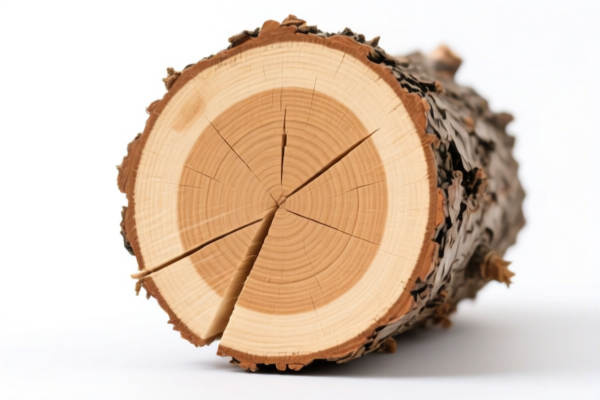
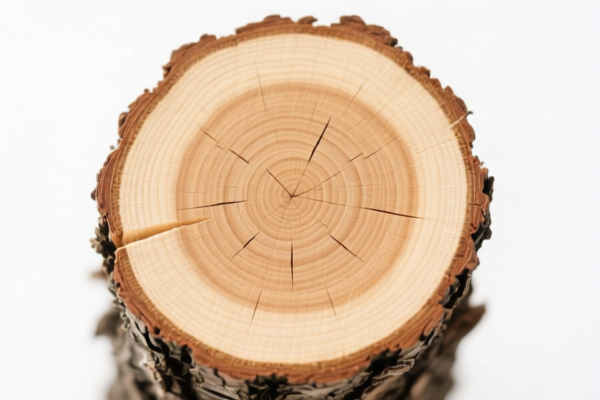
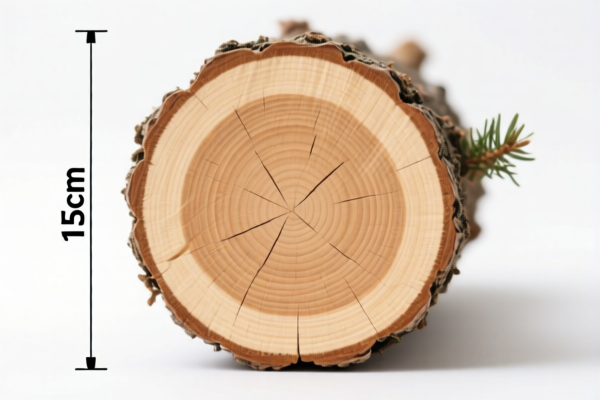
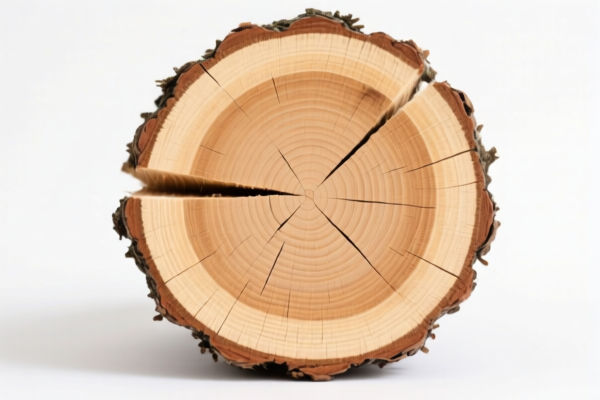
AI Analysis
🌲 Fir Logs (Cross-section 15cm or Above)
🌐 HS Code Reference & Customs Clearance Guide | 2026 Latest Tariff Analysis | Professional Strategy for Timber Imports
📌 I. Product Definition & Classification: Do You Really Understand "Fir Logs"?
Fir Logs are primary raw materials from the Abies genus (Coniferous/Needle-leaved wood). In international trade, specifically for imports into the United States, they are strictly regulated due to phytosanitary requirements and trade policy tariffs.
The classification hinges on two main factors: 1. Physical Form: Are they raw logs (unworked) or processed timber (sawn/planed)? 2. Cross-section Size: The prompt specifies "15cm or above," which aligns with standard large-dimension timber classifications for structural or industrial use.
⚠️ Key Distinction:
- If the wood is raw, unprocessed, and meets the size criteria → It is classified as Logs (Heading 4403 or 4401).
- If the wood has been sawn longitudinally into planks/lumber → It is classified as Sawn Wood (Heading 4407 or 4409).
- "Reference Item": Pine logs are often used as a benchmark for similar coniferous raw materials, sharing the same high-tariff structure under current US-China trade policies.
📦 II. HS Code Classification Details (2026 Latest Tariff Authority)
Based on the provided data, here is the precise breakdown for Fir Logs and related processed fir timber (Cross-section ≥15cm):
| HS Code | Product Description | Application Scenario | Processing State |
|--------|--------------------------|--------------------------|
| 4403.23.01.42 | Fir Logs, cross-section 15cm or above, classified under coniferous logs | Raw timber, export-grade logs, forestry products | ✅ Raw/Unprocessed |
| 4407.12.00.58 | Fir Sawn Timber, cross-section 15cm or above, longitudinal sawn wood | Planks, beams, structural lumber, construction materials | ✅ Sawn (Longitudinal) |
| 4407.12.00.59 | Fir Sawn Timber, cross-section 15cm or above, "Other" coniferous sawn wood | General-purpose fir lumber, non-specific grade | ✅ Sawn (Longitudinal) |
| 4409.10.90.40 | Fir Processed Wood, cross-section 15cm or above, other processed forms | Tongue-and-groove, profiled beams, special shapes | ✅ Profiling/Other Processing |
| 4401.11.00.00 | Pine Logs, cross-section 15cm or above (Reference Material) | Fuelwood, biomass, similar coniferous raw material | ✅ Raw/Unprocessed |
🔍 Critical Note:
- All listed HS codes share the exact same tariff structure under current US trade rules.
- The distinction lies in the physical state of the goods at the time of entry. Misdeclaring a "Sawn Board" as a "Log" to avoid specific phytosanitary checks is a severe compliance violation.
💰 III. 2026 Latest Tariff Rate Breakdown (Including Additional Duties)
✅ Applicable Country: United States (US)
✅ Country of Origin: China (CN) (Implied by the specific tariff structure)
✅ Effective Date: Current Trade Policy (Section 301 & IEEPA)
🎯 1. 4403.23.01.42 —— Fir Logs (Raw)
| Item | Content |
|---|---|
| Base Duty | 0.0% (Ad Valorem) |
| Section 301 Surcharge | +25.0% (Additional Tariff for Chinese Origin) |
| Section 122 Tariff | +10.0% (Specific Provision for Wood Products) |
| Total Effective Rate | 35.0% |
| Tax Calculation | CIF Value × 35% |
| De Minimis Exemption | ❌ Not Applicable (Deny_de_minimis for wood products of Chinese origin) |
| Legal Basis Path | USITC:4403.23.01.42 → Section 301: 25% → Section 122: 10% |
📌 Explanation:
- Base 0%: The standard MFN (Most Favored Nation) rate for logs is often low or zero.
- 25% Surcharge: Applied under Section 301 of the Trade Act of 1974, targeting Chinese imports.
- 10% Surcharge: Applied under Section 122 (or specific executive orders targeting timber/wood categories).
- Total 35%: This is a high-cost barrier. Importers must calculate landed cost carefully.
🎯 2. 4407.12.00.58 & 4407.12.00.59 —— Fir Sawn Timber
| Item | Content |
|---|---|
| Base Duty | 0.0% |
| Section 301 Surcharge | +25.0% |
| Section 122 Tariff | +10.0% |
| Total Effective Rate | 35.0% |
| Tax Calculation | CIF Value × 35% |
| De Minimis Exemption | ❌ Not Applicable |
📌 Note:
- Whether raw logs or sawn lumber, the tariff burden is identical at 35%.
- This ensures that processed timber does not gain an unfair tariff advantage over raw logs under current punitive trade measures.
🎯 3. 4409.10.90.40 —— Fir Processed Wood
| Item | Content |
|---|---|
| Base Duty | 0.0% |
| Section 301 Surcharge | +25.0% |
| Section 122 Tariff | +10.0% |
| Total Effective Rate | 35.0% |
| Tax Calculation | CIF Value × 35% |
| De Minimis Exemption | ❌ Not Applicable |
📌 Note:
- Even if the wood is profiled (e.g., tongue-and-groove), the 35% total tax remains.
- Higher processing costs may apply, but the tariff percentage does not decrease.
🎯 4. 4401.11.00.00 —— Pine Logs (Reference)
| Item | Content |
|---|---|
| Base Duty | 0.0% |
| Section 301 Surcharge | +25.0% |
| Section 122 Tariff | +10.0% |
| Total Effective Rate | 35.0% |
| Tax Calculation | CIF Value × 35% |
| De Minimis Exemption | ❌ Not Applicable |
📌 Note:
- Used as a benchmark for similar coniferous raw materials (e.g., Pine, Spruce, Larch).
- If your product is Pine instead of Fir, the tariff rate is the same.
🛠️ IV. Customs Clearance Practical Advice (Pitfall Avoidance Guide)
✅ 1. Documentation Checklist (Mandatory)
| Document | Required? | Explanation |
|---|---|---|
| ✅ Phytosanitary Certificate | ✔️ | Critical. Issued by the country of origin’s NPPO. Must confirm no pests/diseases. |
| ✅ Fumigation Certificate | ✔️ | Required if wood is not heat-treated. Must show ISPM 15 compliance. |
| ✅ Commercial Invoice | ✔️ | Must clearly state "Fir Logs" or "Fir Sawn Timber" and HS Code. |
| ✅ Packing List | ✔️ | Detail dimensions, volume (CBM), and weight. |
| ✅ Bill of Lading | ✔️ | Must match invoice and packing list details. |
| ✅ Certificate of Origin | ✔️ | Required to determine applicability of additional tariffs. |
📌 Warning:
- No Phytosanitary Certificate = Immediate Rejection/Return!
- Incorrect Species Identification: If "Fir" is mislabeled as "Oak," customs may impose higher penalties or delay clearance for species verification.
✅ 2. Declaration Tips (Key Mantra)
🔥 "Species Precise, Size Clear, Certificates Ready, Tariffs Managed!"
| Scenario | Correct Declaration | Wrong Practice |
|---|---|---|
| Raw Logs | 4403.23.01.42 - "Fir Logs, Cross-section ≥15cm" |
Misdeclaring as "Sawn Timber" to avoid log-specific checks |
| Sawn Lumber | 4407.12.00.58 - "Fir Sawn Timber, ≥15cm" |
Misdeclaring as "Logs" to bypass phytosanitary intensity |
| Mixed Shipments | Separate HS Codes for Logs vs. Sawn Wood | Mixing logs and sawn wood in one line item → Risk of audit |
| Pine vs. Fir | Specify exact genus (Abies for Fir, Pinus for Pine) | Generic "Coniferous Logs" → Higher scrutiny |
✅ 3. Special Circumstances Handling
| Situation | Handling Advice |
|---|---|
| Heat-Treated Wood | Ensure ISPM 15 mark is visible on packaging/logs. Reduces phytosanitary risk. |
| Small Cross-Section (<15cm) | Not covered by these codes. May fall under different subheadings with different tariffs. |
| Origin: Non-China | If imported from Canada, Russia, or Europe, Section 301 and Section 122 do NOT apply. Tariff may be 0%. |
| Sample/Small Quantity | Still subject to 35% tariff if from China. De Minimis ($800) does NOT apply to wood products. |
🌍 V. Global Market Comparison (2026 Latest)
| Country/Region | Recommended HS Code | Tariff (China Origin) | Certification | Notes |
|---|---|---|---|---|
| 🇺🇸 USA | 4403.23.01.42 / 4407.12.00.58 |
35% (0% Base + 25% Sec 301 + 10% Sec 122) | Phytosanitary + ISPM 15 | High barrier for Chinese wood. |
| 🇨🇳 China | 4403.23.01.42 |
0% - 5% | Depends on import type | Import duty may be low, but export restrictions may apply. |
| 🇪🇺 EU | 4403.23.00 |
0% - 2.4% | FSC/PEFC (Voluntary), EUTR Compliance | No Section 301 tariffs. Strict EU Timber Regulation. |
| 🇯🇵 Japan | 4403.23.00 |
2.5% - 5.5% | ISPM 15 | Competitive market, strict quality checks. |
📌 Conclusion:
- USA is the most expensive market for Chinese-origin Fir due to the 35% combined tariff.
- EU and Japan offer lower tariffs but have strict sustainability and legality requirements (EUTR, Lacey Act equivalent).
📌 VI. Common Mistakes & Pitfalls (Lessons Learned)
❌ Mistake 1: Claiming "De Minimis" ($800 exemption) for small shipments of Fir from China.
👉 Consequence: Denied. Wood products are excluded from de minimis. Full 35% duty applies.
❌ Mistake 2: Missing the Phytosanitary Certificate.
👉 Consequence: Cargo seized or returned. Costly delays and potential destruction of wood.
❌ Mistake 3: Misidentifying the species (e.g., calling Fir "Spruce").
👉 Consequence: Customs audit. If species affects tariff (unlikely here but possible in other codes), penalties apply. More importantly, pest risk varies by species.
❌ Mistake 4: Not checking ISPM 15 marks.
👉 Consequence: Rejection at border. All wood packaging and loose wood must be marked.
✅ Correct Practice:
"Fir Logs, Abies species, Cross-section ≥15cm, Heat-Treated (ISPM 15 Marked), Origin: China, HS: 4403.23.01.42"
🎯 VII. Conclusion: Professional Declaration, Cost Control, Risk Reduction
🎯 Remember the Mantra:
🔹 "Logs vs. Sawn? Code differs, Tariff same! 35% is the key!"
🔹 "Phytosanitary is King! No Cert, No Entry!"
📌 Tips:
- If your Fir is not from China (e.g., from Canada or Russia), you can avoid the 35% tariff. Focus on sourcing from FTA (Free Trade Agreement) countries if possible.
- Consider pre-clearance services or customs brokers specializing in forestry products to ensure all documents are perfect before shipment.
📣 Immediate Action:
📞 Contact your customs broker now!
📄 Ensure Phytosanitary Certificate is ready.
📊 Calculate landed cost with 35% duty included.
✨ Professional Clearance Starts with Accurate Classification!
💼 Your timber business deserves precision and peace of mind!
Customer Reviews
About HS Code Classification
The Harmonized System (HS) is an internationally standardized nomenclature developed by the World Customs Organization (WCO) to classify traded products. Over 200 countries use the HS system as the basis for customs tariffs, trade statistics, and import/export regulations.
Each HS code follows a hierarchical structure:
- Chapter (2 digits) — Broad category of goods (e.g., Chapter 84: Machinery and Mechanical Appliances)
- Heading (4 digits) — More specific grouping within the chapter
- Subheading (6 digits) — Internationally standardized breakdown, used by all WCO member countries
- National subdivisions (8-10 digits) — Country-specific extensions for further classification, such as US HTSUS 10-digit codes
Correct HS code classification is essential for smooth customs clearance, accurate duty payment, and compliance with trade regulations. Misclassification can lead to customs delays, overpayment of duties, or penalties.
When importing from CN to US, the applicable tariff rates may include:
- Most-Favored-Nation (MFN) rate — The standard duty rate applied to WTO members
- General rate — Applied to countries without trade agreements
- Trade remedy duties — Additional tariffs such as Section 301 (anti-dumping), Section 232 (national security), or countervailing duties
The information provided on this page is for reference purposes only. For official classification, please consult with your local customs authority or a licensed customs broker.