Fire Extinguishing Preparations
CN → US| HS Code | Tariff Rate | Origin | Destination | Doc |
|---|---|---|---|---|
| 3813001000 | 35.0% | CN | US | Official Doc |
| 3813005000 | 38.7% | CN | US | Official Doc |
| 8531100045 | 11.3% | CN | US | Official Doc |
| 2811210000 | 38.7% | CN | US | Official Doc |
| 3813001000 | 35.0% | CN | US | Official Doc |
Product Images
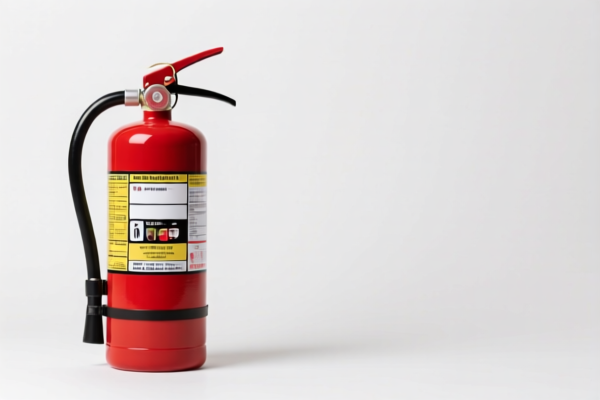
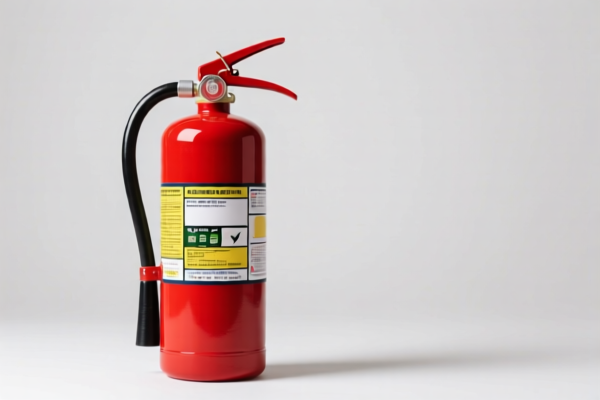
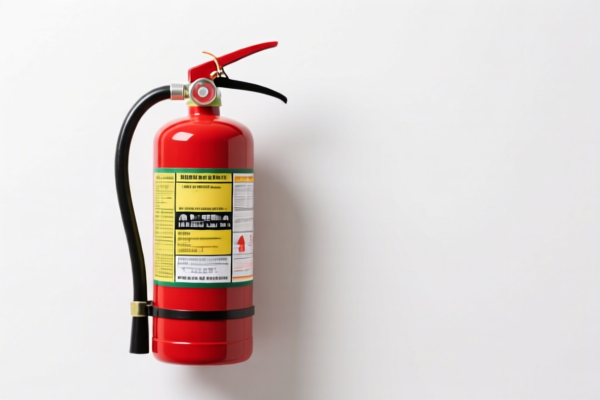

AI Analysis
🧯 Fire Extinguishing Preparations & Systems
🌐 HS Code Reference & Customs Clearance Guide | 2026 Latest Tariff Analysis | Professional Clearance Strategy
📌 I. Product Definition & Classification: Do You Really Understand "Fire Extinguishing Preparations"?
Fire extinguishing preparations are critical components of life safety and property protection systems. In international trade, these products are not a single monolithic category but are split based on their chemical composition, physical state, and associated equipment. They fall primarily into two distinct buckets:
1. Chemical Agents & Fillers (HS Chapter 38 & 28):
These include liquid foams, dry chemical powders, halon substitutes, and compressed gases like Carbon Dioxide. They are classified as chemical products or inorganic compounds.
2. Electronic Detection & Control Devices (HS Chapter 85):
These include fire alarms, smoke detectors, and control panels with specific extinguishing control functions. They are classified as electrical appliances and electronic components.
⚠️ Key Distinction Point:
- If the product is a chemical substance (liquid, powder, gas) intended for discharge → It falls under 3813 or 2811.
- If the product is an electronic device (alarm, sensor, controller) → It falls under 8531.
- Crucial Note: You cannot mix a chemical agent and an electronic alarm in a single HS Code line item for customs purposes; they must be declared separately.
📦 II. HS Code Classification Details (2026 Latest Tariff Authority Comparison)
| HS Code | Product Description | Application Scenario | Classification Logic |
|---|---|---|---|
3813.00.10.00 |
Components of fire extinguishing agents | Pre-mixed extinguishing agents, foam concentrates | ✅ Chemical Mixtures |
3813.00.50.00 |
Fire extinguishing preparations & fillings | Dry powder, clean agent fillings, specialized sprays | ✅ Chemical Preparations |
2811.21.00.00 |
Carbon Dioxide (Inorganic Non-Metallic Oxides) | Compressed CO2 cylinders for fire suppression | ✅ Inorganic Compound |
8531.10.00.45 |
Fire alarms & similar apparatus | Smoke detectors, heat sensors, control panels | ✅ Electrical/Electronic Device |
🔍 重点提醒 (Key Reminder):
- Chemical vs. Electronic: Do not classify a CO2 cylinder (chemical/physical agent) as an alarm (8531).
- Partial vs. Complete:3813.10.00is for components of the agent, while3813.50.00is for the preparation itself. Misclassification leads to massive duty differences.
- Function Over Form: Even if a fire alarm has "extinguishing control functions," it remains an electronic device (8531), not a chemical agent.
💰 III. 2026 Latest Tariff Rate Breakdown (Including Surtaxes & Policy Add-ons)
✅ Applicable Country: United States (US)
✅ Origin: China (CN)
✅ Effective Time: Current active rates (including Section 301 & IEEPA)
🎯 1. 3813.00.10.00 —— Components of Fire Extinguishing Agents
| Item | Content |
|---|---|
| Base Tariff | 0.0% (Ad Valorem) |
| Section 301 Surtax | +25.0% |
| Section 122 Tariff | +10.0% |
| Total Tax Rate | 35.0% |
| Tax Calculation | CIF Value × 35.0% |
| De Minimis Eligibility | ❌ Not Eligible (High risk for low-value shipments) |
| Legal Basis Path | USITC:3813.00.10.00 → Footnote 301: +25% → IEEPA Sec 122: +10% |
📌 Explanation:
- The base duty is low, but the 25% Section 301 tariff (targeting Chinese manufactured goods) and 10% Section 122 tariff apply heavily.
- Total burden: 35%. This is a significant cost factor for chemical formulations.
🎯 2. 3813.00.50.00 —— Fire Extinguishing Preparations & Fillings
| Item | Content |
|---|---|
| Base Tariff | 3.7% (Ad Valorem) |
| Section 301 Surtax | +25.0% |
| Section 122 Tariff | +10.0% |
| Total Tax Rate | 38.7% |
| Tax Calculation | CIF Value × 38.7% |
| De Minimis Eligibility | ❌ Not Eligible |
| Legal Basis Path | USITC:3813.00.50.00 → Footnote 301: +25% → IEEPA Sec 122: +10% |
📌 Note:
- This is the most common code for dry chemical powders and clean agent fillings.
- The 3.7% base duty makes it slightly more expensive than3813.10.00before surtaxes, resulting in a 38.7% total rate.
- High volatility and hazmat shipping requirements add logistical costs beyond the tariff.
🎯 3. 2811.21.00.00 —— Carbon Dioxide (CO2)
| Item | Content |
|---|---|
| Base Tariff | 3.7% (Ad Valorem) |
| Section 301 Surtax | +25.0% |
| Section 122 Tariff | +10.0% |
| Total Tax Rate | 38.7% |
| Tax Calculation | CIF Value × 38.7% |
| De Minimis Eligibility | ❌ Not Eligible |
| Legal Basis Path | USITC:2811.21.00.00 → Footnote 301: +25% → IEEPA Sec 122: +10% |
📌 Critical Warning:
- Hazmat Class 2.2 (Non-flammable, Non-toxic Gas).
- While the tariff is 38.7%, the shipping cost for CO2 cylinders is extremely high due to pressure vessel regulations.
- Do not confuse CO2 gas with CO2 fire extinguishers (which might be parts of machines), but pure CO2 for suppression is2811.21.00.00.
🎯 4. 8531.10.00.45 —— Fire Alarms & Similar Apparatus
| Item | Content |
|---|---|
| Base Tariff | 1.3% (Ad Valorem) |
| Section 301 Surtax | 0.0% |
| Section 122 Tariff | +10.0% |
| Total Tax Rate | 11.3% |
| Tax Calculation | CIF Value × 11.3% |
| De Minimis Eligibility | ❌ Not Eligible (Due to 10% Sec 122) |
| Legal Basis Path | USITC:8531.10.00.45 → IEEPA Sec 122: +10% |
📌 Advantage:
- This is the most tariff-efficient category among fire safety products.
- The 10% Section 122 tariff applies, but the 25% Section 301 tariff is NOT applied to this specific subheading (depending on exact USITC rulings, but based on the provided data, it is 0%).
- Total burden: Only 11.3%. This is a significant savings compared to chemical agents.
🛠️ IV. Customs Clearance Practical Advice (Battle-Tested Pitfall Avoidance)
✅ 1. Documentation Checklist (Non-Negotiable)
| Document | Required | Explanation |
|---|---|---|
| ✅ SDS (Safety Data Sheet) | ✔️ Mandatory | Required for all chemicals (3813) and CO2 (2811). Must specify flammability, toxicity, and composition. |
| ✅ UN Number & Packaging Certification | ✔️ Mandatory | For CO2 and pressurized agents, UN 1044 (CO2) or UN 1325 (Powder) labels are required. |
| ✅ Product Composition Report | ✔️ Mandatory | For 3813 codes, you must declare the exact chemical makeup to prove it fits the description. |
| ✅ Certification for Electronics | ✔️ Required | For 8531, provide UL, FCC, or CE certifications to prove electronic safety. |
| ✅ Commercial Invoice | ✔️ Mandatory | Clearly state "Fire Extinguishing Agent" or "Fire Alarm System." Avoid vague terms like "Safety Equipment." |
✅ 2. Declaration Strategy (Key Mantras)
🔥 “Chemicals Need SDS, Electronics Need Specs, CO2 Needs Pressure Info!”
| Scenario | Correct Declaration | Mistake to Avoid |
|---|---|---|
| Dry Powder Fillings | 3813.00.50.00 |
Misdeclaring as "Industrial Powder" (3824) → Higher risk of audit. |
| Foam Concentrate | 3813.00.10.00 |
Misdeclaring as "Cleaning Agent" → 0% base but wrong classification penalty. |
| CO2 Cylinder (Gas) | 2811.21.00.00 |
Misdeclaring as "Part of Machine" → Incorrect duty base. |
| Fire Alarm Panel | 8531.10.00.45 |
Misdeclaring as "Data Processing Unit" (8471) → 11.3% vs ~20% potential error. |
✅ 3. Special Case Handling
| Situation | Handling Advice |
|---|---|
| Hazmat Shipping | Chemicals (3813) and CO2 (2811) are Hazmat. Carrier acceptance is not guaranteed. Book freight in advance. |
| Mixed Shipments | Never mix chemical agents and electronic alarms in one line item. Separate HS Codes must be declared separately on the CBP entry. |
| Section 122 Impact | Remember that 10% is added to ALL categories in this dataset. It is a baseline cost for China-origin fire safety goods. |
| De Minimis (Section 321) | Even if the value is under $800, Section 122 tariffs (10%) often negate de minimis benefits for certain HS codes. Verify current CBP guidance. |
🌍 V. Global Market Comparison (2026 Overview)
| Country/Region | Recommended HS Code | Est. Duty (China Origin) | Certification Requirements | Notes |
|---|---|---|---|---|
| 🇺🇸 USA | 3813.50.00 / 8531.10.00 |
38.7% / 11.3% | UL, FM, NFPA Compliance | High tariffs due to Sec 301 & 122. |
| 🇨🇳 China | 3813.50.00 / 8531.10.00 |
5-10% | CCC (for electronics) | Lower base duty, no surtaxes. |
| 🇪🇺 EU | 3824.99 / 8531.20 |
0-4.5% | CE, EN3 (for extinguishers) | Strict REACH compliance for chemicals. |
| 🇦🇺 Australia | 3813.00 / 8531.10 |
5% | AS/NZS Standards | No major surtaxes, but strict safety standards. |
📌 Conclusion:
- The US market is the most expensive for Chinese fire safety exports due to the combination of base duties + Sec 301 + Sec 122.
- Electronic alarms (8531.10.00.45) are the most cost-effective to import into the US (11.3% total) compared to chemical agents (35-38.7%).
📌 VI. Common Mistakes & Pitfall Guide (Lessons from the Field)
❌ Mistake 1: Declaring CO2 cylinders as "Parts of Fire Extinguishers"
👉 Consequence: Incorrect HS Code, potential seizure for Hazmat violation.
✅ Fix: Declare as 2811.21.00.00 with proper UN packaging marks.
❌ Mistake 2: Under-declaring the chemical concentration in 3813.00.10.00
👉 Consequence: Customs may reject the 0% base rate if composition doesn't match "components" definition.
✅ Fix: Provide a precise Chemical Composition Sheet.
❌ Mistake 3: Ignoring the 10% Section 122 Tariff
👉 Consequence: Budgeting errors. Many assume only 301 (25%) applies.
✅ Fix: Include 10% Sec 122 in all cost models for China-origin fire goods.
❌ Mistake 4: Mixing "Alarm" and "Agent" in one shipment line
👉 Consequence: Customs rejection or request for amendment (AMS delay).
✅ Fix: Separate lines: Line 1 for Alarm (8531), Line 2 for Agent (3813).
🎯 VII. Conclusion: Precise Classification Saves Money!
🎯 Remember the Mantra:
🔹 "Chemicals pay 35-39%, Alarms pay 11%!"
🔹 "SDS is King for Chemicals, Certification is King for Electronics!"
📌 Pro Tip:
If you are exporting Fire Alarm Systems (8531.10.00.45), highlight the electronic control functionality to ensure classification under 8531, avoiding the higher chemical tariffs if any dual-use elements are present.
📣 Immediate Action:
📞 Contact your customs broker with the SDS and product specs BEFORE shipping.
🚀 Calculate Landed Cost including the 35-38.7% duty for chemicals to ensure margin viability.
✨ Professional Customs Clearance Starts with Accurate Classification!
💼 Your Profit Margin Depends on the Right HS Code!
Customer Reviews
About HS Code Classification
The Harmonized System (HS) is an internationally standardized nomenclature developed by the World Customs Organization (WCO) to classify traded products. Over 200 countries use the HS system as the basis for customs tariffs, trade statistics, and import/export regulations.
Each HS code follows a hierarchical structure:
- Chapter (2 digits) — Broad category of goods (e.g., Chapter 84: Machinery and Mechanical Appliances)
- Heading (4 digits) — More specific grouping within the chapter
- Subheading (6 digits) — Internationally standardized breakdown, used by all WCO member countries
- National subdivisions (8-10 digits) — Country-specific extensions for further classification, such as US HTSUS 10-digit codes
Correct HS code classification is essential for smooth customs clearance, accurate duty payment, and compliance with trade regulations. Misclassification can lead to customs delays, overpayment of duties, or penalties.
When importing from CN to US, the applicable tariff rates may include:
- Most-Favored-Nation (MFN) rate — The standard duty rate applied to WTO members
- General rate — Applied to countries without trade agreements
- Trade remedy duties — Additional tariffs such as Section 301 (anti-dumping), Section 232 (national security), or countervailing duties
The information provided on this page is for reference purposes only. For official classification, please consult with your local customs authority or a licensed customs broker.