Flame Retardant Plastic Wall Cloth Fabric
CN → US| HS Code | Tariff Rate | Origin | Destination | Doc |
|---|---|---|---|---|
| 5911101000 | 37.9% | CN | US | Official Doc |
| 5911900080 | 38.8% | CN | US | Official Doc |
| 6303990010 | 28.8% | CN | US | Official Doc |
| 6303922050 | 28.8% | CN | US | Official Doc |
| 6303922050 | 28.8% | CN | US | Official Doc |
Product Images
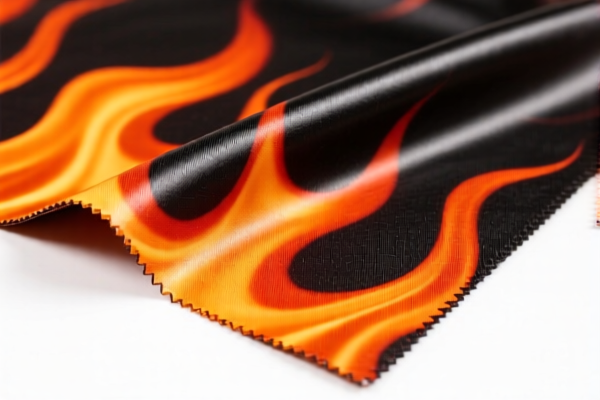
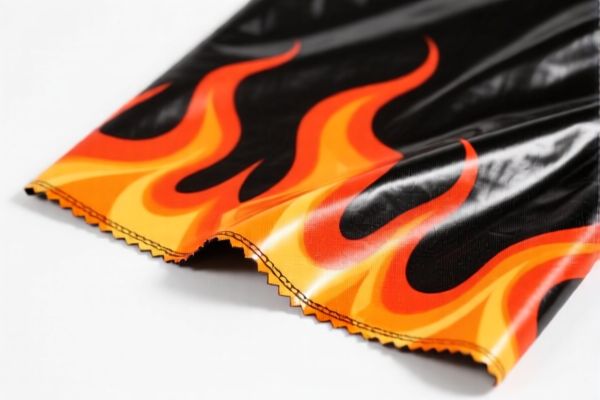
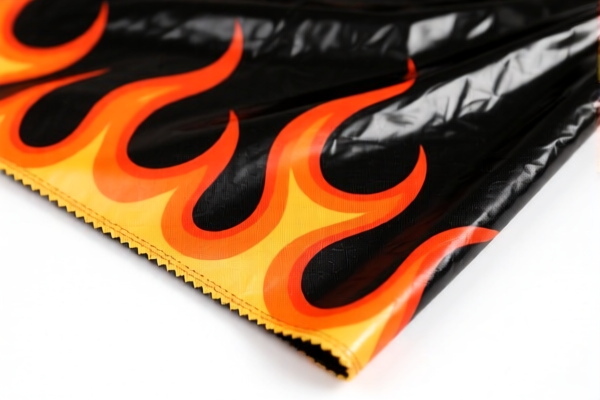
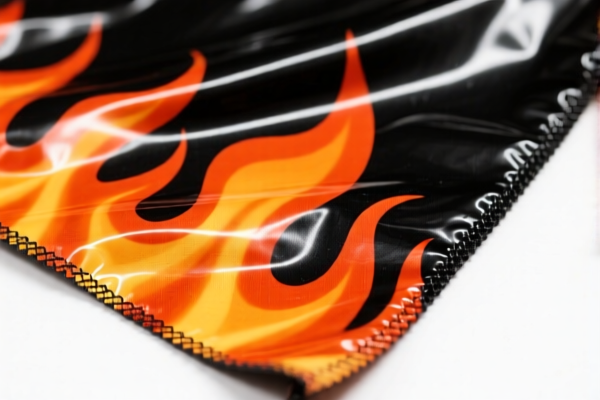
AI Analysis
🧱 Flame Retardant Plastic Wall Cloth Fabric
🌐 HS Code Reference & Customs Clearance Guide | 2026 Latest Tariff Analysis | Professional-Level Clearance Strategy
📌 I. Product Definition & Classification: Do You Really Understand "Flame Retardant Wall Cloth"?
"Flame Retardant Plastic Wall Cloth Fabric" is a niche building material and decorative textile product. In international trade, its classification is tricky because it straddles the line between textiles (Chapter 59/63) and plastics/consumer goods (Chapter 63). The key lies in the material composition (fibers vs. plastic sheets) and form (fabric/woven vs. curtain/sheet).
Key Distinctions: 1. Textile-Based (Woven/Knitted Fabrics): If the core material is textile fibers (cotton, polyester, etc.) treated with flame retardants, it falls under Chapter 59 (Textile Articles Impregnated/Covered) or Chapter 63 (Other Made-Up Textile Articles). 2. Plastic-Based (Sheets/Curtains): If the material is essentially a plastic sheet or curtain (even if marketed as "cloth" or "wall covering"), it may fall under Chapter 63 as other made-up articles.
⚠️ Critical Classification Point:
- If it is a woven textile with flame-retardant finishing → Likely 5911.10.10.00 or 5911.90.00.80.
- If it is a non-textile wall covering (e.g., plastic-coated, PVC-based) acting as a curtain/wall cloth → Likely 6303.99.00.10 or 6303.92.20.50.
📦 II. HS Code Classification Details (2026 Latest Tariff Authority Mapping)
| HS Code | Product Description | Application Scenario | Material/Form | Total Tax Rate* |
|---|---|---|---|---|
5911.10.10.00 |
High-quality flame retardant fabric, textile form, functional flame retardancy | Industrial protective textiles, specialized decorative fabrics | Textile (Fabric) | 37.9% |
5911.90.00.80 |
Technical textile products, material is fabric, flame retardancy is a functional feature | Technical textiles, specialized wall coverings | Textile (Fabric) | 38.8% |
6303.99.00.10 |
Textile material form, flame retardant fabric usually made of artificial or blended fibers | Decorative wall cloths, non-standard textile coverings | Textile (Made-up) | 28.8% |
6303.92.20.50 |
Fabric form, complies with synthetic fibers or fiber products, no conflict with flame retardant attribute | General synthetic fiber wall coverings, decorative panels | Synthetic Fiber | 28.8% |
6303.92.20.50 |
Plastic flame retardant curtain, form is curtain, material is plastic, complies with synthetic material category | PVC/Plastic-based wall "cloths" or curtains | Plastic/Synthetic | 28.8% |
🔍 Note:
- Codes5911.*are for technical/textile fabrics where flame retardancy is a primary functional attribute.
- Codes6303.*are for made-up textile or plastic articles (like curtains/wall cloths) where the form (curtain/sheet) dominates.
- Tax rates vary significantly based on whether it's classified as a "technical textile" (higher duty) or a "general wall covering" (lower duty).*Total Tax Rate includes: Basic Tariff + Section 301 (Additional) Tariff + Section 122 Tariff (if applicable).
💰 III. 2026 Latest Tariff Rate Breakdown (Including Surcharges & Policy Add-ons)
✅ Applicable Country: United States (US)
✅ Country of Origin: China (CN)
✅ Effective Date: 2025 November 10 onwards (and subsequent imports)
🎯 1. 5911.10.10.00 —— High-Quality Flame Retardant Fabric (Textile)
| Item | Content |
|---|---|
| Basic Tariff | 2.9% (Ad Valorem) |
| Section 301 Additional Tariff | +25.0% |
| Section 122 Tariff | +10.0% |
| Total Tax Rate | 37.9% |
| Tax Calculation | CIF Value × 37.9% |
| De Minimis Eligibility | ❌ No (Denied) |
| Legal Basis Path | USITC:5911.10.10.00 → Section 301: 25% → Section 122: 10% |
📌 Explanation:
- This code is for technical textiles. The "flame retardant" attribute defines its function.
- 37.9% is a high rate. Importers must ensure the product truly meets the "technical textile" definition. Misclassification can lead to penalties.
🎯 2. 5911.90.00.80 —— Technical Textile Products (Fabric)
| Item | Content |
|---|---|
| Basic Tariff | 3.8% |
| Section 301 Additional Tariff | +25.0% |
| Section 122 Tariff | +10.0% |
| Total Tax Rate | 38.8% |
| Tax Calculation | CIF Value × 38.8% |
| De Minimis Eligibility | ❌ No |
| Legal Basis Path | USITC:5911.90.00.80 → Section 301: 25% → Section 122: 10% |
📌 Note:
- Slightly higher basic rate (3.8% vs 2.9%) than the previous code.
- Used when the specific subheading5911.10.10.00does not fully apply, but it's still a technical fabric.
🎯 3. 6303.99.00.10 —— Other Made-Up Textile Articles (Wall Cloth)
| Item | Content |
|---|---|
| Basic Tariff | 11.3% |
| Section 301 Additional Tariff | +7.5% |
| Section 122 Tariff | +10.0% |
| Total Tax Rate | 28.8% |
| Tax Calculation | CIF Value × 28.8% |
| De Minimis Eligibility | ❌ No |
| Legal Basis Path | USITC:6303.99.00.10 → Section 301: 7.5% → Section 122: 10% |
📌 Explanation:
- Lower total rate (28.8%) compared to Chapter 59.
- This code is often used for decorative wall coverings that are textile-based but not classified as "technical fabrics."
- Risk: Customs may challenge this if the product is deemed "technical" (requiring Chapter 59).
🎯 4. 6303.92.20.50 —— Synthetic Fiber Wall Coverings / Plastic Curtains
| Item | Content |
|---|---|
| Basic Tariff | 11.3% |
| Section 301 Additional Tariff | +7.5% |
| Section 122 Tariff | +10.0% |
| Total Tax Rate | 28.8% |
| Tax Calculation | CIF Value × 28.8% |
| De Minimis Eligibility | ❌ No |
| Legal Basis Path | USITC:6303.92.20.50 → Section 301: 7.5% → Section 122: 10% |
📌 Note:
- This code covers plastic-based wall coverings or synthetic fiber products.
- If your "plastic wall cloth" is essentially a PVC sheet or plastic curtain, this is likely the most accurate and cost-effective classification (28.8%).
- Key: Ensure documentation clearly states "Plastic Curtain" or "Synthetic Wall Covering" rather than "Textile Fabric."
🛠️ IV. Customs Clearance Practical Advice (Real-World Pitfall Guide)
✅ 1. Documentation Checklist (Mandatory)
| Document | Required | Description |
|---|---|---|
| ✅ Product Specification Sheet | ✔️ | Must specify material (e.g., "PVC-coated polyester" vs. "Pure Polyester"), weight, width, and flame retardant certification. |
| ✅ Material Composition Proof | ✔️ | Lab test report showing % of synthetic vs. natural fibers or plastic content. |
| ✅ Flame Retardant Test Report | ✔️ | UL, ASTM, or EN standards proof. Crucial for functional description. |
| ✅ Commercial Invoice | ✔️ | Clear description: e.g., "Flame Retardant PVC Wall Covering" OR "Technical Flame Retardant Fabric." |
| ✅ Packing List | ✔️ | Roll dimensions, weight, and packing method. |
| ✅ Certificate of Origin | ✔️ | To prove Chinese origin (for tariff calculation). |
✅ 2. Declaration Tips (Key Mnemonic)
🔥 "Material Dictates Code, Form Dictates Chapter!"
| Scenario | Correct HS Code | Incorrect Code | Consequence |
|---|---|---|---|
| PVC/Plastic-based Wall Covering | 6303.92.20.50 (28.8%) |
5911.10.10.00 (37.9%) |
Overpaying ~9% duty |
| Technical Textile Fabric | 5911.10.10.00 (37.9%) |
6303.99.00.10 (28.8%) |
Underpayment + Penalties |
| General Decorative Textile Curtain | 6303.99.00.10 (28.8%) |
5911.90.00.80 (38.8%) |
Overpaying ~10% duty |
📌 Critical Advice:
- If the product is plastic-based, emphasize "Plastic Curtain" or "PVC Wall Covering" in the description to aim for 6303.92.20.50 (28.8%).
- If it is fabric-based, determine if it's "technical" (Chapter 59) or "general made-up" (Chapter 63).
- Do not use vague terms like "Wall Cloth" without specifying material.
✅ 3. Special Case Handling
| Situation | Handling Advice |
|---|---|
| Hybrid Material (e.g., Fiberglass + Plastic Coating) | Classify based on essential character. If plastic coating dominates, consider 6303.92.20.50. If fiberglass textile is essential, consider 5911. |
| Flame Retardant Certification | Provide UL/ASTM reports. Customs may inspect to verify functional claims. |
| Rolls vs. Sheets | If cut to size and packaged as sheets, it may still be considered "made-up" under Chapter 63. |
🌍 V. Global Market Clearance Comparison (2026 Latest)
| Country/Region | Recommended HS Code | Tariff (China Origin) | Certification Requirement | Notes |
|---|---|---|---|---|
| 🇺🇸 USA | 6303.92.20.50 |
28.8% | UL/ASTM (Flame Retardancy) | High scrutiny on material composition |
| 🇨🇳 China | 6303.92.20.50 |
11.3% | CCC (if applicable) | Lower duty, no Section 301 |
| 🇪🇺 EU | 6303.92.20.50 |
0%~6% | CE/REACH (Flame Retardancy) | No additional surcharges |
| 🇦🇺 Australia | 6303.92.20.50 |
5% | AS/NZS Standards | No Section 301 |
| 🇯🇵 Japan | 6303.92.20.50 |
0%~5% | JIS Standards | No additional surcharges |
📌 Conclusion:
- USA is the most expensive market due to Section 301 and Section 122 tariffs.
- Chapter 63 (28.8%) is significantly cheaper than Chapter 59 (37.9%-38.8%).
- Strategy: If your product can be legitimately classified as a "plastic wall covering" or "synthetic fiber article" (Chapter 63), do so to save ~10% in duties.
📌 VI. Common Mistakes & Pitfall Guide (Lessons Learned)
❌ Mistake 1: Calling "Plastic Wall Cloth" a "Textile Fabric"
👉 Result: Customs classifies it as 5911.10.10.00 (37.9%) → Overpaid ~9%.
✅ Fix: Use "Plastic Wall Covering" or "PVC Curtain" in declaration.
❌ Mistake 2: Ignoring Flame Retardant Certification
👉 Result: Customs questions the "functional" description → Delay/Inspection.
✅ Fix: Always attach UL/ASTM test reports.
❌ Mistake 3: Misclassifying "Technical Textile" as "General Curtain"
👉 Result: Underpayment of duty → Penalties + Back Taxes.
✅ Fix: If the fabric is used for industrial/technical purposes, use Chapter 59.
❌ Mistake 4: Vague Description "Wall Cloth"
👉 Result: Ambiguity → Customs discretion → High Risk.
✅ Fix: Be specific: "Flame Retardant PVC Wall Covering, 1.5m Width, Roll Form."
🎯 VII. Conclusion: Professional Declaration, Save Costs, Ensure Clearance!
🎯 Remember the Mnemonic:
🔹 "Plastic Form, Chapter 63 (28.8%); Textile Function, Chapter 59 (38%)."
🔹 "HS Code Saves Money, Description Saves Time!"
📌 Pro Tip:
If your product is plastic-based, insist on classification under 6303.92.20.50. It offers the lowest duty rate (28.8%) among the options provided.
If it's textile-based, ensure you have a strong case for Chapter 59 if it's technical, or Chapter 63 if it's general.
📣 Immediate Action:
📞 Consult a customs broker with material test reports + product photos.
🚀 Get an Advance Ruling from U.S. Customs to lock in the correct HS Code and avoid post-import audits.
✨ Professional Clearance Starts with Accurate Classification!
💼 Your Cost Savings Are Worth the Effort!
Customer Reviews
About HS Code Classification
The Harmonized System (HS) is an internationally standardized nomenclature developed by the World Customs Organization (WCO) to classify traded products. Over 200 countries use the HS system as the basis for customs tariffs, trade statistics, and import/export regulations.
Each HS code follows a hierarchical structure:
- Chapter (2 digits) — Broad category of goods (e.g., Chapter 84: Machinery and Mechanical Appliances)
- Heading (4 digits) — More specific grouping within the chapter
- Subheading (6 digits) — Internationally standardized breakdown, used by all WCO member countries
- National subdivisions (8-10 digits) — Country-specific extensions for further classification, such as US HTSUS 10-digit codes
Correct HS code classification is essential for smooth customs clearance, accurate duty payment, and compliance with trade regulations. Misclassification can lead to customs delays, overpayment of duties, or penalties.
When importing from CN to US, the applicable tariff rates may include:
- Most-Favored-Nation (MFN) rate — The standard duty rate applied to WTO members
- General rate — Applied to countries without trade agreements
- Trade remedy duties — Additional tariffs such as Section 301 (anti-dumping), Section 232 (national security), or countervailing duties
The information provided on this page is for reference purposes only. For official classification, please consult with your local customs authority or a licensed customs broker.