Foamed Synthetic Rubber
CN → US| HS Code | Tariff Rate | Origin | Destination | Doc |
|---|---|---|---|---|
| 4006901000 | 35.0% | CN | US | Official Doc |
| 4008111000 | 35.0% | CN | US | Official Doc |
| 4008115000 | 38.3% | CN | US | Official Doc |
| 4006905000 | 37.7% | CN | US | Official Doc |
| 4016100000 | 35.0% | CN | US | Official Doc |
Product Images
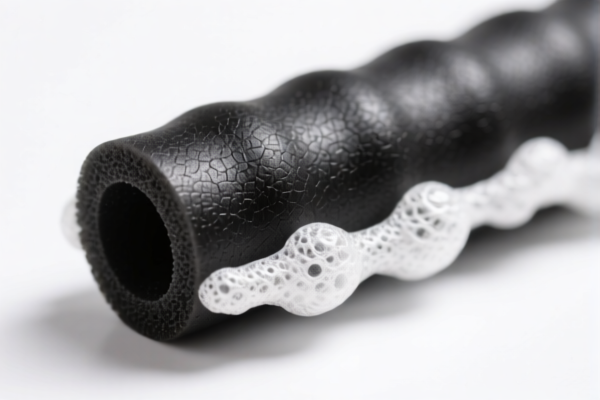
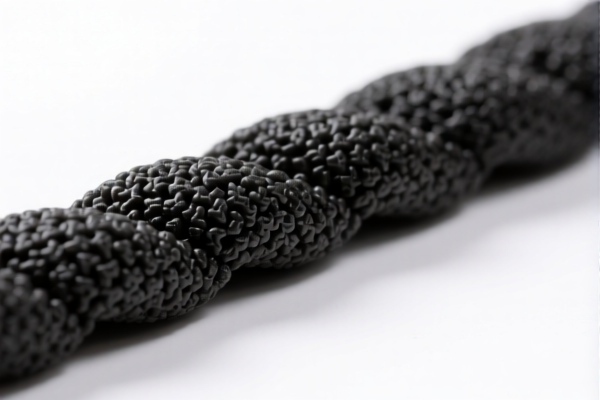
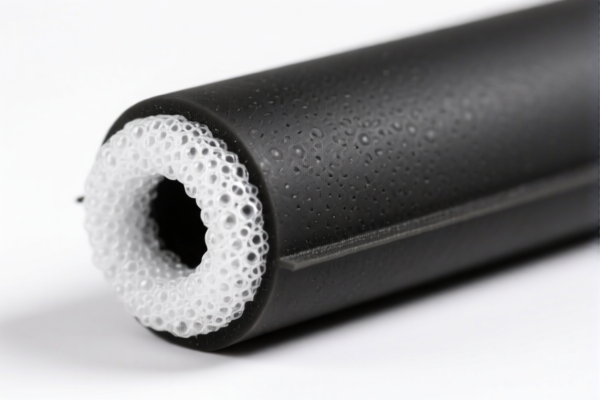
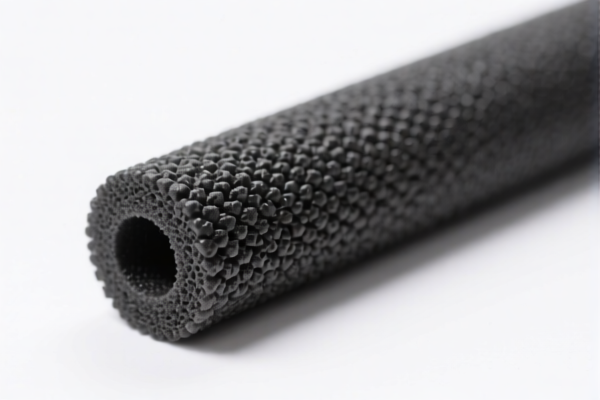
AI Analysis
🛢️ Foamed Synthetic Rubber Sheets & Bars (橡胶泡沫板/条)
🌐 HS Code Reference & Customs Clearance Guide | 2026 Latest Tariff Analysis | Professional Clearance Strategy
📌 I. Product Definition & Classification: Do You Really Understand "Foamed Synthetic Rubber"?
Foamed Synthetic Rubber refers to rubber products that have been expanded to create a cellular structure (pores), resulting in lighter weight, better cushioning, and sound insulation properties. In international trade, classification depends heavily on three core factors: 1. State of Vulcanization: Is it Vulcanized (硫化) or Non-Vulcanized (未硫化)? 2. Shape/Form: Is it a Plate/Slab (板) or a Bar/Strip (条)? 3. Material Type: Is it natural rubber or synthetic rubber?
⚠️ Critical Distinction Point:
- If the rubber is Not Vulcanized (raw state): It falls under Chapter 40.06 or 40.08 specific subsets.
- If the rubber is Vulcanized (processed/fixed state): It falls under Chapter 40.16 or 40.08 specific subsets.
- Misclassification Risk: Declaring a vulcanized foam sheet as "non-vulcanized" can lead to severe penalties for false declaration, as the tax rates and regulatory requirements differ significantly.
📦 II. HS Code Classification Details (2026 Latest Tariff Authority Comparison)
Based on the provided data, here are the valid HS Codes for Foamed Synthetic Rubber:
| HS Code | Product Description | Form | State of Vulcanization | Tax Detail Breakdown |
|---|---|---|---|---|
4006.90.10.00 |
Rubber foam board, material is rubber, shape is plate-like, fits "other shapes and articles of unvulcanized rubber" | Plate/Slab | Non-Vulcanized | Base: 0% + Add-on: 25% + 122 Clauses: 10% = 35.0% |
4008.11.10.00 |
Rubber foam board, shape is plate, material is rubber, fits core elements of classification explanation | Plate/Slab | Non-Vulcanized | Base: 0% + Add-on: 25% + 122 Clauses: 10% = 35.0% |
4008.11.50.00 |
Rubber foam board, "Rubber" matches material, "Foam" matches category, "Plate" matches form, fits definition of vulcanized rubber foam board | Plate/Slab | Vulcanized | Base: 3.3% + Add-on: 25% + 122 Clauses: 10% = 38.3% |
4006.90.50.00 |
Rubber foam board, material is rubber, shape is plate, belongs to "other shapes and articles of unvulcanized rubber" | Plate/Slab | Non-Vulcanized | Base: 2.7% + Add-on: 25% + 122 Clauses: 10% = 37.7% |
4016.10.00.00 |
Rubber foam bar, material is rubber, shape is bar, fits vulcanized rubber articles (cellular rubber products category) | Bar/Strip | Vulcanized | Base: 0% + Add-on: 25% + 122 Clauses: 10% = 35.0% |
🔍 Key Reminder:
- Non-Vulcanized (未硫化) products generally have 0% or low base tariffs but still face high additional taxes.
- Vulcanized (硫化) products may have a base tariff (e.g., 3.3%) but are classified under specific "finished article" codes like4016or4008.11.50.
- The shape (Plate vs. Bar) significantly impacts the final HS Code selection (e.g.,4008for plates vs.4016for bars).
💰 III. 2026 Latest Tariff Rate Detailed Explanation (Including Additional Taxes, Policy Add-ons)
✅ Applicable Country: United States (US)
✅ Origin: China (CN)
✅ Effective Date: From November 10, 2025 (including subsequent imports)
🎯 1. 4006.90.10.00 & 4008.11.10.00 —— Rubber Foam Board (Non-Vulcanized)
| Item | Content |
|---|---|
| Base Tariff Rate | 0.0% (ad valorem) |
| USITC Additional Tariff | +25.0% (From USITC Footnote / Section 301) |
| 122 Clause Tariff (IEEPA) | +10.0% (Targeting China/HK products, effective from Nov 10, 2025) |
| Total Tariff Rate | 35.0% |
| Tax Calculation | CIF Value × 35% |
| De Minimis Eligibility | ❌ Not Eligible (deny_de_minimis) |
| Legal Basis Path | USITC:4006.90.10.00 → FOOTNOTE:301 → IEEPA:122_Clause |
📌 Explanation:
- The 25% additional tariff is from Section 301 of the Trade Act.
- The 10% is the new "122 Clause" tariff targeting specific Chinese imports.
- Total 35% applies to these non-vulcanized foam board classifications.
- No base tax is applied, but the add-ons make it expensive.
🎯 2. 4006.90.50.00 —— Rubber Foam Board (Non-Vulcanized, Other)
| Item | Content |
|---|---|
| Base Tariff Rate | 2.7% |
| USITC Additional Tariff | +25.0% |
| 122 Clause Tariff (IEEPA) | +10.0% |
| Total Tariff Rate | 37.7% |
| Tax Calculation | CIF Value × 37.7% |
| De Minimis Eligibility | ❌ Not Eligible |
| Legal Basis Path | USITC:4006.90.50.00 → FOOTNOTE:301 → IEEPA:122_Clause |
📌 Note:
- This code is a subset of "other shapes" for non-vulcanized rubber.
- It incurs a 2.7% base tax, making the total 2.7% higher than4006.90.10.00.
- Careful selection of the exact sub-heading is crucial to avoid overpaying.
🎯 3. 4008.11.50.00 —— Rubber Foam Board (Vulcanized)
| Item | Content |
|---|---|
| Base Tariff Rate | 3.3% |
| USITC Additional Tariff | +25.0% |
| 122 Clause Tariff (IEEPA) | +10.0% |
| Total Tariff Rate | 38.3% |
| Tax Calculation | CIF Value × 38.3% |
| De Minimis Eligibility | ❌ Not Eligible |
| Legal Basis Path | USITC:4008.11.50.00 → FOOTNOTE:301 → IEEPA:122_Clause |
📌 Critical Warning:
- This is the highest tariff among the board options.
- It applies to Vulcanized rubber foam boards.
- If your product is vulcanized, you cannot use the non-vulcanized codes (4006) to claim lower taxes; doing so is customs fraud.
🎯 4. 4016.10.00.00 —— Rubber Foam Bar (Vulcanized)
| Item | Content |
|---|---|
| Base Tariff Rate | 0.0% |
| USITC Additional Tariff | +25.0% |
| 122 Clause Tariff (IEEPA) | +10.0% |
| Total Tariff Rate | 35.0% |
| Tax Calculation | CIF Value × 35.0% |
| De Minimis Eligibility | ❌ Not Eligible |
| Legal Basis Path | USITC:4016.10.00.00 → FOOTNOTE:301 → IEEPA:122_Clause |
📌 Note:
- Foam Bars/Strips (条) are classified differently from Foam Boards (板).
-4016.10.00.00covers "Other articles of cellular rubber".
- Tariff Advantage: Similar to non-vulcanized boards (35%), but technically distinct because it is Vulcanized yet has a 0% base rate.
- Ensure the product is indeed a Bar/Strip and not a Plate.
🛠️ IV. Customs Clearance Practical Advice (Battle-Tested Pitfall Guide)
✅ 1. Preparation Checklist (Mandatory)
| Document | Mandatory? | Description |
|---|---|---|
| ✅ Product Specifications | ✔️ | Must specify: Material (Synthetic/Natural), State (Vulcanized/Non-Vulcanized), Shape (Board/Bar), Density. |
| ✅ Photos (Clear & Detailed) | ✔️ | Show cross-section (to prove foamed structure), overall shape, and labels. |
| ✅ Commercial Invoice | ✔️ | Accurate description: "Synthetic Rubber Foam Board, Vulcanized, 10mm Thickness". |
| ✅ Packing List | ✔️ | Detail net/gross weight, dimensions. |
| ✅ Certificate of Origin (CO) | ✔️ | Required for tariff calculation. |
| ✅ Test Reports | ✔️ | Material composition report proving it is "Synthetic Rubber". |
✅ 2. Declaration Tips (Key Mnemonic)
🔥 "Shape Matters, State Determines Tax, Don't Mix Board with Bar!"
| Scenario | Correct Declaration | Wrong Practice |
|---|---|---|
| Vulcanized Foam Board | 4008.11.50.00 (38.3%) |
Misdeclare as Non-Vulcanized → Fraud/Seizure |
| Non-Vulcanized Foam Board | 4006.90.10.00 (35.0%) |
Misdeclare as Vulcanized → Overpay 3.3% |
| Vulcanized Foam Bar/Strip | 4016.10.00.00 (35.0%) |
Declare as Board → Wrong Code |
| Cellular Rubber Parts | 4016.99.00.00 (if other) |
Generic "Rubber Product" → High Risk |
✅ 3. Special Handling Cases
| Situation | Handling Advice |
|---|---|
| Mixed Shapes in One Shipment | Split Declaration. Declare Boards under 4008/4006 and Bars under 4016. Do not lump them together. |
| OEM Custom Foam | Provide design drawings showing the exact shape (Plate vs. Bar) and vulcanization process. |
| High Density vs. Low Density | Density does not change HS Code but must be declared accurately for duty valuation. |
| Origin Tracing | Ensure the synthetic rubber raw material origin is clear to avoid dual-origin disputes. |
🌍 V. Global Market Customs Comparison (2026 Latest)
| Country/Region | Recommended HS Code | Tariff (China Origin) | Certification | Notes |
|---|---|---|---|---|
| 🇺🇸 USA | 4006.90.10.00 / 4016.10.00.00 |
35.0% - 38.3% | None specific | High Tariff due to 301 + 122 Clause |
| 🇨🇳 China | 4006.90.10.00 |
~0% - 5% | CCC (if applicable) | Low import tariff for raw/semi-finished |
| 🇪🇺 EU | 4008.11.50 |
0% - 3% | REACH (Chemicals) | No Section 301 equivalent, but REACH strict |
| 🇦🇺 Australia | 4006.90.10.00 |
5% | TGA (if medical) | Standard FTAs may apply |
📌 Conclusion:
- USA is the most challenging market due to the叠加 (stacking) of 301 tariffs (25%) and 122 Clause tariffs (10%).
- Total tariff burden of 35-38% significantly impacts profit margins.
- Europe and Asia are more favorable from a tariff perspective.
📌 VI. Common Mistakes & Pitfall Guide (Blood-Stained Lessons)
❌ Mistake 1: Declaring Vulcanized foam as Non-Vulcanized
👉 Consequence: Customs will reject the declaration, impose fines, and potentially seize goods. The HS Code logic is rigid based on vulcanization state.
❌ Mistake 2: Using "Rubber Sheet" for a Foamed Product
👉 Consequence: Misclassification. Foamed rubber has different physical properties and tax implications than solid rubber sheets (4008.11.90 etc.).
❌ Mistake 3: Ignoring the 122 Clause
👉 Consequence: Many importers only account for the 25% Section 301 tariff. The additional 10% (effective Nov 2025) is new and mandatory. Total cost is 35%, not 25%.
❌ Mistake 4: Confusing Board (板) with Bar (条)
👉 Consequence: Wrong HS Code (4008 vs 4016). While rates might be similar, it triggers customs audits for inconsistency.
✅ Correct Practice:
"Synthetic Rubber Foam Board, Vulcanized, Closed Cell, Thickness: 10mm, Width: 1m, Length: 10m, Model: X100, Origin: China"
🎯 VII. Conclusion: Professional Declaration, Save Time, Reduce Costs!
🎯 Remember the Mnemonic:
🔹 "Vulcanized or Not, State is Key; Board vs. Bar, Shape is King; 25% + 10%, Total 35%+; Don't Guess, Verify!"
🔹 "HS Code decides tax, 3% base tax difference, 3% is 3% more cost; Declaration precision saves thousands!"
📌 Pro Tip:
If your synthetic rubber is sourced from Vietnam, Mexico, or Thailand, you may avoid IEEPA/301 tariffs.
Consider supply chain restructuring to leverage Free Trade Agreements (FTAs).
For high-volume imports, apply for an Advance Ruling (Pre-classification) from US Customs (CBP) to avoid post-entry audits.
📣 Immediate Action:
📞 Consult a licensed Customs Broker + Provide Product Photos + Verify Vulcanization Status
🚀 Let your rubber products clear smoothly, efficiently, and profitably!
✨ Professional Customs Clearance Starts with Accurate Classification!
💼 Every cent of cost deserves precise calculation!
Customer Reviews
About HS Code Classification
The Harmonized System (HS) is an internationally standardized nomenclature developed by the World Customs Organization (WCO) to classify traded products. Over 200 countries use the HS system as the basis for customs tariffs, trade statistics, and import/export regulations.
Each HS code follows a hierarchical structure:
- Chapter (2 digits) — Broad category of goods (e.g., Chapter 84: Machinery and Mechanical Appliances)
- Heading (4 digits) — More specific grouping within the chapter
- Subheading (6 digits) — Internationally standardized breakdown, used by all WCO member countries
- National subdivisions (8-10 digits) — Country-specific extensions for further classification, such as US HTSUS 10-digit codes
Correct HS code classification is essential for smooth customs clearance, accurate duty payment, and compliance with trade regulations. Misclassification can lead to customs delays, overpayment of duties, or penalties.
When importing from CN to US, the applicable tariff rates may include:
- Most-Favored-Nation (MFN) rate — The standard duty rate applied to WTO members
- General rate — Applied to countries without trade agreements
- Trade remedy duties — Additional tariffs such as Section 301 (anti-dumping), Section 232 (national security), or countervailing duties
The information provided on this page is for reference purposes only. For official classification, please consult with your local customs authority or a licensed customs broker.