Food Blender
CN → US| HS Code | Tariff Rate | Origin | Destination | Doc |
|---|---|---|---|---|
| 8509400025 | 14.2% | CN | US | Official Doc |
| 8509400015 | 14.2% | CN | US | Official Doc |
| 8438800000 | 35.0% | CN | US | Official Doc |
| 8438909090 | 37.8% | CN | US | Official Doc |
| 8479820040 | 35.0% | CN | US | Official Doc |
| 8479820080 | 35.0% | CN | US | Official Doc |
Product Images
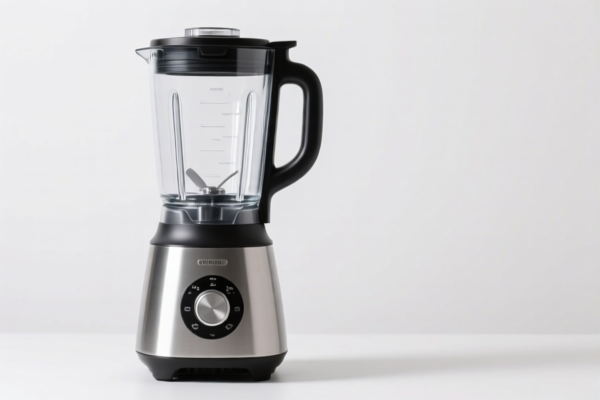
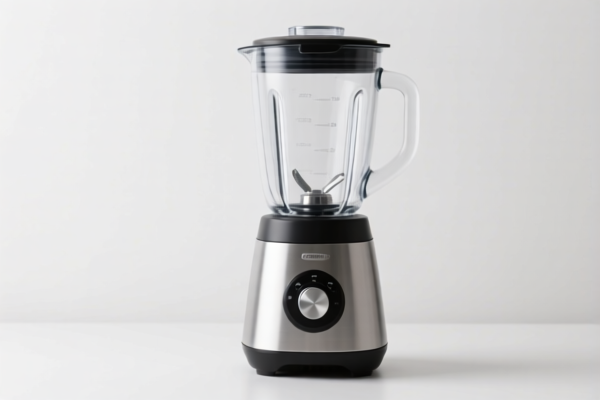
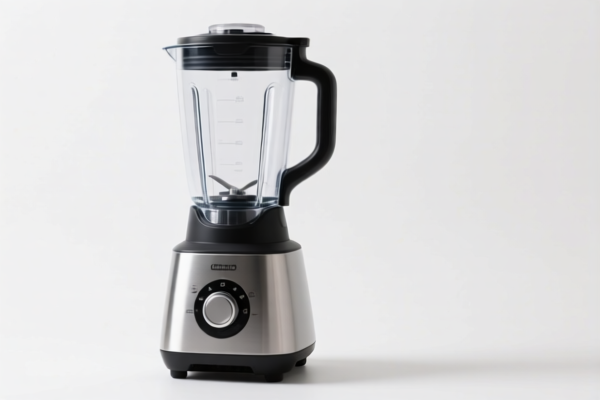

AI Analysis
🌀 Food Blenders: Ultimate HS Code Guide & Tariff Breakdown (2026 Edition)
🌐 HS Code Reference & Customs Clearance Guide | 2026 Latest Tariff Analysis | Professional Clearance Strategy
📌 1. Product Definition: What Exactly Is a "Food Blender"?
A Food Blender is an electrical kitchen appliance designed to mix, puree, or emulsify food substances. In international trade, classification depends heavily on capacity and intended use:
- Household Blenders: Small capacity, electric motors, designed for home kitchens. Typically classified under 8509.
- Industrial/Commercial Blenders: Large capacity, heavy-duty, used in food processing plants. Typically classified under 8438 or 8479.
⚠️ Key Distinction:
- If it’s for home use → Look at 8509.40.
- If it’s for industrial food preparation → Look at 8438.80, 8438.90, or 8479.82.
📦 2. HS Code Classification Details (2026 Official Tariff)
Based on the provided data, here are the 6 possible HS Codes for Food Blenders, ranked by likelihood and tax impact.
| HS Code | Product Description | Usage Match | Total Tax Rate |
|---|---|---|---|
| 8509.40.00.25 | Food Mixers & Blenders | ✅ Perfect Match | 14.2% |
| 8509.40.00.15 | Electric Household Blenders | ✅ Perfect Match | 14.2% |
| 8438.80.00.00 | Industrial Machinery for Food Prep | ⚠️ Partial (Industrial) | 35.0% |
| 8438.90.90.90 | Parts/Accessories for Food Machinery | ⚠️ Parts Only | 37.8% |
| 8479.82.00.40 | Mixing/Kneading Machines | ✅ Consistent | 35.0% |
| 8479.82.00.80 | Mixers with Blending Function | ✅ Consistent | 35.0% |
🔍 Critical Insight:
- Household blenders enjoy significantly lower tariffs (14.2%) compared to industrial equivalents (35.0%–37.8%).
- Misclassifying a household blender as industrial machinery can double your tax burden.
💰 3. 2026 Tariff Rate Breakdown (Detailed Policy Analysis)
✅ Applicable Country: United States (US)
✅ Origin: China (CN)
✅ Effective Date: Ongoing (Post-2025 Policy)
🎯 A. Household Blenders (HS Codes: 8509.40.00.15 / .25)
| Item | Detail |
|---|---|
| Base Tariff | 4.2% (Most Favored Nation Rate) |
| Section 301 Additional Tariff | 0.0% (No additional 301 tariff applied to these sub-headings) |
| Section 122 Tariff | +10.0% (Specific levy on certain household appliances) |
| Total Effective Tax | 14.2% |
| Calculation | CIF Value × 14.2% |
| De Minimis Exemption | ❌ Not Applicable (Commercial import) |
| Legal Basis | HTSUS:8509.40.00 + Section 122 Executive Order |
📌 Explanation:
- These household blenders are exempt from the hefty 25% Section 301 tariffs.
- However, they are subject to a 10% "Section 122" tariff, resulting in a manageable 14.2% total rate.
- This is the most cost-effective classification for home-use blenders.
🎯 B. Industrial Blenders (HS Codes: 8438.80.00.00 / 8479.82.00.40/.80)
| Item | Detail |
|---|---|
| Base Tariff | 0.0% (Free entry for many industrial machines) |
| Section 301 Additional Tariff | +25.0% (Heavy tariff on industrial equipment from China) |
| Section 122 Tariff | +10.0% |
| Total Effective Tax | 35.0% |
| Calculation | CIF Value × 35.0% |
| De Minimis Exemption | ❌ Not Applicable |
| Legal Basis | HTSUS:8438.80 / 8479.82 + USITC Footnote 9903.88.01 |
📌 Explanation:
- Although the base tariff is 0%, the 25% Section 301 tariff drastically increases the cost.
- Total tax is 35.0%, more than double that of household blenders.
🎯 C. Blender Parts/Components (HS Code: 8438.90.90.90)
| Item | Detail |
|---|---|
| Base Tariff | 2.8% |
| Section 301 Additional Tariff | +25.0% |
| Section 122 Tariff | +10.0% |
| Total Effective Tax | 37.8% |
| Calculation | CIF Value × 37.8% |
| De Minimis Exemption | ❌ Not Applicable |
| Legal Basis | HTSUS:8438.90 + USITC Footnote |
📌 Explanation:
- If you ship spare parts (blades, jars, motors) separately, they are taxed as industrial components.
- Highest tax rate at 37.8%. Avoid splitting shipments if possible; ship as complete units under 8509.
🛠️ 4. Customs Clearance Practical Advice (Avoid Pitfalls!)
✅ 1. Documentation Checklist (Mandatory)
| Document | Required? | Purpose |
|---|---|---|
| ✅ Product Specification Sheet | ✔️ | Must state: "Household Use" or "Industrial Use", Voltage, Power (Watts), Motor Type. |
| ✅ Commercial Invoice | ✔️ | Clearly describe as "Electric Food Blender for Household Use" to support 8509.40 classification. |
| ✅ Product Photos | ✔️ | Show the entire unit, including control panel, jug, and base. |
| ✅ Labeling/Packaging | ✔️ | Must indicate "Made in China" and intended market. |
| ✅ Certifications | ✔️ | UL/ETL (US Safety), FCC (EMC), CUL (Canada) if applicable. |
✅ 2. Classification Strategy (Key Tips)
🔥 Golden Rule: "Home Use = 8509 (14.2%); Industrial Use = 8438/8479 (35%+)"
| Scenario | Recommended HS Code | Why? | Risk if Misclassified |
|---|---|---|---|
| Standard Home Blender | 8509.40.00.15 or .25 |
Perfect match for household appliances. Low tax. | High Risk: Audited as industrial → Pay 35%+ + penalties. |
| High-Capacity Commercial Blender | 8438.80.00.00 |
Matches "Food/Drink Preparation Machinery". | Low Risk if documentation supports industrial use. |
| Blender Parts (Jars, Blades) | 8438.90.90.90 |
Classified as parts for machinery. | High Tax (37.8%). Better to ship assembled if possible. |
| Industrial Mixers with Blending Function | 8479.82.00.40 or .80 |
Matches "Mixing, Kneading, or Blending Machines". | Tax is 35%. Ensure "Industrial" use is documented. |
✅ 3. Special Cases & Optimization
| Case | Recommendation |
|---|---|
| OEM/Private Label | Ensure invoice says "Electric Blender" and not "Industrial Mixer". |
| Shipment with Accessories | Ship all parts together in one box to justify 8509 (Complete Unit). Do not ship jars and motors separately to save on shipping – you’ll pay higher taxes. |
| Smart Blenders with App Control | Still classified as 8509 because the primary function is blending, not data processing. |
| Portable USB Blenders | Still 8509.40 as long as they are food blenders. |
🌍 5. Global Market Comparison (2026)
| Region | Recommended HS Code | Tariff (China Origin) | Notes |
|---|---|---|---|
| 🇺🇸 USA | 8509.40.00.15 |
14.2% | Best for home use. Avoid industrial classification. |
| 🇨🇳 China | 8509.40.00 |
Variable | Domestic trade rules differ. Export-focused data shown. |
| 🇪🇺 EU | 8509.40 |
0% - 14% | Varies by country. No Section 301 equivalent. |
| 🇬🇧 UK | 8509.40 |
0% - 14% | Post-Brexit rules apply. Check UK Global Tariff. |
📌 Conclusion:
- USA is the most complex market due to Section 301 and Section 122 tariffs.
- Precise classification under 8509 saves ~20.8% in taxes compared to industrial classification.
📌 6. Common Mistakes & How to Avoid Them
❌ Mistake 1: Calling a blender an "Industrial Mixer" to avoid Section 122 tariff.
👉 Consequence: Customs may reject it as incorrect classification, leading to audits and back taxes.
Fix: Be honest. If it’s for home use, use 8509.
❌ Mistake 2: Shipping parts separately to avoid high整机 tariffs.
👉 Consequence: Parts taxed at 37.8% (HS 8438.90).
Fix: Ship as a complete unit under 8509.40 (14.2%).
❌ Mistake 3: Ignoring "Section 122" tariff.
👉 Consequence: Unexpected 10% extra cost.
Fix: Factor 14.2% total tax into your pricing model for 8509.
🎯 7. Final Recommendations
🎯 For Home Blenders:
✅ Use HS Code 8509.40.00.15 or 8509.40.00.25.
✅ Total Tax: 14.2% (4.2% Base + 10% Section 122).
✅ Avoid Industrial HS Codes unless the machine is genuinely for commercial food processing plants.
🎯 For Industrial Blenders:
✅ Use HS Code 8438.80.00.00 or 8479.82.00.40/.80.
✅ Total Tax: 35.0% (0% Base + 25% Section 301 + 10% Section 122).
✅ Ensure documentation proves industrial-scale use.
📌 Pro Tip:
📞 Always apply for a Binding Ruling from US Customs and Border Protection (CBP) if you are unsure.
🚀 Clarify "Household" vs. "Industrial" in your product descriptions to ensure smooth clearance and optimal tax rates.
✨ Professional Clearance, Precise Classification, Maximized Profit!
💼 Your Tax Bill Should Be Predictable, Not Surprising!
Customer Reviews
About HS Code Classification
The Harmonized System (HS) is an internationally standardized nomenclature developed by the World Customs Organization (WCO) to classify traded products. Over 200 countries use the HS system as the basis for customs tariffs, trade statistics, and import/export regulations.
Each HS code follows a hierarchical structure:
- Chapter (2 digits) — Broad category of goods (e.g., Chapter 84: Machinery and Mechanical Appliances)
- Heading (4 digits) — More specific grouping within the chapter
- Subheading (6 digits) — Internationally standardized breakdown, used by all WCO member countries
- National subdivisions (8-10 digits) — Country-specific extensions for further classification, such as US HTSUS 10-digit codes
Correct HS code classification is essential for smooth customs clearance, accurate duty payment, and compliance with trade regulations. Misclassification can lead to customs delays, overpayment of duties, or penalties.
When importing from CN to US, the applicable tariff rates may include:
- Most-Favored-Nation (MFN) rate — The standard duty rate applied to WTO members
- General rate — Applied to countries without trade agreements
- Trade remedy duties — Additional tariffs such as Section 301 (anti-dumping), Section 232 (national security), or countervailing duties
The information provided on this page is for reference purposes only. For official classification, please consult with your local customs authority or a licensed customs broker.