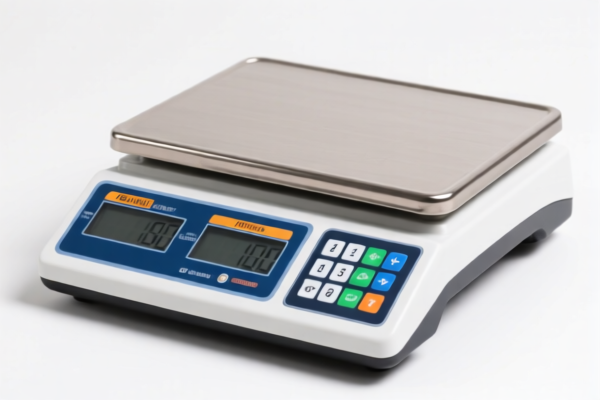
Food Weight Unit
CN → US| HS Code | Tariff Rate | Origin | Destination | Doc |
|---|---|---|---|---|
| 8423810020 | 35.0% | CN | US | Official Doc |
| 8423810030 | 35.0% | CN | US | Official Doc |
| 3924104000 | 13.4% | CN | US | Official Doc |
| 3924905650 | 20.9% | CN | US | Official Doc |
Product Images



AI Analysis
🍎 Food Weight Unit Conversion & Logistics Guide
🌐 Global Standards for Food Weight | 2026 Compliance & Customs Clarity
📌 One Product, Many Units: How to Declare Weight Correctly for Customs & Commerce
When importing, exporting, or labeling food products, understanding the correct weight unit is critical—not just for consumer clarity, but for customs classification, tariff calculation, and regulatory compliance.
Food weight is typically expressed in three main systems:
- Metric System (kg/g) – Most of the world (EU, China, Asia, Africa)
- Imperial/US Customary System (lb/oz) – United States, United Kingdom (partially)
- Mixed/Contextual Units (dozens, pieces, cases) – Often used for packaging and logistics
⚠️ Key Insight:
- Customs duties are based on weight, not volume or count.
- Incorrect unit declaration = delayed clearance, fines, or reclassification.
📦 Primary Food Weight Units Explained
1. Kilogram (kg) & Gram (g) – 🌍 Global Standard
- Used in: EU, China, India, Japan, most of Asia, Africa, South America
- Customs Relevance:
- HS Codes for food items (e.g.,
0901.21for roasted coffee,1006.30for broken rice) are declared in kg - Tariff rates are often ad valorem (based on value), but anti-dumping duties may be per kg
- Labeling Requirement:
- EU: Must show net weight in grams (g) or kilograms (kg)
- China: Mandatory GB standard labeling in g or kg
2. Pound (lb) & Ounce (oz) – 🇺🇸 US & UK
- Used in: United States, United Kingdom (largely), Canada (dual labeling)
- Customs Relevance:
- US Customs (CBP) accepts lb for most food declarations
- 1 lb = 0.453592 kg – Conversion is critical for duty calculation
- Example: Coffee (
0901.21.20.00) declared in lb in US, but kg in EU - Labeling Requirement:
- US FDA: Net weight in oz (for small items) or lb
- UK: Post-Brexit, still allows g or oz, but g is encouraged
3. Case/Carton/Pallet Weight – 📦 Logistics & Bulk
- Used in: B2B trade, warehousing, shipping
- Customs Relevance:
- Not declared as primary unit for HS Code
- Used for freight calculation, not tariff
- Example: 1 pallet = 24 cases = 144 kg of frozen meat
- Important: Always provide gross weight and net weight separately
🧮 Conversion Table: Food Weight Units
| From | To | Factor |
|---|---|---|
| 1 kg | lb | 2.20462 |
| 1 lb | kg | 0.453592 |
| 1 g | oz | 0.035274 |
| 1 oz | g | 28.3495 |
| 1 ton (metric) | lb | 2204.62 |
| 1 short ton (US) | kg | 907.185 |
🔍 Pro Tip:
- For US Customs, convert all weights to lb if required by HS Code
- For EU/China, always use kg or g
- Never mix units in one declaration – consistency is key
📋 How to Declare Weight in Customs
✅ Best Practices
- Net Weight vs. Gross Weight
- Net Weight: Product only (without packaging) – Used for tariffs
- Gross Weight: Product + packaging – Used for freight
-
Example: 10 kg of chocolate (net) in 12 kg box (gross) → Declare 10 kg net for duty
-
Unit Consistency
- If HS Code says “per kg”, declare in kg
- If HS Code says “per lb”, declare in lb
-
Check HS Code description carefully
-
Dual Declaration (Recommended)
- Provide both kg and lb in commercial invoice
-
Example:
Net Weight: 5 kg (11.02 lb) Gross Weight: 5.2 kg (11.47 lb)
-
Packaging Weight Deduction
- If packaging is significant (e.g., canned goods), deduct tare weight
- Example: 1 kg can + 200g label + 50g cap = 1.25 kg gross → Declare 1.0 kg net
🚫 Common Mistakes & How to Avoid Them
| Mistake | Consequence | Solution |
|---|---|---|
| Declaring gross weight instead of net weight | Overpayment of duties, penalties | Always specify net weight |
| Using oz in US for large items | CBP may reject or request conversion | Use lb for items >16 oz |
| Mixing kg and lb in one shipment | Customs delay, reclassification | Stick to one unit per product line |
| Not converting for US Customs | Incorrect duty calculation | Convert all weights to lb if required |
| Ignoring packaging weight | Under-declaration, fines | Deduct tare weight carefully |
📌 Real-World Example:
- Product: Frozen strawberries
- HS Code:0811.90.80.20(US)
- Declared Weight: 100 lb (net)
- Error: Declared as 100 kg → Overpayment by ~10%
- Fix: Always verify unit required by HS Code
🛠️ 清关实操建议(Customs Clearance Tips)
✅ 1. Prepare Weight Documentation
| Document | Requirement |
|---|---|
| ✅ Commercial Invoice | Must state net weight in correct unit |
| ✅ Packing List | Show gross weight, net weight, packaging type |
| ✅ Certificate of Origin | May require weight declaration for preferential tariffs |
| ✅ Product Label | Must match declared net weight |
✅ 2. Conversion Verification
- Use USDA or FAO standards for weight conversion
- For US Customs, use 1 lb = 0.453592 kg exactly
- For EU, use 1 kg = 1000 g
✅ 3. Special Cases
| Case | Advice |
|---|---|
| Liquid foods (e.g., oil, juice) | Declare in liters or kg (1 L water ≈ 1 kg) |
| Bulk commodities (e.g., grain, sugar) | Declare in metric tons or kg |
| Pre-packaged foods | Declare net weight per package |
| Frozen foods | Account for ice glazing weight |
🌍 Global Weight Declaration Standards by Region
| Region | Primary Unit | Customs Accepted Unit | Labeling Law |
|---|---|---|---|
| 🇺🇸 United States | lb/oz | lb | FDA: Net weight in oz/lb |
| 🇪🇺 European Union | kg/g | kg/g | EU Regulation 1169/2011 |
| 🇨🇳 China | kg/g | kg/g | GB 7718 Standard |
| 🇬🇧 United Kingdom | g/oz | g (preferred) | Post-Brexit: g/oz allowed |
| 🇯🇵 Japan | g/kg | g/kg | JAS Act |
| 🇦🇺 Australia | g/kg | g/kg | FSANZ Standard |
📌 Conclusion:
- Most of the world uses kg/g
- US uses lb/oz
- Always check HS Code requirements before declaring
📌 Common Errors & Pitfalls (Lessons Learned)
❌ Error 1: Declaring gross weight for duty calculation
👉 Result: Overpaying duties, possible audits
❌ Error 2: Using oz for large US shipments
👉 Result: CBP rejects, delays clearance
❌ Error 3: Not deducting packaging weight
👉 Result: Under-declaration, fines
❌ Error 4: Mixing kg and lb in one invoice
👉 Result: Customs confusion, manual review
✅ Correct Practice:
“Net Weight: 50 kg (110.23 lb) | Gross Weight: 52 kg (114.64 lb) | Package: 10 x 5 kg bags”
🎯 Conclusion: Precision in Weight = Success in Customs
🎯 Remember the Golden Rules:
🔹 “Net weight matters, not gross.”
🔹 “Check HS Code unit requirement before declaring.”
🔹 “Convert consistently – never mix kg and lb in one shipment.”
🔹 “Deduct packaging weight – it’s not part of the product.”
📌 Pro Tip:
If you’re shipping to multiple countries, use dual labeling (kg + lb) on your commercial invoice to avoid confusion.
📣 Immediate Action:
📞 Consult your customs broker + Verify HS Code weight unit + Convert correctly
🚀 Ensure smooth clearance, accurate duties, and happy customers!
✨ Precision in Weight, Precision in Trade!
💼 Every gram counts – in customs and in your profit margin!
Customer Reviews
About HS Code Classification
The Harmonized System (HS) is an internationally standardized nomenclature developed by the World Customs Organization (WCO) to classify traded products. Over 200 countries use the HS system as the basis for customs tariffs, trade statistics, and import/export regulations.
Each HS code follows a hierarchical structure:
- Chapter (2 digits) — Broad category of goods (e.g., Chapter 84: Machinery and Mechanical Appliances)
- Heading (4 digits) — More specific grouping within the chapter
- Subheading (6 digits) — Internationally standardized breakdown, used by all WCO member countries
- National subdivisions (8-10 digits) — Country-specific extensions for further classification, such as US HTSUS 10-digit codes
Correct HS code classification is essential for smooth customs clearance, accurate duty payment, and compliance with trade regulations. Misclassification can lead to customs delays, overpayment of duties, or penalties.
When importing from CN to US, the applicable tariff rates may include:
- Most-Favored-Nation (MFN) rate — The standard duty rate applied to WTO members
- General rate — Applied to countries without trade agreements
- Trade remedy duties — Additional tariffs such as Section 301 (anti-dumping), Section 232 (national security), or countervailing duties
The information provided on this page is for reference purposes only. For official classification, please consult with your local customs authority or a licensed customs broker.