Food grade PS Plate
CN → USProduct Images
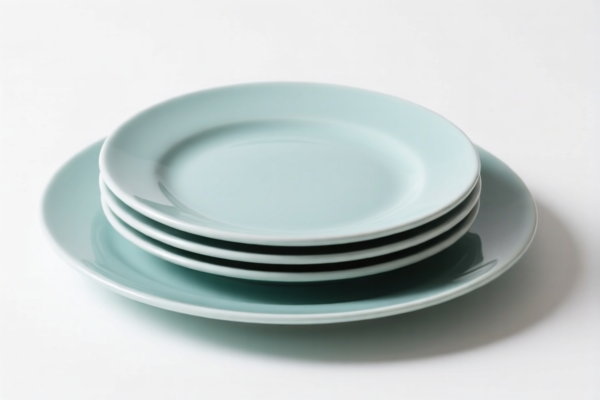
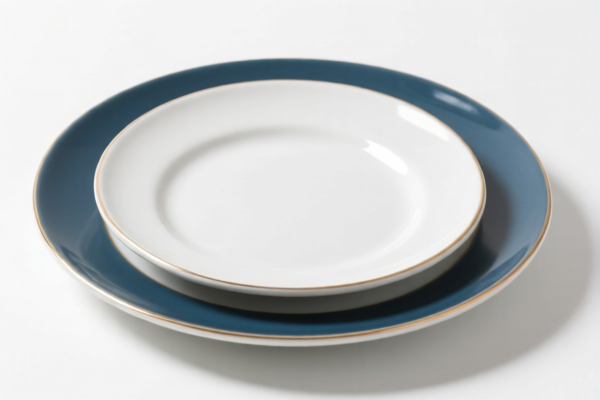
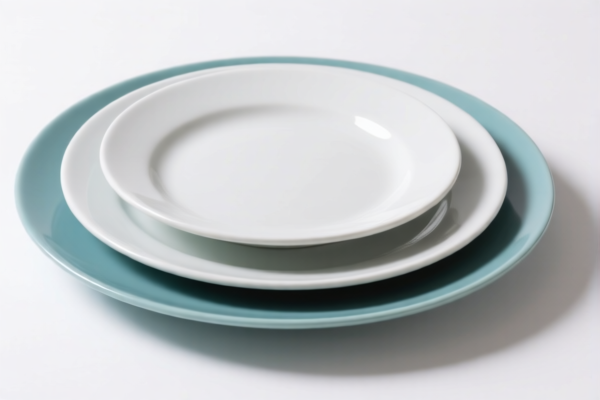
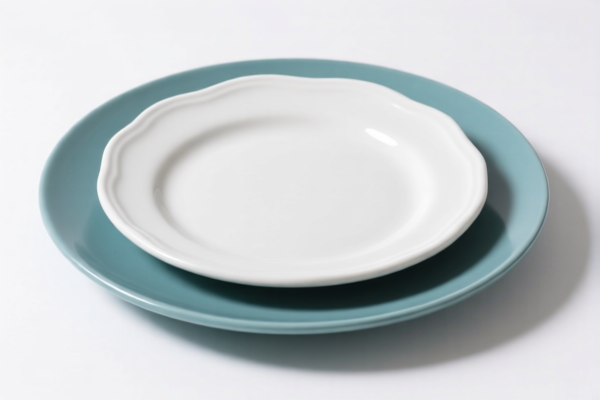
AI Analysis
🍽️ Food Grade PS Plate (Polystyrene Tableware)
🌐 HS Code Reference & Customs Clearance Guide | 2026 Latest Tariff Analysis | Professional Clearance Strategy
📌 1. Product Definition & Classification: Do You Really Know "Food Grade PS"?
Polystyrene (PS) plates are lightweight, rigid, and transparent plastic tableware widely used for single-use dining in the food service industry. In international trade, they fall under Chapter 39 (Plastics and Articles Thereof).
Key Distinction: * Food Grade PS: Must meet strict safety standards (e.g., FDA 21 CFR, EU Regulation 10/2011) for direct food contact. * Industrial/Non-Food PS: Not suitable for food contact; classified differently if contaminated or intended for other uses.
⚠️ Critical Compliance Point:
- If the plate is rigid, non-cellular, and intended for food contact, it is classified as Plates, Dishes, and Other Household/Kitchen Articles.
- If it is cellular foam (expanded polystyrene/EPS), it may fall under a different subheading.
- Always specify "Food Grade" and "Polystyrene" in commercial invoices.
📦 2. HS Code Classification Details (2026 Latest Tariff Authority Comparison)
| HS Code | Product Description | Application | Material Type | Food Contact? |
|---|---|---|---|---|
3924.10.00 |
Tableware and kitchenware, of plastics | PS plates, bowls, cups | Solid/Non-foam PS | ✅ Yes (if certified) |
3924.90.80 |
Other household/kitchen articles, of plastics | PS containers, lids, non-tableware | PS | ✅ Yes (if certified) |
3923.21.00 |
Sacks and bags, of polymers of ethylene | PS packaging bags (not plates) | PE/PP | ❌ No |
3921.90.99 |
Other plates, sheets, film, etc. | Raw PS sheets (not molded) | PS Sheets | ❌ No |
🔍 Key Reminder:
-3924.10.00is the primary HS Code for molded PS plates, dishes, and cups.
-3924.90.80is for other PS kitchenware not specifically plates/cups (e.g., storage containers).
- Foam PS (EPS) plates may still fall under3924.10.00but require specific declaration of "Expanded Polystyrene."
💰 3. 2026 Latest Tariff Rates Breakdown (Including Surtaxes)
✅ Applicable Country: United States (US)
✅ Origin: China (CN)
✅ Effective Date: Post-November 10, 2025 (including subsequent imports)
🎯 1. 3924.10.00 —— Tableware of Plastics (PS Plates)
| Item | Details |
|---|---|
| Base Tariff | 0% (ad valorem) |
| USITC Surtax | +25% (under USITC Footnote 9903.88.01) |
| IEEPA Surtax | +10% (for China/HK products, effective Nov 10, 2025) |
| Total Tariff | 35% |
| Tax Calculation | CIF Value × 35% |
| De Minimis Exemption | ❌ Not Eligible (deny_de_minimis) |
| Legal Basis Path | IEEPA:9903.01.25 → IEEPA:9903.01.24 → USITC:3924.10.00 → FOOTNOTE:9903.88.01 |
📌 Explanation:
- "USITC Surtax 25%": Part of Section 301 tariffs on Chinese plastics.
- "IEEPA 10%": Additional surtax under the International Emergency Economic Powers Act for Chinese goods.
- Total 35% is a high tariff, requiring advance cost planning.
🛠️ 4. Customs Clearance Practical Advice (Real-World Pitfall Avoidance)
✅ 1. Required Documentation Checklist (No Exceptions)
| Document | Required | Description |
|---|---|---|
| ✅ Product Specification Sheet | ✔️ | Material: 100% Polystyrene; Type: Food Grade; Molded/Expanded. |
| ✅ FDA Compliance Statement | ✔️ | Reference to 21 CFR 177.1580 (Polystyrene Resins). |
| ✅ EU 10/2011 Compliance (if applicable) | ✔️ | Declaration of Conformity for EU market. |
| ✅ Commercial Invoice | ✔️ | Clearly state "Food Grade PS Plates, HS 3924.10.00". |
| ✅ Packing List | ✔️ | Net/Gross weight, number of pieces per carton. |
| ✅ Test Reports | ✔️ | FDA Migration Test, Heavy Metal Test, Microbial Test. |
✅ 2. Declaration Tips (Key Mantra)
🔥 "Material Specific, Food Grade Stated, HS 3924.10, Avoid 3924.90!"
| Scenario | Correct Declaration | Incorrect Practice |
|---|---|---|
| Molded PS Plates | 3924.10.00 + "Food Grade" |
Misdeclare as "3924.90" → Higher scrutiny |
| EPS Foam Plates | 3924.10.00 + "Expanded PS" |
Omit "Expanded" → Classification dispute |
| Reusable PS Containers | 3924.90.80 |
Declare as "single-use plates" → Misclassification |
| Non-Food Decorative PS | 3926.90.99 |
Declare as "Food Grade" → Customs Hold/Fine |
✅ 3. Special Case Handling
| Situation | Recommendation |
|---|---|
| OEM Custom Plates | Provide design specs + material certificate to prove food safety. |
| Colored/Printed Plates | Declare ink composition; ensure inks are also food-contact compliant. |
| Mixed Containers | Separate PS plates from non-PS items to avoid misclassification. |
| Small B2C Shipments | Note: De Minimis ($800) is NOT available for China-origin goods under IEEPA. |
🌍 5. Global Market Clearance Comparison (2026 Latest)
| Country/Region | Recommended HS Code | Tariff (China Origin) | Certification | Remarks |
|---|---|---|---|---|
| 🇺🇸 USA | 3924.10.00 |
35% (25% + 10%) | FDA Compliance | High tariff impact |
| 🇨🇳 China | 3924.10.00 |
5-10% | GB 4806 (China Food Standard) | No surtax |
| 🇪🇺 EU | 3924.10.00 |
0-3% (if MFN) | EU 10/2011 + REACH | Low tariff, strict safety |
| 🇬🇧 UK | 3924.10.00 |
0% (Post-Brexit GSP) | UKCA + Food Standards | Check post-Brexit rules |
| 🇯🇵 Japan | 3924.10.00 |
0-3% | JFSL + Food Hygiene Act | Strict migration tests |
📌 Conclusion:
- USA has the highest tariff burden for PS tableware due to trade wars.
- EU/UK/Japan have low tariffs but strict food safety certifications.
- China has moderate tariffs and local GB standards.
📌 6. Common Errors & Pitfall Guide (Lessons Learned)
❌ Error 1: Declaring "Plastic Plates" without specifying "Polystyrene"
👉 Consequence: Customs may classify under generic plastics with higher scrutiny or different duties.
❌ Error 2: Claiming "Food Grade" without FDA/EU documentation
👉 Consequence: Shipment held, fined, or destroyed for non-compliance.
❌ Error 3: Using "3924.90" for standard plates
👉 Consequence: Potential underpayment if base rate differs; administrative penalties.
❌ Error 4: Ignoring IEEPA 10% surtax in cost calculations
👉 Consequence: Unexpected 35% total tariff instead of expected 10-15%.
✅ Correct Approach:
"Polystyrene Plates, Food Grade, Molded, Not Foam, Compliant with FDA 21 CFR 177.1580, HS 3924.10.00"
🎯 7. Conclusion: Professional Declaration Saves Money!
🎯 Remember:
🔹 "Material Matters, Food Safety First, HS 3924.10, US Tariff 35%!"
🔹 "No De Minimis for China, Plan Costs Early!"
📌 Tips:
- If your PS plates are sourced from Vietnam, Mexico, or Thailand, you may qualify for IEEPA exemption, reducing tariffs to 0-5%.
- Apply for Advance Rulings if unsure about classification.
- Ensure FDA migration tests are recent and valid for smooth clearance.
📣 Act Now:
📞 Consult a customs broker + Provide FDA certificates + Apply for HS Code Advance Ruling
🚀 Ensure smooth clearance, compliance, and cost control!
✨ Professional Customs Clearance Starts with Accurate Classification!
💼 Every Percent Saved is Profit Earned!
Customer Reviews
About HS Code Classification
The Harmonized System (HS) is an internationally standardized nomenclature developed by the World Customs Organization (WCO) to classify traded products. Over 200 countries use the HS system as the basis for customs tariffs, trade statistics, and import/export regulations.
Each HS code follows a hierarchical structure:
- Chapter (2 digits) — Broad category of goods (e.g., Chapter 84: Machinery and Mechanical Appliances)
- Heading (4 digits) — More specific grouping within the chapter
- Subheading (6 digits) — Internationally standardized breakdown, used by all WCO member countries
- National subdivisions (8-10 digits) — Country-specific extensions for further classification, such as US HTSUS 10-digit codes
Correct HS code classification is essential for smooth customs clearance, accurate duty payment, and compliance with trade regulations. Misclassification can lead to customs delays, overpayment of duties, or penalties.
When importing from CN to US, the applicable tariff rates may include:
- Most-Favored-Nation (MFN) rate — The standard duty rate applied to WTO members
- General rate — Applied to countries without trade agreements
- Trade remedy duties — Additional tariffs such as Section 301 (anti-dumping), Section 232 (national security), or countervailing duties
The information provided on this page is for reference purposes only. For official classification, please consult with your local customs authority or a licensed customs broker.