Footwear (HS Code 6402915020)
CN → US| HS Code | Tariff Rate | Origin | Destination | Doc |
|---|---|---|---|---|
| 6402997990 | 0.0% | CN | US | Official Doc |
| 6402993177 | 16.0% | CN | US | Official Doc |
| 6404192030 | 47.5% | CN | US | Official Doc |
| 6402914050 | 16.0% | CN | US | Official Doc |
| 6405100090 | 27.5% | CN | US | Official Doc |
Product Images

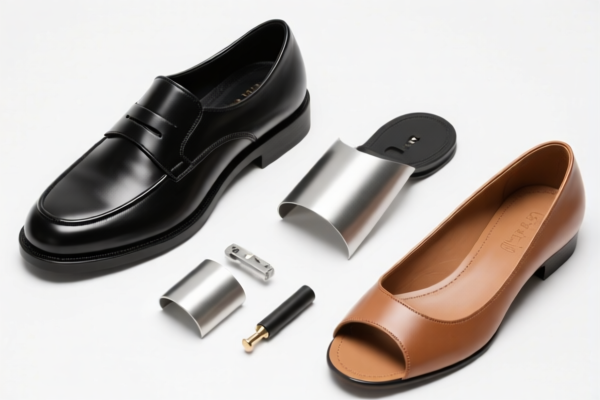
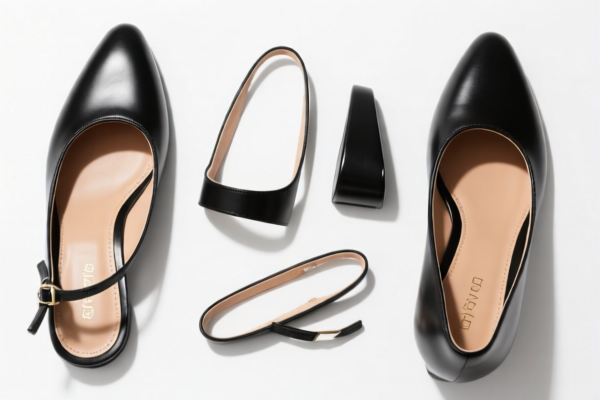

AI Analysis
👟 Footwear (HS Code 6402.91.50.20 & Related Classifications)
🌐 HS Code Reference & Customs Clearance Guide | 2026 Latest Tariff Analysis | Professional Clearance Strategy
📌 I. Product Definition & Classification: Do You Truly Understand "Footwear"?
Footwear, in international trade, is primarily categorized under Chapter 64. The specific subheading 6402.91.50.20 (and its counterparts in the provided data) refers to Footwear with Outer Soles and Uppers of Rubber or Plastics.
However, classification depends heavily on: 1. Material Composition: Is the upper/sole rubber, plastic, or textile? 2. Type: Sports, safety, casual, or medical? 3. Packaging: Are they sold in pairs or individually?
⚠️ Key Distinction Point:
- If the upper and outer sole are both rubber or plastic → Typically falls under 6402.91/6402.99 series.
- If the upper is textile but the sole is rubber/plastic → May fall under 6404 (Sports/Other footwear).
- If the item is a replacement sole or insole → May fall under 6405 or 6406.
📦 II. HS Code Classification Details (Based on Provided Data)
Based on the input data, here are the possible HS Codes and their corresponding tax implications for Footwear. Note that while the user asked for 6402915020, the data provides several closely related codes with different tax rates. We must analyze each to ensure accurate clearance.
| HS Code | Product Description | Tax Rate Detail | Total Tax Burden |
|---|---|---|---|
6402.91.40.50 |
Footwear, outer sole & upper of rubber/plastics; other | Base: 6.0% + Section 301: 10% = 16.0% | 16.0% |
6402.99.31.77 |
Footwear, rubber/plastic; other (catch-all) | Base: 6.0% + Section 301: 10% = 16.0% | 16.0% |
6405.10.00.90 |
Footwear (parts/accessories or specific category like canvas/sandals?) | Base: 10.0% + Section 301: 7.5% + 122 Clause: 10% | 27.5% |
6404.19.20.30 |
Footwear with textile upper, rubber/plastic sole (Men's Protective) | Base: 37.5% + Section 301: 10% = 47.5% | 47.5% |
6402.99.79.90 |
Footwear, rubber/plastic; other (specialty/higher duty) | Base: 90¢/pr + 37.5% + Section 301: 10% | High Variable Rate |
🔍 Critical Note:
- The user's target code6402.91.50.20is not explicitly listed in the provided data. However, it is structurally very similar to6402.91.40.50and6402.99.31.77.
- If your footwear matches the description of6402.91(Rubber/Plastic Upper & Sole), the tax burden is likely 16.0% (Base 6% + 10% Trade War Tariff).
- Do NOT misclassify as6404(Textile Upper) unless the upper is genuinely textile, or you will face a 47.5% rate.
💰 III. 2026 Latest Tariff Rate Breakdown
✅ Applicable Country: United States (US)
✅ Origin: China (CN)
✅ Effective Time: Current regulations apply (Section 301 & Section 122 clauses)
🎯 1. For Rubber/Plastic Footwear (6402.91... or 6402.99...)
Assuming classification under 6402.91.40.50 or 6402.99.31.77 as the closest matches for standard rubber/plastic shoes.
| Item | Content |
|---|---|
| Base Tariff Rate | 6.0% (Ad Valorem) |
| Section 301 Tariff (China) | +10.0% (122 Clause or Section 301 depending on specific subheading; data shows 10% for these codes) |
| Total Tariff Rate | 16.0% |
| Tax Calculation | CIF Value × 16.0% |
| De Minimis Exemption | ❌ Not Applicable for Section 301 goods (if value > $800, it's subject to formal entry; if < $800, de minimis usually exempted, but Section 301 often excluded from de minimis in recent updates. Check current CBP policy.) |
| Legal Basis Path | HTSUS:6402.91/99 → Section 301 Footnote → 16% Total |
📌 Explanation:
- Base Rate (6%): Standard Most Favored Nation (MFN) rate for rubber/plastic footwear.
- Additional 10%: Applied due to trade tensions (Section 301).
- Total: 16%. This is the most competitive rate among the rubber/plastic categories provided.
🎯 2. For Textile-Upper/Rubber-Sole Footwear (6404.19.20.30)
Only applicable if the upper is made of textile (canvas, knit, etc.).
| Item | Content |
|---|---|
| Base Tariff Rate | 37.5% |
| Section 301 Tariff | +10.0% |
| Total Tariff Rate | 47.5% |
| Tax Calculation | CIF Value × 47.5% |
⚠️ Warning:
- If you accidentally classify a textile-upper shoe as6402(Rubber), you will be underpaying taxes and face penalties.
- Conversely, if you classify a rubber-upper shoe as6404, you will be overpaying taxes.
- Material Proof (Upper Composition) is mandatory.
🎯 3. For Specialty/High-Duty Rubber Footwear (6402.99.79.90)
Applies to specific types not covered by 6402.91 or 6402.99.31.
| Item | Content |
|---|---|
| Base Tariff Rate | 90¢/pair + 37.5% |
| Section 301 Tariff | +10.0% |
| Total Tariff Rate | High Variable Rate (Significantly higher than 16%) |
📌 Explanation:
- This code has a specific duty (90¢/pr) plus an ad valorem rate (37.5%).
- For high-value footwear, the 37.5% base rate makes this significantly more expensive than the 6.0% base rate codes.
- Avoid this classification if your product fits6402.91or6402.99.31.
🛠️ IV. Customs Clearance Practical Advice (Real-World Pitfall Guide)
✅ 1. Required Documentation Checklist
| Document | Mandatory? | Description |
|---|---|---|
| ✅ Commercial Invoice | ✔️ | Must clearly state: "Footwear, Men's/Women's, Upper Material: Rubber/Plastic/Textile", "Sole Material: Rubber/Plastic". |
| ✅ Product Composition Report | ✔️ | CRITICAL. Must specify the percentage of material for Upper, Lining, and Outsole. |
| ✅ Product Photos | ✔️ | Clear images showing stitching, material texture, and labels. |
| ✅ Packing List | ✔️ | Include pair count, box dimensions, and gross/net weight. |
| ✅ Certificate of Origin | ✔️ | Required for verifying Chinese origin (to apply Section 301 rates). |
| ✅ FCC/Consumer Reports | ❌ | Usually not required for footwear, but some states may require lead/phthalate testing (CPSIA) if for children. |
✅ 2. Declaration Tips (Key Mantras)
🔥 “Upper Dictates Code, Sole Confirms Type! Misclassification is Costly!”
| Scenario | Correct HS Code Category | Error Consequence |
|---|---|---|
| Rubber Upper + Rubber Sole | 6402.91... or 6402.99... (16% Rate) |
✅ Safe |
| Textile Upper + Rubber Sole | 6404.19... (47.5% Rate) |
❌ If declared as Rubber → Penalty + Back Taxes |
| Canvas Shoes | 6404.19... (47.5% Rate) |
❌ If declared as Rubber → Penalty + Back Taxes |
| Replacement Rubber Soles | 6401/6406 or 6405 |
❌ If declared as Footwear → Wrong Entry Type |
| Children's Rain Boots | 6402.99.31.77 (16% Rate) |
✅ Safe (if rubber/plastic) |
✅ 3. Special Cases & Handling
| Situation | Handling Advice |
|---|---|
| Mixed Material Uppers | If the upper is >50% rubber/plastic by weight/area → 6402. If >50% textile → 6404. Use precise material breakdown. |
| Safety Shoes (Steel Toe) | If the upper is rubber/plastic → 6402. If textile → 6404. Do not assume "Safety" changes HS Code unless specified in Chapter 64 Notes. |
| Sandals/Slippers | Often fall under 6402.99.31.77 (16%) if rubber/plastic. Provide detailed design description. |
| Custom/Made-to-Order | Ensure the invoice matches the physical product exactly. Discrepancies cause delays. |
🌍 V. Global Market Comparison (2026 Update)
| Country/Region | Recommended HS Code | Tariff (China Origin) | Key Requirement |
|---|---|---|---|
| 🇺🇸 USA | 6402.91.40.50 or 6402.99.31.77 |
16.0% (Rubber/Plastic) 47.5% (Textile) |
Section 301 applies strictly. |
| 🇨🇳 China | 6402 |
7-12% | Standard import duty. |
| 🇪🇺 EU | 6402 |
0-10% (varies by type) | CE Marking not always required for fashion, but safety standards apply. |
| 🇬🇧 UK | 6402 |
0-10% | Post-Brexit rules apply. |
| 🇯🇵 Japan | 6402 |
0-10% | No significant anti-dumping duties on standard footwear. |
📌 Conclusion:
- USA has the highest effective tariff (16-47.5%) for Chinese footwear due to Section 301.
- Material composition is the single most important factor for classification.
- Rubber/Plastic footwear (16%) is significantly cheaper to import than Textile-Upper footwear (47.5%).
📌 VI. Common Mistakes & Pitfalls (Lessons Learned)
❌ Mistake 1: Declaring Textile Upper shoes as Rubber/Plastic (6402)
👉 Consequence: Underpayment of ~31.5% in duties → Back taxes + Penalties + Audit Risk.
❌ Mistake 2: Ignoring Section 301 impact
👉 Consequence: Budgeting for 6% duty when actual is 16% → Margin Erosion.
❌ Mistake 3: Vague Description in Invoice
👉 Consequence: "Shoes" is insufficient. Must specify "Men's Rubber Rain Boots" or "Women's Canvas Sneakers" → Customs Hold for Further Inspection.
❌ Mistake 4: Misclassifying Safety Footwear
👉 Consequence: If steel toe is not noted, it may still be classified correctly by material, but if it has special features, it might require additional documentation. Keep it simple: Focus on Upper Material.
✅ Correct Declaration Example:
"Men's Work Shoes, Upper Material: 100% Rubber, Sole Material: Rubber, Lining: Textile, Model XYZ, Chinese Origin"
🎯 VII. Conclusion: Professional Clearance Saves Money!
🎯 Remember the Mantra:
🔹 "Upper Material is King! Rubber/Plastic = 16%, Textile = 47.5%!"
🔹 "HS Code Defines Duty, Description Defines Compliance!"
📌 Pro Tip:
If your footwear is made in Vietnam, Thailand, or Indonesia, you may avoid Section 301 tariffs (check current FTA/CEPA status).
For China-origin goods, accurate material declaration is your best defense against audits.
📣 Immediate Action:
📞 Contact your Customs Broker with Material Composition Reports.
🚀 Verify HS Code against the latest HTSUS before shipping.
💼 Your Profit Margin Depends on Precision!
✨ Professional Customs Clearance Starts with Accurate Classification!
💼 Every Dollar Saved is Pure Profit!
Customer Reviews
About HS Code Classification
The Harmonized System (HS) is an internationally standardized nomenclature developed by the World Customs Organization (WCO) to classify traded products. Over 200 countries use the HS system as the basis for customs tariffs, trade statistics, and import/export regulations.
Each HS code follows a hierarchical structure:
- Chapter (2 digits) — Broad category of goods (e.g., Chapter 84: Machinery and Mechanical Appliances)
- Heading (4 digits) — More specific grouping within the chapter
- Subheading (6 digits) — Internationally standardized breakdown, used by all WCO member countries
- National subdivisions (8-10 digits) — Country-specific extensions for further classification, such as US HTSUS 10-digit codes
Correct HS code classification is essential for smooth customs clearance, accurate duty payment, and compliance with trade regulations. Misclassification can lead to customs delays, overpayment of duties, or penalties.
When importing from CN to US, the applicable tariff rates may include:
- Most-Favored-Nation (MFN) rate — The standard duty rate applied to WTO members
- General rate — Applied to countries without trade agreements
- Trade remedy duties — Additional tariffs such as Section 301 (anti-dumping), Section 232 (national security), or countervailing duties
The information provided on this page is for reference purposes only. For official classification, please consult with your local customs authority or a licensed customs broker.