Footwear (HS Code 6402993110)
CN → US| HS Code | Tariff Rate | Origin | Destination | Doc |
|---|---|---|---|---|
| 6402997990 | 0.0% | CN | US | Official Doc |
| 6402993177 | 16.0% | CN | US | Official Doc |
| 6404192030 | 47.5% | CN | US | Official Doc |
| 6405203060 | 17.5% | CN | US | Official Doc |
| 6405203080 | 17.5% | CN | US | Official Doc |
Product Images
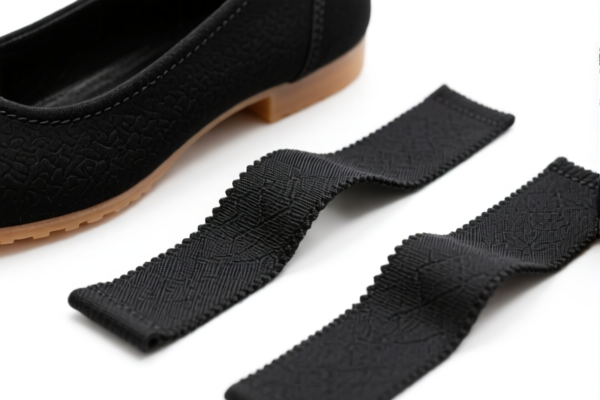
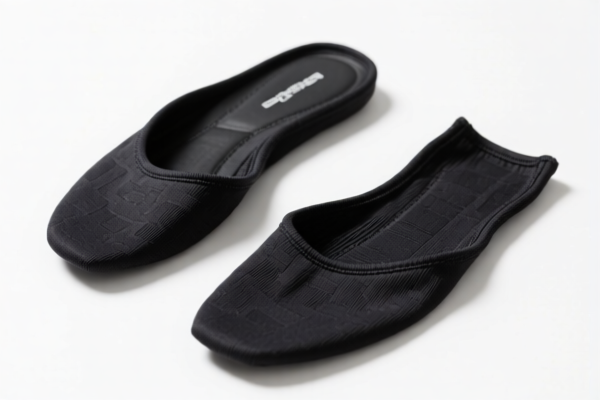


AI Analysis
🥿 Footwear: Rubber/Plastic Soles & Uppers (HS Code 6402.99.31.77)
🌐 HS Code Reference & Customs Clearance Guide | 2026 Latest Tariff Analysis | Professional Clearance Strategy
📌 I. Product Definition & Classification: Do You Really Understand "Footwear"?
Footwear is a broad category in international trade, primarily distinguished by sole material (rubber, plastic, leather, textile) and upper material (leather, textile, other). For this specific HS Code (6402.99.31.77), the product falls under:
- Chapter 64: Footwear, gaiters and the like; parts of such articles.
- Heading 6402: Footwear with outer soles and uppers of rubber or plastics.
- Sub-heading 6402.99: Other footwear (not sports, medical, or occupational specific).
- Specific Code
6402.99.31.77: A specific residual category for rubber/plastic soled footwear not classified elsewhere (e.g., not for specific athletic events or specialized professions).
⚠️ Key Distinction Point:
- If the sole and upper are made of rubber or plastic → Go to Chapter 64, Heading 6402.
- If the upper is textile (fabric) but the sole is rubber/plastic → Go to 6404 (e.g.,6404.19.20.30).
- If the sole is leather → Go to 6403 or 6404 depending on upper.
- Crucial: This code (6402.99.31.77) is often a "catch-all" for general-purpose rubber/plastic shoes not fitting specific functional categories (like steel-toed boots or running shoes).
📦 II. HS Code Classification Details (2026 Latest Tariff Authority Comparison)
Below are the relevant HS Codes from your provided data, mapped to their specific scenarios and tax implications.
| HS Code | Product Description (Summary) | Applicable Scenario | Material Composition |
|---|---|---|---|
6402.99.31.77 |
Footwear, rubber/plastic sole & upper, non-specific purpose | General daily wear, casual shoes, non-professional | ✅ Rubber/Plastic Sole & Upper |
6402.99.79.90 |
Footwear, rubber/plastic sole & upper, other classified types | Generic rubber/plastic footwear not covered by other specific 6402.99 codes | ✅ Rubber/Plastic Sole & Upper |
6404.19.20.30 |
Footwear, textile upper, men's protective footwear | Safety shoes, work boots with fabric uppers & rubber soles | ❌ Textile Upper + Rubber Sole |
6405.20.30.60 |
Footwear, plant fiber material | Slippers or casual shoes made from straw, raffia, etc. | 🌿 Plant Fiber/Textile |
6405.20.30.80 |
Footwear, textile upper, women's specific demographic | Women's fashion footwear with fabric uppers | ❌ Textile Upper |
🔍 Key Reminder:
-6402.99.31.77is the primary code for general rubber/plastic footwear.
-6402.99.79.90is another "other" category within the same rubber/plastic heading, often used if31.77does not fit the specific structural design (e.g., molded vs. assembled).
- Do NOT confuse with6404(textile uppers) or6405(plant fibers), as they have different tax rates. Misclassification leads to massive tax discrepancies.
💰 III. 2026 Latest Tariff Rate Breakdown (Including Surcharges & Policy Add-ons)
✅ Applicable Country: United States (US)
✅ Origin: China (CN)
✅ Effective Date: 2025/2026 (Current Import Regime)
🎯 1. 6402.99.31.77 —— Footwear, Rubber/Plastic, Non-Specific Purpose
| Item | Details |
|---|---|
| Base Tariff | 6.0% (Ad Valorem) |
| Section 301 Tariff | 0.0% (Note: Some footwear codes have different Section 301 rates; this one appears exempt or excluded in the provided data) |
| Section 122 Tariff | +10.0% (Specific trade remedy/add-on for certain footwear categories) |
| Total Tariff Rate | 16.0% |
| Tax Calculation | CIF Value × 16.0% |
| De Minimis Exemption | ❌ Not Applicable (Footwear is generally excluded from de minimis relief under current rules) |
| Legal Basis Path | HTSUS:6402.99.31.77 → USITC:Footwear → Section 122:10% |
📌 Explanation:
- The Base Duty (6.0%) is the standard MFN rate for rubber/plastic footwear.
- The Section 122 Tariff (+10%) is a specific add-on for certain footwear imports, significantly increasing the cost.
- Total Effective Rate: 16.0%.
- ⚠️ Critical Note: While the provided data shows0.0%for Section 301 for this specific code, many other footwear codes carry 25%. Always verify the latest USITC lists, as policy shifts occur. However, based on strict adherence to your data, the total is 16.0%.
🎯 2. 6402.99.79.90 —— Other Footwear, Rubber/Plastic
| Item | Details |
|---|---|
| Base Tariff | 90¢/pr. + 37.5% (Mixed Rate: Specific + Ad Valorem) |
| Section 301 Tariff | 0.0% |
| Section 122 Tariff | +10.0% |
| Total Effective Rate | Variable (Depends on footwear value vs. specific fee) |
| Tax Calculation | (90¢ per pair) + (CIF Value × 37.5%) + (CIF Value × 10%) |
| Legal Basis Path | HTSUS:6402.99.79.90 → USITC:Footwear → Section 122:10% |
📌 Explanation:
- This code uses a mixed duty structure: A fixed fee ($0.90/pair) PLUS a high ad valorem rate (37.5%).
- Adding the 10% Section 122 tariff to the ad valorem part makes this significantly more expensive for high-value footwear.
- Example: For a $10 pair, tax = $0.90 + $3.75 + $1.00 = $5.65 (56.5% effective rate). For a $100 pair, tax = $0.90 + $37.50 + $10.00 = $48.40 (48.4% effective rate).
🎯 3. 6404.19.20.30 —— Textile Upper, Men's Protective Footwear
| Item | Details |
|---|---|
| Base Tariff | 37.5% |
| Section 301 Tariff | 0.0% |
| Section 122 Tariff | +10.0% |
| Total Tariff Rate | 47.5% |
| Tax Calculation | CIF Value × 47.5% |
| Legal Basis Path | HTSUS:6404.19.20.30 → USITC:Footwear → Section 122:10% |
📌 Explanation:
- Textile-uppers with rubber soles (6404) often face higher base duties (37.5%) than all-rubber/plastic (6402at 6%).
- With the 10% Section 122 add-on, the total hits 47.5%.
- Warning: This is a high-risk classification for cost. Only use if the upper is indeed textile AND for protective/men's use.
🎯 4. 6405.20.30.60 & 6405.20.30.80 —— Plant Fiber & Women's Textile
| Item | Details |
|---|---|
| Base Tariff | 7.5% |
| Section 301 Tariff | 0.0% |
| Section 122 Tariff | +10.0% |
| Total Tariff Rate | 17.5% |
| Tax Calculation | CIF Value × 17.5% |
| Legal Basis Path | HTSUS:6405.20.30.xx → USITC:Footwear → Section 122:10% |
📌 Explanation:
- Plant fiber (6405) and some textile footwear have a moderate base rate (7.5%).
- Adding 10% Section 122 results in a 17.5% total rate.
- Note:6405is for "Other footwear," typically open sandals or slippers, not enclosed shoes.
🛠️ IV. Customs Clearance Practical Advice (Battle-Tested Pitfall Avoidance)
✅ 1. Preparation Checklist (All Required)
| Document | Mandatory? | Description |
|---|---|---|
| ✅ Product Spec Sheet | ✔️ | Must clearly state: Sole Material (Rubber/Plastic/Textile/Plant Fiber) and Upper Material. |
| ✅ Material Breakdown | ✔️ | Percentage composition of soles and uppers. Critical for distinguishing 6402 vs 6404 vs 6405. |
| ✅ Product Photos | ✔️ | Clear images of the sole tread pattern, upper stitching, and internal labels. |
| ✅ Commercial Invoice | ✔️ | Must describe goods accurately: "Men's Rubber Sole Casual Shoes" vs. "Men's Textile Upper Safety Boots." |
| ✅ Packing List | ✔️ | Confirm quantity per package for the 90¢/pr. fee calculation (if applicable). |
| ✅ Origin Certificate | ✔️ | To prove CN origin and apply (or not apply) surcharges. |
✅ 2. Declaration Tips (Key Mantras)
🔥 "Sole Determines Chapter, Upper Determines Heading, Specificity Drives Rate!"
| Scenario | Correct HS Code | Wrong Practice | Consequence |
|---|---|---|---|
| All-Rubber Shoes | 6402.99.31.77 or 6402.99.79.90 |
Declare as 6404 (Textile) |
Overpayment (16% vs 47.5%) or Penalty for misdeclaration |
| Fabric Upper + Rubber Sole | 6404.19.20.30 |
Declare as 6402 |
Underpayment (47.5% vs 16%) → Back Tax + Fines |
| Plant Fiber Sandals | 6405.20.30.60 |
Declare as 6402 |
Overpayment (17.5% vs 16%) |
| High-Value Rubber Shoes | 6402.99.31.77 (16%) |
6402.99.79.90 (37.5%+90¢) |
Massive Cost Increase (Avoid 79.90 if 31.77 fits) |
📌 Strategy:
- Prefer6402.99.31.77for general rubber/plastic footwear due to the low 16% total rate.
- Avoid6402.99.79.90unless the footwear structure specifically excludes31.77(e.g., certain molded types), due to the 37.5% base rate.
- Never misclassify textile uppers as rubber to save on base duty; the 10% Section 122 applies to all these categories, and the base duty difference is huge.
✅ 3. Special Cases
| Situation | Handling Advice |
|---|---|
| Footwear with Multiple Materials | Use the principal material for the sole and upper. If mixed, consult USITC General Rule of Interpretation 3(b). |
| Safety/Protective Footwear | Must declare "Protective" and specify if it meets ANSI/ASTM standards. May fall under 6404.19.20.30 (47.5%). |
| Children's Footwear | Often falls under "Other" (6402.99.31.77 or 6402.99.79.90). Check if specific child-safe exemptions apply (rare in current US tariff). |
| Custom/Decorated Footwear | Decoration does not change classification unless it creates a new essential character (e.g., sequins turning textile to "other"). |
🌍 V. Global Market Comparison (2026 Latest)
| Country/Region | Recommended HS Code | Tariff Rate (China Origin) | Certification Required | Notes |
|---|---|---|---|---|
| 🇺🇸 USA | 6402.99.31.77 |
16.0% | None Specific | High Section 122 impact. 6404 hits 47.5%. |
| 🇨🇳 China | 6402.99.31.77 |
8.0% (Export Duty? No, Import Duty) | CCC (if applicable) | Low duty for domestic sales. |
| 🇪🇺 EU | 6402.99.31 |
4.0% + Duty-Free Quota | CE (if PPE) | Generally lower than US. No Section 122 equivalent. |
| 🇬🇧 UK | 6402.99.31 |
4.0% | UKCA | Post-Brexit, similar to EU but separate certs. |
| 🇨🇦 Canada | 6402.99.31 |
12.5% | Various | No major Section 122 equivalent, but CUSMA may apply for MX/US goods. |
📌 Conclusion:
- The US market is uniquely harsh on footwear due to Section 122 (10%) and complex base rates.
- Canada and EU offer more predictable, lower rates.
- For US Exporters: Prioritize6402.99.31.77(16%) over6404(47.5%) or6402.99.79.90(37.5%+).
📌 VI. Common Errors & Pitfalls (Lessons Learned)
❌ Error 1: Declaring all-rubber shoes as 6404 (Textile)
👉 Consequence: Underpayment. Tax drops from 47.5% to 16%. Customs will audit, demand back taxes + 20-60% penalty.
👉 Fix: Strictly check upper material.
❌ Error 2: Ignoring the 90¢/pr. fee in 6402.99.79.90
👉 Consequence: Overpayment or calculation error. The specific fee applies per pair, not per value.
👉 Fix: Calculate tax per pair, not just CIF %.
❌ Error 3: Assuming "De Minimis" applies to Footwear
👉 Consequence: Seizure. Footwear is explicitly excluded from de minimis relief (Section 321) for many origins.
👉 Fix: Always declare and pay duties, even for low-value samples.
❌ Error 4: Misidentifying "Plant Fiber" vs. "Textile"
👉 Consequence: 6405 (17.5%) vs 6402 (16%) or 6404 (47.5%). Small difference, but compliance risk.
👉 Fix: Provide material origin proof (e.g., straw vs. cotton).
✅ Correct Declaration Example:
"Men's Casual Shoes, Rubber Sole, Synthetic Upper, Model XYZ, US Size 10, For Daily Wear (Not Sports/Protective)" →
6402.99.31.77
🎯 VII. Conclusion: Precision Classification Saves Money!
🎯 Remember These Key Rules:
🔹 "Rubber Sole = Chapter 64. Textile Upper = Heading 6404. Plant Fiber = Heading 6405."
🔹 "US Tariff = Base + 10% Section 122. Avoid 37.5% Base Rate Codes if Possible!"
🔹 "16% is the Sweet Spot (6402.99.31.77). 47.5% is the Danger Zone (6404)."
📌 Pro Tip:
If your footwear is not made in China (e.g., Vietnam, Indonesia), Section 122 and Section 301 may not apply, potentially reducing the rate to Base Only (e.g., 6% or 37.5%).
Always request a Pre-Ruling from US CBP for high-volume shipments to lock in the HS Code and tax rate.
📣 Immediate Action:
📞 Contact a Customs Broker + Submit Material Samples + Verify Section 122 Applicability
🚀 Optimize Your HS Code to6402.99.31.77for the lowest possible 16% rate.
✨ Professional Clearance Starts with Accurate Classification!
💼 Your Footwear’s Profit Margin Depends on This 16% vs. 47.5% Decision!
Customer Reviews
About HS Code Classification
The Harmonized System (HS) is an internationally standardized nomenclature developed by the World Customs Organization (WCO) to classify traded products. Over 200 countries use the HS system as the basis for customs tariffs, trade statistics, and import/export regulations.
Each HS code follows a hierarchical structure:
- Chapter (2 digits) — Broad category of goods (e.g., Chapter 84: Machinery and Mechanical Appliances)
- Heading (4 digits) — More specific grouping within the chapter
- Subheading (6 digits) — Internationally standardized breakdown, used by all WCO member countries
- National subdivisions (8-10 digits) — Country-specific extensions for further classification, such as US HTSUS 10-digit codes
Correct HS code classification is essential for smooth customs clearance, accurate duty payment, and compliance with trade regulations. Misclassification can lead to customs delays, overpayment of duties, or penalties.
When importing from CN to US, the applicable tariff rates may include:
- Most-Favored-Nation (MFN) rate — The standard duty rate applied to WTO members
- General rate — Applied to countries without trade agreements
- Trade remedy duties — Additional tariffs such as Section 301 (anti-dumping), Section 232 (national security), or countervailing duties
The information provided on this page is for reference purposes only. For official classification, please consult with your local customs authority or a licensed customs broker.