Fragile Paper Label
CN → US| HS Code | Tariff Rate | Origin | Destination | Doc |
|---|---|---|---|---|
| 4821902000 | 35.0% | CN | US | Official Doc |
| 3919102055 | 40.8% | CN | US | Official Doc |
| 3919905060 | 40.8% | CN | US | Official Doc |
| 4821104000 | 35.0% | CN | US | Official Doc |
Product Images
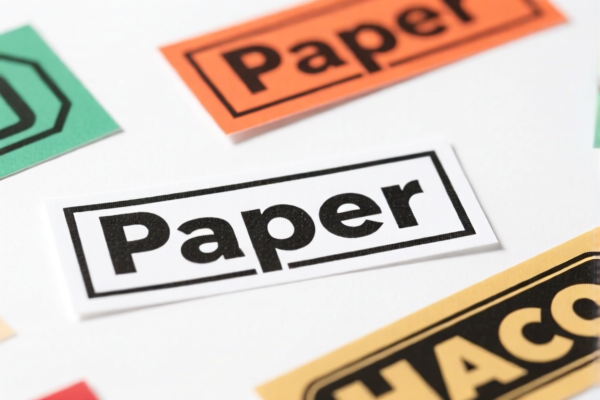
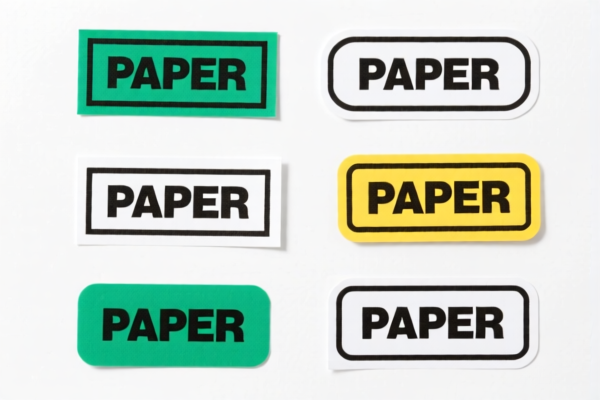


AI Analysis
🖨️ Fragile Paper Label (易碎标签)
🌐 HS Code Reference & Customs Clearance Guide | 2026 Latest Tariff Breakdown | Professional Compliance Strategy
📌 I. Product Definition & Classification: What is a "Fragile Label"?
A Fragile Label (also known as Void Label or Tamper-Evident Label) is a specialized adhesive label designed to break into pieces or leave a "VOID" residue when someone attempts to remove it. It is primarily used for security, warranty validation, and anti-theft purposes on electronics, industrial goods, and high-value items.
In international trade, classification depends strictly on the base material and composition:
1. Paper-Based Fragile Labels:
Made primarily of paper with an adhesive backing. These are classified under Chapter 48 (Paper and Paperboard).
2. Plastic/Composite Fragile Labels:
Made of plastic films (PET, PP, PE) or composite materials that break easily. These are classified under Chapter 39 (Plastics and Articles Thereof).
⚠️ Key Classification Point:
- If the base is paper (even if coated) → Go to Chapter 48.
- If the base is plastic or composite plastic → Go to Chapter 39.
📦 II. HS Code Classification Details (2026 Latest Tariff Authority对照)
Based on the provided data, here are the specific HS Codes for Fragile Labels, categorized by material:
| HS Code | Product Description | Material Type | Classification Logic |
|---|---|---|---|
4821.90.20.00 |
Self-adhesive paper labels, other than those of heading 4821.10 | Paper or Paper Composite | Fits "Self-adhesive paper labels" usage. |
4821.10.40.00 |
Paper or paperboard labels, other | Paper | Falls under "Other paper labels" category. |
3919.10.20.55 |
Self-adhesive plates, sheets, film, foil, tape, strip, and other shapes of plastics | Plastic or Paper-Plastic Composite | Classified as "Other" plastic self-adhesive products (flat/banded). |
3919.90.50.60 |
Plastics plates, sheets, film, foil, tape, strip, and other shapes | Plastic Base | Fits "Other plastic self-adhesive products" with flat shape. |
🔍 Critical Reminder:
- Do not mix paper and plastic HS codes. If the label is 90% paper but has a plastic backing, customs may still classify it as paper OR plastic depending on the specific adhesive structure. - If the label is plastic-based, it triggers Chapter 39 tariffs, which are often higher due to the "122 Clause" and Section 301 tariffs.
💰 III. 2026 Latest Tariff Rate Breakdown (Including Additional Duties)
✅ Applicable Country: USA (US)
✅ Origin: China (CN)
✅ Effective Time: Current rates include Section 301 (25%) and Section 122 (10%) tariffs.
🎯 1. Paper-Based Fragile Labels (4821.90.20.00 & 4821.10.40.00)
Both paper-based codes share the same tax structure in the provided data.
| Item | Content |
|---|---|
| Base Tariff | 0.0% (Ad Valorem) |
| Section 301 Additional Duty | +25.0% |
| Section 122 Clause Tariff | +10.0% |
| Total Tax Rate | 35.0% |
| Tax Calculation | CIF Value × 35% |
| Exemption Eligibility | ❌ No (High-risk category for trade war tariffs) |
| Legal Basis Path | USITC:4821.90.20.00 / USITC:4821.10.40.00 → Section 301: 25% → Section 122: 10% |
📌 Explanation:
- Although the base tariff is 0%, the Section 301 (25%) and Section 122 (10%) add-ons make the total effective rate 35%. - Paper labels are generally safer than plastic labels in terms of base duty, but still bear the full brunt of US-China trade tariffs.
🎯 2. Plastic/Composite Fragile Labels (3919.10.20.55 & 3919.90.50.60)
Plastic-based labels incur a base tariff before the additional duties are applied.
| Item | Content |
|---|---|
| Base Tariff | 5.8% (Ad Valorem) |
| Section 301 Additional Duty | +25.0% |
| Section 122 Clause Tariff | +10.0% |
| Total Tax Rate | 40.8% |
| Tax Calculation | CIF Value × 40.8% |
| Exemption Eligibility | ❌ No (Plastic products are heavily scrutinized) |
| Legal Basis Path | USITC:3919.10.20.55 / USITC:3919.90.50.60 → Section 301: 25% → Section 122: 10% |
📌 Explanation:
- Base Rate 5.8%: Plastic adhesives have a non-zero base tariff. - Total 40.8%: This is 5.8% higher than paper labels due to the base duty. - Risk: Plastic labels are more likely to be challenged as "composite materials," potentially leading to classification disputes.
🛠️ IV. Customs Clearance Operational Advice (Practical Pitfall Avoidance)
✅ 1. Documentation Checklist (Mandatory)
| Document | Required | Description |
|---|---|---|
| ✅ Product Specification Sheet | ✔️ | Must explicitly state: "Fragile/Void Label," Material (Paper/Plastic), Adhesive Type, Liner Type. |
| ✅ Material Composition Declaration | ✔️ | Crucial for distinguishing between 4821 (Paper) and 3919 (Plastic). Specify % of paper vs. plastic. |
| ✅ Product Photos (Label & Packaging) | ✔️ | Show the "void" effect or fragmentation when peeled. Show the roll/sheet format. |
| ✅ Commercial Invoice | ✔️ | Clearly describe as "Fragile Adhesive Label" or "Tamper-Evident Label." Avoid vague terms like "Sticker." |
| ✅ Packing List | ✔️ | Detail the net/gross weight. Note if it's on a roll or sheet. |
| ✅ Certificate of Origin (CO) | ✔️ | Standard form to prove Chinese origin (triggers tariffs). |
✅ 2. Declaration Tips (Key Mnemonics)
🔥 "Material Defines Code, Description Avoids Risk, Tax is High, Prep is Key!"
| Scenario | Correct Declaration | Incorrect Practice |
|---|---|---|
| Paper-Based | 4821.90.20.00 / 4821.10.40.00Desc: "Paper Fragile Label, Self-Adhesive, Void Effect" |
Classifying as 3919 (Plastic) → Overpaying tax? Or under-declaring? |
| Plastic-Based | 3919.10.20.55 / 3919.90.50.60Desc: "Plastic/Void Label, Self-Adhesive, Tamper-Evident" |
Calling it "Paper Label" → Misclassification penalty + Back taxes. |
| Composite Material | Consult Customs Broker | Assume it's paper → If customs deems it plastic, you face 40.8% instead of 35%. |
| Unrolled Sheets vs Rolls | Specify format | If unrolled, ensure HS code still applies (some codes require "rolls"). |
✅ 3. Special Handling for "Fragile" Nature
| Situation | Advice |
|---|---|
| Customs Inspection | Fragile labels are low-risk for safety (non-hazardous), but high-risk for classification. Provide a sample if requested. |
| Value Declaration | Declare the FOB/CIF value of the labels only, not the products they are attached to. Labels are "accessories" or "packaging materials" in some contexts, but here they are self-declared as goods. |
| Anti-Dumping/Countervailing | Check if there are specific anti-dumping duties on paper/plastic adhesives. Currently, Section 301 and 122 are the main burdens. |
🌍 V. Global Market Comparison (2026)
| Country/Region | Recommended HS Code | Tariff (China Origin) | Key Certification | Note |
|---|---|---|---|---|
| 🇺🇸 USA | 4821.90.20.00 / 3919.10.20.55 |
35.0% (Paper) 40.8% (Plastic) |
None specific | High Tariff. Section 301 & 122 apply. |
| 🇨🇳 China | 4821.90.20.00 / 3919.10.20.55 |
Low/Zero (Import Duty) | N/A | Domestic consumption has lower barriers. |
| 🇪🇺 EU | 4821.90 / 3919.10 |
Varies (0-10%) | CE (if functional) | No Section 301/122. Standard WTO rates apply. |
| 🇦🇺 Australia | 4821.90 / 3919.10 |
5% | N/A | Lower tariffs than US. |
| 🇯🇵 Japan | 4821.90 / 3919.10 |
0-5% | PSE (if electronic accessory) | Favorable for paper labels. |
📌 Conclusion:
- The US is the most expensive market due to the 35%-40.8% effective tariff rate. - EU, Australia, and Japan offer significantly better tariff structures (0-10%). - If exporting to the US, ensure your cost model includes 35-40% duty to maintain margins.
📌 VI. Common Errors & Pitfall Guide (Lessons Learned)
❌ Error 1: Classifying Plastic fragile labels as Paper (4821)
👉 Consequence: Underpayment of duty. Customs will reassess to 3919, charging 40.8% instead of 35%, plus penalties.
❌ Error 2: Not specifying "Fragile/Void" in the description
👉 Consequence: Customs may classify as "Standard Adhesive Tape" or "Sticker," leading to incorrect HS code and potential delays.
❌ Error 3: Ignoring Section 122 (10%)
👉 Consequence: Miscalculation of total landed cost. Many brokers forget the 122 Clause, leading to unexpected charges.
❌ Error 4: Declaring "Labels" without material specification
👉 Consequence: High risk of misclassification. Always specify "Paper-Based" or "Plastic-Based."
✅ Correct Approach:
"Fragile Void Label, Paper Base, Self-Adhesive, Tamper-Evident, Model XYZ, HS Code 4821.90.20.00"
or
"Fragile Void Label, PET Plastic Base, Self-Adhesive, HS Code 3919.10.20.55"
🎯 VII. Conclusion: Precision Classification for Cost Control
🎯 Remember the Mantra:
🔹 "Paper is 35%, Plastic is 40.8% — Material Matters!"
🔹 "Section 301 (25%) + Section 122 (10%) = Non-Negotiable!"
🔹 "Describe 'Fragile/Void' Clearly to Avoid Delays!"
📌 Pro Tip:
If your fragile labels are exported to non-US markets (EU, ASEAN, LATAM), the tariff burden drops significantly. Consider supply chain diversification if the US market margin is squeezed by the 35-40% tariff.
For US imports, pre-arrange HS Code rulings with your customs broker to ensure the material classification (Paper vs. Plastic) is defensible.
📣 Immediate Action:
📞 Verify Material: Is it >50% paper or plastic?
📝 Update Invoice: Use precise descriptions ("Fragile Void Label").
💰 Calculate Landed Cost: Include 35% (Paper) or 40.8% (Plastic) in your pricing.
🚀 Let your labels break, not your profit margins!
✨ Professional Clearance Starts with Accurate Classification!
💼 Every Percentage Point Counts in Global Trade!
Customer Reviews
About HS Code Classification
The Harmonized System (HS) is an internationally standardized nomenclature developed by the World Customs Organization (WCO) to classify traded products. Over 200 countries use the HS system as the basis for customs tariffs, trade statistics, and import/export regulations.
Each HS code follows a hierarchical structure:
- Chapter (2 digits) — Broad category of goods (e.g., Chapter 84: Machinery and Mechanical Appliances)
- Heading (4 digits) — More specific grouping within the chapter
- Subheading (6 digits) — Internationally standardized breakdown, used by all WCO member countries
- National subdivisions (8-10 digits) — Country-specific extensions for further classification, such as US HTSUS 10-digit codes
Correct HS code classification is essential for smooth customs clearance, accurate duty payment, and compliance with trade regulations. Misclassification can lead to customs delays, overpayment of duties, or penalties.
When importing from CN to US, the applicable tariff rates may include:
- Most-Favored-Nation (MFN) rate — The standard duty rate applied to WTO members
- General rate — Applied to countries without trade agreements
- Trade remedy duties — Additional tariffs such as Section 301 (anti-dumping), Section 232 (national security), or countervailing duties
The information provided on this page is for reference purposes only. For official classification, please consult with your local customs authority or a licensed customs broker.