Fresh Leather (for Handicrafts)
CN → US| HS Code | Tariff Rate | Origin | Destination | Doc |
|---|---|---|---|---|
| 4105109000 | 12.0% | CN | US | Official Doc |
| 4104115080 | 13.3% | CN | US | Official Doc |
| 4104195080 | 13.3% | CN | US | Official Doc |
| 4105300000 | 12.0% | CN | US | Official Doc |
| 4107117050 | 15.0% | CN | US | Official Doc |
Product Images
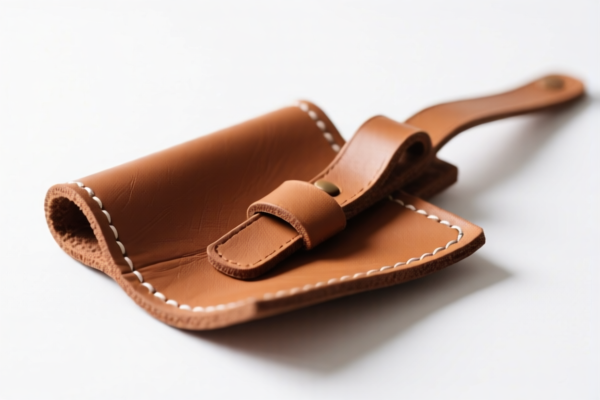
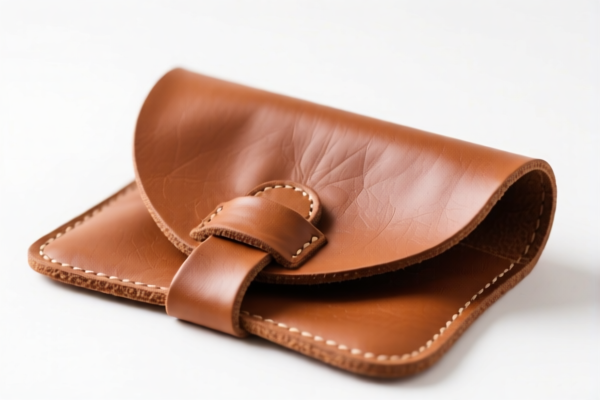
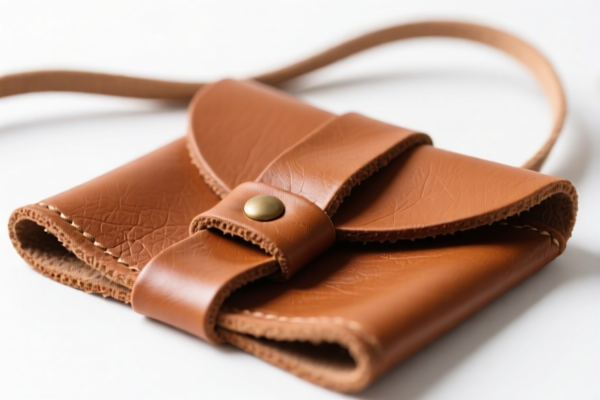
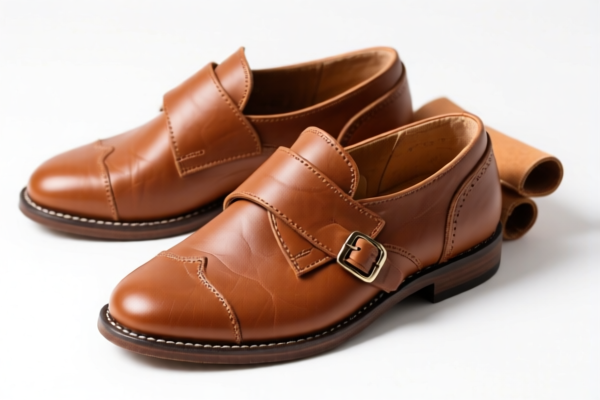
AI Analysis
🧵 Fresh Leather (for Handicrafts)
🌐 HS Code Reference & Customs Clearance Guide | 2026 Latest Tariff Analysis | Professional Strategy for Raw & Semi-Processed Leather
📌 I. Product Definition & Classification: What is "Fresh Leather"?
In the context of international trade and handicrafts, "Fresh Leather" refers to animal hides or skins that are in a wet state or partially tanned (wet-blue/wet-white), or raw/unprocessed skins. These materials are not yet finished goods (like shoes or bags) but are intermediate raw materials used by artisans or manufacturers for further processing, crafting, or finishing.
Key Characteristics: * State: Wet, semi-tanned, or raw. * Material: Bovine (Cow/Horse), Ovine (Sheep/Lamb), or Other animal skins. * Usage: Specifically intended for handicrafts, art creation, or further industrial processing. * Processing Level: Minimal processing beyond soaking, liming, or basic pickling; not yet tanned for durability or finished for retail.
⚠️ Critical Distinction:
- If the leather is fully tanned, finished, and ready for consumer use (e.g., upholstery, finished bags), it falls under different chapters (e.g., 4106, 4115).
- If the item is raw, unprocessed hides with hair/flesh still attached, it falls under Chapter 41 (Hides, Skins, and Leather), specifically headings 4103–4107.
- "Handicrafts" implies the end-use, but HS codes are determined by material and state, not just end-use. However, the summary provided links specific subheadings to "handicrafts," suggesting these specific classifications are validated for such imports under current trade rules.
📦 II. HS Code Classification Details (2026 Tariff Authority)
Based on the provided data, here are the specific HS Codes for Fresh Leather suitable for handicrafts, categorized by material and state:
| HS Code | Material & State Summary | Applicable Scenario | Key Classification Feature |
|---|---|---|---|
| 4105.10.90.00 | Sheep/Lamb Skin Wet/Semi-tanned state |
Handicrafts requiring sheep/lamb leather properties | Matches Sheep/Lamb material requirement; wet/semi-tanned form |
| 4104.11.50.80 | Bovine/Horse Skin Wet/Unprocessed state |
Handicrafts needing bovine/horse leather base | Matches Bovine/Horse classification; wet/unprocessed form |
| 4104.19.50.80 | Other Bovine/Horse Skin Primary/Semi-finished state |
Handicrafts using primary leather forms | Matches Primary Leather classification; semi-finished form |
| 4105.30.00.00 | Sheep/Lamb Skin Raw Original Hide |
Handicrafts using unprocessed sheep/lamb hides | Matches Raw Sheep/Lamb characteristics; no further processing |
| 4107.11.70.50 | Other Leather Raw Hide |
Handicrafts meeting material/state/usage criteria | General classification for Raw Hides meeting specific criteria |
🔍 Important Note:
- 4104 series typically covers Bovine (cow/horse) leathers.
- 4105 series typically covers Ovine (sheep/lamb) leathers.
- 4107 is a residual category for other prepared/tanned leathers not specified elsewhere, but here linked to raw hides for specific handicraft uses.
- The term "Handicrafts" in the summary is a usage descriptor; the HS code is primarily determined by animal type and processing state.
💰 III. 2026 Tariff Rate Breakdown (Including Additional Duties)
✅ Applicable Market: United States (US)
✅ Origin: China (CN) (Implied by "122-Clause Tariff" which often refers to Section 301/IEEPA measures)
✅ Effective Date: Current as of 2026
🎯 1. 4105.10.90.00 – Sheep/Lamb Skin (Wet/Semi-Tanned)
| Item | Detail |
|---|---|
| Base Duty Rate | 2.0% (ad valorem) |
| Section 301 / 122-Clause Tariff | +10.0% |
| Additional Tariffs | 0.0% |
| Total Duty Rate | 12.0% |
| Tax Calculation | CIF Value × 12.0% |
| Legal Basis | USITC 4105.10.90.00 + 122-Clause Add-on |
📌 Explanation:
- Sheep/lamb skins (4105) have a lower base duty (2%) compared to bovine leathers.
- However, the 10% additional tariff applies due to trade restrictions (likely Section 301/IEEPA measures).
- Total: 12% is significantly lower than many other leather categories.
🎯 2. 4104.11.50.80 – Bovine/Horse Skin (Wet/Unprocessed)
| Item | Detail |
|---|---|
| Base Duty Rate | 3.3% (ad valorem) |
| Section 301 / 122-Clause Tariff | +10.0% |
| Additional Tariffs | 0.0% |
| Total Duty Rate | 13.3% |
| Tax Calculation | CIF Value × 13.3% |
| Legal Basis | USITC 4104.11.50.80 + 122-Clause Add-on |
📌 Explanation:
- Bovine skins (4104.11) have a base duty of 3.3%.
- Plus 10% additional tariff.
- Total: 13.3%. Slightly higher than sheep/lamb due to higher base rate.
🎯 3. 4104.19.50.80 – Other Bovine/Horse Skin (Primary/Semi-Finished)
| Item | Detail |
|---|---|
| Base Duty Rate | 3.3% (ad valorem) |
| Section 301 / 122-Clause Tariff | +10.0% |
| Additional Tariffs | 0.0% |
| Total Duty Rate | 13.3% |
| Tax Calculation | CIF Value × 13.3% |
| Legal Basis | USITC 4104.19.50.80 + 122-Clause Add-on |
📌 Explanation:
- Same base rate as 4104.11.
- Total: 13.3%. Applies to bovine/horse skins that are primary or semi-finished but not in the specific subcategory of 4104.11.
🎯 4. 4105.30.00.00 – Sheep/Lamb Skin (Raw Original Hide)
| Item | Detail |
|---|---|
| Base Duty Rate | 2.0% (ad valorem) |
| Section 301 / 122-Clause Tariff | +10.0% |
| Additional Tariffs | 0.0% |
| Total Duty Rate | 12.0% |
| Tax Calculation | CIF Value × 12.0% |
| Legal Basis | USITC 4105.30.00.00 + 122-Clause Add-on |
📌 Explanation:
- Raw sheep/lamb hides have the lowest base duty (2%).
- Total: 12%. Same as wet/semi-tanned sheep/lamb.
🎯 5. 4107.11.70.50 – Other Leather (Raw Hide)
| Item | Detail |
|---|---|
| Base Duty Rate | 5.0% (ad valorem) |
| Section 301 / 122-Clause Tariff | +10.0% |
| Additional Tariffs | 0.0% |
| Total Duty Rate | 15.0% |
| Tax Calculation | CIF Value × 15.0% |
| Legal Basis | USITC 4107.11.70.50 + 122-Clause Add-on |
📌 Explanation:
- This category has the highest base duty (5%) among the listed options.
- Total: 15%. Applies to other types of leather hides not covered by 4104/4105 specifics, or those meeting unique criteria for handicrafts.
🛠️ IV. Customs Clearance Practical Advice (Real-World Pitfall Guide)
✅ 1. Document Checklist (Essential for Clearance)
| Document | Required? | Notes |
|---|---|---|
| Commercial Invoice | ✅ Yes | Must clearly state "Fresh Leather for Handicrafts," material type (Sheep/Bovine), and state (Wet/Raw). |
| Packing List | ✅ Yes | Detail weight, quantity, and packaging. |
| Bill of Lading/Air Waybill | ✅ Yes | Standard shipping document. |
| Certificate of Origin | ✅ Yes | To verify country of origin (critical for 122-Clause tariff application). |
| Product Specification Sheet | ✅ Yes | Must confirm no further tanning/finishing beyond the stated state (wet/raw). Include animal type. |
| Sanitary/Phytosanitary Certificate | ✅ Yes | If required by destination country for animal products. |
| Customs Broker Declaration | ✅ Yes | Professional declaration of HS Code and tariff applicability. |
✅ 2. Classification Strategy (Key Mnemonic)
🔥 "Know the Animal, Know the State, Avoid the 15% Trap!"
| Scenario | Correct HS Code | Total Duty | Wrong Way to Declare |
|---|---|---|---|
| Sheep/Lamb, Wet/Semi-Tanned | 4105.10.90.00 |
12% | Declare as "Finished Leather" → Higher duty or rejection |
| Sheep/Lamb, Raw | 4105.30.00.00 |
12% | Same as above |
| Bovine/Horse, Wet/Unprocessed | 4104.11.50.80 |
13.3% | Declare as "Sheep" → Misclassification penalty |
| Bovine/Horse, Primary/Semi-Finished | 4104.19.50.80 |
13.3% | Same as above |
| Other/General Raw Hide | 4107.11.70.50 |
15% | Avoid if possible; higher base duty |
📌 Critical Tip:
- Accurate Material Identification is paramount. Sheep vs. Bovine determines the base duty (2% vs. 3.3%).
- State of Processing must be clearly documented. If "fresh leather" is actually "finished leather," it will be misclassified, leading to penalties, back taxes, and shipment delays.
- Handicrafts is a usage note; do not rely on it for classification. Use material and state.
✅ 3. Special Circumstances & Handling
| Situation | Recommendation |
|---|---|
| Mixed Animal Types | If a shipment contains both sheep and bovine leather, declare separately or use the higher base duty rate for the entire shipment (if commingled) to avoid penalties. |
| Partially Tanned vs. Raw | Ensure documentation clearly states the degree of tanning. "Wet-blue" (semi-tanned) is different from "Raw" (untanned). Misdeclaration can lead to reclassification. |
| 122-Clause Tariff Exemptions | Check if your product qualifies for any exclusions from the 10% additional tariff. Some specific types of leather may have been excluded in previous trade rounds. |
| Sanitary Controls | Fresh leather is an animal product. Ensure compliance with USDA/APHIS regulations if importing into the US. Failure to provide health certificates can result in destruction of goods. |
🌍 V. Global Market Comparison (2026)
| Country/Region | Recommended HS Code | Base Duty | Additional Tariff (China) | Total Duty | Notes |
|---|---|---|---|---|---|
| 🇺🇸 United States | 4105.10.90.00 (Sheep) |
2.0% | +10% (122-Clause) | 12.0% | Highest scrutiny on animal products. |
| 🇺🇸 United States | 4104.11.50.80 (Bovine) |
3.3% | +10% (122-Clause) | 13.3% | Bovine leather faces slightly higher base. |
| 🇨🇳 China | 4105.10.90.00 |
~2-3% | 0% | ~2-3% | Lower duties if exporting to China. |
| 🇪🇺 EU | 4105.10.90.00 |
~3-5% | 0% (MFN) | ~3-5% | No additional trade tariffs, but high environmental/sanitary standards. |
| 🇬🇧 UK | 4105.10.90.00 |
~3-5% | 0% | ~3-5% | Post-Brexit tariffs may vary; check UK Global Tariff. |
📌 Conclusion:
- The US market imposes the highest effective duty due to the 10% additional tariff.
- Sheep/Lamb leather (4105) is more cost-effective than Bovine/Horse (4104) due to lower base duty.
- Always verify sanitary requirements for animal products in the destination country.
📌 VI. Common Errors & Pitfalls (Lessons Learned)
❌ Error 1: Declaring "Fresh Leather" as "Finished Leather Goods"
👉 Consequence: Misclassification, potential fraud charges, high fines, and shipment seizure.
❌ Error 2: Ignoring the Animal Type (Sheep vs. Bovine)
👉 Consequence: Incorrect base duty rate (2% vs. 3.3%). While small, it can lead to underpayment penalties.
❌ Error 3: Failing to Provide Health/Sanitary Certificates
👉 Consequence: Shipment detained or destroyed by USDA/APHIS in the US or equivalent agencies in other countries.
❌ Error 4: Not Declaring "122-Clause" Tariff Applicability
👉 Consequence: Customs will assess the additional 10% tariff, leading to unexpected costs and potential delays if not prepaid.
✅ Correct Practice:
"Fresh Sheep Skin, Wet-Tanned, for Handicraft Use, Origin: China, HS: 4105.10.90.00"
🎯 VII. Conclusion: Precision in Classification Saves Money!
🎯 Remember the Key Principles:
🔹 "Know the Animal" – Sheep (2% base) vs. Bovine (3.3% base).
🔹 "Know the State" – Raw vs. Wet/Semi-Tanned.
🔹 "Expect the 10% Add-On" – Always budget for the additional tariff if importing from China to the US.
🔹 "Total Duty = Base + 10%" – Calculate accordingly (12%, 13.3%, or 15%).
🔹 "Sanitary Docs are Mandatory" – Never skip health certificates for animal products.
📌 Pro Tip:
If your handicrafts are fully finished (e.g., leather wallets, belts), they fall under Chapter 42 (Articles of Leather), not Chapter 41. Ensure you are classifying raw materials, not finished goods. Misclassifying finished goods as raw materials is a common and serious error.
📣 Immediate Action:
📞 Consult a Customs Broker to verify the exact HS Code based on your specific product sample.
📄 Prepare All Sanitary Documents in advance.
📊 Calculate Landed Cost including the 10% additional tariff to ensure profitability.
✨ Accurate Classification, Smooth Clearance, Maximized Profit!
💼 Every Percent Counts in Leather Trade!
Customer Reviews
About HS Code Classification
The Harmonized System (HS) is an internationally standardized nomenclature developed by the World Customs Organization (WCO) to classify traded products. Over 200 countries use the HS system as the basis for customs tariffs, trade statistics, and import/export regulations.
Each HS code follows a hierarchical structure:
- Chapter (2 digits) — Broad category of goods (e.g., Chapter 84: Machinery and Mechanical Appliances)
- Heading (4 digits) — More specific grouping within the chapter
- Subheading (6 digits) — Internationally standardized breakdown, used by all WCO member countries
- National subdivisions (8-10 digits) — Country-specific extensions for further classification, such as US HTSUS 10-digit codes
Correct HS code classification is essential for smooth customs clearance, accurate duty payment, and compliance with trade regulations. Misclassification can lead to customs delays, overpayment of duties, or penalties.
When importing from CN to US, the applicable tariff rates may include:
- Most-Favored-Nation (MFN) rate — The standard duty rate applied to WTO members
- General rate — Applied to countries without trade agreements
- Trade remedy duties — Additional tariffs such as Section 301 (anti-dumping), Section 232 (national security), or countervailing duties
The information provided on this page is for reference purposes only. For official classification, please consult with your local customs authority or a licensed customs broker.