Garbage Can
CN → US| HS Code | Tariff Rate | Origin | Destination | Doc |
|---|---|---|---|---|
| 3924905650 | 20.9% | CN | US | Official Doc |
| 3924905610 | 20.9% | CN | US | Official Doc |
| 3926909989 | 22.8% | CN | US | Official Doc |
| 3926901000 | 20.9% | CN | US | Official Doc |
| 4202999000 | 55.0% | CN | US | Official Doc |
| 7326908688 | 87.9% | CN | US | Official Doc |
Product Images
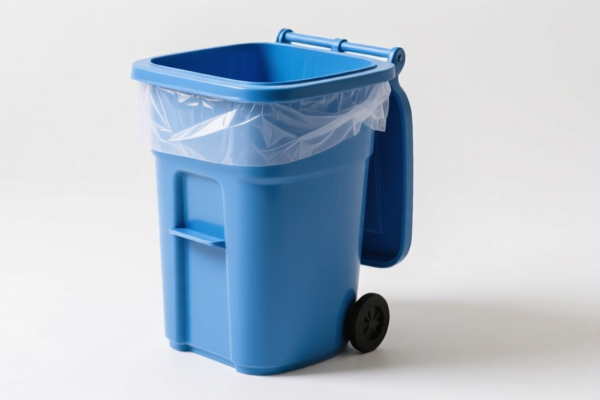
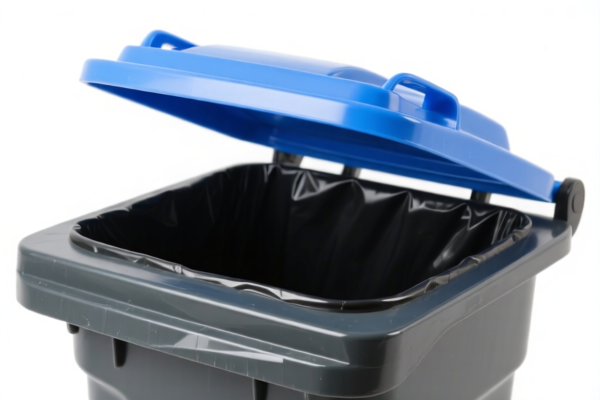
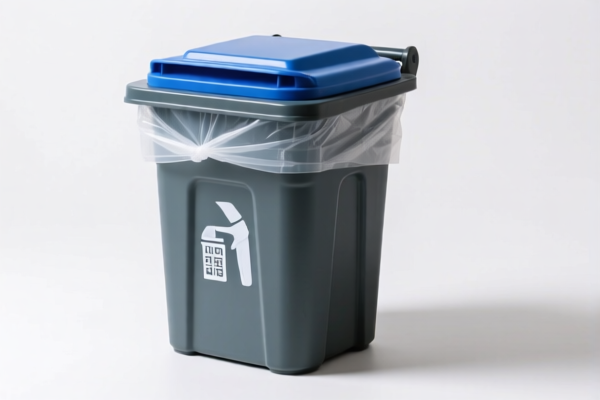
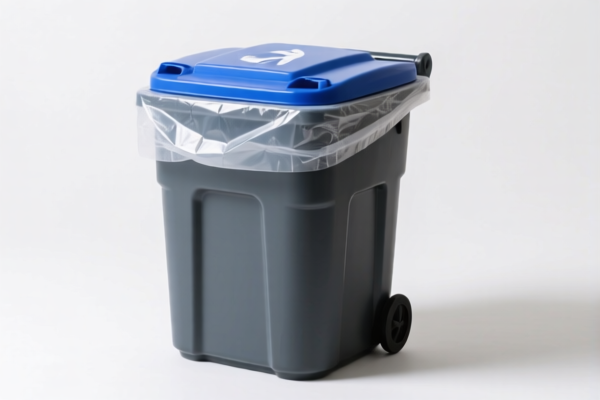
AI Analysis
🗑️ Garbage Can (Trash Bins & Waste Containers)
🌐 HS Code Reference & Customs Clearance Guide | 2026 Latest Tariff Analysis | Professional Strategy for Plastic, Metal & Auto Containers
📌 I. Product Definition & Classification: What Exactly Is a "Garbage Can"?
In international trade, "Garbage Can" is a generic term that masks significant differences in material, use case, and manufacturing process. Misclassification can lead to drastic tariff shocks (from 20.9% to 87.9%) and clearance delays.
We categorize garbage cans into three distinct clusters based on the provided data:
- Household/Homeware Plastic Bins: Generic bins for home, kitchen, or office use.
- Key Feature: Non-specific household use, plastic material.
- Automotive Waste Containers: Bins designed specifically for cars.
- Key Feature: Car-specific use, often plastic or fabric-covered.
- Specialty/Metal Containers: Non-standard materials or specific industrial uses.
- Key Feature: Metal construction or non-typical materials.
⚠️ Critical Distinction Point:
- Plastic Household Bin vs. Plastic Auto Bin: While both are plastic, the use case (Chapter 39 vs. Chapter 39/42) and material perception can shift the HS code from3924to3926or4202.
- Plastic vs. Metal: A metal bin falls under Chapter 73, which attracts significantly higher duties due to steel/aluminum restrictions.
- Hard Plastic vs. Textile/Fabric: A fabric-covered car bin is classified under4202(bags/cases), not plastics.
📦 II. HS Code Classification Matrix (2026 Data Analysis)
Based on the provided dataset, here are the 6 specific HS Codes mapped to Garbage Cans. Note that the "Summary" in the data provides the reasoning for the classification.
| HS Code | Product Description & Data Summary | Material Inference | Primary Use Case | Total Tax Rate |
|---|---|---|---|---|
3924.90.56.50 |
Plastic Household Bin: "Slag bucket" inferred as plastic, fits "other household items/containers of plastic." | Plastic | Household / Kitchen | 20.9% |
3924.90.56.10 |
Plastic Household Bin: "Slag bucket" inferred as plastic, fits "other household plastic products." | Plastic | Household / General | 20.9% |
3926.90.99.89 |
Auto Trash Can: Inferred as plastic, fits "other articles of plastics and articles of other materials." | Plastic | Automotive | 22.8% |
3926.90.10.00 |
Auto Trash Can: Inferred as plastic bucket, fits "plastic buckets." | Plastic | Automotive | 20.9% |
4202.99.90.00 |
Auto Trash Can: Inferred as plastic or textile material, fits "other containers and bags." | Plastic/Textile | Automotive (Fabric/Soft) | 55.0% |
7326.90.86.88 |
Auto Trash Can: Inferred as metal, fits "other articles of base metal." | Metal (Steel/Aluminum) | Automotive / Industrial | 87.9% |
🔍 Key Insight from Data:
- Plastic Household Bins (3924) and Plastic Auto Bins (3926) generally have the lowest base tariffs (3.4% - 5.3%).
- Textile/Fabric Auto Bins (4202) trigger a massive 55% total rate due to high base duties (20%).
- Metal Bins (7326) face the highest penalty at 87.9% due to base duties (2.9%) plus a specific "Steel, Aluminum, Copper Products Surcharge of 50%".
💰 III. Detailed Tariff Breakdown (2026 US Import from China)
✅ Applicable Country: United States (US)
✅ Origin: China (CN)
✅ Effective Date: Current 2025/2026 policies (Section 301 + Section 232/IEEPA components)
The total tax rates provided in the data are composite rates, consisting of: 1. MFN Base Duty (Standard WTO rate) 2. Section 301 Additional Duty (China-specific, often 7.5% or 25%) 3. Section 232 / 122 Clause Tariff (Steel/Aluminum or National Security, 10% in this data context)
🎯 1. 3924.90.56.50 & 3924.90.56.10 — Plastic Household Bins
The most cost-effective option for standard plastic bins.
| Item | Detail |
|---|---|
| Base Duty | 3.4% |
| Section 301 Surcharge | 7.5% |
| 122 Clause / Additional | 10% |
| Total Effective Rate | 20.9% |
| Calculation | CIF Value × 20.9% |
| Why this rate? | Plastics (Ch 39) have low base duties. The 301 tariff is reduced to 7.5% for many consumer goods, plus a flat 10% security levy. |
🎯 2. 3926.90.10.00 — Plastic Auto Bins (Bucket Style)
Similar to household bins but classified under "Other articles of plastics" (Ch 39.26).
| Item | Detail |
|---|---|
| Base Duty | 3.4% |
| Section 301 Surcharge | 7.5% |
| 122 Clause / Additional | 10% |
| Total Effective Rate | 20.9% |
| Calculation | CIF Value × 20.9% |
| Why this rate? | Same structure as household bins. Classification as "bucket" does not increase the tax burden. |
🎯 3. 3926.90.99.89 — Plastic Auto Bins (Other/General)
Generic plastic automotive accessories.
| Item | Detail |
|---|---|
| Base Duty | 5.3% |
| Section 301 Surcharge | 7.5% |
| 122 Clause / Additional | 10% |
| Total Effective Rate | 22.8% |
| Calculation | CIF Value × 22.8% |
| Why this rate? | Higher base duty (5.3%) compared to household bins (3.4%) drives the slight increase. |
🎯 4. 4202.99.90.00 — Textile/Fabric Auto Bins
High-risk classification for car trash cans. Often used for "soft" bins or those with fabric covers.
| Item | Detail |
|---|---|
| Base Duty | 20.0% |
| Section 301 Surcharge | 25.0% |
| 122 Clause / Additional | 10% |
| Total Effective Rate | 55.0% |
| Calculation | CIF Value × 55.0% |
| Why this rate? | CRITICAL: Textiles/Leather goods (Ch 42) have high base duties (20%). The 301 tariff is at the maximum 25%. This is a cost trap. |
🎯 5. 7326.90.86.88 — Metal Auto Bins
Steel or Aluminum trash cans. Highest cost due to trade war penalties on metals.
| Item | Detail |
|---|---|
| Base Duty | 2.9% |
| Section 301 Surcharge | 25.0% |
| Steel/Aluminum Surcharge | 50.0% (Specific to steel/aluminum) |
| 122 Clause / Additional | 10% |
| Total Effective Rate | 87.9% |
| Calculation | CIF Value × 87.9% |
| Why this rate? | EXTREME PENALTY: While the base duty is low (2.9%), the 50% specific duty on Steel/Aluminum combined with the 25% Section 301 rate creates a prohibitive tax. |
📌 Explanation of Tax Components:
- Base Duty: The standard MFN rate for the HS code.
- Section 301 (7.5% vs 25%): Depends on the product list. Plastics are often lower (7.5%), while textiles and metals face higher (25%).
- 122 Clause / 10%: A fixed administrative or security-related surcharge mentioned in the data for all items.
- Steel/Aluminum 50%: A specific penalty for metal products, making7326the most expensive to import.
🛠️ IV. Customs Clearance Practical Advice
✅ 1. Material Declaration is King
Customs officers will inspect the primary material of the product.
- Plastic Bins: Ensure the product description explicitly states "100% Plastic" or "Polypropylene." Avoid vague terms like "Composite" if it contains metal frames.
- Fabric Bins: If the bin is plastic inside but has a fabric cover, it may still be classified as 4202 if the fabric is the "essential character." Result: 55% Tax.
- Metal Bins: If it is steel, accept the 87.9% tax or redesign.
✅ 2. Avoid "Metal" Classification for Auto Bins
Unless the product is purely metal and cannot be substituted with plastic: - Strategy: Switch to Plastic (PP/PE) or Fabric materials. - Savings: Reduces tax from 87.9% to 20.9% - 22.8% (Plastic) or 55% (Fabric). Saving of ~65% tax!
✅ 3. Correctly Define "Household" vs. "Automotive"
- Household (
3924): Lower base duty (3.4%). Use if the bin is generic. - Automotive (
3926/4202): If designed specifically for cars (e.g., clips, specific shape), it falls under3926or4202. - Risk: Do not declare a Metal Car Bin as a Household Plastic Bin. This is customs fraud and will lead to seizures.
✅ 4. Documentation Checklist
| Document | Requirement |
|---|---|
| Commercial Invoice | Clearly state Material (e.g., "Polypropylene Plastic"), HS Code, and Country of Origin. |
| Product Photos | High-res images showing material texture. For fabric bins, show the textile side. |
| Bill of Materials (BOM) | List percentages of materials (e.g., 90% Plastic, 10% Metal). |
| Firmware/Labels | If applicable, ensure no conflicting origin labels. |
🌍 V. Market Comparison & Strategy (2026)
| Market | Recommended HS Code | Total Est. Tax | Strategy |
|---|---|---|---|
| 🇺🇸 USA (From China) | 3924 or 3926 |
20.9% - 22.8% | Best Option: Use Plastic Household/Auto bins. Avoid Metal and Textile. |
| 🇺🇸 USA (From China) | 4202 (Fabric) |
55.0% | High Cost: Only use if design requires fabric. Consider raising prices. |
| 🇺🇸 USA (From China) | 7326 (Metal) |
87.9% | Avoid: Unless it's a luxury/premium item with high margin. |
| 🇪🇺 EU | Varies | Lower Base Duties | EU does not have Section 301/122 clauses. Metal bins may be cheaper in EU than US. |
📌 Conclusion for US Importers:
1. Maximize Plastic Use:3924and3926are the sweet spots (20-22% tax).
2. Eliminate Metal:7326is too expensive (87.9%) for mass market.
3. Caution with Fabric:4202is costly (55%). Ensure the fabric component is not deemed the "essential character" if you want to stay in lower tax brackets, or accept the higher cost.
📌 VI. Common Mistakes & Pitfalls (Blood Lessons)
❌ Mistake 1: Importing Steel Car Bins and declaring them as "Household Plastic Bins."
👉 Consequence: Customs inspection reveals metal → Penalty + Back Taxes + Storage Fees.
❌ Mistake 2: Ignoring the Material Composition of "Auto Trash Cans."
👉 Consequence: A bin with a fabric cover is classified as 4202 (55%) instead of 3926 (22.8%). Loss of 32% profit margin.
❌ Mistake 3: Assuming "Garbage Can" is a single HS Code.
👉 Consequence: Vague descriptions lead to Customs discretion, often resulting in the highest applicable duty for the category.
✅ Correct Approach:
"Plastic Waste Bin, 5L, Polypropylene, for Home Use" →
3924.90.56.50(20.9%)
"Plastic Car Trash Can, Clip-On, Polypropylene" →3926.90.10.00(20.9%)
🎯 VII. Conclusion: Optimize for Material, Not Just Name
🎯 Remember the Mantra:
🔹 "Plastic is King (21%), Fabric is Heavy (55%), Metal is Death (88%)."
🔹 "HS Code depends on Material + Use, not just the name 'Garbage Can'."
📌 Pro Tip:
If you must use metal for aesthetic reasons, consider Plastic with Metal-Look Finish (still classified as plastic 3926 if metal is only surface coating/paint).
Always apply for an Advance Ruling if the material composition is mixed (e.g., Plastic body + Metal lid).
📣 Immediate Action:
📞 Audit your Product BOM: Identify the primary material.
🚀 Select the correct HS Code:3924(Household Plastic) or3926(Auto Plastic) for optimal duty.
💼 Save 67% Tax by switching from Metal to Plastic!
✨ Professional Clearance Starts with Precise Classification!
💼 Every Percent of Duty Saved is Pure Profit!
Customer Reviews
About HS Code Classification
The Harmonized System (HS) is an internationally standardized nomenclature developed by the World Customs Organization (WCO) to classify traded products. Over 200 countries use the HS system as the basis for customs tariffs, trade statistics, and import/export regulations.
Each HS code follows a hierarchical structure:
- Chapter (2 digits) — Broad category of goods (e.g., Chapter 84: Machinery and Mechanical Appliances)
- Heading (4 digits) — More specific grouping within the chapter
- Subheading (6 digits) — Internationally standardized breakdown, used by all WCO member countries
- National subdivisions (8-10 digits) — Country-specific extensions for further classification, such as US HTSUS 10-digit codes
Correct HS code classification is essential for smooth customs clearance, accurate duty payment, and compliance with trade regulations. Misclassification can lead to customs delays, overpayment of duties, or penalties.
When importing from CN to US, the applicable tariff rates may include:
- Most-Favored-Nation (MFN) rate — The standard duty rate applied to WTO members
- General rate — Applied to countries without trade agreements
- Trade remedy duties — Additional tariffs such as Section 301 (anti-dumping), Section 232 (national security), or countervailing duties
The information provided on this page is for reference purposes only. For official classification, please consult with your local customs authority or a licensed customs broker.