Garbage Compactor
CN → US| HS Code | Tariff Rate | Origin | Destination | Doc |
|---|---|---|---|---|
| 8479895500 | 20.3% | CN | US | Official Doc |
| 8479907500 | 17.5% | CN | US | Official Doc |
| 8509802000 | 35.0% | CN | US | Official Doc |
| 8509805095 | 14.2% | CN | US | Official Doc |
Product Images
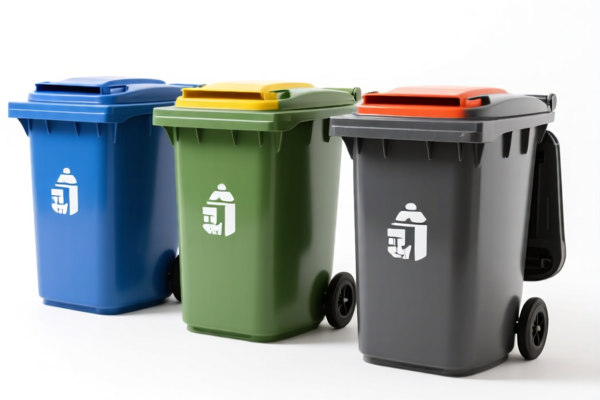
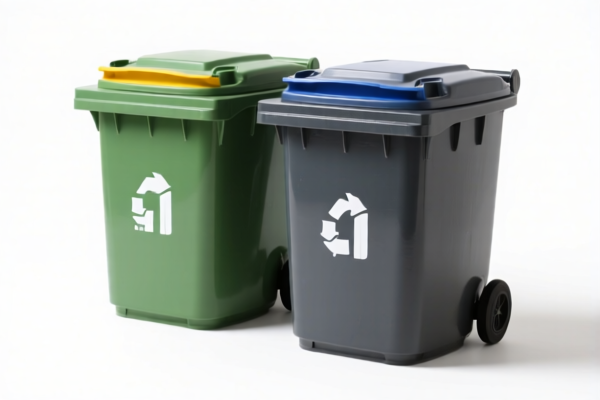
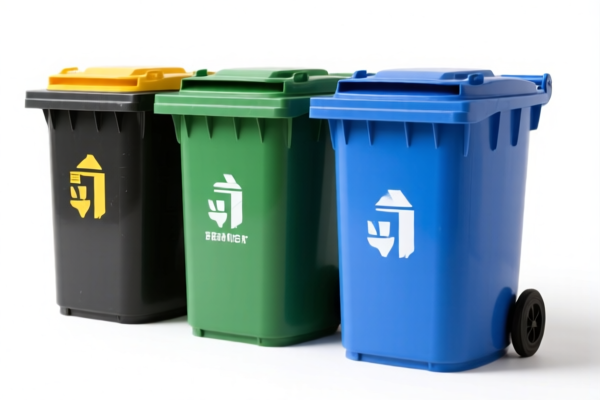
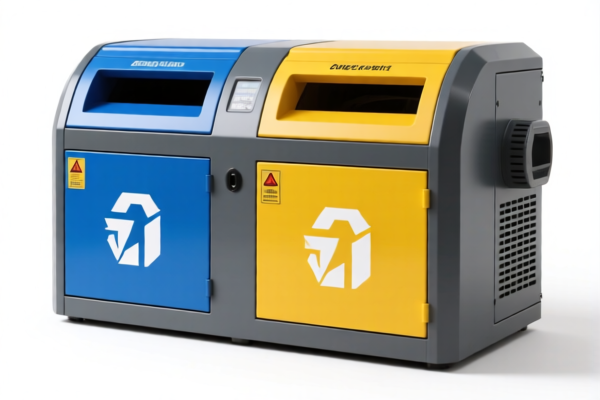
AI Analysis
🗑️ Garbage Compactor (Kitchen Waste Disposers & Trash Compactors)
🌐 HS Code Reference & Clearance Guide | 2026 Latest Tariff Analysis | Professional Strategy for U.S. Imports
📌 I. Product Definition & Classification: What Exactly is a "Garbage Compactor"?
In international trade, "Garbage Compactor" is not a single HS code. It is split into two distinct categories based on application and mechanism:
- Kitchen Waste Disposers (Disposals): Electromechanical appliances with self-contained electric motors, typically installed under kitchen sinks to grind food waste.
- Key Feature: Designed for domestic kitchen use; grinds waste into slurry.
- Trash Compactors: Machines and mechanical appliances with individual functions, often used for general waste volume reduction (e.g., in households, offices, or commercial settings).
- Key Feature: Physically compresses trash into blocks/bales; uses hydraulic or mechanical pressure, not grinding.
⚠️ Critical Distinction:
- If it grinds food waste and discharges into the sewer → Heading 8509 (Domestic Appliances).
- If it compresses solid trash into a block → Heading 8479 (General Mechanical Appliance).
- Misclassification Risk: Declaring a grinder as a compactor (or vice versa) can lead to customs holds, reclassification penalties, or duty adjustments.
📦 II. HS Code Breakdown (2026 Latest Tariff Authority)
| HS Code | Product Description | Applicable Scenario | Key Characteristic |
|---|---|---|---|
8509.80.20.00 |
Electromechanical domestic appliances (self-contained motor): Kitchen waste disposers (disposals) | Under-sink food waste grinders | ✅ Grinds/Discharges |
8509.80.50.95 |
Electromechanical domestic appliances (self-contained motor): Other appliances | Other domestic electrical waste handlers not specifically listed | ✅ Domestic/Grinding (General) |
8479.89.55.00 |
Machines having individual functions: Trash compactors | Waste volume reduction units (hydraulic/mechanical) | ✅ Compresses/Solid Waste |
8479.90.75.00 |
Parts thereof: Of trash compactors: Cabinets or cases | Replacement shells or housing units for compactors | 🛠️ Part Only |
🔍 Important Note:
- Heading 8509 items are classified as "Electromechanical Domestic Appliances".
- Heading 8479 items are classified as "Machines and Mechanical Appliances".
- Parts are only classified separately if imported independently; otherwise, they follow the main product.
💰 III. 2026 Latest Tariff Rate Details (Zero Duty Scenario)
✅ Applicable Country: United States (US)
✅ Origin: China (CN)
✅ Effective Time: Current Rates (2026)
🎯 1. 8509.80.20.00 — Kitchen Waste Disposers
| Item | Content |
|---|---|
| Base Duty Rate | 0.0% (ad valorem) |
| Section 301 Surcharge | 0.0% |
| IEEPA Surcharge | 0.0% |
| Total Tax Rate | 0.0% |
| Tax Calculation | CIF Value × 0% = $0 |
| De Minimis Eligible | ✅ Yes (if < $800) |
| Legal Basis Path | HTSUS:8509.80.20.00 → No Footnotes for Additional Duties |
📌 Explanation:
- Kitchen waste disposers are currently exempt from both the base tariff and the Section 301/IEEPA additional duties.
- This makes them a low-cost entry product for US importers compared to many other electronics.
🎯 2. 8509.80.50.95 — Other Domestic Electromechanical Appliances
| Item | Content |
|---|---|
| Base Duty Rate | 0.0% |
| Section 301 Surcharge | 0.0% |
| IEEPA Surcharge | 0.0% |
| Total Tax Rate | 0.0% |
| Tax Calculation | CIF Value × 0% = $0 |
| De Minimis Eligible | ✅ Yes (if < $800) |
| Legal Basis Path | HTSUS:8509.80.50.95 → No Footnotes for Additional Duties |
📌 Explanation:
- Any other domestic electromechanical appliance with a self-contained motor (not vacuum cleaners) also enjoys 0% duty.
- Ensure the product is strictly "domestic" and not industrial.
🎯 3. 8479.89.55.00 — Trash Compactors
| Item | Content |
|---|---|
| Base Duty Rate | 0.0% |
| Section 301 Surcharge | 0.0% |
| IEEPA Surcharge | 0.0% |
| Total Tax Rate | 0.0% |
| Tax Calculation | CIF Value × 0% = $0 |
| De Minimis Eligible | ✅ Yes (if < $800) |
| Legal Basis Path | HTSUS:8479.89.55.00 → No Footnotes for Additional Duties |
📌 Explanation:
- Unlike many electronics, trash compactors (mechanical compression devices) are not subject to the 25% Section 301 tariff or the 10% IEEPA tariff.
- This is a strategic advantage for importers of mechanical waste management solutions.
🎯 4. 8479.90.75.00 — Parts of Trash Compactors
| Item | Content |
|---|---|
| Base Duty Rate | 0.0% |
| Section 301 Surcharge | 0.0% |
| IEEPA Surcharge | 0.0% |
| Total Tax Rate | 0.0% |
| Tax Calculation | CIF Value × 0% = $0 |
| De Minimis Eligible | ✅ Yes (if < $800) |
| Legal Basis Path | HTSUS:8479.90.75.00 → No Footnotes for Additional Duties |
📌 Explanation:
- Parts (specifically cabinets/cases) are also duty-free.
- Ensure proper identification to avoid being classified under higher-tariff general parts headings.
🛠️ IV. Clearance Practical Advice (Pitfall Avoidance Guide)
✅ 1. Documentation Checklist (Essential)
| Document | Must Provide | Notes |
|---|---|---|
| ✅ Product Specifications | ✔️ | Clearly state: "Grinder" vs. "Compactor", Voltage, Motor Type |
| ✅ Photos & Diagrams | ✔️ | Show internal mechanism: Grinding blades vs. Compression plate |
| ✅ Commercial Invoice | ✔️ | Describe as: "Kitchen Waste Disposer" OR "Trash Compactor" — Do not use generic "Waste Machine" |
| ✅ UL/Energy Star Certs | ✔️ | Electrical safety and efficiency are critical for domestic appliances |
| ✅ Part Lists (if shipping parts) | ✔️ | Clearly identify as "Parts of Trash Compactor" under 8479.90.75.00 |
✅ 2. Declaration Tips (Key Mantra)
🔥 “Grinder is 8509, Compactor is 8479; Name it right, duty stays low!”
| Scenario | Correct Declaration | Wrong Action |
|---|---|---|
| Under-sink food grinder | 8509.80.20.00 |
Misdeclare as 8479.89.55.00 → Possible scrutiny |
| Mechanical trash press | 8479.89.55.00 |
Misdeclare as 8509.80.50.95 → Risk of reclassification |
| Shipping only a metal shell | 8479.90.75.00 |
Declare as "Compactor" → Wrong HTS, potential penalty |
| Mixed shipment (Grinder + Compactor) | Split lines in invoice | Consolidate into one line → Customs confusion |
✅ 3. Special Cases Handling
| Situation | Handling Advice |
|---|---|
| Industrial vs. Domestic | If the compactor is for commercial/industrial use (large scale), it may fall under different 8479 subheadings or even 8479.50. Check with a customs broker. |
| Hydraulic vs. Electric | Both compressors fall under 8479.89.55.00. Ensure the invoice specifies "Hydraulic" or "Mechanical" to distinguish from electrical grinders. |
| OEM/White Label | Provide the manufacturer's catalog showing the product's function. Avoid vague terms like "Waste Handler". |
| Parts Only | Clearly state "For Use With [Model X] Trash Compactor" to justify HS 8479.90.75.00. |
🌍 V. Global Market Clearance Comparison (2026)
| Country/Region | Recommended HS Code | Duty Rate | Certification | Notes |
|---|---|---|---|---|
| 🇺🇸 USA | 8509.80.20.00 / 8479.89.55.00 |
0% | UL, NSF, Energy Star | Zero tariff advantage |
| 🇨🇳 China | 8479.89.90.00 / 8509.40.00.00 |
0-8% | CCC | Varies by exact type |
| 🇪🇺 EU | 8509.80 / 8479.89 |
0% (if GSP/FTA) | CE, WEEE, RoHS | Strict environmental rules |
| 🇬🇧 UK | 8509.80 / 8479.89 |
0% | UKCA, WEEE | Post-Brexit rules apply |
📌 Conclusion:
- The US offers a significant duty advantage (0%) for both kitchen waste disposers and trash compactors from China.
- Ensure UL certification is ready, as US customs may request proof of electrical safety compliance for appliances.
📌 VI. Common Mistakes & Pitfalls (Blood Lessons)
❌ Mistake 1: Calling a "Trash Compactor" a "Garbage Disposal"
👉 Consequence: Wrong HS Code (8509 vs 8479). While both are 0% now, it shows lack of professionalism and may trigger deeper inspection.
❌ Mistake 2: Declaring "Parts" as "Whole Appliances"
👉 Consequence: If you ship only a cabinet, declaring it as a "Compactor" is fraud. Use 8479.90.75.00.
❌ Mistake 3: Ignoring NSF/UL Requirements
👉 Consequence: Appliances with motors in the US require UL Listing for insurance and customs clearance. Missing certs → Delayed release.
❌ Mistake 4: Using Generic Names
👉 Consequence: "Waste Machine" is too vague. Use "Electric Kitchen Waste Disposer" or "Mechanical Trash Compactor".
✅ Correct Practice:
"Electric Kitchen Waste Disposer, 1/2 HP, Stainless Steel, UL Listed, Model XYZ"
OR
"Hydraulic Trash Compactor, 10 Ton Capacity, Industrial Grade, Model ABC"
🎯 VII. Conclusion: Professional Declaration, Zero Duty, Fast Clearance!
🎯 Remember the Mantra:
🔹 "Grinder = 8509, Compactor = 8479"
🔹 "Both are 0% Duty in the US"
🔹 "Name it precisely, avoid the risk"
📌 Pro Tip:
- Even though the duty is 0%, US Customs and Border Protection (CBP) may still verify the product function.
- Have product datasheets and UL certificates ready for inspection.
- For dropshipping/De Minimis (< $800), ensure the invoice clearly separates "Grinder" vs. "Compactor" if mixed.
📣 Immediate Action:
📞 Contact a licensed customs broker
📋 Prepare UL/NSF certificates
🚀 Declare accurately to enjoy 0% Duty and smooth clearance!
✨ Professional clearance starts with precise classification!
💼 Your cost-saving opportunity is 0%—don't leave it to chance!
Customer Reviews
About HS Code Classification
The Harmonized System (HS) is an internationally standardized nomenclature developed by the World Customs Organization (WCO) to classify traded products. Over 200 countries use the HS system as the basis for customs tariffs, trade statistics, and import/export regulations.
Each HS code follows a hierarchical structure:
- Chapter (2 digits) — Broad category of goods (e.g., Chapter 84: Machinery and Mechanical Appliances)
- Heading (4 digits) — More specific grouping within the chapter
- Subheading (6 digits) — Internationally standardized breakdown, used by all WCO member countries
- National subdivisions (8-10 digits) — Country-specific extensions for further classification, such as US HTSUS 10-digit codes
Correct HS code classification is essential for smooth customs clearance, accurate duty payment, and compliance with trade regulations. Misclassification can lead to customs delays, overpayment of duties, or penalties.
When importing from CN to US, the applicable tariff rates may include:
- Most-Favored-Nation (MFN) rate — The standard duty rate applied to WTO members
- General rate — Applied to countries without trade agreements
- Trade remedy duties — Additional tariffs such as Section 301 (anti-dumping), Section 232 (national security), or countervailing duties
The information provided on this page is for reference purposes only. For official classification, please consult with your local customs authority or a licensed customs broker.