Garden Sewage Sludge
CN → US| HS Code | Tariff Rate | Origin | Destination | Doc |
|---|---|---|---|---|
| 3825200000 | 17.5% | CN | US | Official Doc |
| 3825610000 | 35.0% | CN | US | Official Doc |
| 2530908050 | 10.0% | CN | US | Official Doc |
| 2530908015 | 10.0% | CN | US | Official Doc |
| 3101000000 | 35.0% | CN | US | Official Doc |
Product Images
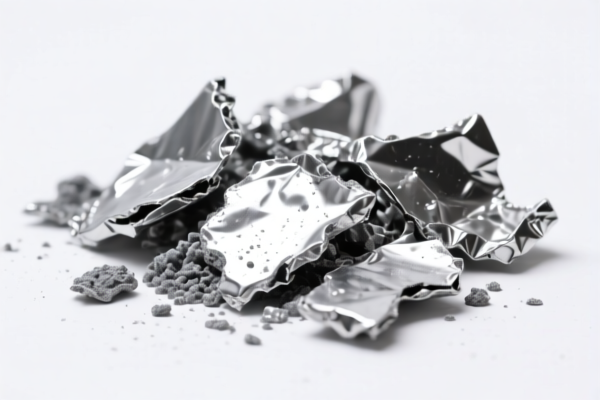
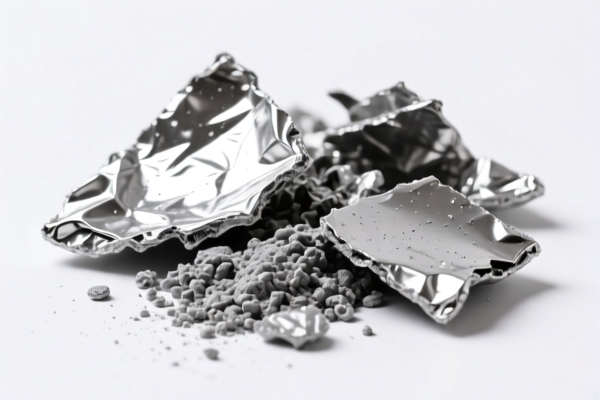
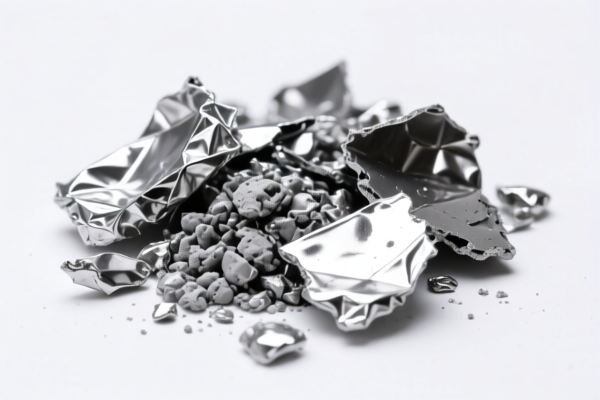
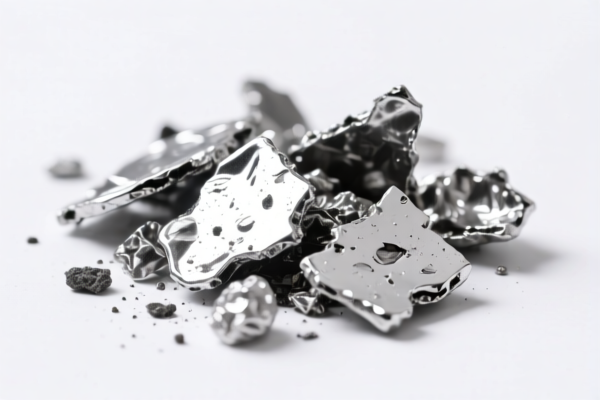
AI Analysis
🏭 Sewage Sludge from Wastewater Treatment Plants (Garden Sewage Sludge)
🌐 HS Code Reference & Customs Clearance Guide | 2026 Latest Tariff Analysis | Professional Clearance Strategy
📌 I. Product Definition & Classification: Do You Really Understand "Sewage Sludge"?
Sewage sludge, specifically from wastewater treatment plants (including garden/community scale systems), is the semi-solid byproduct generated during the purification of domestic or municipal wastewater. In international trade, its classification is highly contentious because it straddles the line between chemical/industrial waste, mineral/organic residue, and fertilizer.
Depending on the specific composition, treatment level, and intended destination, it can be classified into five distinct HS Codes with significantly different tariff implications.
⚠️ Key Classification Distinctions: - If viewed strictly as municipal/industrial waste → Group 38 (Miscellaneous Chemical Products) - If viewed as mineral/organic residue → Group 25 (Mineral Products) - If viewed as agricultural input → Group 31 (Fertilizers)
📦 II. HS Code Classification Details (2026 Latest Tariff Authority Cross-Reference)
| HS Code | Product Description | Application Scenario | Logic Basis |
|---|---|---|---|
3825.20.00.00 |
Sewage Sludge (Specifically "Sewer Sludge") | Municipal wastewater treatment residuals | Direct match: "Sewage sludge" is functionally and essentially identical to "Sewer sludge" in use and nature. |
3825.61.00.00 |
Waste from Chemical/Related Industries | General "Sludge" categorized under industrial waste | Broad category: "Sludge" falls under waste from chemical/related industries, including specific definitions for "sewage sludge." |
2530.90.80.50 |
Other Mineral/Substances (Unlisted) | Mineral/organic residues not otherwise specified | Material match: Sludge contains mineral/organic residues. Fits "Other" unlisted mineral/substance category after excluding specific minerals like earth colors. |
2530.90.80.15 |
Other Mineral Substances/Pigments | Fallback category for mineral/organic residues | Material match: Sludge is a mineral/organic residue. No obvious conflict with "Other mineral substances/pigments," fitting the fallback inference principle. |
3101.00.00.00 |
Animal/Plant Fertilizers | Treated organic waste used as fertilizer | Substance attribute: Treated organic waste fits the definition of fertilizers produced by mixing/processing animal/plant products. |
🔍 Critical Reminder: - Group 38 (3825.xx) treats sludge primarily as WASTE. This is the most common classification for untreated or partially treated sludge destined for disposal or incineration. - Group 25 (2530.xx) treats sludge as a MATERIAL/RESIDUE. This is used when the sludge is processed into a raw material or commodity. - Group 31 (3101.xx) treats sludge as a PRODUCT/FERTILIZER. This requires the sludge to be stabilized, dried, and certified for agricultural use.
💰 III. 2026 Latest Tariff Rate Details (Including Surcharges & Policy Add-ons)
✅ Applicable Country: United States (US) ✅ Country of Origin: China (CN) ✅ Effective Time: From November 10, 2025 (including subsequent imports)
🎯 1. 3825.20.00.00 —— Sewage Sludge (Sewer Sludge)
| Item | Content |
|---|---|
| Base Tariff | 0.0% (ad valorem) |
| USITC Surcharge | +7.5% (Specific surcharge for this category) |
| IEEPA Surcharge | +10% (China/US product specific, effective Nov 10, 2025) |
| Total Tax Rate | 17.5% |
| Tax Calculation | CIF Value × 17.5% |
| De Minimis Eligibility | ❌ Not Applicable (Specific trade policy applies) |
| Legal Basis Path | Base:0% → USITC:7.5% → IEEPA:10% |
📌 Explanation: - "USITC Surcharge 7.5%": This is a specific additional duty applied to "Sewer Sludge" under current US trade regulations. - "IEEPA 10%": The Section 301/IEEPA tariff on Chinese goods. - Total 17.5%: A moderate duty rate, reflecting the classification as specific chemical/industrial waste.
🎯 2. 3825.61.00.00 —— Waste from Chemical/Related Industries (Sludge)
| Item | Content |
|---|---|
| Base Tariff | 0.0% (ad valorem) |
| USITC Surcharge | +25.0% (High surcharge for industrial waste) |
| IEEPA Surcharge | +10.0% (China/US product specific, effective Nov 10, 2025) |
| Total Tax Rate | 35.0% |
| Tax Calculation | CIF Value × 35.0% |
| De Minimis Eligibility | ❌ Not Applicable |
| Legal Basis Path | Base:0% → USITC:25% → IEEPA:10% |
📌 Note: - "USITC Surcharge 25%": This is the standard high additional tariff for broader "chemical/related industrial waste" categories. - "IEEPA 10%": Standard Section 301/IEEPA tariff. - Total 35.0%: A high tariff rate. Misclassifying sludge into this broader waste category instead of the specific "Sewer Sludge" category (
3825.20.00.00) can double your cost.
🎯 3. 2530.90.80.50 —— Other Mineral/Substances (Unlisted)
| Item | Content |
|---|---|
| Base Tariff | 0.0% (ad valorem) |
| USITC Surcharge | +0.0% (No specific surcharge for this mineral fallback) |
| IEEPA Surcharge | +10.0% (China/US product specific, effective Nov 10, 2025) |
| Total Tax Rate | 10.0% |
| Tax Calculation | CIF Value × 10.0% |
| De Minimis Eligibility | ❌ Not Applicable |
| Legal Basis Path | Base:0% → IEEPA:10% |
📌 Explanation: - "USITC Surcharge 0%": This code is under Chapter 25 (Mineral Products), which generally does not attract the higher Section 301 surcharges unless specifically listed. - "IEEPA 10%": The general Section 301/IEEPA tariff applies. - Total 10.0%: The lowest potential rate among waste/residue classifications. However, this requires convincing customs that the sludge is a "mineral/organic residue" rather than "chemical waste."
🎯 4. 2530.90.80.15 —— Other Mineral Substances/Pigments (Fallback)
| Item | Content |
|---|---|
| Base Tariff | 0.0% (ad valorem) |
| USITC Surcharge | +0.0% (No specific surcharge for this mineral fallback) |
| IEEPA Surcharge | +10.0% (China/US product specific, effective Nov 10, 2025) |
| Total Tax Rate | 10.0% |
| Tax Calculation | CIF Value × 10.0% |
| De Minimis Eligibility | ❌ Not Applicable |
| Legal Basis Path | Base:0% → IEEPA:10% |
📌 Note: - Identical tariff structure to
2530.90.80.50. - Relies on the inference principle that sludge, as a mineral/organic residue, does not conflict with "Other mineral substances/pigments." - Total 10.0%: Offers a significant cost advantage over Chapter 38 classifications if the goods are processed/mineral-rich.
🎯 5. 3101.00.00.00 —— Animal/Plant Fertilizers
| Item | Content |
|---|---|
| Base Tariff | 0.0% (ad valorem) |
| USITC Surcharge | +25.0% (High surcharge for organic fertilizers) |
| IEEPA Surcharge | +10.0% (China/US product specific, effective Nov 10, 2025) |
| Total Tax Rate | 35.0% |
| Tax Calculation | CIF Value × 35.0% |
| De Minimis Eligibility | ❌ Not Applicable |
| Legal Basis Path | Base:0% → USITC:25% → IEEPA:10% |
📌 Important: - "USITC Surcharge 25%": Organic fertilizers from China face the same high additional tariff as industrial waste. - "IEEPA 10%": Standard Section 301/IEEPA tariff. - Total 35.0%: High tariff. Requires the sludge to be fully processed, stabilized, and certified as a fertilizer. Do not use this for raw sludge.
🛠️ IV. Customs Clearance Practical Advice (Combat Pitfall Guide)
✅ 1. Document Checklist (All required)
| Document | Required | Description |
|---|---|---|
| ✅ Product Specification Sheet | ✔️ | Details moisture content, mineral composition, organic matter %, heavy metals. |
| ✅ Treatment Process Description | ✔️ | Explains how sludge is processed (dried, composted, mineralized). Critical for choosing between Ch 38, 25, or 31. |
| ✅ Product Photos | ✔️ | Clear images of the sludge in packaging, showing label and state (dry powder, pellet, etc.). |
| ✅ Third-Party Test Report | ✔️ | Analysis of mineral content (for Ch 25) or nutrient content (for Ch 31). |
| ✅ Commercial Invoice | ✔️ | Must accurately describe the product (e.g., "Processed Organic Mineral Residue" vs. "Sewage Sludge"). |
| ✅ Certificate of Origin (CO) | ✔️ | Required for origin determination and applying IEEPA tariffs. |
| ✅ Packing List | ✔️ | Shows net/gross weight, packaging type. |
✅ 2. Declaration Tips (Key Mantra)
🔥 "Process Defines Code, Composition Defines Rate!"
| Scenario | Correct Declaration | Wrong Practice |
|---|---|---|
| Raw/Wet Sludge | 3825.20.00.00 (Sewer Sludge) |
Declare as "Fertilizer" → 35% + Inspection Risk |
| Treated/Dried Sludge (Waste) | 3825.61.00.00 (Industrial Waste) |
Declare as "Mineral" → 35% (High Rate) |
| Mineral-Rich Residue | 2530.90.80.50 or .15 |
Declare as "Sewage Sludge" → 17.5% |
| Certified Organic Fertilizer | 3101.00.00.00 |
Declare as "Waste" → 35% + EPA/USDA Permit |
✅ 3. Special Case Handling
| Scenario | Handling Advice |
|---|---|
| High Mineral Content | Provide test reports showing high inorganic/mineral content. Argue for Chapter 25 (2530.90.80.xx) to achieve 10% rate. |
| Stabilized Organic Waste | If not certified as fertilizer, it may still fall under Chapter 38 (3825). Avoid 3101 unless fully certified. |
| Mixed Composition | If sludge contains significant chemical byproducts, it leans towards Chapter 38. Pure biological sludge might lean towards Chapter 25 or 31. |
| Environmental Permits | Ensure all environmental import permits are secured. Sewage sludge is heavily regulated. |
🌍 V. Global Market Comparison (2026 Latest)
| Country/Region | Recommended HS Code | Tariff (CN Origin) | Certification | Remarks |
|---|---|---|---|---|
| 🇺🇸 USA | 3825.20.00.00 or 2530.90.80.xx |
10% - 35% | EPA/State Permits | High scrutiny. Chapter 25 offers best rate if mineral-rich. |
| 🇨🇳 China | 3825.20.00.00 |
0% - 5% | GB Standards | Low import tariff, but strict environmental controls on import. |
| 🇪🇺 EU | 3825.40.00 or 3825.69.00 |
0% - 6.5% | REACH | Strict waste export/import rules. |
| 🇦🇺 Australia | 3825.40.00 |
5% - 10% | Biosecurity | Strict biosecurity permits required. |
| 🇯🇵 Japan | 3825.40.00 |
0% - 6% | JIS | Strict quality standards for sludge reuse. |
📌 Conclusion: - USA is the most complex market due to high additional tariffs and varying rates based on precise classification. - Chapter 25 (
2530.90.80.xx) offers the lowest tariff (10%) in the US, but requires strong evidence of mineral/organic residue nature. - Chapter 38 is the safest but costlier (17.5% - 35%) for standard sewage sludge.
📌 VI. Common Errors & Pitfalls (Lessons Learned)
❌ Error 1: Declaring "Raw Sewage Sludge" as "Fertilizer" (3101.00.00.00)
👉 Consequence: 35% tariff + EPA/USDA regulatory violation + Potential seizure.
❌ Error 2: Declaring "Treated Sludge" as "Mineral Residue" (2530.90.80.xx) without proof
👉 Consequence: Customs reclassifies to 3825 → Tax increase from 10% to 17.5% or 35% + Delay.
❌ Error 3: Using "Sewage Sludge" in all documents for a product that is "Processed Organic Mineral Residue" 👉 Consequence: Inconsistent description leads to customs inspection and potential misclassification penalties.
❌ Error 4: Ignoring the 122 Clause IEEPA Tariff (10%) 👉 Consequence: Underestimating total tax burden by 10% on all categories.
✅ Correct Practice:
"Processed Dried Sludge, High Mineral Content, For Industrial Use, Model XYZ, EPA Permitted"
🎯 VII. Conclusion: Professional Declaration, Save Time & Money
🎯 Remember the Mantra:
🔹 "Mineral Residue = 10%, Sewer Sludge = 17.5%, Industrial Waste = 35%"
🔹 "Test Reports Decide HS Code, Tax Rate Varies by 25%, Declaration Error Costs Thousands!"
📌 Tips:
- If your sludge is mineral-rich, provide detailed chemical analysis to support Chapter 25 classification for 10% tariff.
- If it is standard municipal sludge, use
3825.20.00.00for 17.5% to be safe.- Pre-apply for Advance Ruling if uncertain, to avoid clearance risks.
📣 Immediate Action:
📞 Contact Professional Customs Broker + Provide Product Test Report + Apply for HS Code Advance Ruling
🚀 Ensure Your Sludge Products Clear Customs Smoothly, Efficiently, and Profitably!
✨ Professional Clearance Starts with Accurate Classification!
💼 Every Cent of Cost Deserves Precise Calculation!
Customer Reviews
About HS Code Classification
The Harmonized System (HS) is an internationally standardized nomenclature developed by the World Customs Organization (WCO) to classify traded products. Over 200 countries use the HS system as the basis for customs tariffs, trade statistics, and import/export regulations.
Each HS code follows a hierarchical structure:
- Chapter (2 digits) — Broad category of goods (e.g., Chapter 84: Machinery and Mechanical Appliances)
- Heading (4 digits) — More specific grouping within the chapter
- Subheading (6 digits) — Internationally standardized breakdown, used by all WCO member countries
- National subdivisions (8-10 digits) — Country-specific extensions for further classification, such as US HTSUS 10-digit codes
Correct HS code classification is essential for smooth customs clearance, accurate duty payment, and compliance with trade regulations. Misclassification can lead to customs delays, overpayment of duties, or penalties.
When importing from CN to US, the applicable tariff rates may include:
- Most-Favored-Nation (MFN) rate — The standard duty rate applied to WTO members
- General rate — Applied to countries without trade agreements
- Trade remedy duties — Additional tariffs such as Section 301 (anti-dumping), Section 232 (national security), or countervailing duties
The information provided on this page is for reference purposes only. For official classification, please consult with your local customs authority or a licensed customs broker.