Glass Fiber Reinforced Plastic Products
CN → US| HS Code | Tariff Rate | Origin | Destination | Doc |
|---|---|---|---|---|
| 6811820000 | 35.0% | CN | US | Official Doc |
| 6815994170 | 35.0% | CN | US | Official Doc |
| 6815190000 | 35.0% | CN | US | Official Doc |
| 6811899000 | 35.0% | CN | US | Official Doc |
Product Images
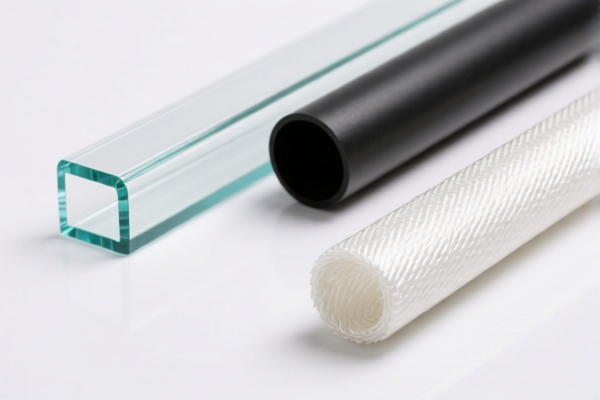
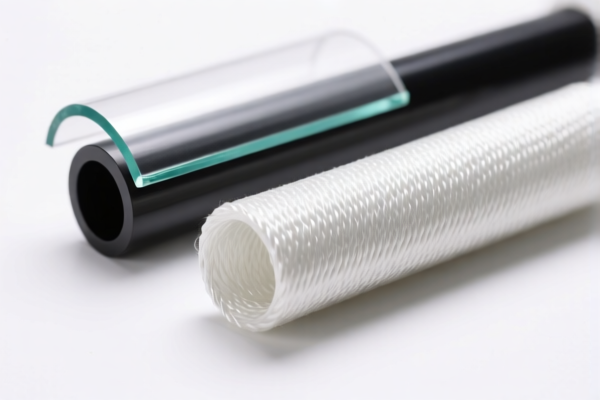
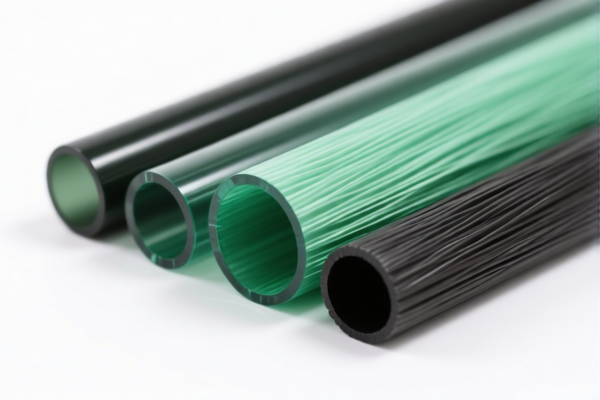
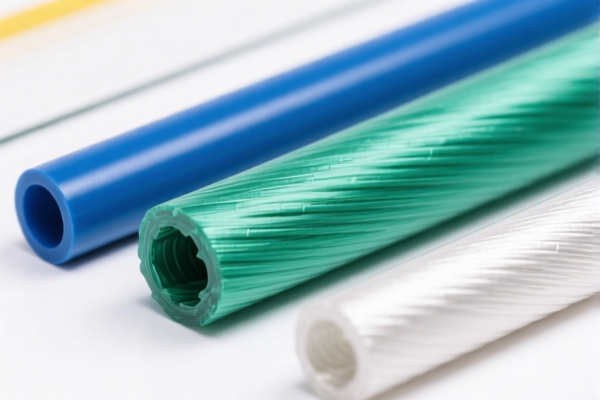
AI Analysis
🏗️ Glass Fiber Reinforced Plastic Products (GFRP)
🌐 HS Code Reference & Customs Clearance Guide | 2026 Latest Tariff Analysis | Professional Clearance Strategy
📌 Product Definition & Classification: Do You Really Know "GFRP"?
Glass Fiber Reinforced Plastic (GFRP), often referred to as Fiberglass, is a composite material made of a polymer matrix reinforced with glass fibers. In international trade, GFRP products are not categorized by a single HS code but depend heavily on their material composition (cement-like vs. stone-like vs. other) and form (sheets, plates, tubes, or general articles).
Key Distinction Points: * Cementitious Matrix: If the resin is mixed with cement or similar inorganic binders, it falls under Chapter 68.11 (Fibrous Cement or Similar). * Mineral/Stone-Based: If the product is made from crushed stone, mineral powder, or similar inorganic substances bound by resin, it may fall under Chapter 68.15. * General Articles: If it doesn't fit specific subcategories, it may fall under 68.15.99 (Other articles of stone or other mineral substances).
⚠️ Critical Compliance Alert:
The following analysis is based strictly on the provided data set. All four HS codes listed below carry the same total tax rate of 35.0% for imports into the United States from China. The distinction lies in the physical and chemical nature of the product to ensure accurate classification and avoid penalties.
📦 II. HS Code Classification Details (Based on Provided Data)
| HS Code | Product Description & Summary | Material/Physical Nature | Tax Detail Breakdown |
|---|---|---|---|
6811.82.00.00 |
Fibrous Cement Articles: Other articles of fibrous cement or of cemented fibrous materials. | Fibrous Cement/Similar: Complies with the description of products made from cement-like binders reinforced with fibers. | Total: 35.0% • Base: 0.0% • Additional (301): 25.0% • Section 122: 10% |
6815.99.41.70 |
Other Mineral Articles: Other articles of stone or other mineral substances, not elsewhere specified. | Mineral/Inorganic: Categorized under minerals/inorganics, fitting non-specific chemical restriction articles. | Total: 35.0% • Base: 0.0% • Additional (301): 25.0% • Section 122: 10% |
6815.19.00.00 |
Stoneware/Mineral Articles: Other articles of stone or other mineral substances, not elsewhere specified. | Stone/Mineral: Complies with non-electrical use mineral product categories. | Total: 35.0% • Base: 0.0% • Additional (301): 25.0% • Section 122: 10% |
6811.89.90.00 |
Other Fibrous Cement Articles: Other articles of fibrous cement or similar materials. | Fibrous Cement/Similar: Fits "articles" category with no material conflict. | Total: 35.0% • Base: 0.0% • Additional (301): 25.0% • Section 122: 10% |
🔍 Key Takeaway:
- All four HS codes result in a 35% Total Tax Rate. - The difference is classification accuracy. Misclassification (e.g., declaring a cement-based GFRP as a mineral-based one) can lead to customs disputes, even if the tax rate is identical, because the legal basis differs. - 6811 relates to Cementitious materials (cement + fibers).
- 6815 relates to Stone/Mineral materials (stone dust, quartz, etc., + binder).
💰 III. 2026 Latest Tariff Rate Breakdown (Including Surcharges)
✅ Applicable Country: United States (US)
✅ Origin: China (CN)
✅ Total Tax Rate: 35.0% for all listed HS Codes
🎯 1. Universal Tax Structure for GFRP Products (from Provided Data)
| Item | Content |
|---|---|
| Base Tariff | 0.0% (ad valorem) |
| USITC Additional Tariff (Section 301) | +25.0% |
| Section 122 Tariff | +10.0% |
| Total Effective Tax Rate | 35.0% |
| Tax Calculation | CIF Value × 35% |
| De Minimis Exemption Eligible? | ❌ No (High-value industrial goods typically excluded) |
| Legal Basis Path | Section 301 (35%) + Section 122 (10%) applied to Chapter 68.11/68.15 |
📌 Explanation:
- Base 0%: Standard MFN rate for these chapter headings is often low or zero. - 25% Additional Tariff: Under Section 301 of the Trade Act, many Chinese-made industrial components are subject to this surcharge. - 10% Section 122 Tariff: This refers to specific trade remedy duties or additional tariffs applied to certain Chinese imports. - Total 35%: This is a significant cost factor for GFRP exporters. It must be factored into pricing strategies.
🛠️ IV. Customs Clearance Practical Advice (Risk Avoidance Guide)
✅ 1. Required Documentation (Non-Negotiable)
| Document | Must Provide | Description |
|---|---|---|
| ✅ Product Specification Sheet | ✔️ | Must clearly state: Matrix Type (Cement vs. Stone/Mineral), Reinforcement (Glass Fiber Type), Dimensions, Weight. |
| ✅ Material Safety Data Sheet (MSDS) | ✔️ | To prove chemical composition and absence of restricted substances. |
| ✅ Photos of Product & Label | ✔️ | Must show product form (sheet, pipe, sculpture) and any markings indicating "Fiberglass" or "GFRP". |
| ✅ Commercial Invoice | ✔️ | Must describe goods accurately (e.g., "Fiberglass Reinforced Cement Panel" vs. "Stone Dust Composite Board"). |
| ✅ Packing List | ✔️ | Details packaging type to avoid damage claims. |
| ✅ Origin Certificate | ✔️ | Proof of Chinese origin triggers the 35% tax. |
✅ 2. Declaration Strategy (Key Tips)
🔥 "Describe the Matrix, Not Just the Fiber!"
| Scenario | Correct Declaration | Wrong Practice |
|---|---|---|
| GFRP Panels used in Construction | 6811.82.00.00 or 6811.89.90.00 (if cement-based) |
Declaring as "Plastic" → Wrong Chapter (39) → Rejection |
| GFRP Artificial Stone Countertops | 6815.19.00.00 or 6815.99.41.70 (if stone/mineral-based) |
Declaring as "Fiberglass" → Wrong Chapter |
| GFRP Pipes/Tubes | Depends on matrix (68.11 or 68.15) | Vague description "Plastic Pipes" → Delays |
| GFRP Sculptures/Decor | 6815.99.41.70 (if mineral-based) or 6811.89.90.00 |
"Artwork" → May attract different duties or inspections |
📌 Note:
- Do not use generic terms like "Fiberglass" without specifying the binding agent.
- If the product contains cement, use 6811.
- If the product contains stone dust/mineral powder as the main body, use 6815.
- Misclassification can lead to audits even if the tax rate is the same, because the regulatory requirements (e.g., EPA, ASTM standards) differ.
✅ 3. Special Cases & Handling
| Situation | Recommendation |
|---|---|
| Mixed Materials | If product has significant metal fittings, declare separately if value exceeds de minimis thresholds. |
| Custom Shapes | Provide CAD drawings or 3D renders to prove it is an "article" and not a raw material. |
| Pre-Certified Products | If already tested for fire rating (ASTM E84), include report to speed up customs inspection. |
| Section 122 Specifics | Verify if your product falls under the specific Section 122 list. Some GFRP items may have exemptions. |
🌍 V. Global Market Comparison (2026)
| Country/Region | Recommended HS Code | Estimated Duty | Notes |
|---|---|---|---|
| 🇺🇸 USA | 6811.82.00.00 / 6815.19.00.00 etc. |
35% (Total) | Highest cost due to 301 + Section 122 tariffs. |
| 🇨🇳 China | 6811.82.00.00 / 6815.19.00.00 |
Varies (5-10%) | Import duties for raw materials may differ. |
| 🇪🇺 EU | 6811.82.00.00 / 6815.19.00.00 |
0-6.5% | No Section 122 equivalent, but CE marking required. |
| 🇯🇵 Japan | 6811.82.00.00 / 6815.19.00.00 |
0-6% | JIS standards may apply. |
📌 Conclusion:
- The US market is the most costly for GFRP products from China due to the 35% total tariff.
- Consider supply chain diversification (e.g., manufacturing in Vietnam or Mexico) if possible to mitigate tariff impact.
- Accurate classification is crucial to avoid penalties, even if the tax rate is uniform.
📌 VI. Common Mistakes & Pitfalls (Lessons Learned)
❌ Mistake 1: Describing GFRP as "Plastic Products" (Chapter 39)
👉 Result: Incorrect HS Code → Customs seizure or reclassification + penalties.
Fix: Always specify the inorganic matrix (cement/mineral).
❌ Mistake 2: Omitting "Fiberglass Reinforced" in Description
👉 Result: Customs may classify as raw stone or cement → Different duty rate or inspection.
Fix: Be explicit: "Glass Fiber Reinforced Cement Panel".
❌ Mistake 3: Assuming All GFRP Products Have the Same HS Code
👉 Result: Audit risk.
Fix: Determine the primary binding agent (cement vs. mineral).
✅ Correct Declaration Example:
"Glass Fiber Reinforced Cement (GFRC) Architectural Panels, 12mm thick, non-load bearing, ASTM E84 compliant, Model: GFRC-100"
🎯 VII. Conclusion: Professional Classification Saves Money!
🎯 Remember the Golden Rules:
🔹 "Cement Matrix? Go to 6811."
🔹 "Stone/Mineral Matrix? Go to 6815."
🔹 "Always expect 35% total tax in the US from China."
🔹 "Describe the binder, not just the fiber!"
📌 Pro Tip:
If your GFRP products are exclusively for non-commercial use or have special exemptions, consult a licensed customs broker to apply for HTSUS exceptions.
Pre-clearance ruling is highly recommended for large shipments to avoid delays.
📣 Action Required:
📞 Engage a Customs Broker + Provide Detailed Specs + Apply for Pre-Ruling
🚀 Ensure accurate classification to avoid fines, delays, and unexpected costs!
✨ Precision in Classification is Key to Profitability!
💼 Every percentage point counts in international trade!
Customer Reviews
About HS Code Classification
The Harmonized System (HS) is an internationally standardized nomenclature developed by the World Customs Organization (WCO) to classify traded products. Over 200 countries use the HS system as the basis for customs tariffs, trade statistics, and import/export regulations.
Each HS code follows a hierarchical structure:
- Chapter (2 digits) — Broad category of goods (e.g., Chapter 84: Machinery and Mechanical Appliances)
- Heading (4 digits) — More specific grouping within the chapter
- Subheading (6 digits) — Internationally standardized breakdown, used by all WCO member countries
- National subdivisions (8-10 digits) — Country-specific extensions for further classification, such as US HTSUS 10-digit codes
Correct HS code classification is essential for smooth customs clearance, accurate duty payment, and compliance with trade regulations. Misclassification can lead to customs delays, overpayment of duties, or penalties.
When importing from CN to US, the applicable tariff rates may include:
- Most-Favored-Nation (MFN) rate — The standard duty rate applied to WTO members
- General rate — Applied to countries without trade agreements
- Trade remedy duties — Additional tariffs such as Section 301 (anti-dumping), Section 232 (national security), or countervailing duties
The information provided on this page is for reference purposes only. For official classification, please consult with your local customs authority or a licensed customs broker.