Halogenated Ethane Mixture
CN → US| HS Code | Tariff Rate | Origin | Destination | Doc |
|---|---|---|---|---|
| 2903196050 | 40.5% | CN | US | Official Doc |
| 2903490000 | 13.7% | CN | US | Official Doc |
| 2942005000 | 38.7% | CN | US | Official Doc |
| 3824995000 | 41.5% | CN | US | Official Doc |
| 3824995500 | 38.7% | CN | US | Official Doc |
| 2942003500 | 41.5% | CN | US | Official Doc |
Product Images
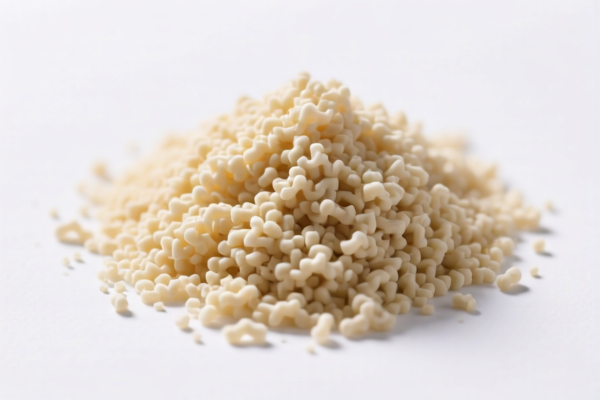
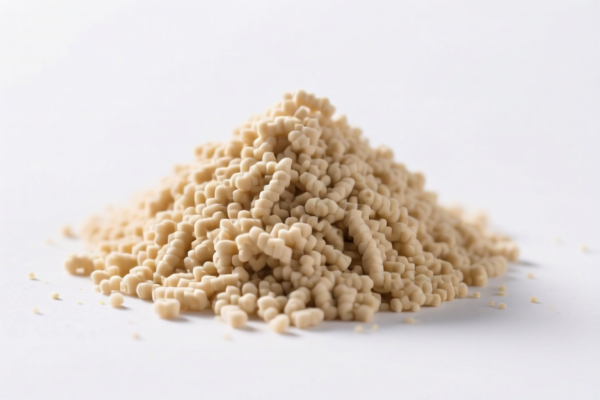
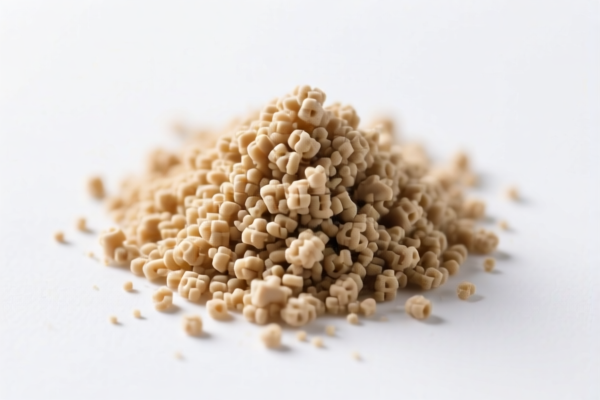
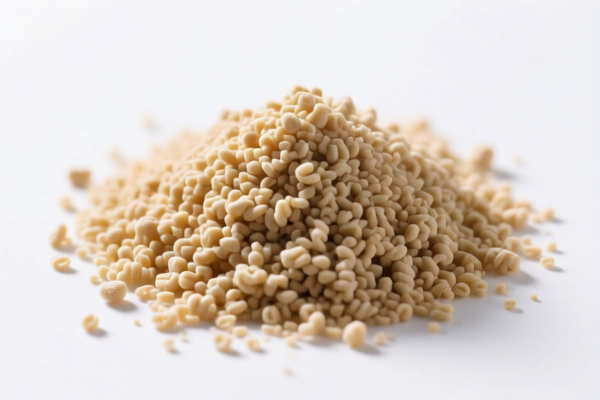
AI Analysis
🧪 Halogenated Ethane Mixture (卤代乙烷混合物)
🌐 HS Code Reference & Clearance Guide | 2026 Latest Tariff Analysis | Professional Customs Strategy
📌 I. Product Definition & Classification: What Exactly is a "Halogenated Ethane Mixture"?
Halogenated ethanes are organic compounds derived from ethane (C₂H₆) where one or more hydrogen atoms are replaced by halogens (fluorine, chlorine, bromine, or iodine). In international trade, these substances are typically used as:
- Solvents: For cleaning electronic components, degreasing, or pharmaceutical synthesis.
- Propellants/Aerosols: Historically common, though heavily regulated.
- Chemical Intermediates: Raw materials for producing other fluorocarbons, refrigerants, or pharmaceuticals.
⚠️ Key Classification Challenge:
The critical factor for classification is whether the mixture is considered a single specific chemical entity under Chapter 29 (Organic Chemicals) or a miscellaneous chemical product under Chapter 38.
- If the mixture is defined by specific chemical composition and fits into a specific organic compound category → Chapter 29.
- If it is a complex mixture, residue, or doesn't fit specific organic definitions → Chapter 38.
📦 II. HS Code Classification Details (2026 Latest Tariff Authority Comparison)
Based on the provided data, here are the potential HS Codes and their corresponding tax implications.
| HS Code | Product Description | Summary & Logic | Total Tax Rate |
|---|---|---|---|
2903.19.60.50 |
Halogenated Methane Mixtures | Classified under halogenated derivatives. Fits the "other" catch-all category for halogenated derivatives. | 40.5% |
2903.49.00.00 |
Other Halogenated Hydrocarbons | Belongs to the halogenated hydrocarbon category. The mixture fits the "other" category characteristics. | 13.7% |
2942.00.50.00 |
Other Organic Compounds | Classified as other organic compounds, fitting the general "other" catch-all principle for organics not specified elsewhere. | 38.7% |
3824.99.50.00 |
Prepared Binders for Foundry Molds; Chemical Products | Highly matches the chemical component attributes of halogenated hydrocarbon mixtures. | 41.5% |
3824.99.55.00 |
Other Chemical Products | Halogenated methane belongs to halogenated hydrocarbons. When form/shape is unspecified, it fits the "other" catch-all rule. | 38.7% |
🔍 Critical Note:
- There is a significant discrepancy in tax rates between2903.49.00.00(13.7%) and others (38-41%).
- Why the difference?2903covers halogenated hydrocarbons specifically. If the "Halogenated Ethane Mixture" can be chemically defined as a specific halogenated hydrocarbon (even if mixed with others of the same class), it may qualify for the lower Chapter 29 rate.
- If it is deemed a "preparation" or "mixture" that doesn't fit specific organic definitions, it falls to Chapter 38, attracting higher duties + Section 301/122 tariffs.
💰 III. 2026 Latest Tariff Rate Breakdown (Including Additional Taxes, Policy Surcharges)
✅ Applicable Country: United States (US)
✅ Origin: China (CN)
✅ Effective Time: 2025 November 10 onwards (including subsequent imports)
🎯 1. 2903.19.60.50 —— Halogenated Methane Mixtures (Other Halogenated Derivatives)
| Item | Content |
|---|---|
| Base Tariff | 5.5% (ad valorem) |
| Section 301 Surcharge | +25.0% (USITC Footnote 9903.88.01) |
| Section 122 Surcharge | +10.0% (IEEPA对华加征关税) |
| Total Rate | 40.5% |
| Tax Calculation | CIF Value × 40.5% |
| De Minimis Eligible? | ❌ No (deny_de_minimis) |
| Legal Basis Path | Base Tariff → Section 301: 25% → Section 122: 10% |
📌 Explanation:
- This code is categorized under "Halogenated Derivatives."
- It attracts both the standard 25% Section 301 duty and the additional 10% Section 122 duty.
- Total 40.5% is a high-cost classification.
🎯 2. 2903.49.00.00 —— Other Halogenated Hydrocarbons (Best Rate Scenario?)
| Item | Content |
|---|---|
| Base Tariff | 3.7% (ad valorem) |
| Section 301 Surcharge | 0.0% (Exempt from Section 301?) |
| Section 122 Surcharge | +10.0% (IEEPA对华加征关税) |
| Total Rate | 13.7% |
| Tax Calculation | CIF Value × 13.7% |
| De Minimis Eligible? | ❌ No (likely still subject to IEEPA) |
| Legal Basis Path | Base Tariff → Section 122: 10% |
📌 Note:
- This is the most favorable rate in the dataset.
- Why 0% Section 301? Some specific halogenated hydrocarbons may have exemptions or different footnote classifications that exclude them from the broad 25% Section 301 list, leaving only the 10% IEEPA surcharge.
- Risk: Customs may challenge this if the mixture is not strictly a "halogenated hydrocarbon" but a "mixture" requiring Chapter 38 classification.
🎯 3. 2942.00.50.00 —— Other Organic Compounds
| Item | Content |
|---|---|
| Base Tariff | 3.7% |
| Section 301 Surcharge | +25.0% |
| Section 122 Surcharge | +10.0% |
| Total Rate | 38.7% |
| Tax Calculation | CIF Value × 38.7% |
| De Minimis Eligible? | ❌ No |
| Legal Basis Path | Base Tariff → Section 301: 25% → Section 122: 10% |
📌 Explanation:
- This is a "catch-all" for organic compounds not elsewhere specified.
- Like Code 1, it attracts both 25% and 10% surcharges.
🎯 4. 3824.99.50.00 —— Halogenated Hydrocarbon Mixture (Chapter 38)
| Item | Content |
|---|---|
| Base Tariff | 6.5% |
| Section 301 Surcharge | +25.0% |
| Section 122 Surcharge | +10.0% |
| Total Rate | 41.5% |
| Tax Calculation | CIF Value × 41.5% |
| De Minimis Eligible? | ❌ No |
| Legal Basis Path | Base Tariff → Section 301: 25% → Section 122: 10% |
📌 Explanation:
- Chapter 38 codes often have higher base tariffs (6.5% vs 3.7-5.5%).
- Also subject to both 25% and 10% surcharges.
- This is the highest cost option at 41.5%.
🎯 5. 3824.99.55.00 —— Other Chemical Products (Chapter 38, Specific Subheading)
| Item | Content |
|---|---|
| Base Tariff | 3.7% |
| Section 301 Surcharge | +25.0% |
| Section 122 Surcharge | +10.0% |
| Total Rate | 38.7% |
| Tax Calculation | CIF Value × 38.7% |
| De Minimis Eligible? | ❌ No |
| Legal Basis Path | Base Tariff → Section 301: 25% → Section 122: 10% |
📌 Explanation:
- Lower base tariff (3.7%) but still subject to full surcharges.
- Total cost is same as2942.00.50.00.
🛠️ IV. Customs Clearance Practical Advice (Battle-Tested Pitfall Guide)
✅ 1. Preparation Checklist (Non-Negotiable)
| Document | Must Provide | Description |
|---|---|---|
| ✅ Safety Data Sheet (SDS) | ✔️ | Must clearly list chemical components and percentages. |
| ✅ Chemical Structure Diagram | ✔️ | To prove if it's a defined halogenated hydrocarbon (Chapter 29) or a mixture (Chapter 38). |
| ✅ Product Photos (Label/Container) | ✔️ | Show warnings, composition, and branding. |
| ✅ Third-Party Test Report | ✔️ | TSCA compliance (US EPA) is critical for halogenated compounds. |
| ✅ Commercial Invoice | ✔️ | Must specify "Halogenated Ethane Mixture" and HS Code. |
| ✅ Certificate of Origin (CO) | ✔️ | Required for US origin determination. |
| ✅ TSCA Certification | ✔️ | Essential: EPA requires TSCA certification for importation of chemical substances. |
✅ 2. Declaration Strategy (Key Mantra)
🔥 "Define Chemistry, Claim Chapter 29, Avoid Chapter 38 Penalty!"
| Scenario | Correct Declaration | Wrong Action |
|---|---|---|
| Defined Halogenated Hydrocarbon Mixture | 2903.49.00.00 (13.7%) |
Report as "Chemical Mixture" → 38.7%+ |
| Complex Industrial Solvent Blend | 3824.99.50.00 (41.5%) |
Force fit into 2903 → Risk of penalty |
| Halogenated Methane vs. Ethane | Correctly identify parent chain | Confuse Ethane (C2) with Methane (C1) → 2903.19 vs 2903.49 |
| Incomplete Disclosure | "Halogenated Ethane Mixture, TSCA Compliant" | Just "Solvent" → Delays & Seizure |
✅ 3. Special Handling
| Situation | Recommendation |
|---|---|
| TSCA Compliance | Ensure all components are on the TSCA Inventory. If not, import may be blocked regardless of HS Code. |
| OEM Custom Mixture | Provide formulation sheet. Avoid vague terms like "Industrial Grade." |
| Refrigerant Use | If used as refrigerant, check EPA SNAP program approvals. May require additional documentation. |
| Small Samples | Even small quantities are subject to Section 301 + 122 duties. No de minimis exemption. |
🌍 V. Global Market Clearance Comparison (2026 Latest)
| Country/Region | Recommended HS Code | Tariff | Certification | Notes |
|---|---|---|---|---|
| 🇺🇸 USA | 2903.49.00.00 |
13.7% (Best Case) | TSCA + FCC (if applicable) | High Risk: Customs may upgrade to 40%+ if composition is unclear. |
| 🇨🇳 China | 2903.49.00.00 |
3.7% | RoHS + REACH (if EU bound) | No additional Section 301/122 taxes. |
| 🇪🇺 EU | 2903.49.00.00 |
0-6.5% | REACH + CLP | REACH registration is mandatory for substances >1 ton/year. |
| 🇦🇺 Australia | 2903.49.00.00 |
5% | AICIS (Chemical Inventory) | Check AICIS compliance. |
| 🇯🇵 Japan | 2903.49.00.00 |
0-3.7% | PRTR Act | Report under Pollutant Release and Transfer Register if applicable. |
📌 Conclusion:
- USA is the most complex market due to high added tariffs (Section 301 + 122).
- China, EU, and Japan offer lower base tariffs but have strict environmental/chemical registration requirements (REACH, PRTR).
- Strategy: If possible, classify under2903.49.00.00to save 25-27% in US tariffs. However, this requires strong chemical justification.
📌 VI. Common Mistakes & Pitfall Guide (Blood-Stained Lessons)
❌ Mistake 1: Classifying as 2903.19.60.50 (Methane) when it is Ethane.
👉 Consequence: Classification error. Ethane (C2) and Methane (C1) are different. Customs may reject and reassess.
❌ Mistake 2: Ignoring TSCA Compliance.
👉 Consequence: Goods held at port until EPA certification is provided. Delay costs > Duty savings.
❌ Mistake 3: Declaring as "Solvent" without chemical specifics.
👉 Consequence: Customs assumes worst-case scenario (Chapter 38, 41.5% tax) or demands full chemical disclosure.
❌ Mistake 4: Assuming "Mixture" means Chapter 38.
👉 Consequence: Missed opportunity. Some mixtures of halogenated hydrocarbons can still fall under Chapter 29 if they meet specific criteria.
✅ Correct Approach:
"Halogenated Ethane Mixture, TSCA Compliant, CAS Numbers: [List], Used as Industrial Solvent, HS Code: 2903.49.00.00"
🎯 VII. Conclusion: Precise Classification Saves Dollars!
🎯 Remember the Mantra:
🔹 "Ethane vs Methane, Don't Mix Up the Chain!"
🔹 "Chapter 29 Saves 25%, Chapter 38 Costs 40%!"
🔹 "TSCA First, Tariff Second, Clearance Smooth!"
📌 Pro Tip:
If your mixture contains ozone-depleting substances (e.g., certain chlorofluoroethanes), additional EPA restrictions apply. Ensure full transparency to avoid fines.
📣 Immediate Action:
📞 Consult with a chemical customs broker + Provide SDS + Apply for TSCA Certification
🚀 Let your Halogenated Ethane Mixture clear customs smoothly, minimize tax burden, and boost profit!
✨ Professional Clearance Starts with Accurate Classification!
💼 Every cent of duty paid is a cent lost to inefficiency!
Customer Reviews
About HS Code Classification
The Harmonized System (HS) is an internationally standardized nomenclature developed by the World Customs Organization (WCO) to classify traded products. Over 200 countries use the HS system as the basis for customs tariffs, trade statistics, and import/export regulations.
Each HS code follows a hierarchical structure:
- Chapter (2 digits) — Broad category of goods (e.g., Chapter 84: Machinery and Mechanical Appliances)
- Heading (4 digits) — More specific grouping within the chapter
- Subheading (6 digits) — Internationally standardized breakdown, used by all WCO member countries
- National subdivisions (8-10 digits) — Country-specific extensions for further classification, such as US HTSUS 10-digit codes
Correct HS code classification is essential for smooth customs clearance, accurate duty payment, and compliance with trade regulations. Misclassification can lead to customs delays, overpayment of duties, or penalties.
When importing from CN to US, the applicable tariff rates may include:
- Most-Favored-Nation (MFN) rate — The standard duty rate applied to WTO members
- General rate — Applied to countries without trade agreements
- Trade remedy duties — Additional tariffs such as Section 301 (anti-dumping), Section 232 (national security), or countervailing duties
The information provided on this page is for reference purposes only. For official classification, please consult with your local customs authority or a licensed customs broker.