Hammer Tool Set
CN → US| HS Code | Tariff Rate | Origin | Destination | Doc |
|---|---|---|---|---|
| 8205906000 | 0.0% | CN | US | Official Doc |
| 8205901000 | 35.0% | CN | US | Official Doc |
Product Images
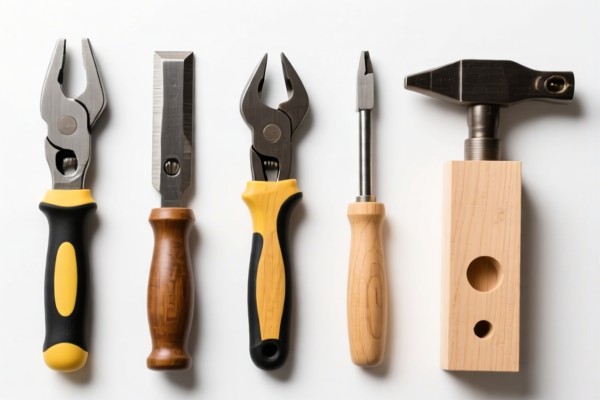
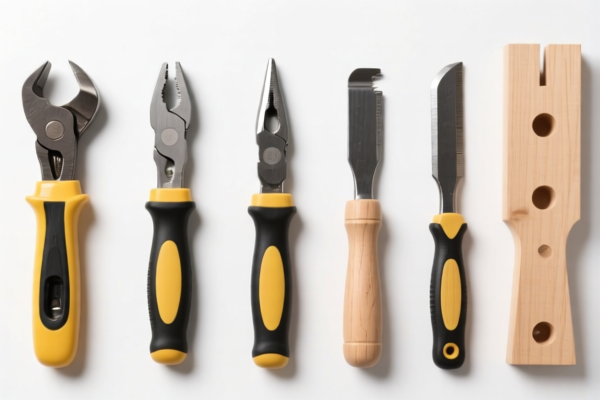
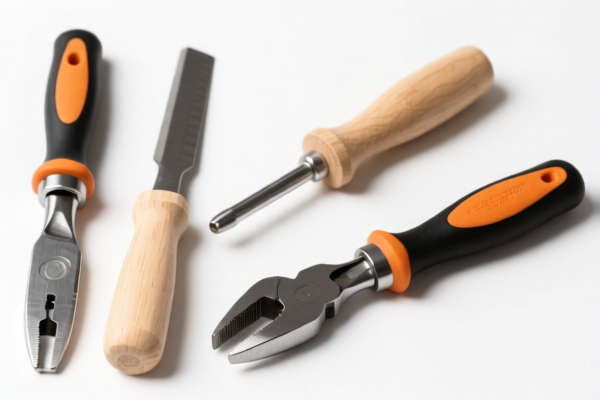
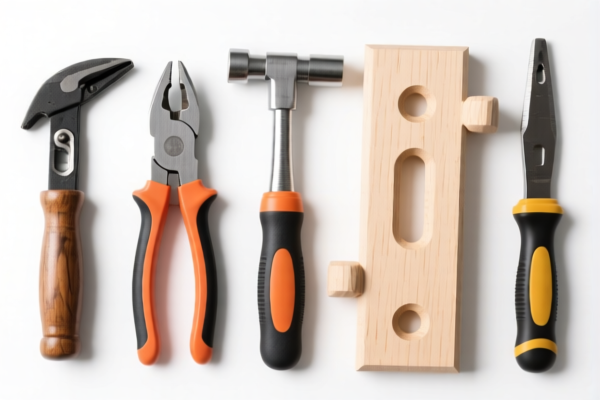
AI Analysis
🔨 Hammer Tool Set (and General Hand Tools) | HS Code & Duty Analysis 2026
🌐 HS Code Reference & Customs Clearance Guide | Latest Tariff Structure | Professional Entry Strategy
📌 I. Product Definition & Classification: What Exactly Is a "Hammer Tool Set"?
A "Hammer Tool Set" is not a single, self-contained HS Code. In international trade, it falls under Heading 8205, which covers "Hand tools (including glass cutters) not elsewhere specified or included... other than accessories for and parts of machine tools..."
The critical distinction lies in whether the set is a generic collection or contains specific heavy equipment like anvils or forges. The data provided indicates two distinct classifications under 8205.90:
- General Hand Tool Sets (Mixed Types): A set containing two or more different types of hand tools (e.g., hammers, pliers, wrenches) from various subheadings of Heading 8205.
- Specific Heavy Hand Tools: Sets specifically comprising Anvils, Portable Forges, or Hand-operated Grinding Wheels.
⚠️ Key Distinction:
- If the "Hammer Set" contains only hammers, screwdrivers, wrenches, etc. (standard hand tools) → It is treated as a Set of articles under 8205.90.60.00.
- If the "Hammer Set" includes an Anvil, Portable Forge, or Grinding Wheel → It falls under 8205.90.10.00.
📦 II. HS Code Classification Details (Based on Provided Data)
| HS Code | Product Description | Applicable Scenario | Key Characteristics |
|--------|--------------------------|-----------------------------|
| 8205.90.60.00 | Other, including sets of articles: Sets of articles of two or more subheadings | Standard Hammer Tool Sets (e.g., Hammer + Wrench + Pliers kit) | Contains mixed hand tools; NOT anvils/forges/grinders. |
| 8205.90.10.00 | Other: Anvils; portable forges; hand- or pedal-operated grinding wheels with frameworks; base metal parts thereof | Sets containing Anvils, Forges, or Grinders | Specifically includes heavy base metal hand tools. |
🔍 Important Note:
- The term "Hammer Tool Set" typically implies 8205.90.60.00 unless the set explicitly includes an anvil or forge.
- Both codes fall under "Base metal parts thereof" or "Other" categories in Heading 8205.
- Do not classify hammers under 8201 (Hand tools, edged tools, of base metal) if they are part of a set described in 8205, as Heading 8205 explicitly covers "sets of articles."
💰 III. 2026 Latest Tariff Rate Breakdown (Detailed Tax Clause)
✅ Applicable Country: United States (US)
✅ Origin: China (CN) (Note: The provided data mentions "Additional Duty: 25.0%", which is characteristic of US Section 301 tariffs on Chinese goods.)
✅ Effective Time: Current Trade Policy (Section 301)
🎯 1. 8205.90.60.00 —— General Hand Tool Sets (e.g., Hammer Sets)
| Item | Content |
|---|---|
| Base Duty (MFN) | The rate of duty applicable to that article in the set subject to |
| Additional Duty (Section 301) | 25.0% |
| Total Effective Rate | (Base Rate of Component) + 25% |
| Tax Calculation Principle | Complex Calculation: The duty is not a flat rate on the whole set. It is calculated based on the specific duty rate of each individual component article within the set, with the 25% surcharge applied to each. |
| Legal Basis Path | 8205.90.60.00 → Section 301 Tariff List → 35% Total (if base is 10%) or similar depending on component. |
📌 Interpretation:
- The data states: "The rate of duty applicable to that article in the set subject t, 加征关税: 25.0%".
- This means if the set contains a hammer (base rate 5.3%) and a wrench (base rate 3.1%), the total duty is calculated individually for each, then 25% is added to each.
- Warning: This is NOT a flat 25% on the total CIF value. It is a compound tax based on component rates + 25% surcharge.
- Example: If the average base rate of components is ~5%, the total tax is ~30%. If base rate is 0%, total is 25%.
🎯 2. 8205.90.10.00 —— Anvils, Forges, Grinding Wheels
| Item | Content |
|---|---|
| Base Duty | 0.0% |
| Additional Duty (Section 301) | 25.0% |
| Total Effective Rate | 25.0% |
| Tax Calculation | CIF Value × 25% |
| Legal Basis Path | 8205.90.10.00 → Section 301 Tariff List → 25% |
📌 Note:
- These items have a 0% base duty, so the total tax is simply 25%.
- If your "Hammer Set" contains an Anvil, it falls here, and the tax is 25% flat on the total value.
🛠️ IV. Customs Clearance Practical Advice (Real-World Pitfalls)
✅ 1. Documentation Checklist (Critical for Hand Tools)
| Document | Required | Explanation |
|---|---|---|
| ✅ Detailed Packing List | ✔️ Mandatory | Must list each item in the set separately (e.g., "1x Hammer, 1x Wrench"). This is crucial for 8205.90.60.00 to calculate the component-based duty. |
| ✅ Commercial Invoice | ✔️ | Must clearly state "Hand Tool Set, HS 8205.90.60.00" or "Anvil Set, HS 8205.90.10.00". Do not just write "Hammer". |
| ✅ Product Photos | ✔️ | Show the complete set together (to prove it's a "set") and individual items. |
| ✅ Material Composition | ✔️ | Confirm items are Base Metal (steel, iron). If wooden/plastic handles are dominant, classification may change. |
✅ 2. Declaration Strategy (Key Rules)
🔥 "Declare Components, Calculate Sum!"
| Scenario | Correct Declaration | Incorrect Practice |
|---|---|---|
| Mixed Hand Tool Set (Hammer, Pliers, Screwdriver) | HS: 8205.90.60.00 List each item's value and base duty. Apply 25% surcharge to each. |
Declaring as single item with flat 25% → Under-declaration of tax. |
| Set with Anvil | HS: 8205.90.10.00 Apply flat 25% on total CIF. |
Declaring as 8205.90.60.00 → Wrong classification. |
| Single Hammer (Not a set) | HS: 8201.30 (or similar) | Declaring as 8205.90 → Wrong heading. |
✅ 3. Special Circumstances
| Situation | Handling Advice |
|---|---|
| OEM Hammer Sets | Provide customer order showing it's a pre-assembled set. Do not declare as loose tools. |
| Wooden-Handled Tools | If >50% value is wood, it may fall under Chapter 44 or 8205 depending on function. Confirm base metal dominance. |
| Precision Tools | If the hammer is a "precision" tool (e.g., for dentistry), it may fall under 9018 or 9023, not 8205. |
| Sets with Electronic Parts | If the "hammer" is a power tool, it falls under Chapter 85 (e.g., 8508), NOT 8205. Crucial! |
🌍 V. Global Market Comparison (2026 Latest)
| Country/Region | Recommended HS Code | Duty Rate (China Origin) | Certification Requirements | Remarks |
|---|---|---|---|---|
| 🇺🇸 USA | 8205.90.60.00 (Mixed)8205.90.10.00 (Anvil) |
Component Rate + 25% or Flat 25% |
None | Highest risk: Complex calculation for mixed sets. |
| 🇨🇳 China | 8205.90.60.00 |
0% - 10% (Import Duty) | CCC (if applicable) | No Section 301 equivalent. |
| 🇪🇺 EU | 8205.90.90 |
5.0% - 6.5% | CE (if applicable) | No additional surcharges. |
| 🇬🇧 UK | 8205.90.90 |
5.0% - 6.5% | UKCA | Post-Brexit rules apply. |
| 🇨🇦 Canada | 8205.90.90 |
0% - 5% | CSA (if applicable) | FTA benefits if Canadian origin. |
📌 Conclusion:
- USA is the most complex due to Section 301 tariffs and the need for component-level calculation.
- EU/UK/Canada have simpler, lower, and flat duty rates.
- Always verify if the tool is electric/power → If yes, NOT 8205.
📌 VI. Common Errors & Pitfalls (Blood Lessons)
❌ Error 1: Declaring a Power Hammer Set (electric) as 8205.90.60.00
👉 Consequence: Incorrect Classification. Power tools fall under Chapter 85 (e.g., 8508.10 or 8508.49). Duty may be different, and certifications (UL/CE) are mandatory.
❌ Error 2: Declaring a Mixed Hand Tool Set as a single item with flat 25%
👉 Consequence: Underpayment of Duty. If components have higher base rates (e.g., 10%), you owe more. USCBP will assess penalties.
❌ Error 3: Ignoring the Anvil Exception
👉 Consequence: If an Anvil is present, it must be declared as 8205.90.10.00 (Flat 25%), not 8205.90.60.00 (Variable Rate). This simplifies calculation but changes classification.
❌ Error 4: Not Providing a Detailed Packing List
👉 Consequence: Customs cannot determine the base rate for each component → Delays, Audits, or Rejection.
✅ Correct Practice:
"Hammer Tool Set (Steel), HS 8205.90.60.00. Contents: 1x Claw Hammer, 1x Adjustable Wrench, 1x Pliers. Base metal construction. No power tools."
🎯 VII. Conclusion: Precision Classification Saves Money!
🎯 Remember:
🔹 "Mixed Set = Component Rates + 25%"
🔹 "Anvil/Forge = Flat 25%"
🔹 "Power Tool = Not 8205!"
📌 Pro Tip:
- If you are importing to the USA, prepare a duty calculation sheet showing the base rate of each component + 25% surcharge.
- For mixed sets, ensure the Packing List is extremely detailed.
- Consider duty drawback or exclusions if applicable (though 25% is hard to exclude).
📣 Immediate Action:
📞 Contact a Customs Broker: Provide a photo and detailed item list.
📄 Prepare Component-Level Duty Calculation: For8205.90.60.00.
🚀 Avoid Surprises: Misclassification leads to 25%+ penalties.
✨ Professional Clearance Starts with Accurate Classification!
💼 Every Component Matters in a Set!
Customer Reviews
About HS Code Classification
The Harmonized System (HS) is an internationally standardized nomenclature developed by the World Customs Organization (WCO) to classify traded products. Over 200 countries use the HS system as the basis for customs tariffs, trade statistics, and import/export regulations.
Each HS code follows a hierarchical structure:
- Chapter (2 digits) — Broad category of goods (e.g., Chapter 84: Machinery and Mechanical Appliances)
- Heading (4 digits) — More specific grouping within the chapter
- Subheading (6 digits) — Internationally standardized breakdown, used by all WCO member countries
- National subdivisions (8-10 digits) — Country-specific extensions for further classification, such as US HTSUS 10-digit codes
Correct HS code classification is essential for smooth customs clearance, accurate duty payment, and compliance with trade regulations. Misclassification can lead to customs delays, overpayment of duties, or penalties.
When importing from CN to US, the applicable tariff rates may include:
- Most-Favored-Nation (MFN) rate — The standard duty rate applied to WTO members
- General rate — Applied to countries without trade agreements
- Trade remedy duties — Additional tariffs such as Section 301 (anti-dumping), Section 232 (national security), or countervailing duties
The information provided on this page is for reference purposes only. For official classification, please consult with your local customs authority or a licensed customs broker.