Hand held power tools
CN → US| HS Code | Tariff Rate | Origin | Destination | Doc |
|---|---|---|---|---|
| 8467210010 | 11.7% | CN | US | Official Doc |
| 8467290010 | 17.5% | CN | US | Official Doc |
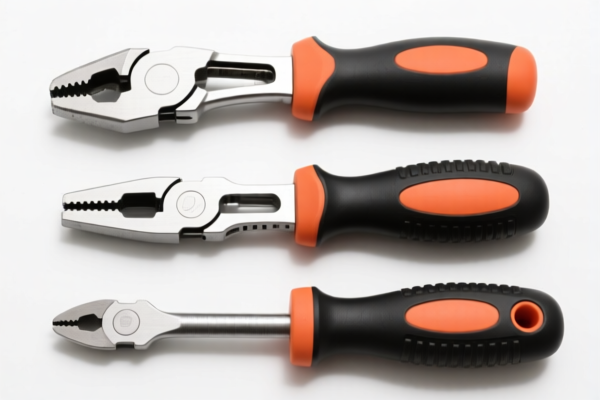
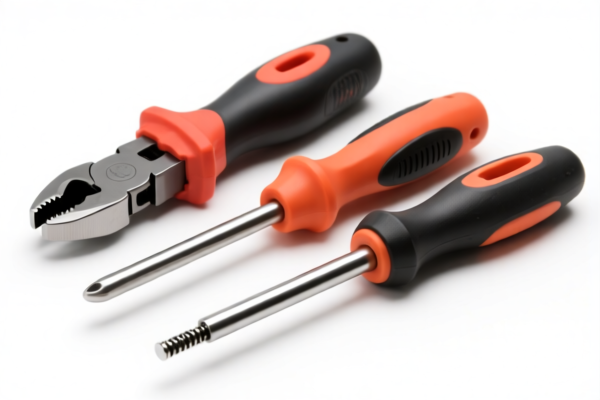
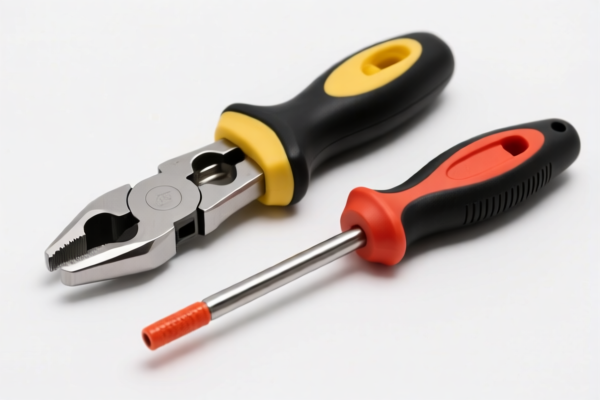
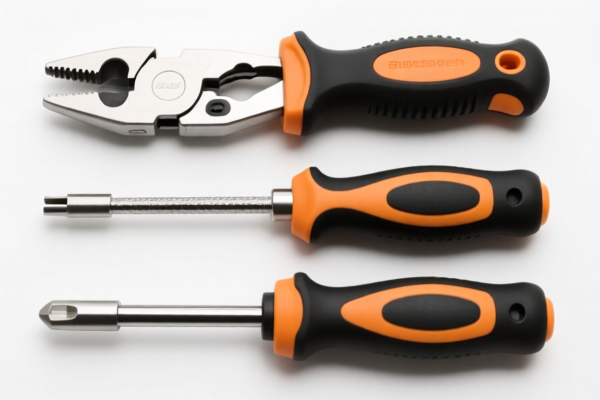
Product Images
AI Analysis
🔌 Hand-Held Power Tools: The Ultimate Clearance Guide for Drills & Grinders
🌐 HS Code Reference & Customs Strategy | 2026 Latest Tariff Analysis | Professional-Level Clearance Tactics
📌 Part 1: Product Definition & Classification — Do You Know Your "Hand-Held Tool"?
Hand-held power tools are essential instruments in construction, manufacturing, and DIY sectors. In international trade, they are strictly categorized based on their power source, function, and motor type. The most critical distinction lies between battery-powered drills and electric angle grinders.
1. Hand-Held Electric Drills (Battery Powered)
- Self-contained electric motor.
- Specifically designed for drilling, screwing, and impact operations.
- Must be battery-operated to fall under specific subheadings.
2. Hand-Held Electric Grinders, Polishers & Sanders
- Includes angle grinders, disc sanders, and polishers.
- Used for cutting, grinding, smoothing, and finishing surfaces.
- Typically operates on higher voltage/current than standard drills.
⚠️ Key Distinction Point:
- If it is a drill that is battery-powered → It belongs to 8467.21.00.10.
- If it is a grinder/sander/polisher (even if battery-powered) → It usually falls under 8467.29.00.10 (Other tools).
- Note: Tax rates differ significantly between these two categories due to US trade policies.
📦 Part 2: HS Code Classification Details (2026 Latest Tariff Authority Comparison)
| HS Code | Product Description | Applicable Scenario | Motor Type | Power Source |
|---|---|---|---|---|
8467.21.00.10 |
Hand-held power tools with self-contained electric motor: Drills of all kinds: Rotary: Battery powered | Cordless drills, impact drivers, screwdrivers | Electric (Self-contained) | Battery Only |
8467.29.00.10 |
Hand-held power tools with self-contained electric motor: Other (Grinders, polishers, sanders): Angle grinders, sanders, polishers | Angle grinders, bench grinders (hand-held version), disc sanders, polishers | Electric (Self-contained) | Battery or Corded (Note: Specific description implies general "Other" tools under electric category) |
🔍 Critical Reminder:
- Drills are separated from Grinders/Sanders in the HS code hierarchy.
- Even if a grinder is battery-powered, it does NOT qualify for the "Drills: Battery powered" subheading (8467.21). It falls under "Other tools" (8467.29).
- Misclassification between these two can lead to severe tax discrepancies.
💰 Part 3: 2026 Latest Tariff Rate Details (Detailed Breakdown)
✅ Applicable Country: United States (US)
✅ Origin: China (CN)
✅ Effective Date: Current US Trade Policy (Section 301 / IEEPA)
🎯 1. 8467.21.00.10 — Hand-Held Drills, Battery Powered
| Item | Content |
|---|---|
| Base Tariff Rate | 0.0% (Ad valorem) |
| Additional Tariff (Section 301) | 0.0% |
| Total Tax Rate | 0.0% |
| Tax Calculation | CIF Value × 0% = $0 |
| Can De Minimis Apply? | ✅ Yes (If value < $800 per person per day) |
| Legal Basis Path | USITC:8467.21.00.10 → No additional footnote penalties for this specific subheading under current Section 301 lists. |
📌 Explanation:
- This specific subheading for battery-powered drills enjoys a 0% total tariff under the current classification analysis.
- This is a significant advantage compared to other power tools.
- However, ensure the tool is strictly a drill and battery-powered. If it is a corded drill, it may fall under different subheadings not listed here.
🎯 2. 8467.29.00.10 — Other Hand-Held Electric Tools (Grinders, Sanders, Polishers)
| Item | Content |
|---|---|
| Base Tariff Rate | 0.0% |
| Additional Tariff (Section 301) | +7.5% |
| Total Tax Rate | 7.5% |
| Tax Calculation | CIF Value × 7.5% |
| Can De Minimis Apply? | ❌ No (If value exceeds $800, or if specifically denied by current enforcement guidelines for certain tool categories) |
| Legal Basis Path | USITC:8467.29.00.10 → Subject to 7.5% Section 301 duty. |
📌 Critical Warning:
- Grinders, Angle Grinders, Sanders, and Polishers are subject to a 7.5% additional tariff.
- This is a trap for many importers: Many assume all hand-held tools are taxed equally. They are not.
- If you import an Angle Grinder (even battery-powered) under 8467.21 by mistake, you risk customs penalties, back taxes, and shipment delays.
🛠️ Part 4: Customs Clearance Practical Advice (Real-World Pitfall Avoidance Guide)
✅ 1. Documentation Checklist (Must-Haves)
| Document | Required | Explanation |
|---|---|---|
| ✅ Product Specification Sheet | ✔️ | Must clearly state: "Drill" vs. "Grinder", Voltage, RPM, Battery Type (Li-ion/NiMH). |
| ✅ Product Photos | ✔️ | Clear images showing the tool's function (e.g., chuck for drills, grinding disc for grinders). |
| ✅ Commercial Invoice | ✔️ | Must explicitly describe the product: "Hand-held Electric Drill, Battery Powered" or "Angle Grinder". Do not use generic terms like 'Power Tool'. |
| ✅ Packing List | ✔️ | List batteries separately if required for air freight (UN3481/UN3480). |
| ✅ Declaration Statement | ✔️ | Confirm origin (Made in China) and HS Code classification. |
✅ 2. Declaration Tips (Golden Rules)
🔥 “Drill is 0%, Grinder is 7.5%. Name it right, save 7.5%!”
| Scenario | Correct Declaration | Incorrect Practice |
|---|---|---|
| Cordless Drill | 8467.21.00.10Hand-held Electric Drill, Battery Powered |
Report as "Power Tool" → Risk of misclassification. |
| Angle Grinder (Battery) | 8467.29.00.10Hand-held Electric Angle Grinder |
Report as "Drill" → Customs Penalty + Back Tax 7.5%. |
| Corded Drill | Not listed in <DATA> |
Assume different HS code → Do not force into 8467.21.00.10. |
| Sanding Disk (Accessory) | Check if part of main tool or separate | Parts may have different rates. |
✅ 3. Special Cases Handling
| Situation | Handling Advice |
|---|---|
| Combo Kits (Drill + Grinder) | If sold as a single kit, the principal function determines the HS Code. Usually, drills are more common, but if the grinder is the main selling point, it may be 8467.29.00.10. Best to separate if possible. |
| Battery Compliance | Ensure batteries meet IATA/IMO standards for air/sea freight. Misdeclared batteries can lead to refusal of carriage, not just customs issues. |
| OEM Custom Tools | Provide technical drawings to prove whether the tool is primarily for drilling or grinding. |
🌍 Part 5: Global Market Comparison (2026 Latest)
| Country/Region | Recommended HS Code | Tariff (China Origin) | Certification | Notes |
|---|---|---|---|---|
| 🇺🇸 USA | 8467.21.00.10 (Drill) |
0.0% | FCC + UL | 7.5% for Grinders (8467.29.00.10). |
| 🇺🇸 USA | 8467.29.00.10 (Grinder) |
7.5% | FCC + UL | Significant cost difference from drills. |
| 🇨🇳 China | 8467.21.00.10 |
0%~10% (Import Duty) | CCC | Varies by exact model. |
| 🇪🇺 EU | 8467.21.00 / 8467.29.00 |
~4.5% - 6% | CE + RoHS | No Section 301-style penalties. |
📌 Conclusion:
- USA Market: The 7.5% tariff differential between drills and grinders is critical.
- Drills (Battery) are tariff-free under this specific analysis.
- Grinders incur a 7.5% extra tax.
- Always verify the primary function of the tool to avoid costly misclassification.
📌 Part 6: Common Errors & Pitfalls (Blood & Tears Lessons)
❌ Error 1: Declaring an Angle Grinder as a Drill
👉 Consequence: Customs audits will identify the function (grinding disc vs. drill chuck). Back taxes + 7.5% penalty + potential fraud charges.
❌ Error 2: Using "Power Tool" as the product name
👉 Consequence: Customs may select it for inspection. If documentation doesn't specify, they may apply the higher 7.5% rate by default or hold the shipment.
❌ Error 3: Ignoring Battery Regulations
👉 Consequence: Shipment rejected by carrier for non-compliant Lithium-ion batteries, even if customs duties are paid.
✅ Correct Practice:
"Hand-held Electric Drill, Battery Powered, 18V Li-ion, Model XYZ, FCC Certified"
OR
"Hand-held Electric Angle Grinder, 4.5 inch Disc, Model ABC, FCC Certified"
🎯 Part 7: Conclusion — Precision Saves Money!
🎯 Remember the Golden Rule:
🔹 "Drill = 0% | Grinder = 7.5%"
🔹 "Function determines Code, Code determines Cost!"🔹 "Don't let a 7.5% error cut your profit margin in half!"
📌 Pro Tip:
If you are importing both drills and grinders, consider separate shipments or clear distinction in invoices to ensure correct classification. For high-volume imports, apply for an Advance Ruling from US Customs (CBP) to secure your HS Code classification legally.
📣 Take Action Now:
📞 Consult with a licensed customs broker.
📄 Provide clear product photos and specs.
🚀 Ensure your Battery-Powered Drills are correctly classified at 0% and your Grinders at 7.5% to optimize compliance and costs.
✨ Professional Clearance Starts with Accurate Classification!
💼 Every Percent Counts in International Trade!
Customer Reviews
About HS Code Classification
The Harmonized System (HS) is an internationally standardized nomenclature developed by the World Customs Organization (WCO) to classify traded products. Over 200 countries use the HS system as the basis for customs tariffs, trade statistics, and import/export regulations.
Each HS code follows a hierarchical structure:
- Chapter (2 digits) — Broad category of goods (e.g., Chapter 84: Machinery and Mechanical Appliances)
- Heading (4 digits) — More specific grouping within the chapter
- Subheading (6 digits) — Internationally standardized breakdown, used by all WCO member countries
- National subdivisions (8-10 digits) — Country-specific extensions for further classification, such as US HTSUS 10-digit codes
Correct HS code classification is essential for smooth customs clearance, accurate duty payment, and compliance with trade regulations. Misclassification can lead to customs delays, overpayment of duties, or penalties.
When importing from CN to US, the applicable tariff rates may include:
- Most-Favored-Nation (MFN) rate — The standard duty rate applied to WTO members
- General rate — Applied to countries without trade agreements
- Trade remedy duties — Additional tariffs such as Section 301 (anti-dumping), Section 232 (national security), or countervailing duties
The information provided on this page is for reference purposes only. For official classification, please consult with your local customs authority or a licensed customs broker.