Handheld Mixer
CN → US| HS Code | Tariff Rate | Origin | Destination | Doc |
|---|---|---|---|---|
| 8509400025 | 14.2% | CN | US | Official Doc |
| 8438800000 | 35.0% | CN | US | Official Doc |
| 8438909090 | 37.8% | CN | US | Official Doc |
| 8479820040 | 35.0% | CN | US | Official Doc |
| 8479820080 | 35.0% | CN | US | Official Doc |
| 8509400015 | 14.2% | CN | US | Official Doc |
Product Images
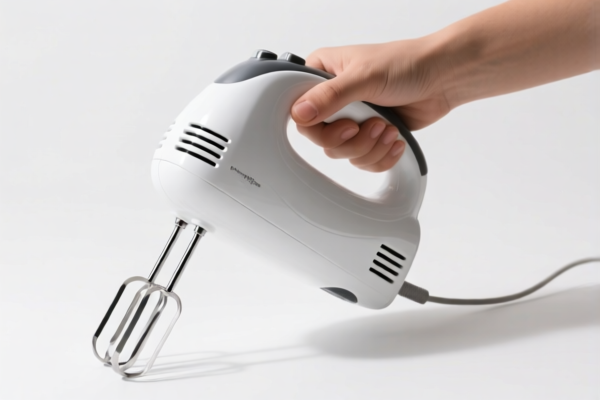
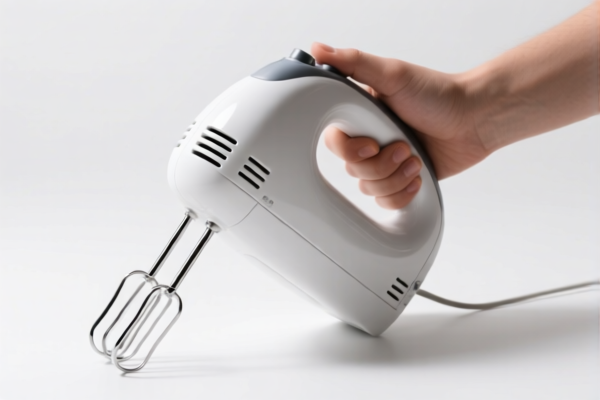
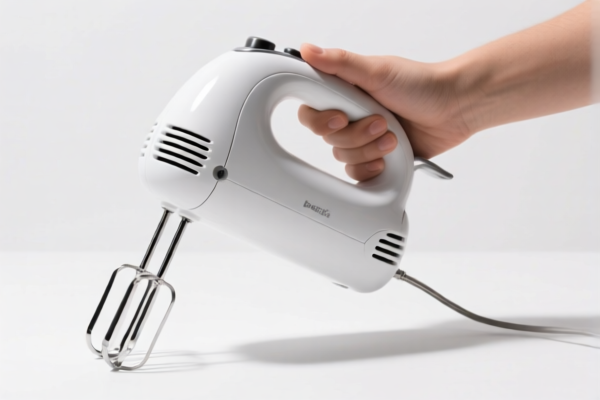

AI Analysis
🥣 Handheld Mixer (Immersion / Stick Blenders)
🌐 HS Code Reference & Customs Clearance Guide | 2026 Latest Tariff Analysis | Professional Clearance Strategy
📌 I. Product Definition & Classification: Do You Really Understand "Handheld Mixers"?
A Handheld Mixer (often called an Immersion Blender or Stick Blender) is a compact kitchen appliance designed for mixing, blending, or pureeing foods directly in the pot or bowl. In international trade, classification depends heavily on whether it is considered a household appliance or an industrial food processing machine.
Key Distinction: * Household Use: Small, motor-driven, used in private kitchens → Typically falls under 8509. * Industrial/Commercial Use: Large-scale, heavy-duty, or specific food manufacturing machinery → Typically falls under 8438 or 8479.
⚠️ Critical Classification Point:
- If the product is marketed as a "Food Blender" for home use →归入 8509.40.00.25 / 8509.40.00.15
- If the product is explicitly an "Industrial Food Preparation Machine" → 归入 8438.80.00.00
- If it is a general-purpose "Mixing Machine" not specific to food → 归入 8479.82.00.40 / 8479.82.00.80
- If it is a part/accessory for the above machines → 归入 8438.90.90.90
📦 II. HS Code Classification Details (2026 Latest Tariff Authority Comparison)
| HS Code | Product Description | Application Scenario | Tax Rate Structure |
|---|---|---|---|
8509.40.00.25 |
Home Blender - Matches "Food Blender" use; no material conflict. | Standard home immersion blenders, countertop blenders. | 14.2% |
8509.40.00.15 |
Electric Home Blender - Matches name and use; includes motor. | Handheld mixers with electric motors for home use. | 14.2% |
8438.80.00.00 |
Industrial Food Prep Machine - Mechanical equipment for food/beverage prep. | Commercial-grade, high-volume food processing mixers. | 35.0% |
8479.82.00.40 |
Mixing/Kneading Machine - Matches "Mixing, kneading, or stirring machines". | General-purpose industrial mixers (non-specific to food). | 35.0% |
8479.82.00.80 |
Stirring Machine - Fits "Stirring" function within mixing machines. | Industrial stirring equipment, not specific to food manufacturing. | 35.0% |
8438.90.90.90 |
Parts for Food Machinery - Key components for food/beverage prep machines. | Blades, shafts, or replacement parts for industrial mixers. | 37.8% |
🔍 Key Reminder:
- Home Use vs. Industrial Use: The primary driver for the tax difference (14.2% vs. 35%+) is the intended use. "Handheld Mixer" is inherently household, but if declared as "Industrial Food Mixer," it jumps to 35%. - Parts Are Expensive: Declaring a mixer as "Parts" (8438.90.90.90) incurs the highest duty (37.8%) and is risky if the item is clearly a complete unit.
💰 III. 2026 Latest Tariff Rate Breakdown (Including Additional Duties & Policy Surcharges)
✅ Applicable Country: United States (US)
✅ Origin: China (CN)
✅ Effective Date: November 10, 2025 (for subsequent imports)
🎯 1. 8509.40.00.25 & 8509.40.00.15 —— Household Blenders & Mixers
| Item | Detail |
|---|---|
| Base Tariff | 4.2% (Ad Valorem) |
| Section 301 Additional Duty | 0.0% (No 25% surcharge applied to this category) |
| IEEPA Additional Duty | +10% (Specific "122 Clause" tariff for China/origin products, effective Nov 10, 2025) |
| Total Effective Rate | 14.2% |
| Calculation | CIF Value × 14.2% |
| De Minimis Eligibility | ❌ No (Subject to Section 321 exemption limits but currently high duty applies) |
| Legal Basis Path | IEEPA:122 Clause → USITC:8509.40.00.15/25 |
📌 Explanation:
- This is the most favorable classification for handheld mixers because it is categorized as a household appliance. - Why 14.2%? It consists of the Base Tariff (4.2%) + IEEPA 122 Clause (10%). - Crucial Note: Unlike electronics or steel, Section 301 (25%) does NOT apply to these household blenders, saving you significant cost compared to industrial counterparts.
🎯 2. 8438.80.00.00 —— Industrial Food Preparation Machinery
| Item | Detail |
|---|---|
| Base Tariff | 0.0% |
| Section 301 Additional Duty | +25.0% |
| IEEPA Additional Duty | +10% |
| Total Effective Rate | 35.0% |
| Calculation | CIF Value × 35.0% |
| De Minimis Eligibility | ❌ No |
| Legal Basis Path | IEEPA:122 Clause → USITC:8438.80.00.00 → Section 301 Footnote |
📌 Warning:
- If you misclassify a household mixer as "Industrial Food Machinery," your cost doubles (14.2% → 35.0%). - This rate includes the heavy Section 301 25% surcharge, which is a major pain point for industrial goods from China.
🎯 3. 8479.82.00.40 & 8479.82.00.80 —— General Mixing/Kneading Machines
| Item | Detail |
|---|---|
| Base Tariff | 0.0% |
| Section 301 Additional Duty | +25.0% |
| IEEPA Additional Duty | +10% |
| Total Effective Rate | 35.0% |
| Calculation | CIF Value × 35.0% |
| De Minimis Eligibility | ❌ No |
| Legal Basis Path | IEEPA:122 Clause → USITC:8479.82.00.40/80 → Section 301 Footnote |
📌 Note:
- These codes apply if the mixer is deemed a "general-purpose industrial machine" (e.g., for chemical mixing, not food). - Same high tax burden (35%) due to Section 301.
🎯 4. 8438.90.90.90 —— Parts for Food Machinery
| Item | Detail |
|---|---|
| Base Tariff | 2.8% |
| Section 301 Additional Duty | +25.0% |
| IEEPA Additional Duty | +10% |
| Total Effective Rate | 37.8% |
| Calculation | CIF Value × 37.8% |
| De Minimis Eligibility | ❌ No |
| Legal Basis Path | IEEPA:122 Clause → USITC:8438.90.90.90 → Section 301 Footnote |
📌 Warning:
- Highest Rate: Never declare a complete handheld mixer as "parts" to save money; it will likely be rejected or reassigned, incurring this 37.8% rate plus penalties. - This rate is for components only (e.g., replacement blades, motor assemblies) properly declared as parts.
🛠️ IV. Customs Clearance Practical Advice (Battle-Tested Pitfall Guide)
✅ 1. Required Documentation Checklist (Non-Negotiable)
| Document | Must Provide? | Description |
|---|---|---|
| ✅ Product Specification Sheet | ✔️ | Must clearly state: "Handheld Mixer," "Household Use," "Voltage 120V." |
| ✅ Product Photos (Labeled) | ✔️ | Show the entire unit, brand label, and model number. |
| ✅ Commercial Invoice | ✔️ | Description must match HS Code logic: "Electric Handheld Food Blender for Household Use." |
| ✅ Declaration of Use | ✔️ | Explicitly state: "For Home Kitchen Use Only, Not Industrial Food Production." |
| ✅ UL/ETL Certification | ✔️ | Required for electrical safety compliance in the US. |
✅ 2. Declaration Strategy (Key Mnemonics)
🔥 "Household is Low, Industrial is High; Name it Right, Save the Bag!"
| Scenario | Correct Declaration | Wrong Approach |
|---|---|---|
| Standard Handheld Mixer | 8509.40.00.15 (14.2%) |
Calling it "Food Processor" → Risk of 35% |
| Industrial Stand Mixer | 8438.80.00.00 (35.0%) |
Calling it "Home Appliance" → Smuggling Risk |
| Replacement Blade Only | 8438.90.90.90 (37.8%) |
Declaring blade as "Mixer" → 14.2% (but rejected if incomplete) |
| Mixed Shipment (Parts + Unit) | Split Declaration | Bundling parts into unit price → Customary valuation issues |
✅ 3. Special Cases Handling
| Case | Handling Advice |
|---|---|
| OEM White-Label Mixers | Ensure the invoice describes the function, not just the brand. Use "Electric Handheld Mixer." |
| Commercial Grade (Heavy Duty) | If the motor is >2HP or designed for continuous factory use, classify as 8438.80.00.00 to avoid fraud claims. |
| Multi-Function Attachments | If sold with whisk/beater attachments, they are part of the 8509 unit. Do not split. |
| Import from Non-China Origins | If shipped from Vietnam/Malaysia, IEEPA 10% may not apply, but verify Section 301 applicability based on substantive transformation. |
🌍 V. Global Market Clearance Comparison (2026 Latest)
| Country/Region | Recommended HS Code | Tariff (China Origin) | Certification | Notes |
|---|---|---|---|---|
| 🇺🇸 USA | 8509.40.00.15 |
14.2% | UL/ETL + FCC | 35% if misclassified as industrial. |
| 🇨🇳 China | 8509.40.00.15 |
8.0% | CCC | Lower entry barrier, but export duties may apply. |
| 🇪🇺 EU | 8509.40.90 |
0.0% (if RO) | CE + RoHS | Free trade if Rules of Origin met. |
| 🇬🇧 UK | 8509.40.00 |
4.0% | UKCA + RoHS | Post-Brexit alignment with EU standards. |
| 🇦🇺 Australia | 8509.40.00 |
5.0% | SAA Mark | Low tariff, strict electrical safety. |
📌 Conclusion:
- The USA is the most complex due to the IEEPA 122 Clause and Section 301. - Classification as Household (8509) is critical to avoid the 35% industrial rate. - EU/UK/AU are more straightforward, focusing on safety certs (CE/UKCA) rather than punitive tariffs.
📌 VI. Common Errors & Pitfall Guide (Blood & Tears Lessons)
❌ Mistake 1: Declaring a Handheld Mixer as "Kitchen Appliance" without specifying "Blender"
👉 Consequence: Customs may reclassify to generic "Other Household Appliances" → Potential delay or higher duty.
❌ Mistake 2: Calling an Industrial Mixer a "Handheld Mixer" to get 14.2%
👉 Consequence: Fraud Detection. Customs inspection reveals industrial specs → Penalties + 35% Rate + Back Taxes.
❌ Mistake 3: Splitting the Motor and the Shaft in declaration
👉 Consequence: Parts (37.8%) vs. Machine (14.2%). Incorrect splitting leads to audit flags.
❌ Mistake 4: Ignoring the IEEPA 122 Clause
👉 Consequence: Underpaying by 10% → Retroactive billing + Interest.
✅ Correct Practice:
"Electric Handheld Mixer, 120V 60Hz, Stainless Steel Blades, Household Use, Model HM-202, UL Listed"
🎯 VII. Conclusion: Precise Classification Saves Money!
🎯 Remember the Mantra:
🔹 "Home Use 14%, Industrial 35%, Parts 37%!"
🔹 "IEEPA 10% is on all, Section 301 is on Industrial only!"
🔹 "Describe the Use, Not Just the Look!"
📌 Pro Tip:
If your handheld mixers are manufactured in Vietnam, Mexico, or Thailand, they may be exempt from the 10% IEEPA and 25% Section 301 (depending on supply chain origin). Always verify Country of Origin vs. Country of Shipment.
📣 Immediate Action:
📞 Contact your freight forwarder + Provide Product Specs + Confirm "Household Use"
🚀 Ensure your Commercial Invoice reads: "Electric Handheld Mixer for Home Kitchen Use"
💰 Lock in the 14.2% rate and avoid the 35% trap!
✨ Professional Clearance Starts with Precise Classification!
💼 Every Percent Counts in International Trade!
Customer Reviews
About HS Code Classification
The Harmonized System (HS) is an internationally standardized nomenclature developed by the World Customs Organization (WCO) to classify traded products. Over 200 countries use the HS system as the basis for customs tariffs, trade statistics, and import/export regulations.
Each HS code follows a hierarchical structure:
- Chapter (2 digits) — Broad category of goods (e.g., Chapter 84: Machinery and Mechanical Appliances)
- Heading (4 digits) — More specific grouping within the chapter
- Subheading (6 digits) — Internationally standardized breakdown, used by all WCO member countries
- National subdivisions (8-10 digits) — Country-specific extensions for further classification, such as US HTSUS 10-digit codes
Correct HS code classification is essential for smooth customs clearance, accurate duty payment, and compliance with trade regulations. Misclassification can lead to customs delays, overpayment of duties, or penalties.
When importing from CN to US, the applicable tariff rates may include:
- Most-Favored-Nation (MFN) rate — The standard duty rate applied to WTO members
- General rate — Applied to countries without trade agreements
- Trade remedy duties — Additional tariffs such as Section 301 (anti-dumping), Section 232 (national security), or countervailing duties
The information provided on this page is for reference purposes only. For official classification, please consult with your local customs authority or a licensed customs broker.