Handwoven Basket
CN → US| HS Code | Tariff Rate | Origin | Destination | Doc |
|---|---|---|---|---|
| 4602110900 | 45.0% | CN | US | Official Doc |
| 4602110700 | 35.0% | CN | US | Official Doc |
| 3926909989 | 22.8% | CN | US | Official Doc |
| 4601920500 | 37.7% | CN | US | Official Doc |
Product Images
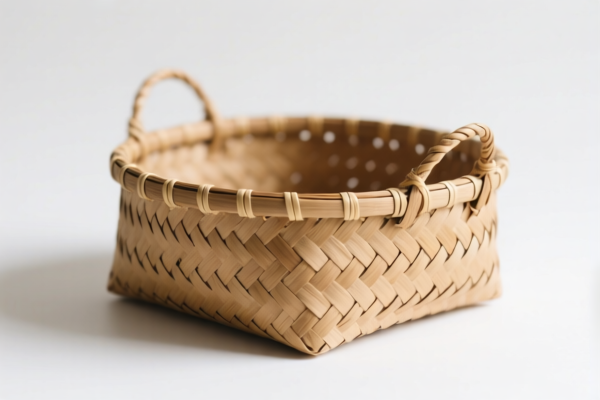
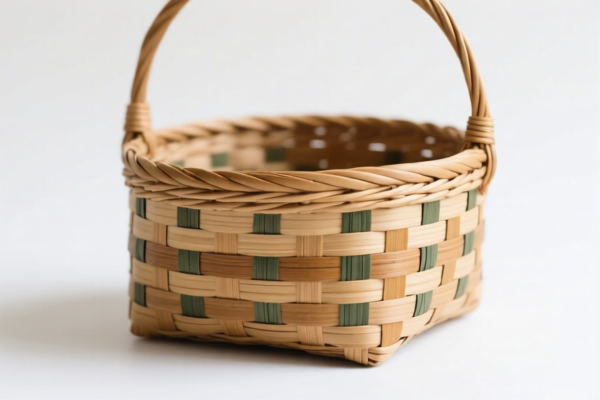
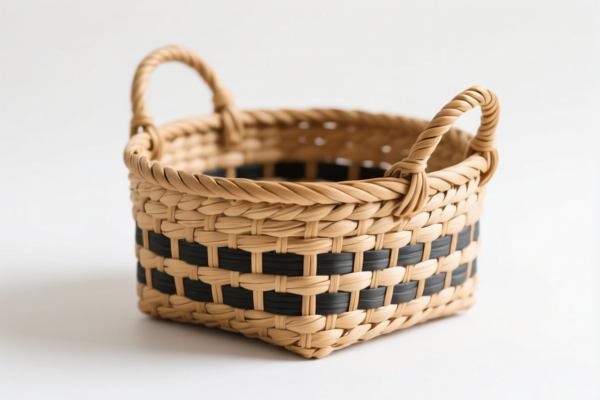
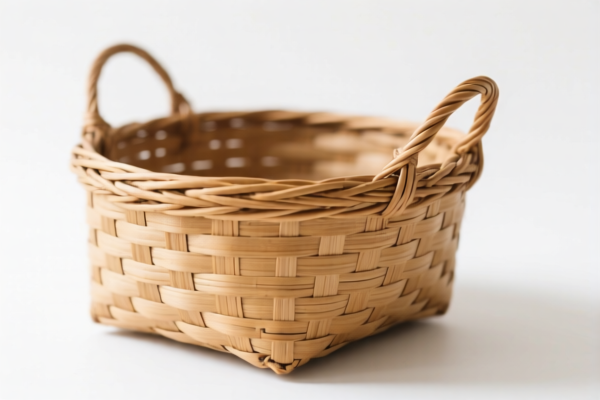
AI Analysis
🧺 Handwoven Basket (Plant Fiber Products)
🌐 HS Code Reference & Customs Clearance Guide | 2026 Latest Tariff Analysis | Professional Entry Strategy
📌 I. Product Definition & Classification: What Exactly is a "Handwoven Basket"?
A handwoven basket is a container crafted by weaving pliable plant materials (such as bamboo, rattan, willow, straw, or reed) into a structured form. In international trade, the classification hinges heavily on the material composition and specific form.
Key Distinction Criteria: * Natural Plant Materials: If made from bamboo, rattan, willow, or other vegetable fibers → Generally falls under Chapter 46. * Synthetic/Plastic Materials: If made from plastic strips or synthetic fibers → Generally falls under Chapter 39. * Raw vs. Finished: Is it a finished basket or a weaving material roll? This affects the subheading.
⚠️ Critical Classification Point:
- If the basket is made of natural plant fibers (bamboo/rattan) and is a finished good → Look to 4602.11 (Baskets and other articles of plaiting materials).
- If the basket is made of plastic or resembles plastic → Look to 3926.90 (Other articles of plastics).
- If it is merely weaving material (not yet a basket shape) → Look to 4601.92 (Plaiting materials).
📦 II. HS Code Classification Details (Based on Provided Data)
| HS Code | Product Description | Material Inference | Total Tax Rate | Tax Breakdown |
|---|---|---|---|---|
4602.11.09.00 |
Baskets of bamboo, rattan, or similar materials (Other) | Bamboo, Rattan, or similar plant fibers | 45.0% | Base: 10.0% + Sec 301: 25.0% + Section 122: 10.0% |
4602.11.07.00 |
Baskets of bamboo (Specific to Bamboo) | Bamboo / Willow / Plant fiber weaving | 35.0% | Base: 0.0% + Sec 301: 25.0% + Section 122: 10.0% |
3926.90.99.89 |
Other articles of plastics (Not specifically listed) | Plastic fibers or synthetic materials | 22.8% | Base: 5.3% + Sec 301: 7.5% + Section 122: 10.0% |
4601.92.05.00 |
Plaiting materials and products thereof (Other) | Raw weaving materials (e.g., bamboo strips) | 37.7% | Base: 2.7% + Sec 301: 25.0% + Section 122: 10.0% |
🔍 Key Insight:
-4602.11codes refer to finished woven articles (baskets).
-4601.92refers to raw weaving materials (rolls, mats, not yet formed into a basket).
-3926.90is for plastic/synthetic baskets, which have a significantly lower base tariff but still attract additional duties.
💰 III. 2026 Latest Tariff Rate Details (Including Surcharges)
✅ Applicable Country: United States (US)
✅ Origin: China (CN)
✅ Effective Time: Current rates include Section 301 and Section 122 measures.
🎯 1. 4602.11.09.00 – Baskets of Bamboo/Rattan (Other)
| Item | Content |
|---|---|
| Base Tariff | 10.0% (ad valorem) |
| Section 301 Surcharge | +25.0% |
| Section 122 Surcharge | +10.0% |
| Total Tax Rate | 45.0% |
| Tax Calculation | CIF Value × 45% |
| De Minimis Exemption | ❌ Not Eligible (High duty rate triggers scrutiny) |
| Legal Basis Path | HTSUS:4602.11.09.00 → USITC:301 → IEEPA:122 |
📌 Explanation:
- This is the highest tax bracket among the natural fiber options.
- The 10% base rate is for general "other" bamboo/rattan baskets.
- The 25% Section 301 and 10% Section 122 are significant additional costs.
🎯 2. 4602.11.07.00 – Baskets of Bamboo
| Item | Content |
|---|---|
| Base Tariff | 0.0% (ad valorem) |
| Section 301 Surcharge | +25.0% |
| Section 122 Surcharge | +10.0% |
| Total Tax Rate | 35.0% |
| Tax Calculation | CIF Value × 35% |
| De Minimis Exemption | ❌ Not Eligible |
| Legal Basis Path | HTSUS:4602.11.07.00 → USITC:301 → IEEPA:122 |
📌 Explanation:
- Best option for natural baskets.
- Because the Base Tariff is 0%, the total tax burden is 10 percentage points lower than4602.11.09.00.
- Condition: Must be clearly identified as Bamboo (not general rattan or "other" plant fibers).
🎯 3. 3926.90.99.89 – Plastic/Synthetic Baskets
| Item | Content |
|---|---|
| Base Tariff | 5.3% (ad valorem) |
| Section 301 Surcharge | +7.5% |
| Section 122 Surcharge | +10.0% |
| Total Tax Rate | 22.8% |
| Tax Calculation | CIF Value × 22.8% |
| De Minimis Exemption | ❌ Not Eligible |
| Legal Basis Path | HTSUS:3926.90.99.89 → USITC:301 → IEEPA:122 |
📌 Explanation:
- Lowest total tax rate among the options.
- However, the base tariff is higher (5.3% vs 0%), and Section 301 is lower (7.5% vs 25%).
- Critical: You must prove the material is plastic/synthetic, not natural plant fiber. Misclassification here can lead to penalties.
🎯 4. 4601.92.05.00 – Plaiting Materials (Unfinished)
| Item | Content |
|---|---|
| Base Tariff | 2.7% (ad valorem) |
| Section 301 Surcharge | +25.0% |
| Section 122 Surcharge | +10.0% |
| Total Tax Rate | 37.7% |
| Tax Calculation | CIF Value × 37.7% |
| De Minimis Exemption | ❌ Not Eligible |
| Legal Basis Path | HTSUS:4601.92.05.00 → USITC:301 → IEEPA:122 |
📌 Explanation:
- Applies only if you are importing raw weaving strips or mats, not finished baskets.
- If you ship finished baskets but declare this code, customs will likely reclassify and charge4602.11rates + penalties.
🛠️ IV. Customs Clearance Practical Advice (Avoid Pitfalls)
✅ 1. Preparation Checklist (Mandatory)
| Document | Required | Description |
|---|---|---|
| ✅ Product Specifications | ✔️ | Detailed material breakdown (e.g., "100% Natural Bamboo," not just "Plant Fiber"). |
| ✅ Product Photos | ✔️ | Clear images of the basket, including labels, weaving texture, and any plastic components. |
| ✅ Bill of Lading / Invoice | ✔️ | Must match the declared HS Code. E.g., "Handwoven Bamboo Basket" vs. "Plastic Woven Basket." |
| ✅ Material Test Report | ✔️ | For 3926.90.99.89 claims, a lab report confirming synthetic/plastic composition is crucial. |
| ✅ Packing List | ✔️ | Weight and dimensions of each basket. |
✅ 2. Declaration Strategy (Key Mantras)
🔥 “Material Determines Code, Shape Determines Chapter”
| Scenario | Correct Declaration | Incorrect Action |
|---|---|---|
| Bamboo Basket | 4602.11.07.00 (35% Total) |
Declaring as 4602.11.09.00 (45%) → Extra 10% cost! |
| Rattan Basket | 4602.11.09.00 (45% Total) |
Declaring as 4602.11.07.00 → Misclassification Penalty |
| Plastic Basket | 3926.90.99.89 (22.8% Total) |
Declaring as natural fiber → Fraud Risk / High Penalty |
| Weaving Strips (Rolls) | 4601.92.05.00 (37.7% Total) |
Declaring as "Basket" → Reclassification Delay |
✅ 3. Special Considerations
| Situation | Advice |
|---|---|
| Mixed Materials | If the basket has a plastic handle or lining, the primary material (plant fiber) usually dictates Chapter 46. However, if plastic is dominant, consider Chapter 39. Consult a customs broker. |
| Labeling | Ensure the commercial invoice explicitly states: "Made of Bamboo" or "Made of Plastic." Vague terms like "Woven Basket" increase the risk of arbitrary classification by CBP. |
| Section 122 Tariff | Note that the 10% Section 122 tariff applies to all these codes. This is a specific duty on certain goods, including textiles and apparel, but often captured under broader categories depending on the specific ruling. Ensure your broker is tracking this specific levy. |
📌 V. Common Mistakes & Pitfalls (Lessons Learned)
❌ Mistake 1: Calling a Bamboo Basket a "Rattan Basket" to try for a lower rate.
👉 Result: If inspected and found to be Bamboo, you face back duties and penalties. Be truthful about the material.
❌ Mistake 2: Using 4601.92 (Plaiting Materials) for a finished basket.
👉 Result: Customs will reject the entry or reclassify to 4602.11 + add penalties for misdeclaration.
❌ Mistake 3: Assuming "Plant Fiber" automatically means 0% base tariff.
👉 Result: Only Bamboo (4602.11.07.00) has 0% base. Other plant fibers (4602.11.09.00) have 10% base.
✅ Correct Approach:
“Handwoven Basket, 12-inch, Made of 100% Natural Bamboo, Decorative Use, Model XYZ”
HS Code:4602.11.07.00
🎯 VI. Conclusion: Professional Declaration, Cost Optimization!
🎯 Key Takeaway:
🔹 For Bamboo: Use
4602.11.07.00(35% Total).
🔹 For Rattan/Other Plants: Use4602.11.09.00(45% Total).
🔹 For Plastic: Use3926.90.99.89(22.8% Total).
📌 Pro Tip:
- If your supplier uses a mix of materials, clearly define the primary material in your contract.
- Pre-classification Rulings: For high-volume imports, consider applying for an Advance Ruling from U.S. Customs and Border Protection (CBP) to lock in the HS Code and avoid disputes.
📣 Immediate Action:
📞 Verify the exact material composition with your supplier.
📄 Choose the correct HS Code based on material (Bamboo vs. Rattan vs. Plastic).
🚀 Save 10% on taxes by correctly identifying Bamboo baskets as4602.11.07.00instead of4602.11.09.00!
✨ Precision in Classification = Profit in Your Pocket!
💼 Don’t let misclassification eat your margins!
Customer Reviews
About HS Code Classification
The Harmonized System (HS) is an internationally standardized nomenclature developed by the World Customs Organization (WCO) to classify traded products. Over 200 countries use the HS system as the basis for customs tariffs, trade statistics, and import/export regulations.
Each HS code follows a hierarchical structure:
- Chapter (2 digits) — Broad category of goods (e.g., Chapter 84: Machinery and Mechanical Appliances)
- Heading (4 digits) — More specific grouping within the chapter
- Subheading (6 digits) — Internationally standardized breakdown, used by all WCO member countries
- National subdivisions (8-10 digits) — Country-specific extensions for further classification, such as US HTSUS 10-digit codes
Correct HS code classification is essential for smooth customs clearance, accurate duty payment, and compliance with trade regulations. Misclassification can lead to customs delays, overpayment of duties, or penalties.
When importing from CN to US, the applicable tariff rates may include:
- Most-Favored-Nation (MFN) rate — The standard duty rate applied to WTO members
- General rate — Applied to countries without trade agreements
- Trade remedy duties — Additional tariffs such as Section 301 (anti-dumping), Section 232 (national security), or countervailing duties
The information provided on this page is for reference purposes only. For official classification, please consult with your local customs authority or a licensed customs broker.