Hats and Headwear
CN → US| HS Code | Tariff Rate | Origin | Destination | Doc |
|---|---|---|---|---|
| 6504003000 | 41.0% | CN | US | Official Doc |
| 6506996000 | 43.5% | CN | US | Official Doc |
| 6506910060 | 35.0% | CN | US | Official Doc |
| 6504009015 | 41.8% | CN | US | Official Doc |
| 6504006000 | 0.0% | CN | US | Official Doc |
Product Images
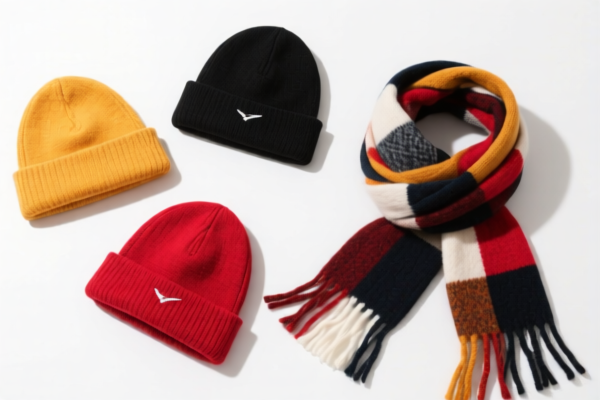
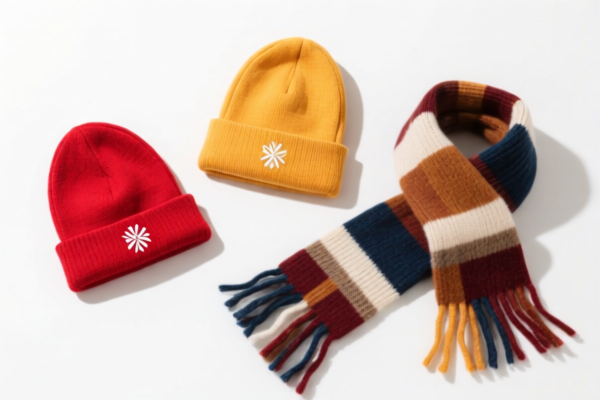
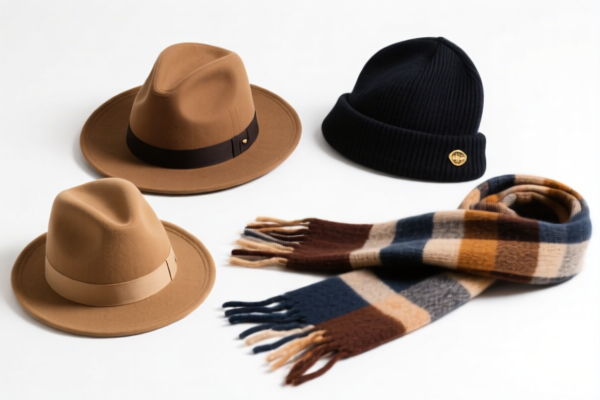
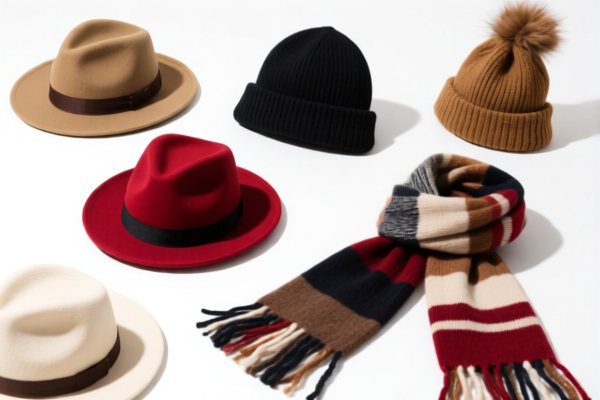
AI Analysis
🎩 Hats & Headwear: The Ultimate Customs Classification & Tariff Guide (USA/China)
🌐 HS Code Reference & Clearance Strategy | 2026 Latest Tariff Analysis | Professional Compliance Guide
📌 I. Product Definition: What Exactly Are We Talking About?
Hats and Headwear are not just fashion accessories; they are highly regulated textile and non-textile goods in international trade. In customs terminology, they are broadly categorized by material composition and function.
- Textile Hats: Made from wool, cotton, synthetic fibers, straw, or plant fibers.
- Non-Textile/Plastic Hats: Made from rubber, plastic, leather, or felt (often treated as textiles in some contexts, but distinct in others).
- Protective Headgear: Safety helmets, sports caps, etc.
⚠️ Key Distinction Point:
- Material is King: The primary determinant for HS Code classification is the material (e.g., Plant Fiber vs. Rubber vs. Synthetic Fiber).
- Function Matters: Is it a "cap" for fashion, a "helmet" for safety, or a "band" for support?
- Construction: Is it knitted, crocheted, woven, or assembled from pre-cut pieces?
📦 II. HS Code Classification Matrix (Based on Provided Data)
Below are the 5 specific HS Codes from the provided dataset, categorized by material and risk profile.
| HS Code | Summary Description | Material Focus | Estimated Total Tax Burden |
|---|---|---|---|
6504.00.30.00 |
Hats & Headgear, Plant Fibers/Paper Yarn | Plant Fiber / Paper | 41.0% |
6506.99.60.00 |
Hats, Other Materials, No Material Conflict | Mixed/Other Textiles | 43.5% |
6506.91.00.60 |
Headgear, Rubber or Plastic | Rubber / Plastic | 35.0% |
6504.00.90.15 |
Hats, Artificial Fiber (Sewn) | Synthetic/Artificial Fiber | 41.8% |
6504.00.60.00 |
Headwear (Catch-all), No Conflict | General/Mixed | 94¢/doz + 4.6% + 35.0% |
🔍 Critical Insight:
- Plastic/Rubber (6506.91.00.60) offers the lowest total tax rate at 35.0% due to a 0% Base Tariff.
- Plant Fibers (6504.00.30.00) and Synthetics (6504.00.90.15) carry higher base tariffs (~6-6.8%), pushing total costs higher.
- Generic/Mixed (6504.00.60.00) has a complex calculation: Specific Duty ($0.94/doz) + Ad Valorem (4.6%) + Surcharges (35%). This can be costly for low-value, high-volume items.
💰 III. Detailed Tariff Breakdown & Policy Surcharge Analysis
✅ Applicable Market: USA (Import from China)
✅ Effective Date: Current 2026 Trade Policy (Including Section 301 & IEEPA)
✅ Note: All rates below include Base Tariff + Section 301 Additional Tariff (25%) + Section 122/IEEPA Tariff (10%).
🎯 1. 6504.00.30.00 – Plant Fiber / Paper Yarn Hats
- Summary: Hats made from straw, paper yarn, or other vegetable fibers.
- Tax Structure:
- Base Tariff: 6.0%
- Section 301 Surcharge: +25.0%
- Section 122/IEEPA Surcharge: +10.0%
- Total Effective Rate: 41.0%
- Why this rate? Plant fibers are considered traditional textiles. While the base tariff is moderate, the cumulative surcharges result in a high total duty.
- Clearance Tip: Ensure the "plant fiber" content is >50% to qualify. If blended with synthetic, you might fall into a different subheading.
🎯 2. 6506.99.60.00 – Other Hats (No Material Conflict)
- Summary: Hats made of materials not specifically listed elsewhere (e.g., felt, wool, or mixed fabrics without dominant plastic/rubber).
- Tax Structure:
- Base Tariff: 8.5%
- Section 301 Surcharge: +25.0%
- Section 122/IEEPA Surcharge: +10.0%
- Total Effective Rate: 43.5%
- Why this rate? This is the "catch-all" for non-rubber/plastic textile hats. The highest base tariff (8.5%) in this dataset leads to the highest total percentage rate.
- Clearance Tip: Avoid this code if you can justify a more specific material classification (like plant fiber or artificial fiber) to potentially lower the base rate, though the surcharges remain constant.
🎯 3. 6506.91.00.60 – Rubber or Plastic Headgear ⭐ Lowest Tax Rate
- Summary: Headgear made of rubber, plastic, or similar materials (e.g., rain hats, safety helmets with plastic shells, swim caps).
- Tax Structure:
- Base Tariff: 0.0%
- Section 301 Surcharge: +25.0%
- Section 122/IEEPA Surcharge: +10.0%
- Total Effective Rate: 35.0%
- Why this rate? The US tariff schedule often exempts certain plastic/rubber goods from base duties. However, the political surcharges (25% + 10%) still apply, making the total 35%.
- Clearance Tip: This is the most cost-effective HS Code for import. Ensure the product is primarily rubber or plastic. If it has significant textile lining, customs may reclassify it.
🎯 4. 6504.00.90.15 – Artificial Fiber Hats (Sewn)
- Summary: Hats made of artificial fibers (nylon, polyester, etc.), typically sewn construction.
- Tax Structure:
- Base Tariff: 6.8%
- Section 301 Surcharge: +25.0%
- Section 122/IEEPA Surcharge: +10.0%
- Total Effective Rate: 41.8%
- Why this rate? Synthetic fibers are heavily regulated due to textile trade agreements. The base tariff is slightly higher than plant fibers.
- Clearance Tip: "Sewn" is a key descriptor. If the hat is knitted or crocheted, it may fall under a different chapter (Chapter 61). Ensure construction method matches the description.
🎯 5. 6504.00.60.00 – Headwear (Catch-All / Default)
- Summary: A residual category for hats that don't fit other specific material definitions. "Principle of Fallback."
- Tax Structure:
- Specific Duty: $0.94 per dozen
- Ad Valorem Base: 4.6%
- Section 301 Surcharge: +25.0%
- Section 122/IEEPA Surcharge: +10.0%
- Total Effective Rate: Variable (Depends on value)
- Why this rate? This is a complex calculation. For high-value hats, the 4.6% base + 35% surcharges (~39.6% total ad valorem) applies. For low-value hats, the $0.94/doz specific duty can significantly inflate the effective percentage.
- Clearance Tip: Avoid this code if possible. It is a "default" category. If your product has any specific material definition (Plastic, Plant, Synthetic), use that instead. If using this code, calculate the total duty carefully for low-value items.
🛠️ IV. Custom Clearance Operational Advice
✅ 1. Documentation Checklist (Must-Have)
| Document | Required? | Why? |
|---|---|---|
| Commercial Invoice | ✅ | Must clearly state HS Code, Material (%), and Country of Origin. |
| Packing List | ✅ | Detail items per box to justify quantity and weight. |
| Product Specification Sheet | ✅ | Crucial: Must specify material composition (e.g., "100% Rubber Shell, Cotton Lining"). |
| Material Test Report | ✅ | Lab test confirming % of rubber/plastic vs. textile. Customs may audit. |
| Photos of Product | ✅ | Show label, interior, exterior, and any safety certifications. |
| IEEPA/Section 301 Certificate | ✅ | Confirm Chinese origin to apply correct surcharges. |
✅ 2. Classification Strategy (Pro Tips)
🔥 "Material First, Then Function"
-
Is it Plastic/Rubber?
→ Try to classify under6506.91.00.60(35% Total).
→ Risk: If it has significant fabric lining, customs may challenge. Provide proof that rubber/plastic is the primary material. -
Is it Natural/Plant Fiber (Straw/Paper)?
→ Use6504.00.30.00(41% Total).
→ Risk: Must prove it's not "felt" or "knitted wool." -
Is it Synthetic (Polyester/Nylon)?
→ Use6504.00.90.15(41.8% Total).
→ Risk: Ensure construction is "sewn." Knitted synthetics go to Chapter 61. -
Is it Mixed/Unclear?
→ Do NOT use6504.00.60.00unless you have no other choice. The specific duty ($0.94/doz) can be punitive for cheap items. Try to argue for a more specific material code.
✅ 3. Common Pitfalls & Errors
| Mistake | Consequence | Correction |
|---|---|---|
| Misidentifying Material | Using 6506.99.60.00 (43.5%) for a Plastic Hat |
Reclassify to 6506.91.00.60 (35%) → Save 8.5% |
| Ignoring "Specific Duty" | Using 6504.00.60.00 for $1 hats |
The $0.94/doz adds huge % duty. Find a better HS Code. |
| Wrong Construction | Listing "Sewn" for a Knitted Hat | Knitted hats fall under Chapter 61 (8042/6040), which may have different tariffs. Check Chapter 61. |
| Omitting Lining Info | Customs assumes "Other Material" | Provide full material breakdown. If lining is textile, it may affect classification. |
🌍 V. Global Tariff Comparison (2026)
| Market | Preferred HS Code | Estimated Total Duty | Notes |
|---|---|---|---|
| 🇺🇸 USA (China Origin) | 6506.91.00.60 |
35.0% | Lowest total rate due to 0% base tariff. |
| 🇺🇸 USA (China Origin) | 6504.00.30.00 |
41.0% | Common for straw hats. |
| 🇪🇺 EU | 6504.00 |
Varies (0-6% base) | No Section 301/IEEPA surcharges. Generally lower total cost. |
| 🇨🇳 China (Import) | 6504.00 |
~6-8% base | No additional surcharges for most headwear. |
| 🇬🇧 UK | 6504.00 |
~6-8% base | Post-Brexit rules apply. No US-style surcharges. |
📌 Conclusion for US Importers:
- Plastic/Rubber hats are the most tax-efficient to import from China to the US due to the 0% base tariff.
- Textile/Plant hats carry a heavy ~41-43% total tax burden due to combined base + surcharges.
- Always try to classify under6506.91.00.60if the product allows.
📌 VI. Final Recommendation & Action Plan
🚀 Immediate Steps:
- Audit Material Composition: Check your Bill of Materials. Is it >50% rubber/plastic? If yes, target
6506.91.00.60. - Calculate Total Landed Cost:
- For
6506.91.00.60: Duty = CIF × 35% - For
6504.00.30.00: Duty = CIF × 41% - For
6504.00.60.00: Duty = (CIF × 4.6%) + (CIF × 35%) + ($0.94/6 pcs)
- For
- Prepare for Customs Audit: Have lab tests ready to prove material composition.
- Consider Origin Diversification: If tariffs are prohibitive, consider sourcing from Vietnam or Mexico (subject to current FTA rules), which may avoid IEEPA surcharges.
✨ Pro Tip:
"In Headwear, Rubber Rules! 🏆
If you can make it out of plastic/rubber, you save 6-8% in total duties compared to fabric/straw.
Don't let 35% beat 43%. Optimize your material!"
📣 Need Help?
📞 Contact a licensed customs broker to apply for an Advance Ruling on your specific headwear design.
🚀 Clear Customs Fast, Sleep Well at Night!
💼 Precision Classification = Maximum Profit.
🎩 Your Hat, Your Rules, Your Tariff Strategy.
Customer Reviews
About HS Code Classification
The Harmonized System (HS) is an internationally standardized nomenclature developed by the World Customs Organization (WCO) to classify traded products. Over 200 countries use the HS system as the basis for customs tariffs, trade statistics, and import/export regulations.
Each HS code follows a hierarchical structure:
- Chapter (2 digits) — Broad category of goods (e.g., Chapter 84: Machinery and Mechanical Appliances)
- Heading (4 digits) — More specific grouping within the chapter
- Subheading (6 digits) — Internationally standardized breakdown, used by all WCO member countries
- National subdivisions (8-10 digits) — Country-specific extensions for further classification, such as US HTSUS 10-digit codes
Correct HS code classification is essential for smooth customs clearance, accurate duty payment, and compliance with trade regulations. Misclassification can lead to customs delays, overpayment of duties, or penalties.
When importing from CN to US, the applicable tariff rates may include:
- Most-Favored-Nation (MFN) rate — The standard duty rate applied to WTO members
- General rate — Applied to countries without trade agreements
- Trade remedy duties — Additional tariffs such as Section 301 (anti-dumping), Section 232 (national security), or countervailing duties
The information provided on this page is for reference purposes only. For official classification, please consult with your local customs authority or a licensed customs broker.