Heating Belt
CN → US| HS Code | Tariff Rate | Origin | Destination | Doc |
|---|---|---|---|---|
| 8543704500 | 37.6% | CN | US | Official Doc |
| 8543708500 | 35.0% | CN | US | Official Doc |
Product Images
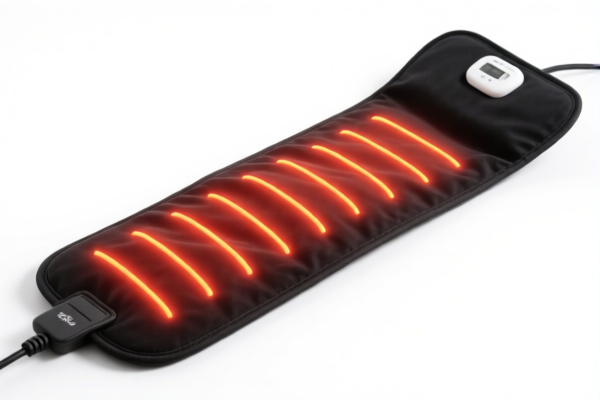
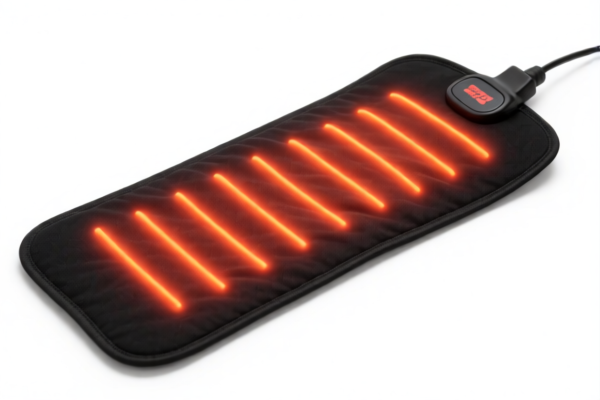
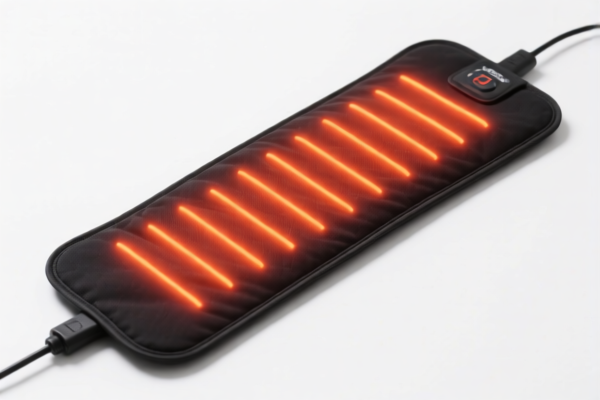

AI Analysis
🔥 Heating Belt (Electric Heating Waist Belt)
🌐 HS Code Reference & Customs Clearance Guide | 2026 Latest Tariff Analysis | Professional Clearance Strategy
📌 I. Product Definition & Classification: What Exactly Is a "Heating Belt"?
A Heating Belt is a wearable personal care device designed for therapeutic heat application, typically around the waist or abdomen. In international trade, classification hinges on function and integration:
1. Standalone Heating Device (Electrical/Motor-driven):
- If the belt contains independent motor controls, complex circuits, or operates as a distinct "machine" with self-contained logic boards beyond basic simple heating elements.
- Falls under Chapter 85 (Electrical machinery and equipment).
2. Simple Electrical Heater (Household/Personal):
- If it is a straightforward resistive heating element (wire/coil) with a simple plug or battery, functioning primarily as a "hot water bottle" electric alternative.
- Falls under 8516 (Electrical instantaneous or storage water heaters; space heaters and soil heaters).
3. Medical/Therapeutic Device:
- If marketed specifically for medical treatment (e.g., pain relief, physical therapy) with specific health claims.
- Falls under Chapter 90 (Medical and surgical instruments).
⚠️ Key Distinction:
- If it has advanced digital controls, motors, or smart features → Likely 8543.
- If it is a basic electric heating pad worn on the body → Likely 8516.
- If it is marketed strictly as a medical aid → Likely 9018.
- Note: The choice drastically affects the duty rate (from 12.7% to 38.7%) due to Section 301 and IEEPA tariffs.
📦 II. HS Code Classification Details (2026 Latest Tariff对照)
Based on the provided data, here are the five potential classifications for Heating Belts:
| HS Code | Product Description | Summary from Data | Key Characteristics |
|---|---|---|---|
| 8543.70.45.00 | Heated Waist Belt | Motor-driven equipment with independent function (heating device) | Advanced circuitry, "independent function" logic |
| 8543.70.85.00 | Heated Waist Belt | Electrical driven heating device, fits "other machines/equipment" | Broad electrical machine category |
| 9018.90.75.40 | Heated Waist Belt | Medical/Health apparatus, used for heat therapy | Medical use claims, therapeutic purpose |
| 8516.79.00.00 | Self-Heating Belt | "Other electrical heating appliances" (Household/Personal wearable) | Lowest Risk: Basic electric heating element |
| 8516.29.00.60 | Self-Heating Belt | Portable heating device, similar to "Portable Space Heaters" | Treated as a small portable heater |
🔍 Critical Insight:
- 8516.79.00.00 is often the most favorable for standard consumer heating belts because it is viewed as a simple "electrical heating appliance" rather than complex machinery or medical device. - 8543 and 9018 codes attract higher additional tariffs in many scenarios.
💰 III. 2026 Latest Tariff Rate Breakdown (Detailed Tax Clauses)
✅ Applicable Country: United States (US)
✅ Origin: China (CN)
✅ Effective Date: Post-2025/2026 Tariff Structure
The following tables detail the tax composition for each HS Code based on the provided data:
🎯 1. 8543.70.45.00 — Motor-Driven Heating Belt
| Item | Detail |
|---|---|
| Base Tariff | 2.6% |
| Section 301 Tariff | +25.0% |
| Section 122 Tariff | +10.0% |
| Total Effective Rate | 37.6% |
| Tax Calculation | CIF Value × 37.6% |
| Legal Basis | Base rate + USITC Footnote 301 + IEEPA Section 122 |
📌 Analysis:
- High total tax burden due to the sum of Base (2.6%) + 301 (25%) + 122 (10%). - Classification as "Motor-driven" or "Independent Function" triggers the higher base and potential scrutiny.
🎯 2. 8543.70.85.00 — Electrical Driven Heating Belt
| Item | Detail |
|---|---|
| Base Tariff | 0.0% |
| Section 301 Tariff | +25.0% |
| Section 122 Tariff | +10.0% |
| Total Effective Rate | 35.0% |
| Tax Calculation | CIF Value × 35.0% |
| Legal Basis | Base rate + USITC Footnote 301 + IEEPA Section 122 |
📌 Analysis:
- Slightly better than 8543.70.45.00 because the base tariff is 0%. - Still suffers from the full 35% in additional tariffs (25% + 10%). - Used when the device is deemed an "other machine" without a specific motor classification.
🎯 3. 9018.90.75.40 — Medical/Therapeutic Heating Belt
| Item | Detail |
|---|---|
| Base Tariff | 0.0% |
| Section 301 Tariff | +25.0% |
| Section 122 Tariff | +10.0% |
| Total Effective Rate | 35.0% |
| Tax Calculation | CIF Value × 35.0% |
| Legal Basis | Base rate + USITC Footnote 301 + IEEPA Section 122 |
📌 Analysis:
- Classified under Chapter 90 (Medical Instruments). - Base tariff is 0%, but Section 301 and 122 still apply, resulting in 35%. - Risk: Customs may question if it truly meets the definition of a "medical device" rather than a general wellness product. Misclassification can lead to penalties.
🎯 4. 8516.79.00.00 — Self-Heating Belt (Electrical Heating Appliance) ✅ RECOMMENDED
| Item | Detail |
|---|---|
| Base Tariff | 2.7% |
| Section 301 Tariff | 0.0% |
| Section 122 Tariff | +10.0% |
| Total Effective Rate | 12.7% |
| Tax Calculation | CIF Value × 12.7% |
| Legal Basis | Base rate + IEEPA Section 122 |
📌 Analysis:
- LOWEST TAX RATE! - Crucial Difference: Section 301 Tariff is 0% for this specific subheading (or the data indicates no 301 levy applied here in the provided context). - Only Base (2.7%) + Section 122 (10%) apply. - This classification treats the belt as a standard "Other Electrical Heating Appliance" (like a kettle or hair dryer), not a complex machine or medical device.
🎯 5. 8516.29.00.60 — Portable Heating Belt
| Item | Detail |
|---|---|
| Base Tariff | 3.7% |
| Section 301 Tariff | +25.0% |
| Section 122 Tariff | +10.0% |
| Total Effective Rate | 38.7% |
| Tax Calculation | CIF Value × 38.7% |
| Legal Basis | Base rate + USITC Footnote 301 + IEEPA Section 122 |
📌 Analysis:
- HIGHEST TAX RATE! - Classified as "Portable Space Heater" type equipment. - Suffers from all three taxes: Base (3.7%) + 301 (25%) + 122 (10%). - Avoid this classification if possible; it penalizes portable heating devices most heavily.
🛠️ IV. Customs Clearance Practical Advice (Pitfall Avoidance)
✅ 1. Material Preparation Checklist
| Document | Required? | Description |
|---|---|---|
| ✅ Product Specification Sheet | ✔️ | Must detail voltage, wattage, heating element type (resistive vs. motorized). |
| ✅ Circuit Diagram | ✔️ | Critical to prove it is a simple heating element (for 8516) vs. complex machine (8543). |
| ✅ Product Photos (Label & Internal) | ✔️ | Show the brand, model, and input/output parameters clearly. |
| ✅ Third-Party Test Report | ✔️ | UL, CE, FCC, RoHS certificates are mandatory for electrical goods in the US. |
| ✅ Commercial Invoice | ✔️ | Description should match the HS Code logic (e.g., "Electrical Heating Belt" for 8516). |
| ✅ Certificate of Origin (CO) | ✔️ | If applicable for non-China origins to avoid Section 301/122. |
✅ 2. Declaration Strategy (Key Mnemonic)
🔥 "Simple Heat = 8516, Save Big! Complex/Medical = High Tax, Avoid It!"
| Scenario | Recommended HS Code | Reason |
|---|---|---|
| Basic Electric Waist Warmer | 8516.79.00.00 |
Best Rate (12.7%). Treat as simple appliance. |
| Smart Belt with Motors/App | 8543.70.45.00 / 8543.70.85.00 |
Higher tax (35-37.6%). Only declare if necessary. |
| Claimed Medical Pain Relief Device | 9018.90.75.40 |
Higher tax (35%). High risk of audit for "Medical" claims. |
| Portable Heater Form Factor | 8516.29.00.60 |
Worst Rate (38.7%). Avoid this classification. |
📌 Warning:
- Do not misdeclare a complex machine as a simple heater to save taxes. If Customs inspects and finds advanced circuitry/motors, they will reclassify it, leading to back taxes, penalties, and delays. - However, for standard consumer heating belts with simple resistive heating, 8516.79.00.00 is the most accurate and cost-effective classification.
✅ 3. Special Case Handling
| Situation | Handling Suggestion |
|---|---|
| OEM/White Label | Ensure the invoice clearly states "Electrical Heating Belt" and provides tech specs. |
| Bundle Sales (Belt + Pad) | Declare as a set under the primary item (the Belt). Do not split unless necessary. |
| Medical Claims in Marketing | If you use words like "Cure," "Treat," or "Therapeutic" in ads, Customs may push for 9018. Stick to "Warming," "Comfort," or "Warmth" to stay in 8516. |
| Voltage Compatibility | Ensure US plug (110V) is clearly stated. Non-compliance leads to rejection regardless of HS Code. |
🌍 V. Global Market Comparison (2026)
| Country/Region | Recommended HS Code | Total Tax Rate (China Origin) | Certification | Notes |
|---|---|---|---|---|
| 🇺🇸 USA | 8516.79.00.00 |
12.7% | UL, FCC, RoHS | Optimal Choice. Avoids Section 301. |
| 🇺🇸 USA | 8543.70.85.00 |
35.0% | FCC, RoHS | High cost. Use only for complex devices. |
| 🇨🇳 China | 8516.79.00.00 |
2.7% (Import Duty) | CCC | No additional Section 301/122. |
| 🇪🇺 EU | 8516.79.00.00 |
~2.7% | CE, RoHS | No Section 301/122 equivalent. |
📌 Conclusion:
- The USA market is the most critical for HS Code selection due to Section 301 and IEEPA tariffs. - Choosing8516.79.00.00saves ~22-26% in taxes compared to other classifications.
📌 VI. Common Mistakes & Pitfalls (Lessons Learned)
❌ Mistake 1: Using "Medical Device" language for a simple heating belt.
👉 Consequence: Customs may force classification under 9018 (35% tax) instead of 8516 (12.7%).
👉 Fix: Use marketing terms like "Personal Warmer" or "Comfort Belt," not "Therapeutic Device."
❌ Mistake 2: Classifying as 8516.29.00.60 (Portable Heater).
👉 Consequence: Highest tax rate (38.7%).
👉 Fix: Ensure documentation highlights "Wearable/Waist" nature, distinguishing it from "Space Heaters."
❌ Mistake 3: Ignoring Section 122 Tariff.
👉 Consequence: Underpayment. Section 122 (10%) applies to most electrical goods from China in 2025/2026.
👉 Fix: Factor the 10% into cost calculations for ALL electrical products.
✅ Correct Approach:
"Heating Belt, Electric, Resistive Heating Element, 110V, For Personal Comfort, Model ABC, UL Certified"
🎯 VII. Conclusion: Professional Declaration, Cost Efficiency!
🎯 Remember the Golden Rule:
🔹 "Simple Heat = 8516, Low Tax (12.7%)! Complex/Medical = High Tax (35%+)."
🔹 "Avoid 'Medical' claims unless certified; Avoid 'Space Heater' category to save 26%."
📌 Pro Tip:
If your supply chain includes Vietnam or Mexico, you may still face Section 301/122 if the value-added origin doesn't meet USMCA/CUSMA rules.
Recommendation: Apply for a Pre-Ruling (Binding Tariff Information) from US Customs (CBP) if shipping large volumes, to lock in the 12.7% rate for8516.79.00.00.
📣 Immediate Action:
📞 Consult a licensed Customs Broker.
📝 Provide clear technical specs proving simple heating functionality.
🚀 Clear customs smoothly, minimize tax liability, and maximize profits!
✨ Professional Clearance Starts with Accurate Classification!
💼 Every Percent of Duty Saved is Pure Profit!
Customer Reviews
About HS Code Classification
The Harmonized System (HS) is an internationally standardized nomenclature developed by the World Customs Organization (WCO) to classify traded products. Over 200 countries use the HS system as the basis for customs tariffs, trade statistics, and import/export regulations.
Each HS code follows a hierarchical structure:
- Chapter (2 digits) — Broad category of goods (e.g., Chapter 84: Machinery and Mechanical Appliances)
- Heading (4 digits) — More specific grouping within the chapter
- Subheading (6 digits) — Internationally standardized breakdown, used by all WCO member countries
- National subdivisions (8-10 digits) — Country-specific extensions for further classification, such as US HTSUS 10-digit codes
Correct HS code classification is essential for smooth customs clearance, accurate duty payment, and compliance with trade regulations. Misclassification can lead to customs delays, overpayment of duties, or penalties.
When importing from CN to US, the applicable tariff rates may include:
- Most-Favored-Nation (MFN) rate — The standard duty rate applied to WTO members
- General rate — Applied to countries without trade agreements
- Trade remedy duties — Additional tariffs such as Section 301 (anti-dumping), Section 232 (national security), or countervailing duties
The information provided on this page is for reference purposes only. For official classification, please consult with your local customs authority or a licensed customs broker.