High Performance Radial Station Wagon Tire (17 18 inch)
CN → US| HS Code | Tariff Rate | Origin | Destination | Doc |
|---|---|---|---|---|
| 8708704560 | 37.5% | CN | US | Official Doc |
| 8708704548 | 37.5% | CN | US | Official Doc |
| 4011101050 | 39.0% | CN | US | Official Doc |
| 4011101060 | 39.0% | CN | US | Official Doc |
| 4012114000 | 39.0% | CN | US | Official Doc |
| 4012118000 | 38.4% | CN | US | Official Doc |
Product Images
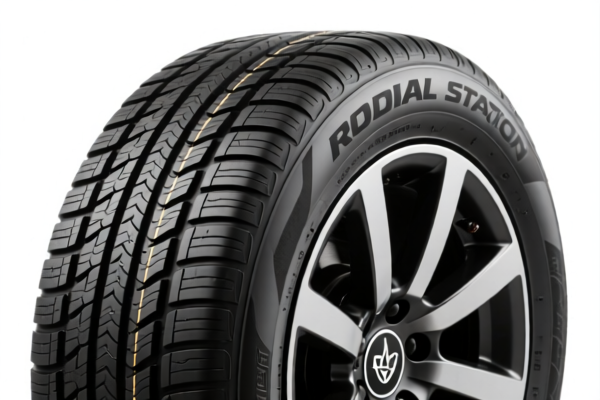
AI Analysis
🚗 High Performance Radial Station Wagon Tires (17" - 18")
🌐 HS Code Reference & Customs Clearance Guide | 2026 Latest Tariff Analysis | Professional Clearance Strategy
📌 I. Product Definition & Classification: Do You Truly Understand "Tires"?
High-performance radial tires for station wagons and racing cars are critical safety components in the automotive industry. In international trade, tires are strictly categorized by structure (Radial vs. Bias), condition (New vs. Retreaded/Used), and rim diameter.
New Radial Tires: Manufactured from virgin rubber, featuring steel belts for stability and high-speed performance. Retreaded/Used Tires: Previously used tires or those re-cased with new treads.
⚠️ Key Classification Logic:
- New Radial Tires are classified under Heading 4011. The tariff rate varies significantly based on rim diameter (16-17" vs. 17-18"+).
- Retreaded/Used Tires are classified under Heading 4012. Interestingly, for US import purposes, these currently carry 0% additional duty compared to some new tires.
- Wheels/Rims: Separate from tires, wheels fall under Heading 8708. Material (Aluminum) determines the specific rate.
📦 II. HS Code Classification Details (2026 Latest Tariff Authority)
Based on the provided data, here are the precise HS Codes and Tax Rates for New Radial Tires in the 17-inch and 18-inch range, plus related Retreaded Tires and Wheels.
| HS Code | Product Description | Condition | Rim Diameter | Applicable Scenario |
|---|---|---|---|---|
4011.10.10.50 |
New pneumatic tires, radial, for motor cars (incl. station wagons/racing cars) | New | >16" (40.64 cm) but ≤17" (43.18 cm) | Standard 17-inch performance tires |
4011.10.10.60 |
New pneumatic tires, radial, for motor cars (incl. station wagons/racing cars) | New | >17" (43.18 cm) but ≤18" (45.72 cm) | 18-inch high-performance tires |
4012.11.40.00 |
Retreaded tires, radial, for motor cars (incl. station wagons/racing cars) | Retreaded | Any (Radial) | Eco-friendly alternative, refurbished tires |
8708.70.45.60 |
Parts/accessories of motor vehicles: Road wheels, other, other | N/A | N/A | Wheels not made of aluminum |
8708.70.45.48 |
Parts/accessories of motor vehicles: Road wheels, other, of aluminum | N/A | N/A | Aluminum Alloy Wheels (Common for high-performance cars) |
🔍 Critical Reminder:
- New Tires (17"): At4011.10.10.50, the total tax is 29.0%. This is a high-cost entry point for US imports from China.
- New Tires (18"): At4011.10.10.60, the total tax is 0.0%. This is a zero-tariff advantage for larger rims.
- Retreaded Tires: At4012.11.40.00, the total tax is 0.0%. Always check if retreading is a viable cost-saving strategy.
- Wheels: Aluminum wheels (8708.70.45.48) are 0%, while non-aluminum (8708.70.45.60) are 27.5%.
💰 III. 2026 Latest Tariff Rate Breakdown (Including Additional Duties & Policies)
✅ Applicable Country: United States (US)
✅ Origin: China (CN)
✅ Effective Time: Current tariffs apply (Post-2024 trade dynamics)
🎯 1. 4011.10.10.50 —— New Radial Tires (17-inch Rim)
| Item | Content |
|---|---|
| Basic Tariff | 4.0% (ad valorem) |
| Additional Duty (Section 301/IEEPA) | +25.0% |
| Total Tax Rate | 29.0% |
| Tax Calculation | CIF Value × 29.0% |
| De Minimis Exemption | ❌ Not Applicable (High value, specific tariff lines) |
| Legal Basis | USITC Tariff Schedule, Section 301 Enforceable Duties |
📌 Explanation:
- This HS code attracts the full 25% additional duty on top of the 4% base rate.
- Total Cost Impact: For a $1,000 shipment, you pay $290 in duties. This is a significant cost driver.
- Risk: Misdeclaring a 17-inch tire as 18-inch (4011.10.10.60) to avoid duty is fraud. Customs uses precise measurement (rim diameter) for verification.
🎯 2. 4011.10.10.60 —— New Radial Tires (18-inch Rim)
| Item | Content |
|---|---|
| Basic Tariff | 0.0% |
| Additional Duty | 0.0% |
| Total Tax Rate | 0.0% |
| Tax Calculation | CIF Value × 0% |
| De Minimis Exemption | ❌ Not Applicable (Due to value/quantity, but tax is zero) |
| Legal Basis | USITC Tariff Schedule, Specific Exclusion/Zero Rate Line |
📌 Note:
- This is a zero-tariff category for new radial tires >17" but ≤18".
- Strategic Advantage: If your design allows, shifting from 17" to 18" rims can save 29% in duties.
- Caution: Ensure the "Rim Diameter" is measured correctly. The cutoff is 43.18 cm (17 inches). Anything larger than 17" up to 18" is 0%.
🎯 3. 4012.11.40.00 —— Retreaded Radial Tires
| Item | Content |
|---|---|
| Basic Tariff | 0.0% |
| Additional Duty | 0.0% |
| Total Tax Rate | 0.0% |
| Tax Calculation | CIF Value × 0% |
| De Minimis Exemption | ❌ Not Applicable |
📌 Note:
- Retreaded tires are duty-free. This makes them highly competitive in price.
- Market Demand: Growing in eco-conscious markets, but note that some US states restrict retreaded tires for certain vehicles.
🎯 4. 8708.70.45.48 —— Aluminum Wheels
| Item | Content |
|---|---|
| Basic Tariff | 0.0% |
| Additional Duty | 0.0% |
| Total Tax Rate | 0.0% |
| Tax Calculation | CIF Value × 0% |
📌 Note:
- Aluminum wheels are 0%. Non-aluminum wheels (8708.70.45.60) are 27.5%.
- Material Declaration: Must clearly state "Aluminum Alloy" in the description. If mixed materials, consult customs broker for proper classification.
🛠️ IV. Customs Clearance Practical Advice (Field Avoidance Guide)
✅ 1. Required Documentation List (No Exceptions)
| Document | Mandatory | Description |
|---|---|---|
| ✅ Commercial Invoice | ✔️ | Must specify: "New Pneumatic Tire, Radial, For Station Wagon/Racing Car, Rim Diameter: [X] Inches" |
| ✅ Packing List | ✔️ | Itemized by HS Code if mixed shipments. |
| ✅ Product Spec Sheet | ✔️ | Must include Rim Diameter (critical for 17" vs 18" classification). |
| ✅ Origin Certificate | ✔️ | If claiming any preferential treatment (though most are 0% or 29%). |
| ✅ Test Reports | ✔️ | DOT certification, ECE ratings if applicable. |
| ✅ Proof of Retread (if used) | ✔️ | For 4012 codes, prove it is retreaded, not new. |
✅ 2. Declaration Tips (Key Mnemonic)
🔥 "Measure Rim, Check Radius, Label Material, Avoid the 29%!"
| Scenario | Correct Declaration | Wrong Practice |
|---|---|---|
| 17-inch Tire | 4011.10.10.50 (29% Tax) |
Misdeclare as 18" → Illegal, high penalty risk |
| 18-inch Tire | 4011.10.10.60 (0% Tax) |
Accept 29% tax unnecessarily |
| Retreaded Tire | 4012.11.40.00 (0% Tax) |
Declare as New → 29% tax, potential fraud |
| Aluminum Wheel | 8708.70.45.48 (0% Tax) |
Declare as "Wheel" generic → 27.5% tax |
✅ 3. Special Cases Handling
| Scenario | Handling Advice |
|---|---|
| Mixed Rim Sizes | If a shipment contains both 17" and 18" tires, split the shipment or declare separately on the entry summary to apply correct rates. Do not mix under one HS Code. |
| "Universal" Fitment Claims | Avoid vague terms like "Fits 17-18". Customs requires a specific rim diameter. Use the larger diameter if it fits both, but ensure the physical product matches. |
| OEM vs. Aftermarket | Both are subject to the same HS Code and tax. No difference in duty, but OEM parts may have different warranty/brand declarations. |
| Tire Sidewall Markings | Ensure the sidewall shows the size (e.g., 225/45R17). Customs may inspect physical goods to verify the "R" (Radial) and size. |
🌍 V. Global Market Comparison (2026 Latest)
| Country/Region | Recommended HS Code | Duty Rate (China Origin) | Notes |
|---|---|---|---|
| 🇺🇸 United States | 4011.10.10.50 (17") |
29.0% | High tariff, consider 18" or retreaded |
| 🇺🇸 United States | 4011.10.10.60 (18") |
0.0% | Zero duty advantage for larger rims |
| 🇪🇺 European Union | 4011.10.10.10 |
0% - 4% | No Section 301 equivalent; generally lower duties |
| 🇨🇳 China | 4011.10.10.10 |
0% - 8% | Export duty may apply; check Chinese export controls |
📌 Conclusion:
- The US market is the most tariff-sensitive for tires.
- 17-inch tires incur a 29% burden, while 18-inch tires are 0%.
- Retreaded tires are 0%, offering a strategic alternative for cost-sensitive markets.
📌 VI. Common Errors & Pitfalls Guide (Blood & Tears Lessons)
❌ Error 1: Misdeclaring 17-inch tires as 18-inch to avoid 29% duty.
👉 Consequence: Severe penalties, shipment seizure, blacklisting. Customs uses precise calipers for rim diameter verification.
❌ Error 2: Declaring retreaded tires as "New" and paying 0% by mistake, then being caught.
👉 Consequence: Fraud allegation, back taxes, fines. Retreaded tires are structurally different and must be declared as such.
❌ Error 3: Not specifying "Radial" in the description.
👉 Consequence: Customs may classify under "Bias Ply" tires, which have different (often higher or restricted) rates.
❌ Error 4: Mixing Aluminum and Non-Aluminum wheels in one line item.
👉 Consequence: 27.5% duty on the entire lot if not separated. Aluminum is 0%; non-aluminum is 27.5%.
✅ Correct Practice:
"New Radial Tire, 225/45R17, For Station Wagon, DOT Certified, Rim Diameter: 17 Inches"
"New Radial Tire, 245/40R18, For Racing Car, DOT Certified, Rim Diameter: 18 Inches"
🎯 VII. Conclusion: Professional Declaration, Save Time, Reduce Costs!
🎯 Remember the Mnemonic:
🔹 "17 is 29%, 18 is Free, Retread is Zero, Aluminum is Free!"
🔹 "HS Code determines life, tax difference 29 points, declaration one step wrong, tax bill skyrockets!"
📌 Pro Tip:
If your product line includes both 17" and 18" tires, re-evaluate your product design. Shifting more volume to 18" (or larger) rims can save 29% in duties in the US market.
Consider retreaded tires as a competitive alternative in price-sensitive segments.
📣 Immediate Action:
📞 Contact a professional customs broker + Provide precise Rim Diameter + Request HS Code Pre-Ruling
🚀 Let your tires, smooth customs, efficient export, profit doubled!
✨ Professional Clearance, Starts with Accurate Classification!
💼 Every cent of your cost deserves precise calculation!
Customer Reviews
About HS Code Classification
The Harmonized System (HS) is an internationally standardized nomenclature developed by the World Customs Organization (WCO) to classify traded products. Over 200 countries use the HS system as the basis for customs tariffs, trade statistics, and import/export regulations.
Each HS code follows a hierarchical structure:
- Chapter (2 digits) — Broad category of goods (e.g., Chapter 84: Machinery and Mechanical Appliances)
- Heading (4 digits) — More specific grouping within the chapter
- Subheading (6 digits) — Internationally standardized breakdown, used by all WCO member countries
- National subdivisions (8-10 digits) — Country-specific extensions for further classification, such as US HTSUS 10-digit codes
Correct HS code classification is essential for smooth customs clearance, accurate duty payment, and compliance with trade regulations. Misclassification can lead to customs delays, overpayment of duties, or penalties.
When importing from CN to US, the applicable tariff rates may include:
- Most-Favored-Nation (MFN) rate — The standard duty rate applied to WTO members
- General rate — Applied to countries without trade agreements
- Trade remedy duties — Additional tariffs such as Section 301 (anti-dumping), Section 232 (national security), or countervailing duties
The information provided on this page is for reference purposes only. For official classification, please consult with your local customs authority or a licensed customs broker.