High Strength Leather Belt
CN → US| HS Code | Tariff Rate | Origin | Destination | Doc |
|---|---|---|---|---|
| 4205008000 | 35.0% | CN | US | Official Doc |
| 4203300000 | 37.7% | CN | US | Official Doc |
| 4203406000 | 35.0% | CN | US | Official Doc |
Product Images
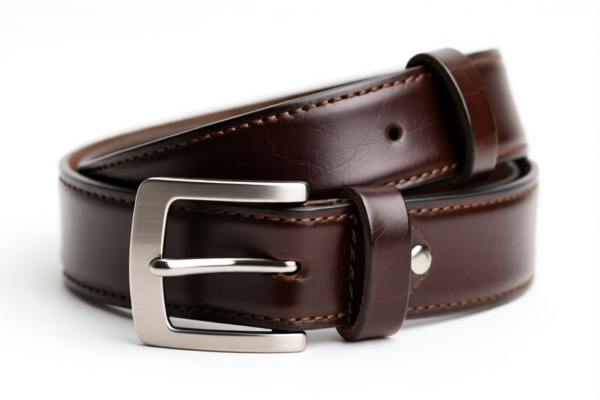
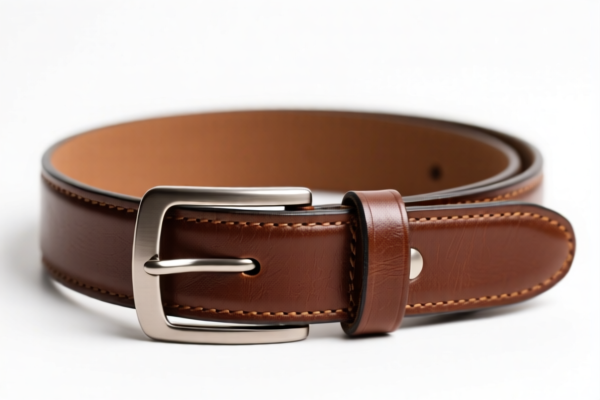
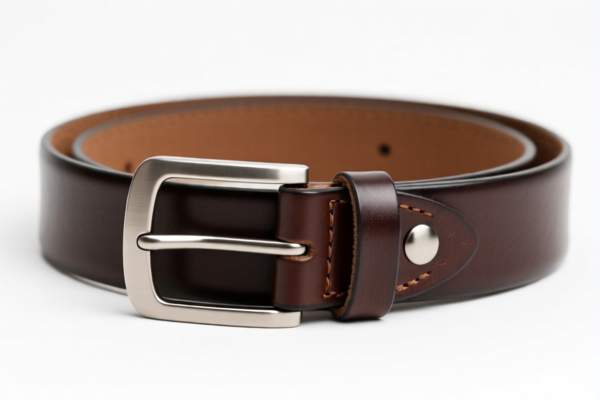
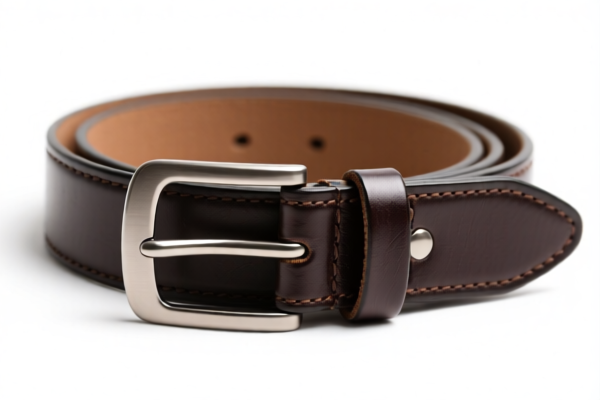
AI Analysis
🎒 High Strength Leather Belt (Robust Fashion Accessory)
🌐 HS Code Reference & Customs Clearance Guide | 2026 Latest Tariff Analysis | Professional Level Strategy
📌 I. Product Definition & Classification: What is a "High Strength Leather Belt"?
A "High Strength Leather Belt" refers to a belt primarily made of leather, designed for durability and load-bearing capacity (often used for workwear, hiking, or heavy-duty fashion). In international trade, the key to classification lies in distinguishing whether it is classified as a "garment accessory" or an "other leather article."
Two Main Categories: 1. Garment Accessories (Section 4203): Belts specifically designed as fasteners for clothing (trousers, skirts). 2. Other Leather Articles (Section 4205): General-purpose leather goods, including belts not strictly categorized as garment accessories, or those considered "other."
⚠️ Key Distinction Point:
- If the belt is clearly intended as a clothing fastener (e.g., trouser belt) → Often falls under 4203 (Garment Accessories).
- If the belt is a general leather good (e.g., heavy-duty, industrial, or generic "leather belt" without specific garment context) → Often falls under 4205 (Other Leather Articles).
- Note: Some 4203 subheadings may exclude specific types, pushing them to 4205, or vice versa based on exact material composition and hardware.
📦 II. HS Code Classification Details (2026 Latest Tariff Authority Comparison)
| HS Code | Product Description | Application Scenario | Basis from Data |
|---|---|---|---|
4205.00.80.00 |
Other articles of leather or composition leather | General leather belts, heavy-duty belts, non-garment specific | ✅ Matches: "Leather" material; "Belt" fits "Other leather articles" |
4203.30.00.00 |
Belts and bands of leather | Garment accessories, clothing fasteners | ✅ Matches: Leather material + Belt use = Leather garment accessories |
4203.40.60.00 |
Other garments and accessories, of leather | Other leather garment accessories | ✅ Matches: Leather material; Belt = "Other garment accessory" |
🔍 Critical Note:
-4203.30.00.00is the most precise for clothing belts made of leather.
-4205.00.80.00is a broader category for other leather goods, including belts that might not fit strictly into "garment accessories" or are considered generic leather products.
-4203.40.60.00covers other leather garment accessories, which can include belts if not specified in4203.30.
- Tariff Impact: The choice of HS Code significantly affects the total tax rate due to differences in Base Tariff and Additional Tariffs.
💰 III. 2026 Latest Tariff Rate Details (Including Surtaxes & Policy Add-ons)
✅ Applicable Country: United States (US)
✅ Country of Origin: China (CN)
✅ Effective Date: Post-November 2025 (Current Trade Environment)
🎯 1. 4205.00.80.00 —— Other Articles of Leather (General Leather Belt)
| Item | Content |
|---|---|
| Base Tariff | 0.0% |
| Additional Tariff (Section 301) | +25.0% |
| Section 122 Tariff | +10.0% |
| Total Tax Rate | 35.0% |
| Tax Calculation | CIF Value × 35% |
| De Minimis Exemption | ❌ Not Eligible (Subject to scrutiny) |
| Legal Basis Path | USITC:4205.00.80.00 → Section 301: 25% → Section 122: 10% |
📌 Explanation:
- 0% Base Tariff: General duty for many leather articles.
- 25% Section 301 Tariff: Applied to Chinese-origin goods under US Trade Act Section 301.
- 10% Section 122 Tariff: Additional tariff under Section 122 of the Trade Expansion Act (often applied to specific imports).
- Total 35%: High impact on cost. No de minimis exemption means even small shipments are taxed.
🎯 2. 4203.30.00.00 —— Belts and Bands of Leather (Garment Accessory)
| Item | Content |
|---|---|
| Base Tariff | 2.7% |
| Additional Tariff (Section 301) | +25.0% |
| Section 122 Tariff | +10.0% |
| Total Tax Rate | 37.7% |
| Tax Calculation | CIF Value × 37.7% |
| De Minimis Exemption | ❌ Not Eligible |
| Legal Basis Path | USITC:4203.30.00.00 → Section 301: 25% → Section 122: 10% |
📌 Note:
- 2.7% Base Tariff: Slightly higher than4205due to specific classification.
- Same Surtaxes: 25% + 10% apply, leading to the highest total rate (37.7%).
- Precision Risk: This code is very specific to "belts and bands." Misclassification here can lead to penalties.
🎯 3. 4203.40.60.00 —— Other Garments and Accessories, of Leather
| Item | Content |
|---|---|
| Base Tariff | 0.0% |
| Additional Tariff (Section 301) | +25.0% |
| Section 122 Tariff | +10.0% |
| Total Tax Rate | 35.0% |
| Tax Calculation | CIF Value × 35% |
| De Minimis Exemption | ❌ Not Eligible |
| Legal Basis Path | USITC:4203.40.60.00 → Section 301: 25% → Section 122: 10% |
📌 Explanation:
- 0% Base Tariff: Same as4205.00.80.00.
- 35% Total Rate: Competitive compared to4203.30.
- Broad Category: "Other garment accessories" allows more flexibility than "Belts and Bands."
🛠️ IV. Customs Clearance Practical Advice (Avoid Pitfalls)
✅ 1. Documentation Checklist (All Required)
| Document | Required | Notes |
|---|---|---|
| ✅ Product Specification Sheet | ✔️ | Must state material (100% Leather, Genuine, etc.) and usage (Belt, Accessory) |
| ✅ Product Photos | ✔️ | Clear images of the belt, buckle, and any labels |
| ✅ Commercial Invoice | ✔️ | Accurately describe item as "Leather Belt" or "Leather Garment Accessory" |
| ✅ Packing List | ✔️ | Detail quantity, weight, and packaging |
| ✅ Origin Certificate (CO) | ✔️ | If applicable for other markets, but for US, origin is key for surtaxes |
✅ 2. Classification Strategy (Key Rules)
🔥 "Material First, Use Second. Be Specific, Avoid Ambiguity."
| Scenario | Recommended HS Code | Risk |
|---|---|---|
| Standard Trouser Belt | 4203.30.00.00 |
Highest tax (37.7%), but most accurate. |
| General/Heavy-Duty Leather Belt | 4205.00.80.00 |
Lower tax (35%), broader category, safer if not strictly a garment accessory. |
| Fashion/Other Leather Accessory | 4203.40.60.00 |
Lower tax (35%), flexible classification for non-standard belts. |
| Non-Leather Belt (Synthetic) | N/A (Not in Data) | Would fall under different codes (e.g., 4202/4205 of synthetic materials). |
⚠️ Warning:
- Do not misdeclare a4203.30item as4205to save 2.7% base tax. Customs may audit and impose penalties + back taxes.
- Ensure the description matches the HS Code. "Leather Belt" under4205.00.80.00is acceptable if framed as "other leather article."
✅ 3. Special Circumstances
| Scenario | Advice |
|---|---|
| OEM/Custom Belts | Provide design specs to prove material and intended use. |
| Belt with Metal Buckle | Still classified under leather if leather is the primary material. |
| Sample Shipments | Even small quantities are subject to full tariffs (no de minimis). |
| Transshipment | Ensure origin is clearly China to apply correct surtaxes. |
🌍 V. Global Market Comparison (2026 Latest)
| Country/Region | Recommended HS Code | Base Tariff | Surtaxes (China) | Total Rate | Notes |
|---|---|---|---|---|---|
| 🇺🇸 USA | 4205.00.80.00 / 4203.30.00.00 |
0% / 2.7% | +25% (301) + 10% (122) | 35.0% / 37.7% | High barriers, strict origin checks. |
| 🇨🇳 China | 4205.00.80.00 / 4203.30.00.00 |
Varies | None | Low | Import duties apply, but no US surtaxes. |
| 🇪🇺 EU | 4203.29 / 4205.00 |
4% - 12% | None | 4%-12% | No Section 301/122 equivalents. |
| 🇬🇧 UK | 4203.29 / 4205.00 |
4% - 12% | None | 4%-12% | Post-Brexit tariffs, no US surtaxes. |
| 🇨🇦 Canada | 4203.29 / 4205.00 |
3.5% - 18% | None | 3.5%-18% | FTA benefits if from Canada/Mexico. |
📌 Conclusion:
- The USA imposes the highest effective tariff on Chinese leather belts due to Section 301 and Section 122.
- For other markets, tariffs are significantly lower (4%-18%), making the US market more challenging.
📌 VI. Common Mistakes & Pitfalls (Lessons Learned)
❌ Mistake 1: Declaring all belts as 4203.30.00.00 without justification.
👉 Consequence: 37.7% tax rate, potentially overpaying if 4205.00.80.00 (35%) is more appropriate.
❌ Mistake 2: Using vague descriptions like "Fashion Accessory" for 4205.00.80.00.
👉 Consequence: Customs may reject the code, requiring reclassification and delays.
❌ Mistake 3: Ignoring Section 122 Tariff.
👉 Consequence: Underestimating total cost by 10%, leading to cash flow issues.
❌ Mistake 4: Assuming de minimis applies.
👉 Consequence: Seizure or penalty for undeclared high-value shipments.
✅ Best Practice:
"High-Strength Genuine Leather Belt, 1.5 inch Width, Used for Trousers, Made in China" → Choose
4203.30.00.00(37.7%) for precision, or4205.00.80.00(35%) if marketing as a general leather good.
🎯 VII. Conclusion: Professional Classification, Cost Optimization
🎯 Key Takeaways:
🔹 Total Tariff Range: 35.0% – 37.7% for China-origin leather belts entering the US.
🔹 Base Tariff Difference: 0% (4205/4203.40) vs. 2.7% (4203.30).
🔹 Surtaxes are Fixed: 25% (301) + 10% (122) apply to all.
🔹 Strategy: If the belt is a standard garment accessory,4203.30.00.00is safest. If it’s a general leather product,4205.00.80.00saves 2.7% on the base rate.
📌 Pro Tip:
Consider supply chain diversification (e.g., production in Vietnam or Mexico) to avoid Section 301/122 tariffs. Always apply for an Advance Ruling from US Customs to confirm HS Code validity.
📣 Action Item:
📞 Consult a licensed customs broker.
📄 Provide detailed product specs.
🚀 Optimize HS Code selection to minimize costs while ensuring compliance.
✨ Precision in Classification Saves Money!
💼 Every Percent Counts in Global Trade!
Customer Reviews
About HS Code Classification
The Harmonized System (HS) is an internationally standardized nomenclature developed by the World Customs Organization (WCO) to classify traded products. Over 200 countries use the HS system as the basis for customs tariffs, trade statistics, and import/export regulations.
Each HS code follows a hierarchical structure:
- Chapter (2 digits) — Broad category of goods (e.g., Chapter 84: Machinery and Mechanical Appliances)
- Heading (4 digits) — More specific grouping within the chapter
- Subheading (6 digits) — Internationally standardized breakdown, used by all WCO member countries
- National subdivisions (8-10 digits) — Country-specific extensions for further classification, such as US HTSUS 10-digit codes
Correct HS code classification is essential for smooth customs clearance, accurate duty payment, and compliance with trade regulations. Misclassification can lead to customs delays, overpayment of duties, or penalties.
When importing from CN to US, the applicable tariff rates may include:
- Most-Favored-Nation (MFN) rate — The standard duty rate applied to WTO members
- General rate — Applied to countries without trade agreements
- Trade remedy duties — Additional tariffs such as Section 301 (anti-dumping), Section 232 (national security), or countervailing duties
The information provided on this page is for reference purposes only. For official classification, please consult with your local customs authority or a licensed customs broker.