Home Vehicle Refurbished Rubber Tires
CN → US| HS Code | Tariff Rate | Origin | Destination | Doc |
|---|---|---|---|---|
| 4012909000 | 37.7% | CN | US | Official Doc |
| 4005910000 | 35.0% | CN | US | Official Doc |
| 4006901000 | 35.0% | CN | US | Official Doc |
| 4012904500 | 39.2% | CN | US | Official Doc |
| 4005200000 | 35.0% | CN | US | Official Doc |
Product Images
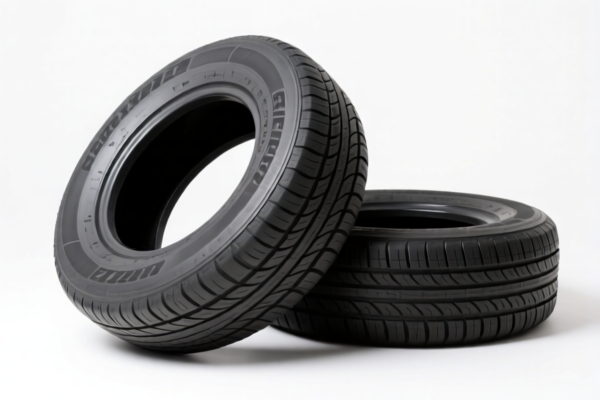
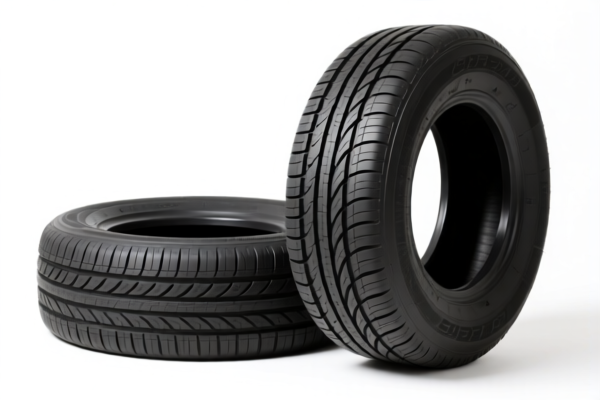
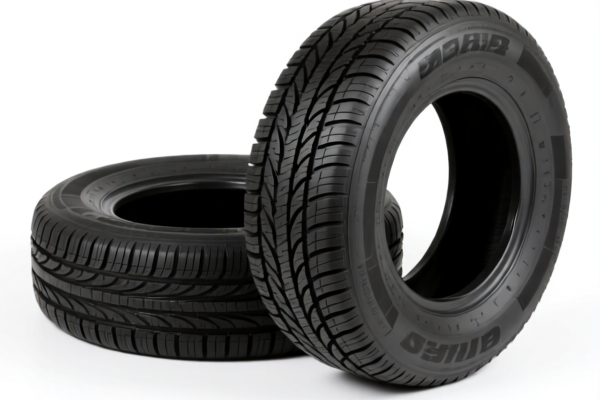
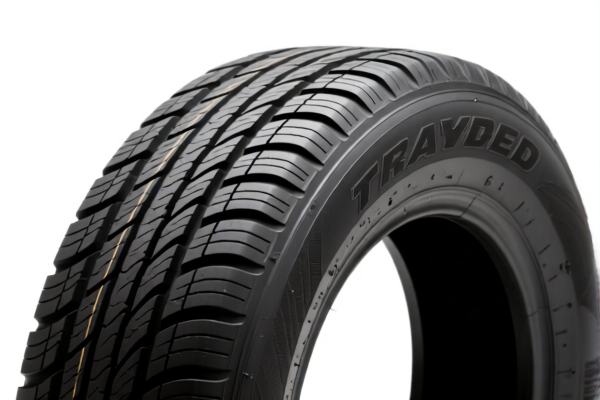
AI Analysis
🚗 Home Vehicle Refurbished Rubber Tires: Ultimate HS Code & Customs Clearance Guide (2026)
🌐 HS Code Reference & Customs Clearance Guide | 2026 Latest Tariff Analysis | Professional Entry Strategy
📌 I. Product Definition & Classification: Do You Really Understand "Rubber Treads"?
Rubber Treads, specifically for home vehicle refurbishing (retreading), are intermediate rubber products used to renew worn-out tires. In international trade, their classification depends heavily on material state (vulcanized vs. unvulcanized) and physical form.
1. Treads for Retreading (4012 Category):
Considered "Used or New Retreadable Tires" or parts thereof. These are semi-finished or finished tire components.
2. Unvulcanized Rubber Forms (4005/4006 Category):
If the treads are in the form of plates, sheets, or strips of unvulcanized mixed rubber, they may fall under intermediate rubber materials rather than finished tire parts.
⚠️ Critical Distinction Point:
- If the product is a semi-finished or finished tire part ready for retreading → Falls under Chapter 4012. - If the product is raw, unvulcanized rubber in plate/sheet/strip form (even if intended for treads) → Falls under Chapter 4005 or 4006. - Key Risk: Misclassifying unvulcanized raw rubber as a finished tire part can lead to under-declaration of duties; misclassifying a retreadable part as raw material may trigger rejection for lack of proper certification.
📦 II. HS Code Classification Details (2026 Latest Tariff Authority Comparison)
| HS Code | Product Description | Application Scenario | Material/Form State |
|---|---|---|---|
4012.90.90.00 |
Rubber tires, new or used, for refurbishing (excluding pneumatic) | Retreadable tire casings/treads not specifically listed elsewhere | ✅ Finished/Semi-finished Tire Part |
4005.91.00.00 |
Mixed/unblended rubber, other, plates/sheets/strips, unvulcanized | Raw rubber treads in plate/sheet form, unvulcanized | ✅ Unvulcanized Raw Material |
4006.90.10.00 |
Other articles of unvulcanized rubber, unhardened | Unvulcanized rubber shapes/forms not elsewhere specified | ✅ Unvulcanized Intermediate Product |
4012.90.45.00 |
Rubber tires, new or used, for refurbishing, pneumatic | Specific sub-category for pneumatic tire treads intended for retreading | ✅ Finished/Semi-finished Tire Part |
4005.20.00.00 |
Mixed/unblended rubber, plates/sheets/strips, unvulcanized, in raw form | Generic unvulcanized rubber plates/strips, potentially for tread manufacturing | ✅ Unvulcanized Raw Material |
🔍 Key Reminder:
- Retreading Treads usually belong to 4012.90.45.00 or 4012.90.90.00 if they are processed tire components. - If the "treads" are actually unvulcanized rubber extrusions (raw material shape), they may fall under 4005 or 4006. - Clarification Needed: Confirm if the goods are vulcanized (cured) or unvulcanized (raw). This is the single most important factor for HS Code selection.
💰 III. 2026 Latest Tariff Rate Details (Including Surcharges & Policy Add-ons)
✅ Applicable Country: United States (US)
✅ Country of Origin: China (CN)
✅ Effective Date: Ongoing (Section 301 & IEEPA tariffs apply)
🎯 1. 4012.90.90.00 – Rubber Tires for Refurbishing (Other)
| Item | Content |
|---|---|
| Base Tariff Rate | 2.7% (ad valorem) |
| Section 301 Tariff | +25.0% (List 4A) |
| IEEPA Section 122 Tariff | +10.0% (Specific China surcharge) |
| Total Tariff Rate | 37.7% |
| Tax Calculation | CIF Value × 37.7% |
| De Minimis Exemption | ❌ Not Eligible (deny_de_minimis) |
| Legal Basis Path | HTSUS:4012.90.90 → USITC:301.List4A → IEEPA:122.ChinaSurcharge |
📌 Explanation:
- Base Rate (2.7%): Standard MFN rate for used/retreadable tire parts. - Section 301 (+25%): Applies to rubber products of Chinese origin. - IEEPA (+10%): Additional surcharge for specific Chinese goods. - Total (37.7%): High tariff burden. Must be factored into landed cost calculations.
🎯 2. 4005.91.00.00 – Unvulcanized Mixed Rubber (Plates/Sheets/Strips)
| Item | Content |
|---|---|
| Base Tariff Rate | 0.0% (ad valorem) |
| Section 301 Tariff | +25.0% (List 4A) |
| IEEPA Section 122 Tariff | +10.0% |
| Total Tariff Rate | 35.0% |
| Tax Calculation | CIF Value × 35.0% |
| De Minimis Exemption | ❌ Not Eligible (deny_de_minimis) |
| Legal Basis Path | HTSUS:4005.91.00 → USITC:301.List4A → IEEPA:122.ChinaSurcharge |
📌 Note:
- Although the base rate is lower (0% vs 2.7%), the total effective rate is 35.0%, which is slightly lower than 4012.90.90.00 (37.7%). - Risk: If US Customs determines the product is actually a "tire part" (4012) rather than "raw rubber" (4005), you will face under-payment penalties and back taxes.
🎯 3. 4006.90.10.00 – Other Unvulcanized Rubber Articles
| Item | Content |
|---|---|
| Base Tariff Rate | 0.0% (ad valorem) |
| Section 301 Tariff | +25.0% (List 4A) |
| IEEPA Section 122 Tariff | +10.0% |
| Total Tariff Rate | 35.0% |
| Tax Calculation | CIF Value × 35.0% |
| De Minimis Exemption | ❌ Not Eligible (deny_de_minimis) |
| Legal Basis Path | HTSUS:4006.90.10 → USITC:301.List4A → IEEPA:122.ChinaSurcharge |
📌 Note:
- Similar to 4005.91.00.00. Applicable if the treads are considered "other shapes" of unvulcanized rubber. - Requires strong documentation proving the unvulcanized state and non-tire-specific form.
🎯 4. 4012.90.45.00 – Pneumatic Tires for Refurbishing
| Item | Content |
|---|---|
| Base Tariff Rate | 4.2% (ad valorem) |
| Section 301 Tariff | +25.0% (List 4A) |
| IEEPA Section 122 Tariff | +10.0% |
| Total Tariff Rate | 39.2% |
| Tax Calculation | CIF Value × 39.2% |
| De Minimis Exemption | ❌ Not Eligible (deny_de_minimis) |
| Legal Basis Path | HTSUS:4012.90.45 → USITC:301.List4A → IEEPA:122.ChinaSurcharge |
📌 Note:
- This is the highest total tariff (39.2%) among the options. - Apply only if the product is definitively a pneumatic tire tread intended for retreading. - Higher base rate (4.2%) makes this the most expensive option for Chinese-origin goods.
🎯 5. 4005.20.00.00 – Unvulcanized Mixed Rubber (Raw Plates/Sheets/Strips)
| Item | Content |
|---|---|
| Base Tariff Rate | 0.0% (ad valorem) |
| Section 301 Tariff | +25.0% (List 4A) |
| IEEPA Section 122 Tariff | +10.0% |
| Total Tariff Rate | 35.0% |
| Tax Calculation | CIF Value × 35.0% |
| De Minimis Exemption | ❌ Not Eligible (deny_de_minimis) |
| Legal Basis Path | HTSUS:4005.20.00 → USITC:301.List4A → IEEPA:122.ChinaSurcharge |
📌 Note:
- Same total rate as 4005.91.00.00 and 4006.90.10.00 (35.0%). - Use this if the product is generic unvulcanized rubber stock in plate/sheet form, not specifically shaped as a tread yet.
🛠️ IV. Customs Clearance Practical Advice (Real-World Pitfall Guide)
✅ 1. Preparation Checklist (All Required)
| Document | Required | Explanation |
|---|---|---|
| ✅ Product Specification Sheet | ✔️ | Must clearly state: Vulcanized or Unvulcanized? Shape? Intended use? |
| ✅ Technical Data Sheet (TDS) | ✔️ | Chemical composition, hardness, state of vulcanization. |
| ✅ Photos of Product | ✔️ | Show shape, texture, and any markings. Distinguish between raw rubber and cured tread. |
| ✅ Commercial Invoice | ✔️ | Accurate description: "Unvulcanized Rubber Treads" or "Retreadable Tire Treads". Avoid vague terms like "Rubber Parts". |
| ✅ Packing List | ✔️ | Weight and dimensions must match invoice. |
| ✅ Certificate of Origin | ✔️ | Confirm Chinese origin for accurate Section 301/IEEPA application. |
| ✅ Vulcanization Status Statement | ✔️ | Critical: A signed statement from the manufacturer declaring whether the goods are vulcanized or unvulcanized. |
✅ 2. Declaration Tips (Key Mantra)
🔥 “State is Key: Unvulcanized = 35%, Vulcanized = 37.7%-39.2%! Never Guess!”
| Scenario | Correct HS Code | Wrong Practice | Consequence |
|---|---|---|---|
| Unvulcanized rubber in sheet/strip form | 4005.91.00.00 or 4005.20.00.00 |
Declaring as "Tire Tread" (4012) | Overpay by ~2.7% on base rate |
| Unvulcanized rubber in irregular shapes | 4006.90.10.00 |
Declaring as "Raw Rubber Plate" (4005) | Minor risk, but must justify shape |
| Vulcanized/Cured retreadable tread | 4012.90.90.00 or 4012.90.45.00 |
Declaring as "Unvulcanized Rubber" (4005) | Severe Penalty: Customs will reclassify and charge back taxes + fines |
| Mixed/Shipment with Both | Separate Lines | Combining into one HS Code | High risk of audit and rejection |
✅ 3. Special Cases Handling
| Situation | Handling Advice |
|---|---|
| OEM Custom Treads | Provide customer order + design specs. If unvulcanized, prove it’s not yet a "tire part". |
| Partial Vulcanization | If the product is partially cured, it is generally considered vulcanized → Use 4012 codes. |
| Import for Retreading Services | Clearly state "For Retreading Use Only". If unvulcanized, use 4005/4006. If pre-formed vulcanized, use 4012. |
| Small Quantity Samples | Still subject to tariffs. No de minimis exemption for China-origin rubber goods. |
🌍 V. Global Market Customs Comparison (2026 Latest)
| Country/Region | Recommended HS Code | Tariff (China Origin) | Certification Requirements | Notes |
|---|---|---|---|---|
| 🇺🇸 USA | 4012.90.90.00 / 4005.91.00.00 |
37.7% / 35.0% | None specific, but strong customs scrutiny | High tariffs due to Section 301 & IEEPA. |
| 🇨🇳 China | 4012.90.90.00 / 4005.91.00.00 |
0% - 5% (Import Duty) | CCC (if applicable) | Import duties may be low, but VAT applies. |
| 🇪🇺 EU | 4012.90.00 / 4005.90 |
0% - 4.5% | REACH Compliance | Lower tariffs than US. REACH chemical registration critical. |
| 🇦🇺 Australia | 4012.90.00 / 4005.90 |
5% | No specific rubber certs | Moderate tariff. |
| 🇯🇵 Japan | 4012.90.00 / 4005.90 |
0% - 3.2% | JIS Standards (if applicable) | Low tariffs. |
📌 Conclusion:
- USA is the most expensive market due to punitive tariffs (Section 301 + IEEPA). - EU and Japan offer significant cost advantages in terms of duty rates. - For US imports, accurate classification between 4005/4006 (35%) and 4012 (37.7%-39.2%) can save ~2-4% of CIF value, but risks are high if misclassified.
📌 VI. Common Mistakes & Pitfall Guide (Blood Lessons)
❌ Mistake 1: Calling "Unvulcanized Rubber Treads" as "Tires"
👉 Consequence: Customs may reclassify to 4012, but if they find it’s raw material, they may penalize for misdeclaration. Conversely, if you declare as raw material but it’s cured, you underpay.
Solution: Use precise terminology: "Unvulcanized Rubber Tread Shapes" vs. "Vulcanized Retreadable Treads".
❌ Mistake 2: Assuming All Rubber Treads Are 4012
👉 Consequence: Missed opportunity to use 35% tariff if the goods are truly unvulcanized.
Solution: Verify vulcanization status with manufacturer. Provide test reports.
❌ Mistake 3: Ignoring IEEPA 10% Surcharge
👉 Consequence: Under-budgeting for landed cost. The total rate is not just 25% or 27%, but 25% + 10% + Base.
Solution: Always calculate Base + 25% + 10%.
❌ Mistake 4: Using "Rubber Parts" as a Generic Description
👉 Consequence: Customs request additional information, delaying clearance.
Solution: Be specific: "Unvulcanized Rubber Strip, for Tire Tread Manufacturing".
✅ Correct Declaration Example:
"Unvulcanized Mixed Rubber Treads, Plate Form, for Tire Refurbishing, HS 4005.91.00.00, Origin: China"
🎯 VII. Conclusion: Precision in Classification Saves Money!
🎯 Remember the Mantra:
🔹 "Unvulcanized = 35%, Vulcanized = 37.7%-39.2%. State your vulcanization status clearly!"
🔹 "US Tariffs are High: Base + 25% + 10%. Don’t forget the IEEPA surcharge!"
🔹 "Documentation is Key: Proving unvulcanized state can lower costs, but must be provable."
📌 Pro Tip:
If your rubber treads are vulcanized, the tariff is higher (37.7% or 39.2%). If they are unvulcanized, the tariff is 35%.
Recommendation:
1. Confirm the vulcanization status with your supplier.
2. If unvulcanized, provide a Manufacturer’s Statement and Technical Data Sheet proving this status.
3. Consider Advance Ruling from US Customs if the status is ambiguous.
4. For US shipments, factor in the 35%-39.2% total tariff in your pricing model.
📣 Immediate Action:
📞 Contact a licensed customs broker.
📄 Provide product photos + vulcanization proof.
🚀 Ensure accurate HS Code selection to avoid penalties and delays.
✨ Professional Customs Clearance Starts with Accurate Classification!
💼 Every Percentage Point Saved is Profit Gained!
Customer Reviews
About HS Code Classification
The Harmonized System (HS) is an internationally standardized nomenclature developed by the World Customs Organization (WCO) to classify traded products. Over 200 countries use the HS system as the basis for customs tariffs, trade statistics, and import/export regulations.
Each HS code follows a hierarchical structure:
- Chapter (2 digits) — Broad category of goods (e.g., Chapter 84: Machinery and Mechanical Appliances)
- Heading (4 digits) — More specific grouping within the chapter
- Subheading (6 digits) — Internationally standardized breakdown, used by all WCO member countries
- National subdivisions (8-10 digits) — Country-specific extensions for further classification, such as US HTSUS 10-digit codes
Correct HS code classification is essential for smooth customs clearance, accurate duty payment, and compliance with trade regulations. Misclassification can lead to customs delays, overpayment of duties, or penalties.
When importing from CN to US, the applicable tariff rates may include:
- Most-Favored-Nation (MFN) rate — The standard duty rate applied to WTO members
- General rate — Applied to countries without trade agreements
- Trade remedy duties — Additional tariffs such as Section 301 (anti-dumping), Section 232 (national security), or countervailing duties
The information provided on this page is for reference purposes only. For official classification, please consult with your local customs authority or a licensed customs broker.