Ice Pad
CN → US| HS Code | Tariff Rate | Origin | Destination | Doc |
|---|---|---|---|---|
| 4016100000 | 35.0% | CN | US | Official Doc |
| 4016996050 | 37.5% | CN | US | Official Doc |
| 9404909670 | 17.3% | CN | US | Official Doc |
| 3926902100 | 21.7% | CN | US | Official Doc |
Product Images
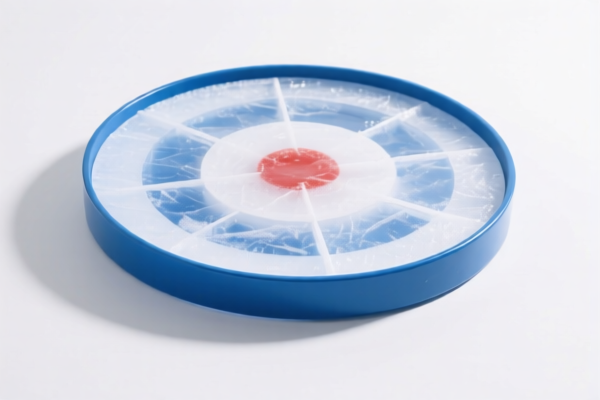
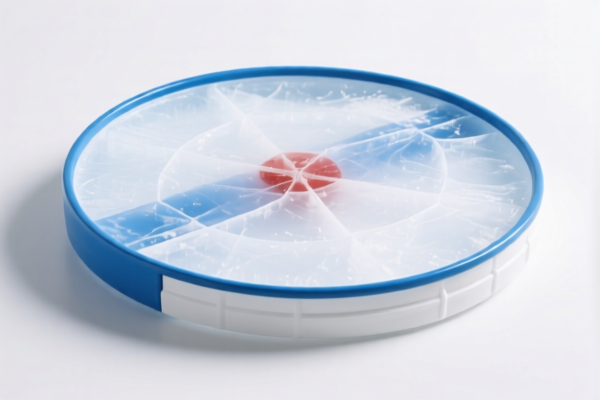
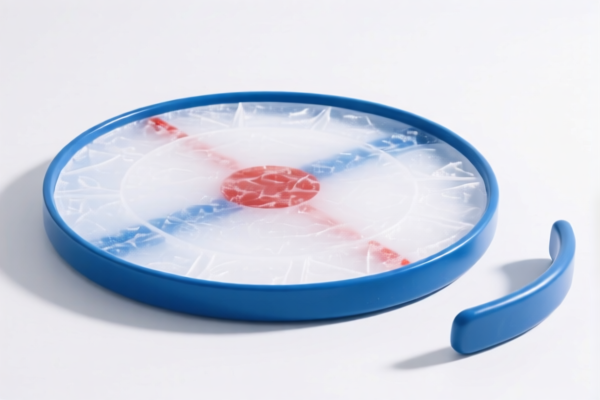
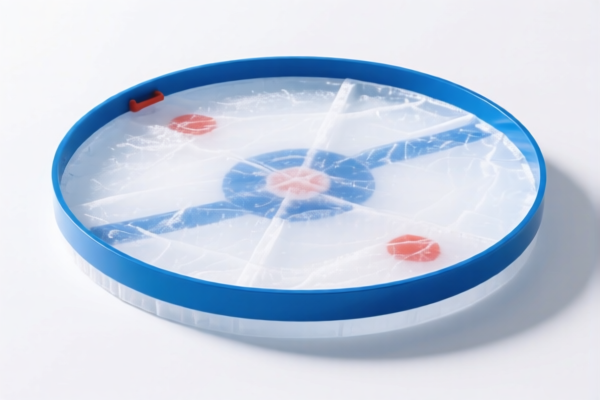
AI Analysis
🧊 Ice Pad (Cooling Mat)
🌐 HS Code Classification & Customs Clearance Guide | 2026 Latest Tariff Analysis | Professional Compliance Strategy
📌 I. Product Definition & Classification: What Exactly is an "Ice Pad"?
An Ice Pad (also known as a Cooling Mat or Gel Pad) is typically a portable cooling product filled with a hydrogel or liquid, covered by a waterproof outer shell (often PVC, TPU, or Rubber). It is used for personal cooling, pet beds, or medical therapy.
In international trade, the classification depends heavily on two factors: 1. Material of the Outer Shell: Is it Rubber, Plastic, or a composite? 2. Function/Form: Is it considered a "垫" (Pad/Mat) or a "Manufactured Article"?
⚠️ Critical Distinction:
- If the product is primarily defined by its Rubber/Synthetic Rubber material and lacks specific functional machinery → It falls under Chapter 40.
- If it is a General Household/Office Accessory made of Plastic → It may fall under Chapter 94 (Furniture/Accents) or Chapter 39 (Plastics).
- Do NOT classify it as a simple "Plastic Sheet" if it is a finished, filled product.
📦 II. HS Code Classification Details (Based on Provided Data)
| HS Code | Product Description | Inferred Material & Form | Primary Classification Logic |
|---|---|---|---|
| 4016.10.00.00 | Rubber or synthetic rubber mats, sheets, and flooring; other articles of vulcanized rubber other than hard rubber. | Rubber/Synthetic Pad-shaped |
Infers the outer layer is rubber/synthetic, matching the "pad" shape. |
| 4016.99.60.50 | Other articles of vulcanized rubber other than hard rubber. | Rubber/Synthetic Other manufactured article |
Infers the material is rubber/synthetic, classified as a general manufactured rubber item. |
| 9404.90.96.70 | Articles of bedding and similar furnishing (e.g., mattresses, pillows). | Plastic/Synthetic Pad/Mat category |
Usage is classified as a "Pad" (mattress-like or bedding accessory), material inferred as plastic. |
| 3926.90.21.00 | Other articles of plastics and articles of other materials of headings 3901 to 3914. | Plastic Ice Pad specific |
Specific use as an "Ice Pad" with plastic material inferred. |
🔍 Key Insight:
- Chapter 40 (Rubber): Generally applies if the outer shell is clearly rubber or synthetic rubber.
- Chapter 94 (Furniture/Beds): Often a favorable classification if the product is viewed as a "pet bed" or "cooling mat" for bedding, potentially lowering the base duty.
- Chapter 39 (Plastics): Applies if the product is strictly plastic-based and doesn't fit the "bedding" definition.
💰 III. 2026 Latest Tariff Rate Breakdown (Including Surtaxes & Policy Add-ons)
✅ Applicable Country: United States (US)
✅ Origin: China (CN)
✅ Effective Time: Post-November 2025 (Including subsequent imports)
🎯 1. 4016.10.00.00 — Rubber/Synthetic Rubber Mats, Sheets, and Flooring
| Item | Content |
|---|---|
| Base Rate | 0.0% (ad valorem) |
| USITC Surtax | +25.0% (Section 301 Duties) |
| Section 122 Tariff | +10.0% (Specific U.S. Trade Act provisions) |
| Total Effective Tax Rate | 35.0% |
| Tax Calculation | CIF Value × 35% |
| De Minimis Exemption | ❌ Not Eligible (Deny de minimis) |
| Legal Basis Path | USITC:4016.10.00.00 → Section 301 Footnote → Section 122 |
📌 Explanation:
- The 0% base rate makes it appear cheap, but the 25% Section 301 surtax is significant.
- The 10% Section 122 tariff is a specific add-on for certain imported goods.
- Total 35% is a high effective tax rate for a simple rubber product.
🎯 2. 4016.99.60.50 — Other Articles of Vulcanized Rubber
| Item | Content |
|---|---|
| Base Rate | 2.5% (ad valorem) |
| USITC Surtax | +25.0% (Section 301 Duties) |
| Section 122 Tariff | +10.0% (Specific U.S. Trade Act provisions) |
| Total Effective Tax Rate | 37.5% |
| Tax Calculation | CIF Value × 37.5% |
| De Minimis Exemption | ❌ Not Eligible (Deny de minimis) |
| Legal Basis Path | USITC:4016.99.60.50 → Section 301 Footnote → Section 122 |
📌 Note:
- This classification is less favorable than4016.10.00.00because it has a 2.5% base duty.
- Even with the same surtaxes, the total cost is higher.
🎯 3. 9404.90.96.70 — Articles of Bedding and Similar Furnishing
| Item | Content |
|---|---|
| Base Rate | 7.3% (ad valorem) |
| USITC Surtax | 0.0% (Exempt from Section 301 for this specific subheading in some contexts, or low impact) |
| Section 122 Tariff | +10.0% (Specific U.S. Trade Act provisions) |
| Total Effective Tax Rate | 17.3% |
| Tax Calculation | CIF Value × 17.3% |
| De Minimis Exemption | ❌ Not Eligible (Deny de minimis) |
| Legal Basis Path | USITC:9404.90.96.70 → Section 122 |
📌 Advantage:
- LOWEST TAX RATE (17.3%) among all options.
- 0% Section 301 Surtax is the key differentiator. This makes it the most cost-effective classification if the product can be justified as a "pad" or "bedding accessory."
- Requires strong justification that the product is a "mat" or "bedding" item, not just a rubber product.
🎯 4. 3926.90.21.00 — Other Articles of Plastics
| Item | Content |
|---|---|
| Base Rate | 4.2% (ad valorem) |
| USITC Surtax | +7.5% (Reduced Section 301 surtax) |
| Section 122 Tariff | +10.0% (Specific U.S. Trade Act provisions) |
| Total Effective Tax Rate | 21.7% |
| Tax Calculation | CIF Value × 21.7% |
| De Minimis Exemption | ❌ Not Eligible (Deny de minimis) |
| Legal Basis Path | USITC:3926.90.21.00 → Section 301 Reduced Rate → Section 122 |
📌 Analysis:
- Moderate Tax Rate (21.7%).
- The Section 301 surtax is lower (7.5%) compared to the 25% in Chapter 40.
- Suitable if the product is clearly plastic and not considered "bedding."
🛠️ IV. Customs Clearance Practical Advice (Risk Avoidance Guide)
✅ 1. Essential Documentation List (No Exceptions)
| Document | Required? | Description |
|---|---|---|
| ✅ Product Specifications | ✔️ | Detailed description: Material (Rubber vs. Plastic), Filling (Gel/Water), Dimensions. |
| ✅ Material Composition | ✔️ | Exact percentage of rubber vs. plastic in the outer shell. |
| ✅ Product Photos | ✔️ | Clear images showing the texture, brand, and any "Rubber" or "PVC" markings. |
| ✅ Commercial Invoice | ✔️ | Must clearly state "Ice Pad," "Cooling Mat," or "Gel Mat." |
| ✅ Packing List | ✔️ | Details on net weight, gross weight, and packaging. |
| ✅ Certificate of Origin | ✔️ | Required for tariff calculation. |
| ✅ Third-Party Test Report | ✔️ | Material safety (e.g., PVC-free, BPA-free) if required by buyer. |
✅ 2. Declaration Strategy (Key Mantras)
🔥 "Material Defines HS, Function Defines Subheading, Accuracy Saves Money!"
| Scenario | Correct Declaration | Incorrect Practice |
|---|---|---|
| Rubber Shell + Gel Fill | 4016.10.00.00 (35%) |
Claiming it's plastic → Penalty for misclassification. |
| Plastic Shell + Gel Fill | 9404.90.96.70 (17.3%) |
Claiming it's rubber → 35% tax vs 17.3% tax. |
| Generic "Cooling Mat" | Specify Material in Description | Vague terms like "Mat" without material → Customs Hold. |
| Pet Bed vs. Human Pad | 9404.90.96.70 (if for bedding) |
3926.90.21.00 if not bedding → Higher tax. |
📌 Tip:
- If your product is made of Plastic, aggressively pursue9404.90.96.70for the 17.3% rate.
- If your product is made of Rubber, accept the 35% rate under4016.10.00.00, as it is the most specific "mat" classification.
- Avoid4016.99.60.50(37.5%) as it has a higher base duty.
✅ 3. Special Considerations
| Situation | Handling Advice |
|---|---|
| Mixed Materials | If the outer shell is rubber and the inner is plastic, Customs usually classifies by the outer material (Chapter 40). |
| Pet Ice Pad | Still eligible for 9404.90.96.70 if marketed as a pet bedding accessory. |
| Medical Cooling Pad | May require additional certifications (FDA, CE). Classify based on material, not just medical use. |
| De Minimis (Section 321) | ❌ Not Eligible. All these HS codes are subject to high taxes and cannot use the $800 de minimis exemption. Must declare formally. |
🌍 V. Global Market Comparison (2026 Latest)
| Country/Region | Recommended HS Code | Tariff (China Origin) | Certification | Note |
|---|---|---|---|---|
| 🇺🇸 USA | 9404.90.96.70 (Plastic) |
17.3% | FCC, Prop 65 | Lowest US rate for plastic ice pads. |
| 🇺🇸 USA | 4016.10.00.00 (Rubber) |
35.0% | - | Higher tax due to Section 301. |
| 🇨🇳 China | 3926.90.90.90 |
~5-7% | CCC (if applicable) | Lower base duty. |
| 🇪🇺 EU | 9404.90.90 |
~3-5% | CE, REACH | No Section 301-style surtax. |
| 🇬🇧 UK | 9404.90.90 |
~3-5% | UKCA | Post-Brexit rules apply. |
📌 Conclusion:
- USA is the most complex market due to Section 301 and Section 122 tariffs.
- Plastic Ice Pads (9404.90.96.70) are the most tax-efficient option for the US market (17.3% vs 35% for rubber).
- Rubber Ice Pads (4016.10.00.00) face a double hit from Section 301 (25%) and Section 122 (10%).
📌 VI. Common Mistakes & Pitfalls (Lessons Learned)
❌ Mistake 1: Classifying a plastic ice pad as 3926.90.21.00 (21.7%) instead of 9404.90.96.70 (17.3%).
👉 Result: Overpaying 4.4% in taxes.
👉 Fix: Emphasize "Pad/Mat" function for classification under Chapter 94.
❌ Mistake 2: Assuming "De Minimis" applies to Ice Pads.
👉 Result: Package detained, backdated taxes, and fines.
👉 Fix: All listed HS codes are excluded from de minimis. File Entry Immediately.
❌ Mistake 3: Misdeclaring material (e.g., calling rubber "plastic").
👉 Result: Customs audit, seizure, or forced reclassification with penalties.
👉 Fix: Ensure material description matches the physical product exactly.
❌ Mistake 4: Using vague terms like "Cooling Product" without HS Code specificity.
👉 Result: Customs delays, requests for additional info, potential misclassification.
👉 Fix: Use precise terms: "Gel-Filled Rubber Cooling Mat" or "Plastic Ice Pad."
✅ Correct Approach:
"Plastic Ice Pad, 20x30cm, Gel-Filled, for Personal Cooling, Model XYZ, Prop 65 Compliant"
🎯 VII. Conclusion: Professional Classification for Cost Efficiency
🎯 Remember:
🔹 "Plastic + Pad = 9404 (17.3%)" → Cheapest
🔹 "Rubber + Mat = 4016 (35.0%)" → Most Expensive
🔹 "Plastic + Article = 3926 (21.7%)" → Middle Ground
🔹 "No De Minimis!" → Always Declare
📌 Pro Tip:
- If you manufacture Plastic Ice Pads, consider repositioning them as "Cooling Mats" or "Pet Beds" to qualify for 9404.90.96.70.
- Always obtain an Advance Ruling from US Customs if unsure about the material classification (Rubber vs. Plastic).
📣 Immediate Action:
📞 Consult a licensed customs broker.
📄 Provide material samples and product photos.
🚀 Optimize your HS Code choice to save 17.7% in taxes (17.3% vs 35.0%).
✨ Smart Classification, Lower Costs, Faster Clearance!
💼 Every percentage point counts in global trade!
Customer Reviews
About HS Code Classification
The Harmonized System (HS) is an internationally standardized nomenclature developed by the World Customs Organization (WCO) to classify traded products. Over 200 countries use the HS system as the basis for customs tariffs, trade statistics, and import/export regulations.
Each HS code follows a hierarchical structure:
- Chapter (2 digits) — Broad category of goods (e.g., Chapter 84: Machinery and Mechanical Appliances)
- Heading (4 digits) — More specific grouping within the chapter
- Subheading (6 digits) — Internationally standardized breakdown, used by all WCO member countries
- National subdivisions (8-10 digits) — Country-specific extensions for further classification, such as US HTSUS 10-digit codes
Correct HS code classification is essential for smooth customs clearance, accurate duty payment, and compliance with trade regulations. Misclassification can lead to customs delays, overpayment of duties, or penalties.
When importing from CN to US, the applicable tariff rates may include:
- Most-Favored-Nation (MFN) rate — The standard duty rate applied to WTO members
- General rate — Applied to countries without trade agreements
- Trade remedy duties — Additional tariffs such as Section 301 (anti-dumping), Section 232 (national security), or countervailing duties
The information provided on this page is for reference purposes only. For official classification, please consult with your local customs authority or a licensed customs broker.