Impregnated/Covered Paper Packaging Base Paper
CN → US| HS Code | Tariff Rate | Origin | Destination | Doc |
|---|---|---|---|---|
| 4811512040 | 35.0% | CN | US | Official Doc |
| 4811512010 | 35.0% | CN | US | Official Doc |
Product Images
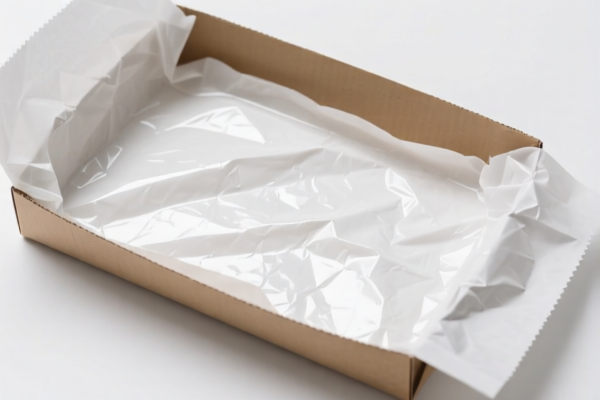
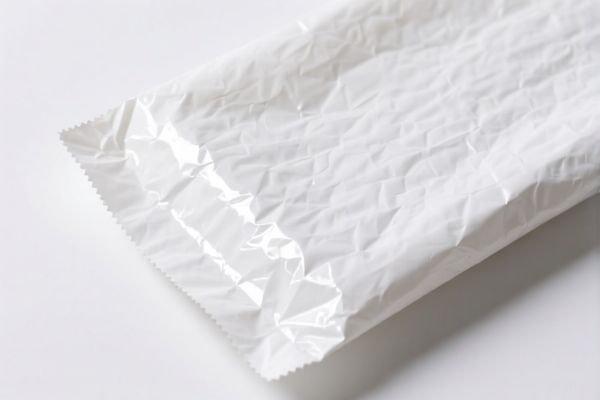

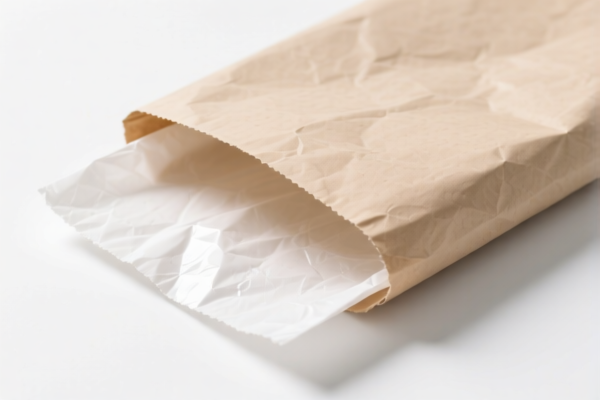
AI Analysis
📦 Impregnated/Covered Paper Packaging Base Paper
🌐 HS Code Reference & Clearance Guide | 2026 Latest Tariff Analysis | Professional Customs Strategy
📌 I. Product Definition & Classification: What is "Packaging Base Paper"?
Impregnated or covered paper used as a base for packaging is a specialized intermediate material. It is not a finished carton or box, but the structural "skin" or core that will later be converted into milk cartons, beverage containers, or other food-grade packaging.
In international trade, the classification depends strictly on: 1. Material: Paper or paperboard. 2. Treatment: Coated, impregnated, or covered (typically with plastics like PE to provide moisture/air barrier properties). 3. Form: Rolls or sheets. 4. Weight & Thickness: Specific thresholds (e.g., >150 g/m²) and dimensions.
⚠️ Key Distinction:
- If the product is white/bleached and intended for food/beverage containers (like milk cartons), it falls under 4811.51.20.10.
- If it is white/bleached and intended for general packaging (boxes, bags), it falls under 4811.51.20.40.
- Do not classify as "finished cartons" (Heading 4804/4805) or "printing paper" (Heading 4802/4803).
📋 II. HS Code Classification Details (2026 Latest Tariff Alignment)
| HS Code | Product Description | Application Scenario | Key Characteristics |
|---|---|---|---|
4811.51.20.10 |
Base stock for milk cartons and other beverage containers | Dairy packaging, juice cartons, UHT milk boxes | Bleached, >150 g/m², Plastic-coated/impregnated, specific thickness/dimensions |
4811.51.20.40 |
Base stock for general packaging | Food boxes, cosmetic boxes, rigid boxes, non-beverage containers | Bleached, >150 g/m², Plastic-coated/impregnated, specific thickness/dimensions |
🔍 Critical Note:
- Both codes refer to Heading 4811 (Paper treated with plastics).
- The differentiation is purely based on the intended end-use:
- "Beverage Container" →...10
- "Other Packaging" →...40
- Misclassification Risk: If you declare "Milk Carton Paper" but use it for cosmetic boxes, or vice versa, customs may reclassify and impose penalties.
💰 III. 2026 Tariff Rate Breakdown (US Import from China)
✅ Applicable Country: United States (US)
✅ Origin: China (CN)
✅ Effective Date: Current rates apply (Note: Verify if any new exemptions apply to your specific supplier).
🎯 1. 4811.51.20.10 —— Base Stock for Milk/Beverage Containers
| Item | Detail |
|---|---|
| Base Tariff | 0.0% |
| Section 301 Additional Duty | 25.0% |
| Total Tariff Rate | 25.0% |
| Calculation Basis | CIF Value × 25% |
| De Minimis Exemption | ❌ Not Applicable |
| Legal Reference | USITC HTS 4811.51.20.10 + Section 301 Footnote |
📌 Explanation:
- The "Base Tariff" for this specific subheading is 0% under normal trade relations.
- However, due to Section 301 tariffs on Chinese imports, an additional 25% is levied.
- Total Cost Impact: For every $1,000 of goods, you pay $250 in tariffs.
🎯 2. 4811.51.20.40 —— Base Stock for General Packaging
| Item | Detail |
|---|---|
| Base Tariff | 0.0% |
| Section 301 Additional Duty | 25.0% |
| Total Tariff Rate | 25.0% |
| Calculation Basis | CIF Value × 25% |
| De Minimis Exemption | ❌ Not Applicable |
| Legal Reference | USITC HTS 4811.51.20.40 + Section 301 Footnote |
📌 Explanation:
- Identical tax structure to...10.
- Both are classified under Chapter 48, which generally faces heavy scrutiny and tariffs from China.
🛠️ IV. Clearance Operational Advice (Practical Pitfall Guide)
✅ 1. Documentation Checklist (Non-Negotiable)
| Document | Required? | Purpose |
|---|---|---|
| Product Specification Sheet | ✔️ | Must specify: Bleached status, Weight (g/m²), Thickness (mm), Plastic type/coating weight, and Intended End-Use |
| Commercial Invoice | ✔️ | Must clearly state: "Paper base for packaging" and specify Milk Carton vs. General Packaging |
| Packing List | ✔️ | Must show roll dimensions or sheet sizes to verify compliance with "width >15cm" rule |
| Certificate of Origin (CO) | ✔️ | To confirm China origin (triggers 25% tariff) |
| Declaration of Use | ✔️ | Crucial: A signed statement specifying if the paper is for beverage containers (...10) or other packaging (...40) |
✅ 2. Declaration Tips (Key Mantra)
🔥 “Be Specific, Declare Use, Avoid ‘Paper’ Alone!”
| Situation | Correct Declaration | Incorrect Declaration |
|---|---|---|
| For Milk Cartons | "Bleached Plastic-Coated Paper Base, >150g/m², for Milk Cartons" | "Paper Roll" or "Packaging Paper" |
| For Cosmetic Boxes | "Bleached Plastic-Coated Paper Base, >150g/m², for General Packaging" | "Carton Board" |
| Finished Cartons | Do NOT use HS 4811. Use Heading 4804/4805 instead. | Misdeclaring finished boxes as "base paper" to lower tariffs (High Risk!) |
⚠️ Warning:
- If you declare...10(Beverage) but the goods are used for non-beverage packaging, customs may reclassify to...40(same rate, but administrative delay).
- If you declare...40but it’s actually for beverage containers, no rate difference, but consistency in supply chain documentation is required for audits.
✅ 3. Special Cases & Solutions
| Scenario | Advice |
|---|---|
| OEM Production | Provide end-user purchase orders showing the final product (e.g., "Milk Carton Manufacturer") to justify ...10. |
| Mixed Rolls | If a single roll contains layers for both uses, declare the primary function. If mixed shipments, split declarations. |
| Thickness Dispute | Ensure thickness is ≥0.3 mm for the specific subheadings in 4811.51.20. If <0.3 mm, it may fall under different subheadings with different rates. |
| Unbleached Paper | If the paper is not bleached, it does NOT fall under 4811.51.20.xx. It may fall under 4811.59.xx with different tariffs. Check bleaching status carefully! |
🌍 V. Global Market Clearance Comparison (2026)
| Region | Recommended HS Code | Tariff Rate (China Origin) | Key Requirement |
|---|---|---|---|
| 🇺🇸 USA | 4811.51.20.10 / .40 |
25.0% (Total) | Section 301 applies. Precise use declaration required. |
| 🇨🇳 China | 4811.51.20.10 / .40 |
~5-6% | Standard import duty. No additional anti-dumping usually. |
| 🇪🇺 EU | 4811.51 |
~5.0-6.0% | CE marking not required for raw material, but REACH compliance for plastics needed. |
| 🇨🇦 Canada | 4811.51.20 |
MFN Rate ~5-6% | Free trade agreements may reduce rates if from CUSMA countries. |
📌 Conclusion:
- The US market is the most challenging due to the 25% Section 301 tariff.
- EU/Canada have lower tariffs but stricter environmental/plastic regulations (REACH).
- Cost Optimization: Consider sourcing from non-China countries (e.g., Vietnam, Brazil) if eligible for preferential rates to avoid the 25% US surcharge.
📌 VI. Common Errors & Pitfalls (Lessons Learned)
❌ Error 1: Declaring as "Paper" (General)
👉 Consequence: Customs reclassifies to 4811.51.20.xx and applies 25% tariff + penalties for misdeclaration.
❌ Error 2: Confusing "Base Paper" with "Finished Cartons"
👉 Consequence: Finished cartons may have different tariffs. If you declare base paper but ship finished boxes, cargo will be detained.
❌ Error 3: Ignoring Bleaching Status
👉 Consequence: If the paper is unbleached (kraft), it falls under 4811.59 (Other), not 4811.51 (Bleached). This changes the HS code entirely.
❌ Error 4: Vague Description on Invoice
👉 Consequence: "Paper for Packaging" is too vague. Must specify "Bleached, Plastic-Coated, >150g/m², for [Specific Use]".
✅ Correct Declaration Example:
"BLEACHED PAPER BASE, PLASTIC-IMPREGNATED, WEIGHT 160G/M², ROLLS WIDTH 120CM, THICKNESS 0.35MM, FOR MILK CARTON MANUFACTURE. HS 4811.51.20.10."
🎯 VII. Conclusion: Professional Declaration Saves Money!
🎯 Remember the Mantra:
🔹 "Bleached & Coated >150g/m² → Look at 4811.51.20"
🔹 "Milk Carton → .10 | Other Packaging → .40"
🔹 "25% Tariff Lurks → Be Precise!"
📌 Pro Tip:
- If your volume is high, consider applying for a Section 301 Exclusion if available (check USTR website for current exclusions).
- Always keep samples and test reports (showing bleaching, weight, coating) for customs inspection.
- Verify if your supplier can provide Non-Preferential Origin Certificate to prove it’s not from a third country evading tariffs.
📣 Immediate Action:
📞 Consult your customs broker with Product Specs + Intended End-Use.
📝 Declare Exactly: "Bleached, >150g/m², Plastic-Coated Paper Base for [Milk Cartons/Packaging]".
🚀 Clear Customs Smoothly, Control Costs, Avoid Delays!
✨ Precision in Classification is Key to Profitability!
💼 Every Dollar in Tariffs Counts!
Customer Reviews
About HS Code Classification
The Harmonized System (HS) is an internationally standardized nomenclature developed by the World Customs Organization (WCO) to classify traded products. Over 200 countries use the HS system as the basis for customs tariffs, trade statistics, and import/export regulations.
Each HS code follows a hierarchical structure:
- Chapter (2 digits) — Broad category of goods (e.g., Chapter 84: Machinery and Mechanical Appliances)
- Heading (4 digits) — More specific grouping within the chapter
- Subheading (6 digits) — Internationally standardized breakdown, used by all WCO member countries
- National subdivisions (8-10 digits) — Country-specific extensions for further classification, such as US HTSUS 10-digit codes
Correct HS code classification is essential for smooth customs clearance, accurate duty payment, and compliance with trade regulations. Misclassification can lead to customs delays, overpayment of duties, or penalties.
When importing from CN to US, the applicable tariff rates may include:
- Most-Favored-Nation (MFN) rate — The standard duty rate applied to WTO members
- General rate — Applied to countries without trade agreements
- Trade remedy duties — Additional tariffs such as Section 301 (anti-dumping), Section 232 (national security), or countervailing duties
The information provided on this page is for reference purposes only. For official classification, please consult with your local customs authority or a licensed customs broker.