Industrial Brake Fluid
CN → US| HS Code | Tariff Rate | Origin | Destination | Doc |
|---|---|---|---|---|
| 3819000090 | 16.5% | CN | US | Official Doc |
| 3403191000 | 35.2% | CN | US | Official Doc |
| 3819000010 | 41.5% | CN | US | Official Doc |
| 3824992900 | 41.5% | CN | US | Official Doc |
| 3403191000 | 35.2% | CN | US | Official Doc |
Product Images
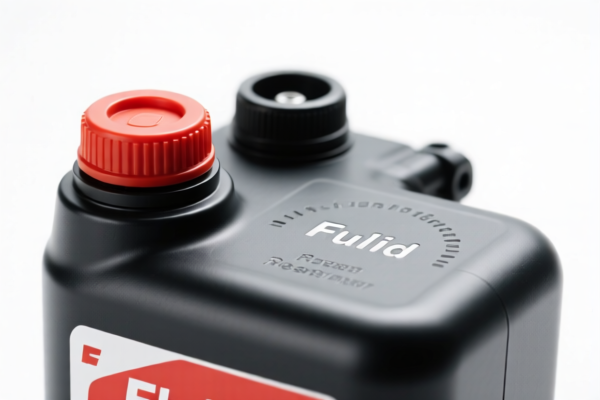
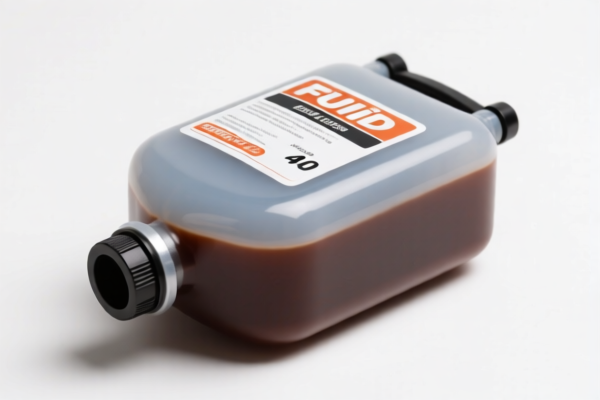
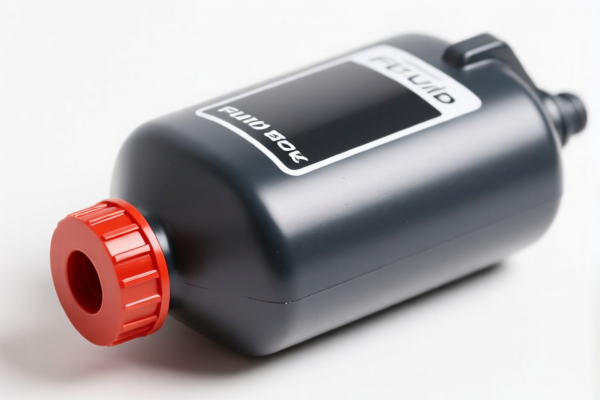

AI Analysis
🚛 Industrial Brake Fluid (Hydraulic Brake Fluid)
🌐 HS Code Reference & Customs Clearance Guide | 2026 Latest Tariff Analysis | Professional Clearance Strategy
📌 I. Product Definition & Classification: Do You Really Understand "Brake Fluid"?
Industrial brake fluid, specifically hydraulic brake fluid, is a specialized non-compressible fluid used to transmit pressure within a hydraulic braking system. It is critical for the safe operation of commercial vehicles, heavy machinery, and industrial equipment.
In international trade, the classification hinges on two main factors: 1. Primary Function: Is it acting as a hydraulic transmission fluid (classified under Chapter 38) or as a lubricating preparation (classified under Chapter 34)? 2. Chemical Composition: Is it primarily petroleum-based (mineral oil) or synthetic (glycol/ester-based)?
⚠️ Key Distinction Point:
- If the product is explicitly identified as "Hydraulic Brake Fluid" intended for pressure transmission → It typically falls under Chapter 38 (Miscellaneous Chemical Products).
- If the product is classified as a lubricant containing petroleum oil/mineral oil as its main component → It may fall under Chapter 34 (Lubricating Preparations).
- Crucial: The specific HS code determines the tax burden significantly due to "Section 301" and "122 Clause" tariffs.
📦 II. HS Code Classification Details (2026 Latest Tariff Authoritative Comparison)
Based on the available data, there are 4 distinct HS Code possibilities for "Industrial Brake Fluid" (including Commercial Vehicle Brake Fluid). Each carries a different tax implication.
| HS Code | Product Description | Application Scenario | Tax Implication |
|---|---|---|---|
3819.00.00.10 |
Hydraulic Brake Fluid (Specific Match) | Direct match for brake fluid; hydraulic transmission property. Highest Tax Risk. | 41.5% |
3819.00.00.90 |
Hydraulic Brake Fluid (General) | Matches "Hydraulic Brake Fluid" usage; hydraulic transmission fluid attribute. Lowest Tax Risk. | 16.5% |
3403.19.10.00 |
Lubricating Preparations (Petroleum/Mineral Oil) | Inferred as liquid lubricant/containing petroleum/mineral oil. Medium Tax Risk. | 35.2% |
3824.99.29.00 |
Chemical Preparations | Classified as chemical preparation (glycol/glycerol/silane-based). No material conflict. High Tax Risk. | 41.5% |
🔍 Key Insight:
-3819.00.00.10and3824.99.29.00both carry the highest total tax rate (41.5%). -3819.00.00.90offers the lowest total tax rate (16.5%) and is explicitly defined as "Hydraulic Brake Fluid." -3403.19.10.00assumes a lubricating/petroleum-based nature, resulting in a 35.2% rate.
💰 III. 2026 Latest Tariff Rate Details (Including Surcharges & Policy Add-ons)
✅ Applicable Country: United States (US)
✅ Origin: China (CN)
✅ Effective Time: 2025年11月10日起 (From Nov 10, 2025)
🎯 1. 3819.00.00.90 —— Hydraulic Brake Fluid (Recommended/Lowest Risk)
| Item | Content |
|---|---|
| Basic Tariff | 6.5% (Ad Valorem) |
| Additional Tariff (Section 301/USITC) | +0.0% (No specific 25% surcharge listed for this sub-code in data) |
| 122 Clause Tariff | +10% (Targeting China/HK products) |
| Total Tax Rate | 16.5% |
| Tax Calculation | CIF Value × 16.5% |
| De Minimis Exemption? | ❌ No (Deny De Minimis) |
| Legal Basis Path | Basic Tariff 6.5% + 122 Clause 10% |
📌 Explanation:
- This code explicitly matches "Hydraulic Brake Fluid." - Base: 6.5%. - 122 Clause: +10%. - Total: 16.5%. This is the most cost-effective classification if the product is strictly defined as hydraulic brake fluid without petroleum lubricant characteristics being dominant.
🎯 2. 3403.19.10.00 —— Lubricating Preparations (Petroleum/Mineral Oil Based)
| Item | Content |
|---|---|
| Basic Tariff | 0.2% |
| Additional Tariff (Section 301/USITC) | +25.0% (High surcharge applied) |
| 122 Clause Tariff | +10% |
| Total Tax Rate | 35.2% |
| Tax Calculation | CIF Value × 35.2% |
| De Minimis Exemption? | ❌ No |
| Legal Basis Path | Basic 0.2% + USITC 25% + 122 Clause 10% |
📌 Explanation:
- This classification assumes the brake fluid is a lubricant containing petroleum oil or mineral oil. - Base: 0.2%. - Section 301 Surcharge: +25%. - 122 Clause: +10%. - Total: 35.2%. This is significantly higher than3819.00.00.90.
🎯 3. 3819.00.00.10 —— Hydraulic Brake Fluid (Specific/High Risk)
| Item | Content |
|---|---|
| Basic Tariff | 6.5% |
| Additional Tariff (Section 301/USITC) | +25.0% |
| 122 Clause Tariff | +10% |
| Total Tax Rate | 41.5% |
| Tax Calculation | CIF Value × 41.5% |
| De Minimis Exemption? | ❌ No |
| Legal Basis Path | Basic 6.5% + USITC 25% + 122 Clause 10% |
📌 Explanation:
- Although it explicitly matches "Hydraulic Brake Fluid," this sub-code attracts the full 25% Section 301 surcharge. - Total: 41.5%. This is the highest tax bracket for this product.
🎯 4. 3824.99.29.00 —— Chemical Preparations (Glycol/Silane Based)
| Item | Content |
|---|---|
| Basic Tariff | 6.5% |
| Additional Tariff (Section 301/USITC) | +25.0% |
| 122 Clause Tariff | +10% |
| Total Tax Rate | 41.5% |
| Tax Calculation | CIF Value × 41.5% |
| De Minimis Exemption? | ❌ No |
| Legal Basis Path | Basic 6.5% + USITC 25% + 122 Clause 10% |
📌 Explanation:
- Used if the brake fluid is classified as a general chemical preparation (e.g., based on glycol, glycerin, or silanes) rather than hydraulic fluid or lubricant. - Total: 41.5%. Same high tax burden as3819.00.00.10.
🛠️ IV. Customs Clearance Practical Advice (Battle-Tested Pitfall Avoidance)
✅ 1. Document Checklist (Mandatory)
| Document | Required | Description |
|---|---|---|
| ✅ Product Specification Sheet | ✔️ | Must specify: Type (DOT 3/4/5.1/6), Base (Glycol/Ester/Silicone), Viscosity, Flash Point. |
| ✅ MSDS (Material Safety Data Sheet) | ✔️ | Critical for chemical classification. Confirms no petroleum oil content (if claiming 3819.00.00.90). |
| ✅ Commercial Invoice | ✔️ | Clearly state: "Hydraulic Brake Fluid for Industrial Vehicles." Avoid vague terms like "Lubricant." |
| ✅ Certificate of Origin (CO) | ✔️ | Required for origin determination (China vs. other). |
| ✅ Packing List | ✔️ | Detail net/gross weight and packaging type. |
| ✅ Third-Party Test Report | ✔️ | ISO, ASTM, or DOT certification to prove product quality and composition. |
✅ 2. Declaration Strategy (Key Mantras)
🔥 "Declare as Hydraulic Fluid, Not Lubricant; Avoid Petroleum Basis to Lower Tax!"
| Scenario | Correct Declaration | Incorrect Declaration | Tax Consequence |
|---|---|---|---|
| Glycol-based Brake Fluid | 3819.00.00.90 (Hydraulic Brake Fluid) |
3403.19.10.00 (Lubricant) |
Save 18.7% (16.5% vs 35.2%) |
| Mineral Oil-based Brake Fluid | 3403.19.10.00 (Lubricant) |
3819.00.00.90 (Hydraulic Fluid) |
Pay 35.2% (Misclassification risk) |
| General Chemical Brake Fluid | 3819.00.00.10 or 3824.99.29.00 |
N/A | Pay 41.5% (High risk) |
📌 Critical Warning:
- If you declare as3819.00.00.90but the MSDS shows high petroleum/mineral oil content, customs may reclassify to3403.19.10.00(35.2%) or even penalize for misdeclaration. -3819.00.00.10has a higher risk of the 25% surcharge compared to3819.00.00.90. Always verify if the sub-code.90is applicable for general hydraulic brake fluids.
✅ 3. Special Case Handling
| Situation | Handling Advice |
|---|---|
| OEM Custom Brake Fluid | Provide client order + chemical formula to prove it is not a standard lubricant. |
| Silicone-Based Brake Fluid | Ensure MSDS clearly states "Silicone" to avoid classification as petroleum-based (3403.19.10.00). |
| Mixed Packaging (Brake Fluid + Wrenches) | Declare as Main Product. Do not split unless necessary. Brake fluid is the primary value/function. |
| Small Sample Shipments | ❌ Not Eligible for De Minimis. All shipments >$800 are subject to these tariffs. |
🌍 V. Global Market Comparison (2026 Latest)
| Country/Region | Recommended HS Code | Total Tax (China Origin) | Certification Required | Notes |
|---|---|---|---|---|
| 🇺🇸 USA | 3819.00.00.90 |
16.5% | DOT, FMVSS | Lowest US Tax. Avoid 3819.00.00.10 (41.5%). |
| 🇺🇸 USA | 3403.19.10.00 |
35.2% | DOT, FMVSS | Higher tax if petroleum-based. |
| 🇨🇳 China | 3819.00.00.90 |
~3-6% | CCC (if applicable) | No Section 301 or 122 Clause. |
| 🇪🇺 EU | 3819.00.00 |
0-4% | ECE R17/R57 | No major surcharges. |
| 🇦🇺 Australia | 3819.00.00 |
5% | ADR Certification | Moderate tax. |
📌 Conclusion:
- USA is the most challenging market due to 122 Clause (10%) and potential Section 301 (25%) tariffs. - Optimal Strategy: Aim for3819.00.00.90(16.5%) by ensuring the product is documented as Hydraulic Brake Fluid and not primarily a petroleum lubricant.
📌 VI. Common Errors & Pitfalls (Lessons Learned)
❌ Error 1: Declaring "Brake Fluid" as "Lubricant" (3403.19.10.00) when it is glycol-based.
👉 Result: Unnecessary 35.2% tax instead of 16.5%.
👉 Fix: Check chemical composition. If no petroleum oil, use Chapter 38.
❌ Error 2: Using 3819.00.00.10 without verifying surcharge applicability.
👉 Result: 41.5% tax due to 25% Section 301 surcharge.
👉 Fix: Verify if 3819.00.00.90 is available and applicable. It has 0% Section 301 surcharge in the provided data.
❌ Error 3: Ignoring the 122 Clause (10%).
👉 Result: Underestimating total cost by 10%.
👉 Fix: All China-origin shipments are subject to 122 Clause. Factor this into pricing.
❌ Error 4: Declaring as "Chemical Product" (3824.99.29.00) without specific reason.
👉 Result: 41.5% tax + potential compliance issues.
👉 Fix: Be specific. "Hydraulic Brake Fluid" is more accurate than "Chemical Preparation."
✅ Correct Declaration Example:
"HYDRAULIC BRAKE FLUID, DOT 3, GLYCOL-BASED, NON-CORROSIVE, FOR INDUSTRIAL VEHICLES, MODEL XYZ, MADE IN CHINA"
🎯 VII. Conclusion: Precise Classification, Cost Savings, Smooth Clearance!
🎯 Remember the Mantra:
🔹 "Hydraulic Fluid, Not Lubricant; 16.5% is the Goal."
🔹 "Avoid .10 and .29 Codes; They Hit You with 41.5%!"
🔹 "122 Clause is Always 10%; Plan for It!"
📌 Pro Tip:
- If your brake fluid is originally from Vietnam, Thailand, or Malaysia, you may exempt from Section 301 and 122 Clause tariffs, reducing tax to 0-6.5%.
- Consider Advance Ruling from US Customs (CBP) if importing large volumes, to lock in the 16.5% rate for 3819.00.00.90.
📣 Take Action Now:
📞 Consult a licensed customs broker + Provide MSDS + Verify HS Code
3819.00.00.90eligibility.
🚀 Ensure your brake fluid clears customs smoothly, minimizes costs, and maximizes profit!
✨ Professional Clearance Starts with Accurate Classification!
💼 Every cent of tax savings counts in the chemical trade!
Customer Reviews
About HS Code Classification
The Harmonized System (HS) is an internationally standardized nomenclature developed by the World Customs Organization (WCO) to classify traded products. Over 200 countries use the HS system as the basis for customs tariffs, trade statistics, and import/export regulations.
Each HS code follows a hierarchical structure:
- Chapter (2 digits) — Broad category of goods (e.g., Chapter 84: Machinery and Mechanical Appliances)
- Heading (4 digits) — More specific grouping within the chapter
- Subheading (6 digits) — Internationally standardized breakdown, used by all WCO member countries
- National subdivisions (8-10 digits) — Country-specific extensions for further classification, such as US HTSUS 10-digit codes
Correct HS code classification is essential for smooth customs clearance, accurate duty payment, and compliance with trade regulations. Misclassification can lead to customs delays, overpayment of duties, or penalties.
When importing from CN to US, the applicable tariff rates may include:
- Most-Favored-Nation (MFN) rate — The standard duty rate applied to WTO members
- General rate — Applied to countries without trade agreements
- Trade remedy duties — Additional tariffs such as Section 301 (anti-dumping), Section 232 (national security), or countervailing duties
The information provided on this page is for reference purposes only. For official classification, please consult with your local customs authority or a licensed customs broker.