Industrial Grade Bleached Softwood Sulfate Pulp
CN → US| HS Code | Tariff Rate | Origin | Destination | Doc |
|---|---|---|---|---|
| 4703210040 | 35.0% | CN | US | Official Doc |
| 4703210020 | 35.0% | CN | US | Official Doc |
Product Images
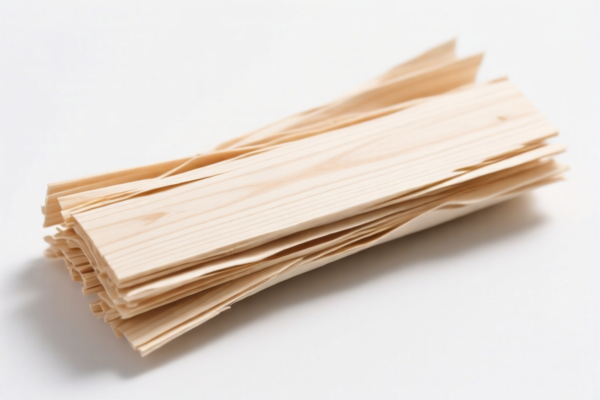
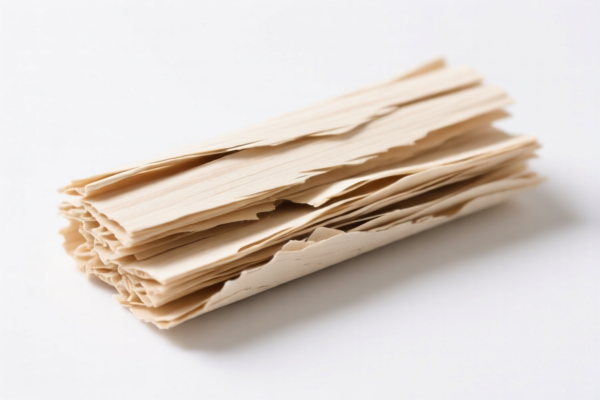
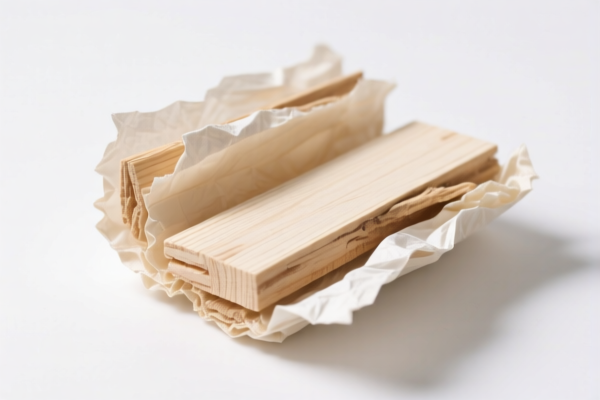
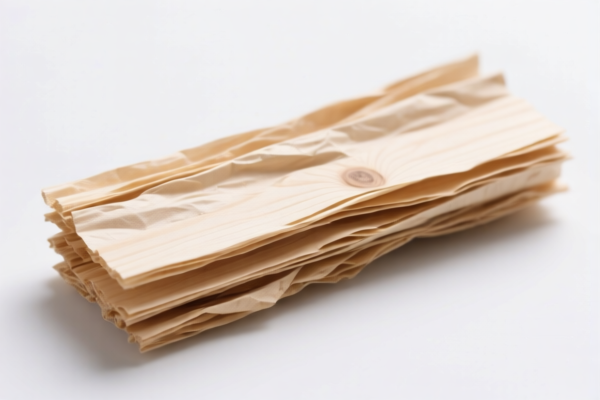
AI Analysis
🌲 Chemical Woodpulp, Soda or Sulfate, Other Than Dissolving Grades: Semibleached or Bleached — Coniferous (Industrial Grade)
🌐 HS Code Reference & Customs Clearance Guide | 2026 Latest Tariff Analysis | Professional通关 Strategy
📌 I. Product Definition & Classification: What Exactly Is "Bleached Softwood Sulfate Pulp"?
Chemical Woodpulp, specifically Sulfate (Kraft) Pulp derived from Coniferous (Softwood) trees, is the backbone of high-strength paper, cardboard, and tissue production. In international trade, the classification hinges strictly on two factors: 1. Chemical Process: Soda or Sulfate (Kraft) method. 2. Degree of Bleaching: Semibleached vs. Bleached.
⚠️ Key Distinction:
- "Dissolving Grades" are excluded from this section entirely (they fall under HS 4706 or specific dissolving pulp codes).
- "Coniferous" refers to softwoods (pine, spruce, fir), which provide long fibers for strength.
- "Bleached" vs. "Semibleached": This is the critical differentiator for HS Code selection and, consequently, tariff application.
📦 II. HS Code Classification Details (Based on Provided Data)
| HS Code | Product Description | Status | Fiber Type |
|---|---|---|---|
4703.21.00.40 |
Chemical woodpulp, soda or sulfate, other than dissolving grades: Semibleached or bleached: Coniferous Bleached | ✅ Bleached | Coniferous (Softwood) |
4703.21.00.20 |
Chemical woodpulp, soda or sulfate, other than dissolving grades: Semibleached or bleached: Coniferous Semibleached | ✅ Semibleached | Coniferous (Softwood) |
🔍 Critical Clarification:
- Both codes fall under the broader category of "Semibleached or Bleached". The last two digits distinguish the final product state.
- "Bleached" (.40): The pulp has undergone further chemical bleaching to achieve high brightness (whiteness).
- "Semibleached" (.20): The pulp has been partially bleached (often via oxygen delignification) but retains more lignin than fully bleached pulp. It is typically used for stronger, less bright papers.
- Note: The user input "Industrial Grade Bleached" specifically points to HS Code 4703.21.00.40.
💰 III. 2026 Latest Tariff Rate Breakdown (Strictly Based on Provided Data)
✅ Applicable Country: United States (US)
✅ Origin: Implied China (CN) based on tax structure in data
✅ Effective Date: Current tariff schedule
🎯 1. 4703.21.00.40 —— Coniferous Bleached Sulfate Pulp (The Target Code)
| Item | Content |
|---|---|
| Base Tariff Rate | 0.0% (ad valorem) |
| Additional Tariff (Section 301) | +25.0% |
| Total Tax Rate | 25.0% |
| Tax Calculation | CIF Value × 25% |
| De Minimis Exemption | ❌ Not Applicable (Section 301 tariffs apply regardless of value) |
| Legal Basis | HTSUS 4703.21.00.40 |
📌 Explanation:
- The base rate is 0%, meaning standard MFN (Most Favored Nation) tariffs are waived.
- However, a 25% additional duty is applied. This typically stems from U.S. Trade Act Section 301 duties on Chinese-origin goods.
- Total Cost Impact: For every $10,000 worth of bleached softwood pulp imported, an additional $2,500 in duties must be paid.
🎯 2. 4703.21.00.20 —— Coniferous Semibleached Sulfate Pulp
| Item | Content |
|---|---|
| Base Tariff Rate | 0.0% |
| Additional Tariff (Section 301) | +25.0% |
| Total Tax Rate | 25.0% |
| Tax Calculation | CIF Value × 25% |
| Legal Basis | HTSUS 4703.21.00.20 |
📌 Note:
- Even though it is "semibleached," it is subject to the exact same 25% additional tariff as the fully bleached version.
- There is no tariff advantage for choosing semibleached over bleached in this specific tariff schedule.
🛠️ IV. Customs Clearance Practical Advice (Avoiding Pitfalls)
✅ 1. Documentation Checklist (Mandatory)
| Document | Required | Purpose |
|---|---|---|
| ✅ Commercial Invoice | ✔️ | Must clearly state "Chemical Woodpulp, Sulfate, Bleached, Coniferous" |
| ✅ Packing List | ✔️ | Detail weight, bale count, and dimensions |
| ✅ Certificate of Origin | ✔️ | Crucial to prove origin (e.g., Canada, Sweden) to avoid "China Origin" penalties if not applicable |
| ✅ Quality Specification Sheet | ✔️ | Must confirm ISO Brightness (for Bleached) and Kappa Number (for lignin content) |
| ✅ Bill of Lading | ✔️ | Standard shipping document |
⚠️ Critical Point:
- Do NOT simply write "Paper Pulp" on the invoice. Use the exact HTSUS description.
- If the pulp is bleached, ensure the Certificate of Quality confirms it meets the brightness standards for HS 4703.21.00.40, not semibleached.
✅ 2. Declaration Strategy
🔥 "Specify Process, Specify Brightness, Specify Origin!"
| Scenario | Correct Declaration | Incorrect Declaration |
|---|---|---|
| Bleached Softwood Kraft Pulp | 4703.21.00.40 - Bleached Coniferous Sulfate Pulp |
4703.29.00.00 (Nippon/Non-coniferous) → Wrong Code |
| Semibleached Softwood Kraft Pulp | 4703.21.00.20 - Semibleached Coniferous Sulfate Pulp |
4703.21.00.40 → Over-declared brightness |
| Dissolving Pulp | Excluded from this section | 4703.21.00.40 → Major Error, Penalties |
✅ 3. Special Considerations
| Issue | Handling Advice |
|---|---|
| Origin Marking | Ensure bales are marked with the actual country of origin (e.g., "Made in Canada"). Mislabeling can trigger anti-dumping duties or Section 301 penalties if falsely marked as non-China. |
| Moisture Content | Pulp is shipped at ~10% moisture. Invoice must reflect net weight vs. gross weight for accurate duty calculation. |
| Quality Disputes | If lab tests show pulp is "semibleached" but declared as "bleached," customs may reclassify to .20 (same tax, but delay) or penalize for misdeclaration. |
🌍 V. Global Market Comparison (2026)
| Country | HS Code (Bleached Softwood) | Base Tariff | Additional Tariff | Total Rate |
|---|---|---|---|---|
| 🇺🇸 USA | 4703.21.00.40 |
0.0% | +25.0% | 25.0% |
| 🇨🇳 China | 4703.21.00 (General) |
~5-10% | 0% | ~5-10% |
| 🇪🇺 EU | 4703.21 |
0% | 0% | 0% |
| 🇬🇧 UK | 4703.21 |
0% | 0% | 0% |
📌 Conclusion:
- The USA is the most expensive market due to the 25% additional tariff.
- EU and UK offer duty-free access, making them more competitive if the pulp is destined for final product manufacturing in those regions.
- China has a moderate base tariff but no Section 301-style additional duties for non-China origins.
📌 VI. Common Errors & Pitfalls
❌ Error 1: Confusing "Sulfate" with "Sulfite"
👉 Result: Wrong HS Code. Sulfite pulp is under 4703.30. Sulfate (Kraft) is under 4703.10 or 4703.20.
❌ Error 2: Misidentifying "Coniferous" vs. "Non-Coniferous"
👉 Result: Non-coniferous (hardwood) pulp falls under 4703.30. Softwood (coniferous) is 4703.20.
👉 Impact: Wrong code leads to seizure or back-taxes.
❌ Error 3: Ignoring the "Dissolving Grade" exclusion
👉 Result: If pulp is high-alpha cellulose for rayon/paper, it is not under 4703.21. It requires a different code.
👉 Action: Check technical specifications for "Alpha Cellulose" content.
🎯 VII. Conclusion: Precision in Pulp Classification
🎯 Key Takeaway:
🔹 "Bleached Coniferous Sulfate Pulp" =
4703.21.00.40
🔹 "Semibleached Coniferous Sulfate Pulp" =4703.21.00.20
🔹 Total Duty in USA = 25% (due to additional tariffs)
📌 Pro Tip:
Always verify the Chemical Process (Sulfate vs. Soda) and Fiber Type (Coniferous vs. Non-Coniferous) before declaring. A simple typo can change the HS Code from 4703.21 to 4703.30, potentially altering legal requirements or inspection protocols.
📣 Immediate Action:
📞 Confirm with your supplier: Is the pulp Bleached or Semibleached?
📄 Prepare Tech Data Sheet: Confirm Kappa Number and ISO Brightness.
🚀 Pre-clearance: Submit documents to your customs broker 48 hours before arrival to avoid delays.
✨ Accurate Classification = Smooth Customs + Predictable Costs!
💼 In the pulp trade, precision is profitability.
Customer Reviews
About HS Code Classification
The Harmonized System (HS) is an internationally standardized nomenclature developed by the World Customs Organization (WCO) to classify traded products. Over 200 countries use the HS system as the basis for customs tariffs, trade statistics, and import/export regulations.
Each HS code follows a hierarchical structure:
- Chapter (2 digits) — Broad category of goods (e.g., Chapter 84: Machinery and Mechanical Appliances)
- Heading (4 digits) — More specific grouping within the chapter
- Subheading (6 digits) — Internationally standardized breakdown, used by all WCO member countries
- National subdivisions (8-10 digits) — Country-specific extensions for further classification, such as US HTSUS 10-digit codes
Correct HS code classification is essential for smooth customs clearance, accurate duty payment, and compliance with trade regulations. Misclassification can lead to customs delays, overpayment of duties, or penalties.
When importing from CN to US, the applicable tariff rates may include:
- Most-Favored-Nation (MFN) rate — The standard duty rate applied to WTO members
- General rate — Applied to countries without trade agreements
- Trade remedy duties — Additional tariffs such as Section 301 (anti-dumping), Section 232 (national security), or countervailing duties
The information provided on this page is for reference purposes only. For official classification, please consult with your local customs authority or a licensed customs broker.