Industrial Grade Heterogeneous Fatty Acids
CN → US| HS Code | Tariff Rate | Origin | Destination | Doc |
|---|---|---|---|---|
| 3823110000 | 0.0% | CN | US | Official Doc |
| 1516100000 | 0.0% | CN | US | Official Doc |
| 3823120000 | 0.0% | CN | US | Official Doc |
| 1518004000 | 25.5% | CN | US | Official Doc |
| 1518002000 | 0.0% | CN | US | Official Doc |
Product Images
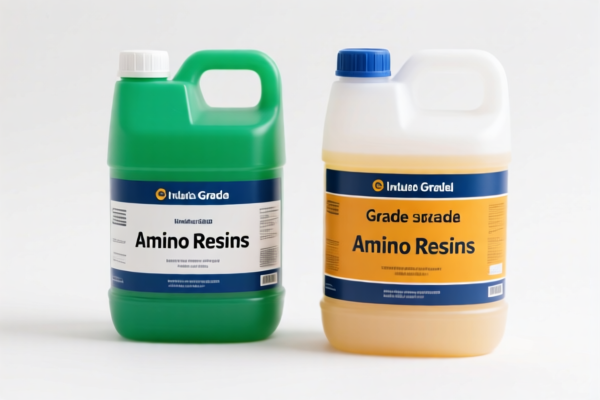
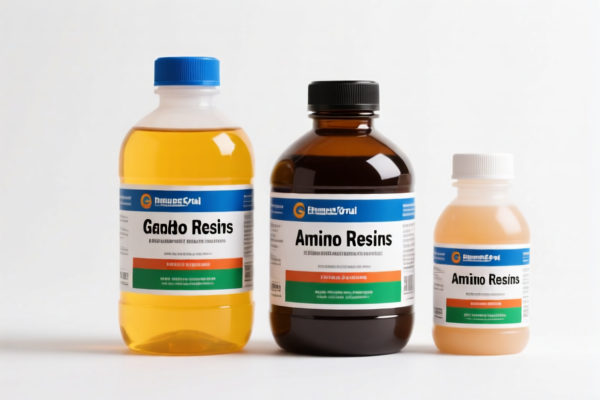
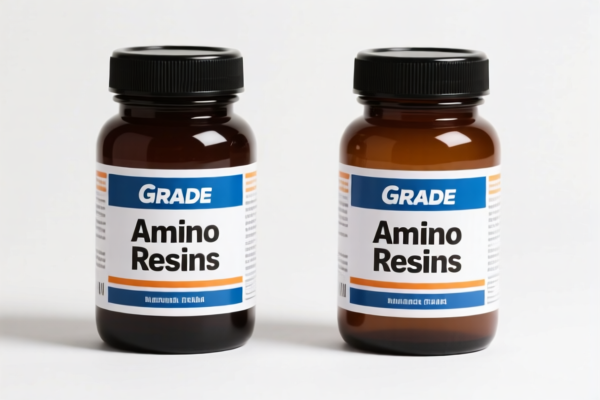
AI Analysis
🧪 Industrial Grade Heterogeneous Fatty Acids (Refined)
🌐 HS Code Reference & Customs Clearance Guide | 2026 Latest Tariff Analysis | Professional-Level Clearance Strategy
📌 I. Product Definition & Classification: What Exactly Are "Industrial Heterogeneous Fatty Acids"?
Industrial grade heterogeneous fatty acids are complex mixtures derived from the refining of crude fatty acids or oils. Unlike pure single-acid fatty acids (like stearic or palmitic acid), these are mixtures with varying chain lengths and structures, typically obtained through hydrogenation, cracking, or fractionation of natural fats/oils.
In international trade, classification depends heavily on: 1. Chemical Purity & Refinement Level: Is it a raw refined product, a chemical derivative, or a specialized industrial chemical? 2. Physical State: Liquid oil, solid acid, or a blend? 3. End Use: Lubricant base, chemical intermediate, soap manufacturing, or biodiesel feedstock?
⚠️ Key Distinction Points:
- If the product is considered a raw chemical intermediate or refined fatty acid oil → Often falls under Chapter 38 (Miscellaneous Chemical Products) or Chapter 15 (Animal/Vegetable Fats and Oils).
- If it is a specific single acid (e.g., pure stearic acid) → Chapter 15.
- If it is a chemically modified derivative not fitting standard fat definitions → Chapter 38.
📦 II. HS Code Classification Details (Based on Provided Data)
| HS Code | Product Description | Summary from Data | Key Characteristics |
|---|---|---|---|
3823.11.00.00 |
Industrial fatty acids (refined) | Matches refined fatty acids; material: fatty acids; form: refined acid oil. | Primary Fit: Raw refined industrial acid oils. |
1516.10.00.00 |
Industrial fatty acids (refined) - Oil Products | Belongs to fat/oil category; form: refined oil fractionation product. | Secondary Fit: Treated as refined vegetable/animal oil derivatives. |
3823.12.00.00 |
Industrial fatty acids (refined) | Matches industrial monocarboxylic fatty acids & refined acid oils. | Specific Fit: For refined single-carbon-chain fatty acid mixtures. |
1518.00.40.00 |
Industrial fatty acids (refined) - Oil Derivatives | Oil derivative; fits fractionation & chemical modification features. | Chemical Modification: Heavily processed or hydrogenated oils. |
1518.00.20.00 |
Industrial fatty acids (refined) - Refined Fractions | Oil fraction or chemically modified product; fits refined form. | Fractionated: Specifically isolated fractions of oils. |
🔍 Critical Note:
- The classification hinges on whether customs views the product as a "fatty acid" (Ch 38) or a "refined oil/fat derivative" (Ch 15).
- Chapter 38 codes (3823.11,3823.12) often imply a higher degree of chemical processing or industrial chemical status.
- Chapter 15 codes (1516,1518) imply the product is still fundamentally viewed as a fat/oil product, even if refined.
💰 III. 2026 Tariff Rate Breakdown (Including Surcharges & Policy Add-ons)
✅ Applicable Country: United States (US)
✅ Origin: China (CN)
✅ Effective Date: From November 10, 2025 (including subsequent imports)
🎯 1. 3823.11.00.00 —— Industrial Fatty Acids (Refined) – Most Likely Primary Classification
| Item | Details |
|---|---|
| Base Tariff | 2.1¢/kg + 3.8% (Ad Valorem) |
| Section 301 Surcharge | +7.5% |
| Section 301 (122 Clauses) | +10% |
| Total Effective Rate | 2.1¢/kg + 3.8% + 7.5% + 10% = 2.1¢/kg + 21.3% |
| Tax Calculation | Fixed duty: $0.021 × Weight (kg) + CIF Value × 21.3% |
| De Minimis Exemption? | ❌ NO (High-risk chemical category) |
| Legal Basis Path | USITC:3823.11.00.00 → Section 301: 7.5% → Section 122: 10% |
📌 Interpretation:
- This code is chosen because the product is described as "refined fatty acids" and "industrial grade," fitting the Chapter 38 definition of "industrial fatty acids and acids from animal/vegetable origin."
- The 2.1¢/kg is a specific duty (weight-based), while 3.8%+7.5%+10% is ad valorem.
- Total burden is significant due to multiple layers of tariffs.
🎯 2. 1516.10.00.00 —— Industrial Fatty Acids (Refined) – Oil Product Classification
| Item | Details |
|---|---|
| Base Tariff | 7¢/kg (Specific Duty) |
| Section 301 Surcharge | +7.5% |
| Section 301 (122 Clauses) | +10% |
| Total Effective Rate | 7¢/kg + 17.5% (Base 7¢/kg only, no ad valorem base shown in summary except for surcharges) |
| Tax Calculation | Fixed duty: $0.07 × Weight (kg) + CIF Value × 17.5% |
| De Minimis Exemption? | ❌ NO |
| Legal Basis Path | USITC:1516.10.00.00 → Section 301: 7.5% → Section 122: 10% |
📌 Interpretation:
- Higher specific duty ($0.07 vs $0.021), but lower ad valorem base rate (if any).
- This classification treats the product more like a processed oil rather than a pure chemical.
- Risk: Customs may argue this is not a "fat" but a "chemical acid," leading to reclassification to Ch 38.
🎯 3. 3823.12.00.00 —— Industrial Fatty Acids (Refined) – Monocarboxylic Specific
| Item | Details |
|---|---|
| Base Tariff | 2.1¢/kg + 3.2% |
| Section 301 Surcharge | +7.5% |
| Section 301 (122 Clauses) | +10% |
| Total Effective Rate | 2.1¢/kg + 3.2% + 7.5% + 10% = 2.1¢/kg + 20.7% |
| Tax Calculation | Fixed duty: $0.021 × Weight (kg) + CIF Value × 20.7% |
| De Minimis Exemption? | ❌ NO |
| Legal Basis Path | USITC:3823.12.00.00 → Section 301: 7.5% → Section 122: 10% |
📌 Interpretation:
- Slightly better ad valorem rate than3823.11(3.2% vs 3.8%).
- Suitable if the product is specifically identified as monocarboxylic fatty acids (common in industrial refining).
🎯 4. 1518.00.40.00 —— Industrial Fatty Acids (Refined) – Oil Derivative
| Item | Details |
|---|---|
| Base Tariff | 25.5% (Ad Valorem only, no specific duty shown) |
| Section 301 Surcharge | +7.5% |
| Section 301 (122 Clauses) | +10% |
| Total Effective Rate | 8.0% + 7.5% + 10% = 25.5% |
| Tax Calculation | CIF Value × 25.5% |
| De Minimis Exemption? | ❌ NO |
| Legal Basis Path | USITC:1518.00.40.00 → Section 301: 7.5% → Section 122: 10% |
📌 Interpretation:
- Highest Ad Valorem Rate (25.5%).
- No weight-based duty.
- Risk: High cost if CIF value is high.
- Fits products that are chemically modified or highly fractionated oils.
🎯 5. 1518.00.20.00 —— Industrial Fatty Acids (Refined) – Refined Fractions
| Item | Details |
|---|---|
| Base Tariff | 6.3¢/kg |
| Section 301 Surcharge | +7.5% |
| Section 301 (122 Clauses) | +10% |
| Total Effective Rate | 6.3¢/kg + 17.5% |
| Tax Calculation | Fixed duty: $0.063 × Weight (kg) + CIF Value × 17.5% |
| De Minimis Exemption? | ❌ NO |
| Legal Basis Path | USITC:1518.00.20.00 → Section 301: 7.5% → Section 122: 10% |
📌 Interpretation:
- Moderate specific duty ($0.063/kg).
- Suitable for fractions of oils, not necessarily pure fatty acids.
🛠️ IV. Customs Clearance Practical Advice (Battle-Tested Pitfall Avoidance)
✅ 1. Document Checklist (Non-Negotiable)
| Document | Required? | Purpose |
|---|---|---|
| ✅ Technical Data Sheet (TDS) | ✔️ | Must specify: Fatty acid composition (C8-C24 range), purity, acid value, moisture content, refining process. |
| ✅ Certificate of Analysis (COA) | ✔️ | Lab results confirming homogeneous/heterogeneous nature. |
| ✅ Process Description | ✔️ | Explain hydrogenation, cracking, or distillation steps. Critical for Ch 38 vs Ch 15 debate. |
| ✅ Commercial Invoice | ✔️ | Clearly state: "Industrial Grade Heterogeneous Fatty Acids, Refined" + HS Code. |
| ✅ Material Safety Data Sheet (MSDS) | ✔️ | For hazardous material classification (if applicable). |
| ✅ Bill of Lading | ✔️ | Ensure no conflicting descriptions. |
✅ 2. Declaration Strategy (Key Mnemonics)
🔥 “Chemical First, Oil Second, Data Drives the Code!”
| Scenario | Recommended HS Code | Reason |
|---|---|---|
| Refined acid oil, mixture, industrial use | 3823.11.00.00 |
Best fit for "industrial fatty acids" as chemicals. |
| Pure monocarboxylic mix, refined | 3823.12.00.00 |
More specific than .11, lower ad valorem. |
| Hydrogenated fat/oil derivative | 1516.10.00.00 or 1518.00.40.00 |
If viewed as processed fat. |
| Fractionated oil for chemical use | 1518.00.20.00 |
Specific fraction definition. |
⚠️ Critical Warning:
- Do NOT simply declare as "Fatty Acid" without specifying "Industrial Grade Refined Heterogeneous Mixture."
- Do NOT assume Chapter 15 is cheaper; the ad valorem rate (25.5%) for1518.00.40.00is much higher than3823codes for high-CIF shipments.
- Chapter 38 (3823.11/.12) generally has lower total tax burden for high-value products due to lower ad valorem base rates (3.2%-3.8% + surcharges vs 25.5% flat).
✅ 3. Special Circumstances Handling
| Situation | Handling Advice |
|---|---|
| High Purity (>90%) | Strongly argue for 3823.11.00.00 or 3823.12.00.00 as "industrial chemicals." |
| Low Purity/Moisture | May be classified under 1518.00.20.00 as a crude fraction. Provide moisture data. |
| Biodiesel Feedstock | If intended for transesterification, disclose intent. May affect duty-free status under certain FTAs (but not US-China). |
| Packaging | Drum vs. Tanker. Ensure weight (kg) is accurate for specific duty calculations (e.g., 2.1¢/kg). |
🌍 V. Global Market Comparison (2026 Latest)
| Country/Region | Recommended HS Code | Estimated Duty (China Origin) | Certification Requirements | Notes |
|---|---|---|---|---|
| 🇺🇸 USA | 3823.11.00.00 |
2.1¢/kg + 21.3% | SDS, COA | High tariff burden due to 301/122 clauses. |
| 🇨🇳 China | 3823.11.00.00 |
~5-13% | None | Import tariff varies, but no surcharges. |
| 🇪🇺 EU | 3823.11.00.00 |
6.5% | REACH Registration | No surcharges, but REACH compliance is strict. |
| 🇬🇧 UK | 3823.11.00.00 |
6.5% | UK REACH | Post-Brexit, UK-specific REACH applies. |
| 🇯🇵 Japan | 3823.11.00.00 |
5.5% | JIS Standards | Moderate duty, no surcharges. |
📌 Conclusion:
- USA is the most expensive market for this product due to layered tariffs (Base + 301 + 122).
- EU/UK/Japan have simpler, lower tariffs but strict chemical regulations (REACH, etc.).
- Cost Optimization: If shipping to USA, consider supply chain diversification or advanced rulings to lock in the lower3823.11/.12codes rather than1518.00.40.00.
📌 VI. Common Errors & Pitfalls (Lessons Learned)
❌ Error 1: Declaring as "Vegetable Oil" under 1515 or 1518 without proof of refining process.
👉 Consequence: Customs reclassifies to 3823 + penalties for under-declaration.
❌ Error 2: Ignoring the 122-Clause 10% tariff.
👉 Consequence: Underestimating costs by 10%, leading to cash flow issues.
❌ Error 3: Using vague terms like "Natural Fatty Acids" without specifying "Industrial Grade" or "Heterogeneous."
👉 Consequence: Customs may classify as food-grade or cosmetic, triggering different regulations.
❌ Error 4: Miscalculating Specific Duties (e.g., 2.1¢/kg).
👉 Consequence: Significant over/under-payment on high-volume shipments. Always audit kg vs. volume.
✅ Correct Approach:
“Industrial Heterogeneous Fatty Acids, Refined, for Chemical Synthesis, CAS No. [XXX-XX-X], Moisture <0.5%, Acid Value: XX mg KOH/g.”
🎯 VII. Conclusion: Precision Classification Saves Money!
🎯 Remember the Mantra:
🔹 “Chemical Code (Ch 38) vs. Oil Code (Ch 15) – Data Decides!”
🔹 “Chapter 38 Lowers Ad Valorem, Chapter 15 Risks 25.5%!”
🔹 “301 & 122 Clauses Apply to Both – Plan Accordingly!”
📌 Pro Tip:
If your product is highly pure (>95%) monocarboxylic acids, push for 3823.12.00.00 to save 0.6% ad valorem vs 3823.11.00.00.
If it’s a complex blend, stick to 3823.11.00.00.
Avoid 1518.00.40.00 unless specifically advised by a customs broker, as the 25.5% rate is punishing.
📣 Immediate Action:
📞 Consult a US Customs Broker + Provide TDS/COA + Apply for Advance Ruling
🚀 Secure the correct HS Code, avoid penalties, and protect your margins!
✨ Professional Classification Starts Here!
💼 Every cent saved on tariffs is pure profit!
Customer Reviews
About HS Code Classification
The Harmonized System (HS) is an internationally standardized nomenclature developed by the World Customs Organization (WCO) to classify traded products. Over 200 countries use the HS system as the basis for customs tariffs, trade statistics, and import/export regulations.
Each HS code follows a hierarchical structure:
- Chapter (2 digits) — Broad category of goods (e.g., Chapter 84: Machinery and Mechanical Appliances)
- Heading (4 digits) — More specific grouping within the chapter
- Subheading (6 digits) — Internationally standardized breakdown, used by all WCO member countries
- National subdivisions (8-10 digits) — Country-specific extensions for further classification, such as US HTSUS 10-digit codes
Correct HS code classification is essential for smooth customs clearance, accurate duty payment, and compliance with trade regulations. Misclassification can lead to customs delays, overpayment of duties, or penalties.
When importing from CN to US, the applicable tariff rates may include:
- Most-Favored-Nation (MFN) rate — The standard duty rate applied to WTO members
- General rate — Applied to countries without trade agreements
- Trade remedy duties — Additional tariffs such as Section 301 (anti-dumping), Section 232 (national security), or countervailing duties
The information provided on this page is for reference purposes only. For official classification, please consult with your local customs authority or a licensed customs broker.