Inert Sprocket
CN → US| HS Code | Tariff Rate | Origin | Destination | Doc |
|---|---|---|---|---|
| 7326190080 | 87.9% | CN | US | Official Doc |
| 8483901010 | 37.8% | CN | US | Official Doc |
| 8431499050 | 85.0% | CN | US | Official Doc |
| 8431499084 | 85.0% | CN | US | Official Doc |
| 7326908688 | 87.9% | CN | US | Official Doc |
Product Images
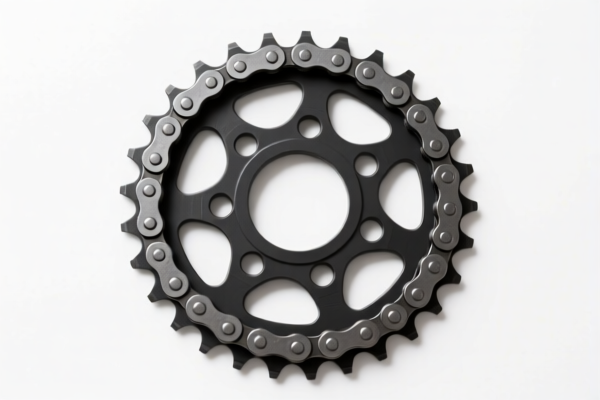
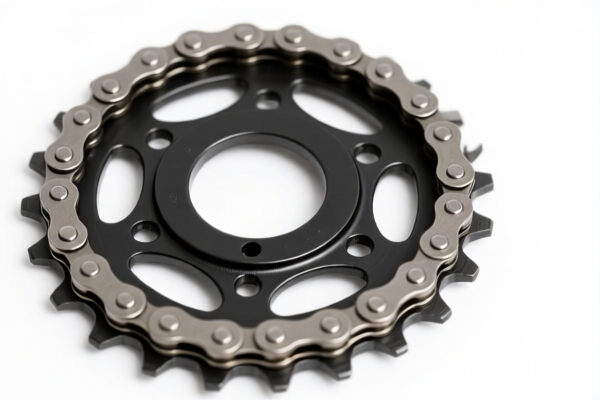
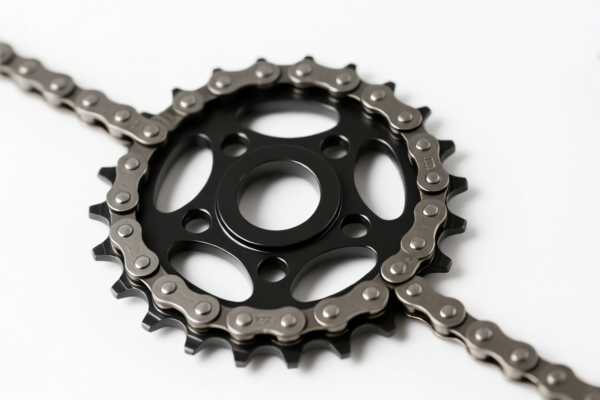
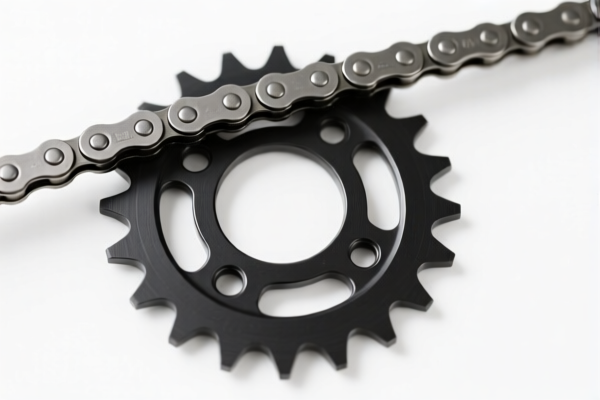
AI Analysis
⚙️ Inert Sprocket (Chain Sprocket)
🌐 HS Code Reference & Customs Clearance Guide | 2026 Tariff Analysis | Strategic Compliance Strategy
📌 1. Product Definition & Classification: Is It a Mechanical Part or a Steel Article?
An "Inert Sprocket" is a mechanical component used in power transmission systems (often in chains, belts, or tracks). The term "Inert" in this context typically refers to the component being a passive mechanical part (non-powered, non-electronic) rather than a propulsion unit itself.
In international trade, sprockets are classified based on two conflicting principles: 1. Functional Classification (Chapter 84): As a "Part of Machinery" if it is specifically identifiable as a component for specific machines (e.g., excavators, tractors). 2. Material Classification (Chapter 73): As an "Article of Iron or Steel" if it is considered a generic manufactured item without specific machine identification.
⚠️ Critical Distinction Point:
- If the sprocket is specifically designed for a particular machine (e.g., "Track Wheel for Excavator") → Chapter 84 (Parts).
- If the sprocket is generic (used in various conveyors, industrial drives, or unspecified machinery) → Chapter 73 (Articles of Iron/Steel).
📦 2. HS Code Classification Matrix (2026 Latest Tariff Data)
The provided data suggests four potential HS Codes for an "Inert Sprocket," split between Steel Articles (Ch 73) and Machinery Parts (Ch 84).
| HS Code | Product Description | Classification Logic | Total Tax Rate |
|---|---|---|---|
7326.19.00.80 |
Other Articles of Iron or Steel (General Parts) | Material-Based: Deemed as a generic "part/component" of steel. Matches the "Other" catch-all category for steel products. | 87.9% |
8483.90.10.10 |
Parts of Transmission Shafts, Cranks, etc. | Functional-Based: Classified under "Sprockets" in Chapter 84. Assumed to be "Forged" type. No material conflict noted. | 37.8% |
8431.49.90.50 |
Parts of Track-Laying Vehicles (e.g., Excavators/Tractors) | Application-Based: Inferred as a mechanical transmission part for tracked vehicles (like "Track Links"). Uses the "Parts" catch-all logic. | 85.0% |
8431.49.90.84 |
Other Parts of Track-Laying Vehicles | Application-Based: Similar to above, but falls under "Other Parts" for road wheels/other parts of tracked vehicles. | 85.0% |
7326.90.86.88 |
Other Articles of Iron or Steel (Miscellaneous) | Material-Based: Generic steel product. Material is metal; form is mechanical part. Fits "Other Steel Articles" catch-all. | 87.9% |
🔍 Key Insight:
- Cheapest Option:8483.90.10.10at 37.8% (if the sprocket is strictly categorized as a transmission component).
- Most Expensive Options:7326codes at 87.9% (due to heavy steel/aluminum/copper tariffs).
- Middle Ground:8431codes at 85.0% (if used in heavy tracked machinery, still high due to steel tariffs).
💰 3. 2026 Tariff Breakdown (Detailed Tax Clauses)
✅ Applicable Market: United States (US)
✅ Origin: China (CN)
✅ Effective Date: 2025–2026 (Subject to Section 301 & IEEPA measures)
🎯 1. 7326.19.00.80 & 7326.90.86.88 — Steel Articles (High Tariff)
| Item | Detail |
|---|---|
| Base Duty | 2.9% |
| Section 301 Additional Duty | +25.0% |
| IEEPA Additional Duty (122 Clause) | +10% |
| Steel/Aluminum/Copper Additional Duty | +50.0% |
| Total Effective Rate | 87.9% |
| De Minimis Exemption? | ❌ No (Denied) |
| Legal Path | IEEPA: 9903.01.25 → USITC: 7326.19.00.80 + Steel Tariff (EO 14081) |
📌 Explanation:
- The 50% additional duty is triggered because these HS codes are classified under "Steel Products" (Section 232/301 overlap).
- This is the highest tax bracket for mechanical parts if classified by material rather than function.
🎯 2. 8483.90.10.10 — Transmission Parts (Moderate Tariff)
| Item | Detail |
|---|---|
| Base Duty | 2.8% |
| Section 301 Additional Duty | +25.0% |
| IEEPA Additional Duty (122 Clause) | +10% |
| Total Effective Rate | 37.8% |
| De Minimis Exemption? | ❌ No (Denied) |
| Legal Path | IEEPA: 9901.25 → USITC: 8483.90.10.10 |
📌 Explanation:
- This code falls under Chapter 84 (Machinery), so it avoids the 50% Steel/Aluminum/Copper surcharge.
- It is the most cost-effective option if the sprocket can be legitimately classified as a "Transmission Component" (e.g., for motorcycles, industrial conveyors, or general machinery).
🎯 3. 8431.49.90.50 & 8431.49.90.84 — Tracked Vehicle Parts (High Tariff)
| Item | Detail |
|---|---|
| Base Duty | 0.0% |
| Section 301 Additional Duty | +25.0% |
| IEEPA Additional Duty (122 Clause) | +10% |
| Steel/Aluminum/Copper Additional Duty | +50.0% |
| Total Effective Rate | 85.0% |
| De Minimis Exemption? | ❌ No (Denied) |
| Legal Path | IEEPA: 9903.01.25 → USITC: 8431.49.90.50 + Steel Tariff |
📌 Explanation:
- Even though the base duty is 0%, the 50% Steel Tariff applies because these parts are deemed "Steel Products" used in heavy machinery.
- This is risky if the sprocket is not exclusively for tracked vehicles (e.g., excavators). Misclassification here can lead to audits.
🛠️ 4. Customs Clearance Practical Advice
✅ 1. Documentation Checklist (Must-Haves)
| Document | Required | Purpose |
|---|---|---|
| Product Specification Sheet | ✔️ | Must specify: Material (Steel/Alloy), Dimensions, Number of Teeth, Bore Size. |
| Intended Use Statement | ✔️ | Critical: Does it go into a tracked vehicle (8431)? Or general transmission (8483)? Or is it generic steel (7326)? |
| Technical Drawings | ✔️ | To prove if it is "Forged" (supports 8483.90.10.10) or "Cast" (may support 7326). |
| Commercial Invoice | ✔️ | Must clearly state: "Sprocket for [Machine Name/Type]". Avoid vague terms like "Metal Part." |
| Bill of Lading | ✔️ | Ensure packaging matches declared weight/volume to avoid discrepancies. |
✅ 2. Classification Strategy (How to Save Money)
| Strategy | Action | Benefit |
|---|---|---|
| Maximize Chapter 84 Usage | Provide evidence that the sprocket is specifically designed for a machine (e.g., "Sprocket for Model X Excavator" or "Transmission Sprocket for Industrial Conveyor"). | Avoids 50% Steel Tariff. Lowers rate from 87.9% to 37.8% or 85.0%. |
| Avoid Chapter 73 if Possible | Do not classify generic sprockets as "Other Steel Articles" (7326) unless necessary. | 87.9% is extremely high. Only use if the sprocket is a raw/unspecified steel item. |
| Choose 8483 over 8431 | If the sprocket is for general transmission (not tracked vehicles), use 8483.90.10.10. |
37.8% vs 85.0%. Saves nearly half the tariff. |
✅ 3. Common Pitfalls & Warnings
❌ Pitfall 1: Calling it "Steel Part" on the invoice.
👉 Result: Customs may default to 7326 (87.9%).
✅ Fix: Use specific terms like "Chain Sprocket for Transmission" or "Track Drive Sprocket."
❌ Pitfall 2: Misclassifying a general sprocket as an "Excavator Part" (8431).
👉 Result: You pay 85.0% (due to steel tariff) instead of 37.8%. Also, high audit risk if it’s not for tracked vehicles.
✅ Fix: Only use 8431 if it is exclusively for track-laying vehicles.
❌ Pitfall 3: Ignoring the "122 Clause" (IEEPA 10%).
👉 Result: All listed HS codes include a 10% IEEPA tariff. This is non-negotiable for Chinese-origin goods.
✅ Fix: Factor this into your landed cost calculation immediately.
🌍 5. Global Comparison (2026)
| Market | Recommended HS Code | Est. Tariff (CN Origin) | Notes |
|---|---|---|---|
| 🇺🇸 USA | 8483.90.10.10 |
37.8% | Best option for general sprockets. Avoid 7326/8431 if possible. |
| 🇪🇺 EU | 8483.40 |
0-3% | No Section 301 equivalent. Steel tariffs do not apply in the same way. |
| 🇨🇳 China | 8483.40 |
3-5% | Low base duty. No additional penalties for US-China trade war. |
| 🇬🇧 UK | 8483.40 |
0-5% | Post-Brexit tariff schedules may favor machinery parts. |
📌 Conclusion:
- The US market is the most challenging due to layered tariffs (Base + 301 + IEEPA + Steel).
- Chapter 84 (Machinery Parts) is significantly cheaper than Chapter 73 (Steel Articles).
- Chapter 8483 is the "Sweet Spot" for generic sprockets.
- Chapter 8431 is only viable if you can prove specific use in tracked vehicles, but the steel tariff negates the base duty savings.
📌 6. Final Recommendations
🎯 For Exporters/Importers:
1. Specify Intended Use: Clearly document the sprocket's application. If it’s for general machinery, declare it under 8483.
2. Avoid "Generic" Steel Classifications: Do not use 7326 unless the item is truly a raw/unspecified steel component. The 87.9% tariff is prohibitive.
3. Prepare for Audits: Keep technical drawings and use statements ready. Customs may challenge the "Part of Machine" classification vs. "Article of Steel."
4. Calculate Landed Cost: Add 37.8% (minimum) to your FOB price for US-bound goods. Do not plan with base duties only.
🔥 Golden Rule:
"Function over Material! If it’s a mechanical part, fight for Chapter 84. If you lose to Chapter 73, you pay 87.9%!"
✨ Professional Clearance Starts with Precision!
💼 Your Cost Savings Depend on the Right HS Code!
Customer Reviews
About HS Code Classification
The Harmonized System (HS) is an internationally standardized nomenclature developed by the World Customs Organization (WCO) to classify traded products. Over 200 countries use the HS system as the basis for customs tariffs, trade statistics, and import/export regulations.
Each HS code follows a hierarchical structure:
- Chapter (2 digits) — Broad category of goods (e.g., Chapter 84: Machinery and Mechanical Appliances)
- Heading (4 digits) — More specific grouping within the chapter
- Subheading (6 digits) — Internationally standardized breakdown, used by all WCO member countries
- National subdivisions (8-10 digits) — Country-specific extensions for further classification, such as US HTSUS 10-digit codes
Correct HS code classification is essential for smooth customs clearance, accurate duty payment, and compliance with trade regulations. Misclassification can lead to customs delays, overpayment of duties, or penalties.
When importing from CN to US, the applicable tariff rates may include:
- Most-Favored-Nation (MFN) rate — The standard duty rate applied to WTO members
- General rate — Applied to countries without trade agreements
- Trade remedy duties — Additional tariffs such as Section 301 (anti-dumping), Section 232 (national security), or countervailing duties
The information provided on this page is for reference purposes only. For official classification, please consult with your local customs authority or a licensed customs broker.