Integrated Circuit (Other)
CN → US| HS Code | Tariff Rate | Origin | Destination | Doc |
|---|---|---|---|---|
| 8542390070 | 60.0% | CN | US | Official Doc |
| 8543906800 | 35.0% | CN | US | Official Doc |
| 8542390090 | 60.0% | CN | US | Official Doc |
| 8543908885 | 85.0% | CN | US | Official Doc |
| 8542310050 | 60.0% | CN | US | Official Doc |
Product Images
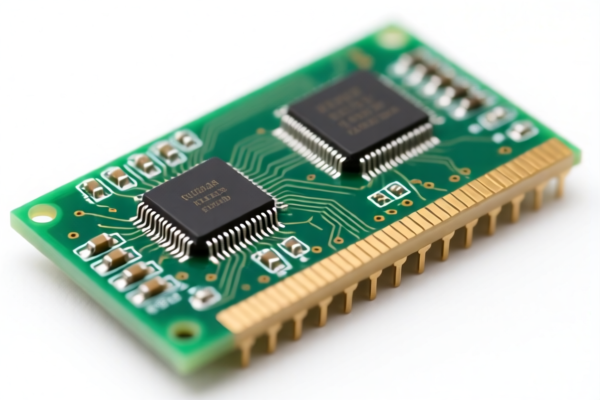
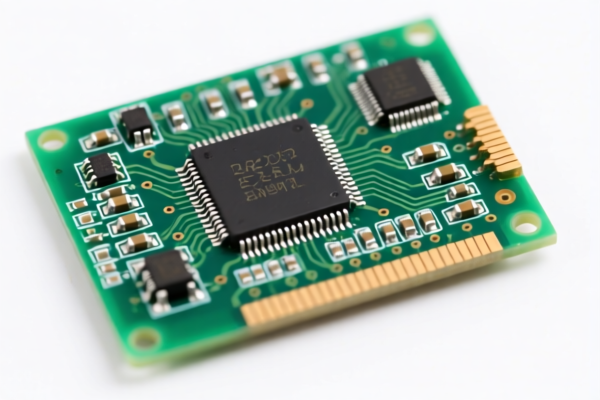
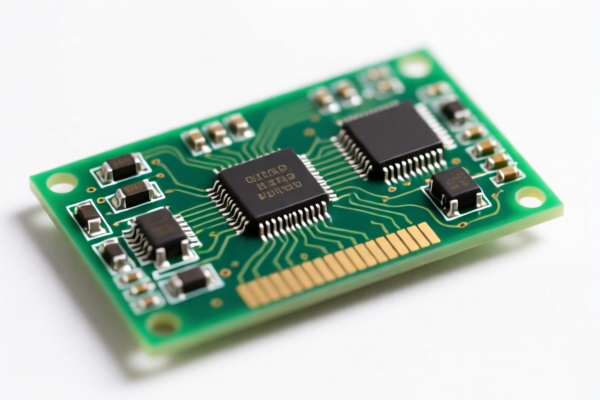
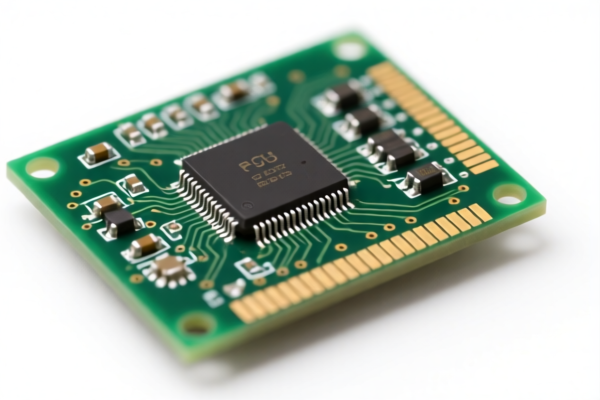
AI Analysis
🧠 Integrated Circuits (Other) – The Silicon Powerhouse
🌐 HS Code Reference & Customs Clearance Guide | 2026 Latest Tariff Analysis | Professional Clearance Strategy
📌 I. Product Definition & Classification: Do You Really Understand "Integrated Circuits"?
Integrated Circuits (ICs), often called "chips" or "microchips," are the fundamental building blocks of modern electronics. They consist of semiconductor devices (like transistors and resistors) miniaturized onto a single piece of semiconductor material (usually silicon).
In international trade, "Integrated Circuits (Other)" typically refers to ICs that are not specifically classified as Microprocessors (Central Processing Units) or Memory Units. This includes: * Logic ICs: Gates, flip-flops, counters. * Memory ICs: Static RAM (SRAM), Flash Memory (if not classified as general memory modules). * Analog ICs: Amplifiers, regulators. * Mixed-Signal ICs: Combining digital and analog functions.
⚠️ Key Distinction Point:
- If the chip is a Microprocessor (CPU/MCU) → It falls under specific subheadings like 8542.31.
- If it is Other (Logic, Analog, Memory, etc.) → It falls under 8542.39 or potentially 8543 depending on whether it is a functional component vs. a standalone electronic circuit.
📦 II. HS Code Classification Details (2026 Latest Tariff Authoritative Comparison)
Based on the provided data, here are the five potential HS Code classifications for "Integrated Circuits (Other)," along with their tax implications and rationales.
| HS Code | Product Description & Rationale | Total Tax Rate | Tax Breakdown |
|---|---|---|---|
8542.39.00.70 |
Other Electronic Integrated Circuits. • "Integrated Circuits" matches the classification. • "Other" corresponds to the "Other" category. • No conflict in material/form. |
60.0% | Base: 0% Add-on: 50% (Section 301) IEEPA: 10% (Section 122) |
8543.90.68.00 |
Other Electrical Machines & Apparatus. • "Other" matches the classification. • ICs are electronic functional components. • Inferable as Printed Circuit Components if no material conflict. |
35.0% | Base: 0% Add-on: 25% (Section 301) IEEPA: 10% (Section 122) |
8542.39.00.90 |
Other Electronic Integrated Circuits. • "Integrated Circuits" matches material/usage. • "Other" matches the category perfectly. • Standard "Other" IC classification. |
60.0% | Base: 0% Add-on: 50% (Section 301) IEEPA: 10% (Section 122) |
8543.90.88.85 |
Other Electrical Machines (Non-IC specific). • Belongs to electrical equipment field. • "Other" category. • ⚠️ High Risk: Includes potential 50% tariff for Steel/Aluminum/Copper products if applicable. |
85.0% | Base: 0% Add-on: 25% (Section 301) IEEPA: 10% (Section 122) Metals Add-on: 50% (if applicable) |
8542.31.00.50 |
Microprocessors & Controllers. • "Microprocessors" directly matches "Processors (including microprocessors)." • Fits electronic IC material/form attributes. |
60.0% | Base: 0% Add-on: 50% (Section 301) IEEPA: 10% (Section 122) |
🔍 Critical Analysis:
- 8542 Series (.39and.31): Specifically for Electronic Integrated Circuits. This is the correct technical classification for most chips.
- 8543 Series (.90): For Other Electrical Machines/Apparatus. This is generally incorrect for standalone ICs unless they are part of a larger functional assembly or specifically excluded from 8542. Using 8543 may lead to disputes, although one code (.68) offers a lower tax rate (35%).
- High Tax Warning: All codes include significant US tariffs (50% or 25% Section 301 + 10% IEEPA), totaling 35% to 85%.
💰 III. 2026 Latest Tariff Rate Detail Explanation (Including Add-ons & Policies)
✅ Applicable Country: United States (US)
✅ Origin: China (CN) (Implied by Section 301 & IEEPA context)
✅ Effective Time: Post-2025 adjustments
🎯 1. 8542.39.00.70 & 8542.39.00.90 —— Other Electronic Integrated Circuits
| Item | Details |
|---|---|
| Base Tariff | 0% (ad valorem) |
| USITC Add-on (Section 301) | +50% |
| IEEPA Add-on (Section 122) | +10% |
| Total Tariff Rate | 60.0% |
| Tax Calculation | CIF Value × 60% |
| De Minimis Exemption | ❌ Not Applicable (High value/duty rate excludes small shipments) |
| Legal Basis Path | IEEPA:9903.01.25 → USITC:8542.39.00.70/90 |
📌 Interpretation:
- These are the standard classifications for "Other" ICs.
- The 50% Section 301 duty is the dominant cost driver.
- Total 60% is extremely high, significantly impacting profit margins.
🎯 2. 8542.31.00.50 —— Microprocessors
| Item | Details |
|---|---|
| Base Tariff | 0% |
| USITC Add-on (Section 301) | +50% |
| IEEPA Add-on (Section 122) | +10% |
| Total Tariff Rate | 60.0% |
| Tax Calculation | CIF Value × 60% |
| De Minimis Exemption | ❌ Not Applicable |
| Legal Basis Path | Same as above, specific subheading for processors. |
📌 Note:
- Even if your product is a "Microprocessor," it faces the same 60% tax rate as other ICs.
- Do not assume "Processor" = Lower Tax. It does not.
🎯 3. 8543.90.68.00 —— Other Electrical Machines (Potential Lower Tax)
| Item | Details |
|---|---|
| Base Tariff | 0% |
| USITC Add-on (Section 301) | +25% |
| IEEPA Add-on (Section 122) | +10% |
| Total Tariff Rate | 35.0% |
| Tax Calculation | CIF Value × 35% |
| De Minimis Exemption | ❌ Not Applicable |
| Legal Basis Path | IEEPA:9903.01.24 → USITC:8543.90.68.00 |
📌 Strategy Alert:
- This code offers a 25% savings compared to the 60% rate.
- However, it requires convincing Customs that the product is an "Electrical Machine/Apparatus" rather than an "Integrated Circuit." This is risky and may require strong technical documentation proving it is not a standard IC but a functional assembly.
🎯 4. 8543.90.88.85 —— Other Electrical Machines (Highest Risk)
| Item | Details |
|---|---|
| Base Tariff | 0% |
| USITC Add-on (Section 301) | +25% |
| IEEPA Add-on (Section 122) | +10% |
| Metal Add-on (Steel/Al/Cu) | +50% (If applicable) |
| Total Tariff Rate | 85.0% (or 35% if no metals) |
| Tax Calculation | CIF Value × 85% |
| De Minimis Exemption | ❌ Not Applicable |
📌 Warning:
- If the IC packaging or substrate contains significant steel/aluminum/copper, the 50% metal surcharge applies.
- This results in the highest possible tax rate (85%). Avoid this classification unless absolutely necessary.
🛠️ IV. Customs Clearance Practical Advice (Pitfall Avoidance Guide)
✅ 1. Required Documentation List (Mandatory)
| Document | Must Provide | Description |
|---|---|---|
| ✅ Product Specification Sheet | ✔️ | Detailed technical specs: Pinout, Voltage, Logic Family (TTL, CMOS), etc. |
| ✅ Datasheet / Datasheets | ✔️ | Manufacturer-provided PDF proving it is an "Integrated Circuit" (e.g., Texas Instruments, STM datasheet). |
| ✅ Product Photos (Clear) | ✔️ | Showing markings, package type (SOP, QFP, BGA), and no external connectors that suggest a full device. |
| ✅ Commercial Invoice | ✔️ | Clearly state: "Electronic Integrated Circuit, Model XYZ, No Microprocessor Function." |
| ✅ Bill of Lading / Air Waybill | ✔️ | Ensure HS Code matches the invoice exactly. |
| ✅ Country of Origin Certificate | ✔️ | If not China, may qualify for lower tariffs. |
✅ 2. Declaration Tips (Key Mantras)
🔥 "Be Precise: IC is IC, Don't Guess. 8542 is King for Chips."
| Scenario | Correct Declaration | Wrong Approach |
|---|---|---|
| Standard IC (Logic/Analog) | 8542.39.00.70 or 8542.39.00.90 |
Claiming "Electronic Component" vaguely → Delay/Inspection |
| Microprocessor/CPU | 8542.31.00.50 |
Classifying as "Other IC" → May be accepted but risky if functionality differs |
| IC on a Board | Depends on Board Function | If it's a full module, it might be 8543. If just the chip, stick to 8542. |
| Attempting Lower Tax | Use 8543.90.68.00 ONLY if you have strong legal/technical justification |
Forcing 8543 for standard chips → Audit/Seizure Risk |
✅ 3. Special Case Handling
| Situation | Handling Advice |
|---|---|
| Mixed Containers | Ensure HS codes are strictly separated. Do not mix 8542 ICs with 8543 assemblies. |
| Rebottled Chips | Provide proof of origin. Customs may scrutinize if markings are changed. |
| OEM Chips | Include OEM contract or authorization letter to prove legitimate supply chain. |
| High-Value Shipments | Consider applying for HTS Exclusions if available, though rare for ICs post-2025. |
🌍 V. Global Market Clearance Comparison (2026 Latest)
| Country/Region | Recommended HS Code | Tariff (China Origin) | Certification | Notes |
|---|---|---|---|---|
| 🇺🇸 USA | 8542.39.00.70 |
60% | None (FCC not needed for bare ICs) | Highest Duty. Plan margins accordingly. |
| 🇨🇳 China | 8542.39.00 |
0% - 5% | None | Low duty. Major manufacturing hub. |
| 🇪🇺 EU | 8542.31 / .39 |
0% - 4% | CE (if in device), RoHS | Low duty. Strict REACH compliance for chemicals in packaging. |
| 🇬🇧 UK | 8542.39 |
0% - 5% | UKCA | Similar to EU post-Brexit. |
| 🇯🇵 Japan | 8542.39 |
0% - 5% | PSE (if in device) | Low duty. High quality standards. |
📌 Conclusion:
- USA is the outlier with 60% tariffs.
- All other major markets have 0-5% tariffs.
- Strategy: If selling to the US, consider supply chain diversification (e.g., assembly in Vietnam or Mexico) to avoid Section 301/IEEPA duties, if feasible.
📌 VI. Common Errors & Pitfall Guide (Lessons from the Field)
❌ Error 1: Using 8543.90.88.85 for standard ICs
👉 Consequence: 85% Tax Rate. You lose all profit.
👉 Fix: Stick to 8542 series for pure ICs.
❌ Error 2: Claiming 8543.90.68.00 (35% tax) for standard ICs without proof
👉 Consequence: Customs rejection, audit, or forced reclassification to 60%.
👉 Fix: Only use 8543 if the item is a functional electrical apparatus, not a standalone semiconductor device.
❌ Error 3: Vague Description "Electronic Parts"
👉 Consequence: Customs inspection delay, potential misclassification.
👉 Fix: Use specific description: "CMOS Logic Integrated Circuit, Model ABC, 8542.39.00.70".
✅ Correct Declaration Example:
"Electronic Integrated Circuit, CMOS Technology, Model SN74LVC1G00, Qty: 10,000 pcs, HS Code: 8542.39.00.70, Origin: China"
🎯 VII. Conclusion: Precision Classification, Cost Control, and Compliance
🎯 Remember These Mantras:
🔹 "IC is 8542, Not 8543. Avoid the 85% Trap."
🔹 "60% Tax in the US is Real. Plan Your Supply Chain."
🔹 "Datasheets Are Your Best Friend. Keep Them Ready."
📌 Pro Tip:
If your ICs are assembled into modules (e.g., WiFi modules, GPS modules), they may qualify for 8543 codes with 25% or 35% tax rates. However, bare ICs will always be 60%.
✅ Action: Consult a customs broker for Pre-Ruling if you are shipping high-volume ICs. The savings from a correct classification (even if it's 60% vs 85%) or module classification (35% vs 60%) are significant.
📣 Immediate Action:
📞 Verify your Datasheet.
📄 Confirm HS Code: 8542.39.00.70 or .90.
🚀 Budget for 60% Duty.
💼 Your profit depends on this precision!
✨ Professional Clearance Starts with Accurate Classification!
💼 Every cent saved is pure profit!
Customer Reviews
About HS Code Classification
The Harmonized System (HS) is an internationally standardized nomenclature developed by the World Customs Organization (WCO) to classify traded products. Over 200 countries use the HS system as the basis for customs tariffs, trade statistics, and import/export regulations.
Each HS code follows a hierarchical structure:
- Chapter (2 digits) — Broad category of goods (e.g., Chapter 84: Machinery and Mechanical Appliances)
- Heading (4 digits) — More specific grouping within the chapter
- Subheading (6 digits) — Internationally standardized breakdown, used by all WCO member countries
- National subdivisions (8-10 digits) — Country-specific extensions for further classification, such as US HTSUS 10-digit codes
Correct HS code classification is essential for smooth customs clearance, accurate duty payment, and compliance with trade regulations. Misclassification can lead to customs delays, overpayment of duties, or penalties.
When importing from CN to US, the applicable tariff rates may include:
- Most-Favored-Nation (MFN) rate — The standard duty rate applied to WTO members
- General rate — Applied to countries without trade agreements
- Trade remedy duties — Additional tariffs such as Section 301 (anti-dumping), Section 232 (national security), or countervailing duties
The information provided on this page is for reference purposes only. For official classification, please consult with your local customs authority or a licensed customs broker.