Irregular Wood Pellet Fuel
CN → US| HS Code | Tariff Rate | Origin | Destination | Doc |
|---|---|---|---|---|
| 4401310000 | 35.0% | CN | US | Official Doc |
| 4401394210 | 35.0% | CN | US | Official Doc |
Product Images
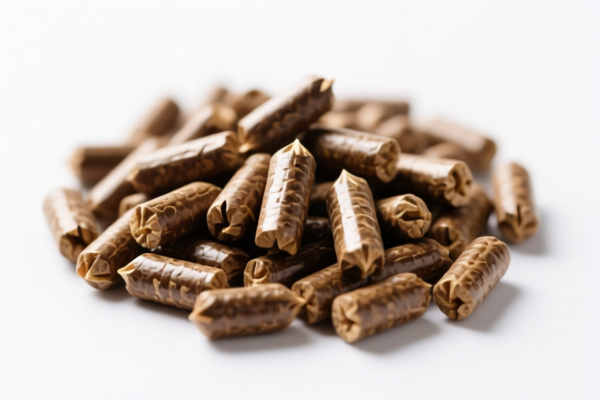
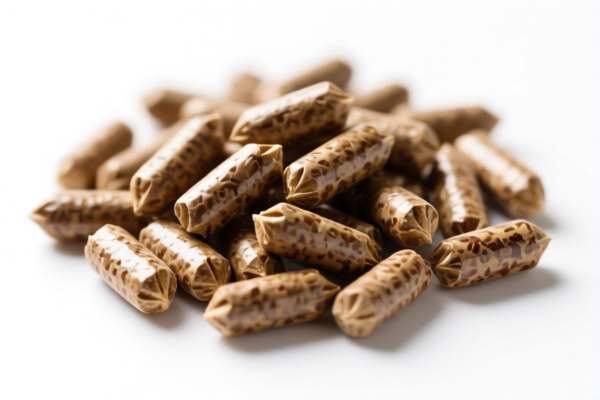
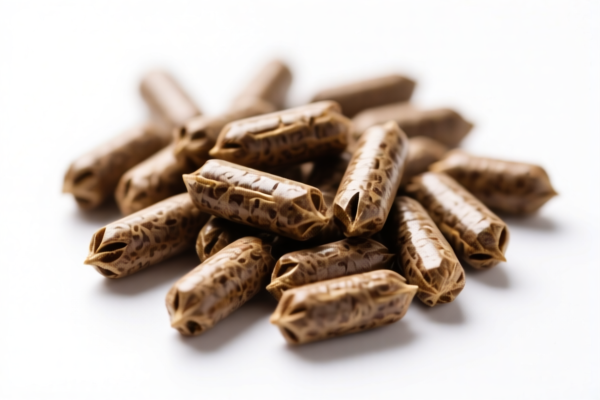

AI Analysis
🪵 Irregular Wood Pellet Fuel (Biomass Energy)
🌐 HS Code Reference & Customs Clearance Guide | 2026 Latest Tariff Breakdown | Professional Clearance Strategy
📌 I. Product Definition & Classification: What is "Irregular Wood Pellet Fuel"?
Wood pellets, a form of solid biofuel, are categorized in international trade based on their physical form and processing level. The term "Irregular Wood Pellet Fuel" in a commercial context typically refers to two distinct classifications under HS Code 4401:
- Standard Wood Pellets: Uniformly shaped, machine-extruded cylinders (the most common form of commercial fuel).
- Irregular/Other Agglomerated Sawdust: Wood waste and scrap agglomerated into logs, briquettes, or non-standard pellets (often referred to as "irregular" if not uniform cylinders).
⚠️ Critical Distinction:
- If the product consists of uniform, cylindrical pellets made from sawdust/wood waste →归入 4401.31.00.00
- If the product consists of other agglomerated forms (briquettes, irregular blocks, or non-cylindrical particles) →归入 4401.39.42.10
- Note: Raw sawdust without agglomeration does not fall under these "pellet/briquette" codes but may fall under other 4401 subheadings. This guide focuses on the agglomerated forms as implied by "pellet fuel."
📦 II. HS Code Classification Details (2026 Latest Tariff Authority)
| HS Code | Product Description | Typical Appearance | Processing Level |
|---|---|---|---|
4401.31.00.00 |
Sawdust and wood waste/scrap, agglomerated: Wood Pellets | Uniform cylindrical pellets (6-8mm diameter) | High-density, extruded |
4401.39.42.10 |
Sawdust and wood waste/scrap, agglomerated: Other: Other Sawdust (Briquettes/Irregular) | Irregular blocks, briquettes, or non-standard agglomerates | Compressed, molded, or irregularly formed |
🔍 Key Reminder:
- "Wood Pellets" (4401.31) are strictly defined as cylindrical forms.
- "Other" (4401.39) covers briquettes, irregular logs, or any agglomerated form that is not a standard pellet.
- If your product is "irregular" in shape (e.g., square briquettes, uneven chunks), it likely falls under 4401.39.42.10, not 4401.31.
💰 III. 2026 Latest Tariff Rate Breakdown (Including Additional Duties)
✅ Applicable Country: United States (US)
✅ Country of Origin: China (CN)
✅ Effective Date: From November 10, 2025 (including subsequent imports)
🎯 1. 4401.31.00.00 —— Wood Pellets (Standard Cylindrical)
| Item | Details |
|---|---|
| Base Tariff | 0% (ad valorem) |
| Additional Tariff | +25.0% (Section 301 / USITC Footnote) |
| Total Tax Rate | 25.0% |
| Tax Calculation | CIF Value × 25% |
| De Minimis Exemption | ❌ Not Applicable (DENY) |
| Legal Basis Path | HS:4401.31.00.00 → USITC Footnote → Section 301 |
📌 Explanation:
- Despite a 0% base tariff, US imports of Chinese-origin wood pellets are subject to a 25% additional tariff under Section 301.
- This is a high-cost entry category for biomass energy suppliers.
- No de minimis exemption applies; even small shipments are taxed at 25%.
🎯 2. 4401.39.42.10 —— Other Agglomerated Sawdust (Briquettes/Irregular)
| Item | Details |
|---|---|
| Base Tariff | 0% (ad valorem) |
| Additional Tariff | +25.0% (Section 301 / USITC Footnote) |
| Total Tax Rate | 25.0% |
| Tax Calculation | CIF Value × 25% |
| De Minimis Exemption | ❌ Not Applicable (DENY) |
| Legal Basis Path | HS:4401.39.42.10 → USITC Footnote → Section 301 |
📌 Note:
- Similar to standard pellets, briquettes and irregular agglomerates face the same 25% additional tariff.
- The 0% base rate is canceled out by the 25% punitive tariff.
- Do not assume "irregular" forms receive lower tariffs; they are equally taxed under Section 301.
🛠️ IV. Customs Clearance Operational Advice (Practical Pitfall Avoidance)
✅ 1. Required Documentation Checklist (Non-negotiable)
| Document | Required? | Notes |
|---|---|---|
| ✅ Commercial Invoice | ✔️ | Must clearly state "Wood Pellets" or "Wood Briquettes" and specify origin (e.g., China). |
| ✅ Packing List | ✔️ | Detail weight, volume, and number of bags/pallets. |
| ✅ Certificate of Origin (CO) | ✔️ | Essential to prove origin for tariff application. |
| ✅ Phytosanitary Certificate | ✔️ | Critical for wood products. Must confirm treatment (e.g., ISPM 15) to prevent pest invasion. |
| ✅ Material Safety Data Sheet (MSDS) | ✔️ | For transport safety (combustible solid). |
| ✅ Bill of Lading (B/L) | ✔️ | Must match invoice description exactly. |
✅ 2. Declaration Tips (Key Mantras)
🔥 "Be Specific on Form, Declare Origin Clearly, Avoid Ambiguity!"
| Scenario | Correct Declaration | Wrong Practice |
|---|---|---|
| Standard Pellets | "Wood Pellets, Cylindrical, 6mm, HS 4401.31.00.00" | "Biomass Fuel" (Too vague → Delays) |
| Irregular Briquettes | "Wood Briquettes, Agglomerated Sawdust, HS 4401.39.42.10" | "Wood Chips" (Incorrect code → 4401.31 vs 4401.39) |
| Mixed Shipments | Separate HS codes for pellets and chips | "Mixed Wood Products" (High risk of misclassification) |
📌 Warning:
- "Wood Chips" (unagglomerated) and "Wood Pellets" (agglomerated) have different HS codes and may have different tariff treatments. Do not mix them in one declaration line if possible.
- If the product is irregular, ensure it is clearly described as "Briquettes" or "Agglomerated Sawdust", not "Pellets," to avoid penalty for misdeclaration.
✅ 3. Special Case Handling
| Case | Recommendation |
|---|---|
| OEM Private Label | Ensure invoice lists manufacturer’s name and brand separately. |
| Wood Treatment | Provide ISPM 15 fumigation/treatment certificate to avoid quarantine rejection. |
| Moisture Content | Specify moisture content (<20% ideal) on invoice; high moisture may trigger quality disputes but not tariff changes. |
| Origin Change | If sourced from Vietnam, Malaysia, or Canada, tariffs may be 0% (verify with latest USITC lists). |
🌍 V. Global Market Clearance Comparison (2026 Latest)
| Country/Region | Recommended HS Code | Tariff (China Origin) | Certification | Remarks |
|---|---|---|---|---|
| 🇺🇸 USA | 4401.31.00.00 / 4401.39.42.10 |
25% | ISPM 15 + MSDS | High tariff burden |
| 🇨🇳 China | 4401.31.00.00 |
0% | N/A | Export-friendly |
| 🇪🇺 EU | 4401.31.00.00 |
0% (if RED certified) | ENplus / FSC | Low tariff, high eco-standards |
| 🇬🇧 UK | 4401.31.00.00 |
0% | UKCA + FSC | Similar to EU post-Brexit |
| 🇯🇵 Japan | 4401.31.00.00 |
0% | JAS Standard | Strict quality control |
📌 Conclusion:
- USA imposes a 25% additional tariff on Chinese wood pellets/briquettes, making it the most expensive market for this commodity.
- EU, UK, and Japan offer 0% tariffs, but require strict sustainability certifications (ENplus, FSC, RED).
- Strategy: If targeting the US, consider diversifying supply chains (e.g., sourcing from Vietnam or Canada) to avoid the 25% tariff.
📌 VI. Common Errors & Pitfall Avoidance (Lessons Learned)
❌ Error 1: Declaring "Wood Pellets" when the product is "Wood Chips" (unagglomerated)
👉 Consequence: Misclassification → Penalties + Delays
❌ Error 2: Not providing a Phytosanitary Certificate
👉 Consequence: Quarantine rejection or destruction of goods
❌ Error 3: Using vague descriptions like "Biomass Fuel"
👉 Consequence: Customs questions the HS Code → Audits + Delays
❌ Error 4: Ignoring Moisture Content or Ash Content in specifications
👉 Consequence: Quality disputes with buyers, even if customs clears
✅ Correct Practice:
"Wood Pellets, Cylindrical, 6mm Diameter, Moisture <10%, Ash <1%, HS Code 4401.31.00.00, Origin China, ISPM 15 Treated"
🎯 VII. Conclusion: Professional Clearance, Cost Optimization!
🎯 Remember the Mantra:
🔹 "Pellets vs. Briquettes, HS Code Matters!"
🔹 "0% Base + 25% Additional = 25% Total!"
🔹 "Phytosanitary Certificate is a MUST!"
📌 Pro Tip:
- If your wood pellets are originating from countries other than China (e.g., Vietnam, Canada, Russia), verify if they qualify for 0% tariffs in the US under USMCA or Generalized System of Preferences (GSP).
- For US imports, consider Advance Ruling from CBP to confirm HS Code classification, especially for "irregular" agglomerated forms.
📣 Immediate Action:
📞 Contact a Licensed Customs Broker
📄 Prepare ISPM 15 Certificate + MSDS
🚀 Verify HS Code with CBP for "Irregular" Forms
💼 Optimize Supply Chain to Avoid 25% Tariff Where Possible!
✨ Professional Clearance Starts with Accurate Classification!
💼 Every Ton of Pellets is Worth Counting!
Customer Reviews
About HS Code Classification
The Harmonized System (HS) is an internationally standardized nomenclature developed by the World Customs Organization (WCO) to classify traded products. Over 200 countries use the HS system as the basis for customs tariffs, trade statistics, and import/export regulations.
Each HS code follows a hierarchical structure:
- Chapter (2 digits) — Broad category of goods (e.g., Chapter 84: Machinery and Mechanical Appliances)
- Heading (4 digits) — More specific grouping within the chapter
- Subheading (6 digits) — Internationally standardized breakdown, used by all WCO member countries
- National subdivisions (8-10 digits) — Country-specific extensions for further classification, such as US HTSUS 10-digit codes
Correct HS code classification is essential for smooth customs clearance, accurate duty payment, and compliance with trade regulations. Misclassification can lead to customs delays, overpayment of duties, or penalties.
When importing from CN to US, the applicable tariff rates may include:
- Most-Favored-Nation (MFN) rate — The standard duty rate applied to WTO members
- General rate — Applied to countries without trade agreements
- Trade remedy duties — Additional tariffs such as Section 301 (anti-dumping), Section 232 (national security), or countervailing duties
The information provided on this page is for reference purposes only. For official classification, please consult with your local customs authority or a licensed customs broker.