Jacquard Fabric (under 1 square meter)
CN → US| HS Code | Tariff Rate | Origin | Destination | Doc |
|---|---|---|---|---|
| 5407522020 | 49.9% | CN | US | Official Doc |
| 5111113000 | 45.0% | CN | US | Official Doc |
| 5208316060 | 44.7% | CN | US | Official Doc |
| 6107199000 | 23.1% | CN | US | Official Doc |
| 6108910025 | 26.0% | CN | US | Official Doc |
Product Images
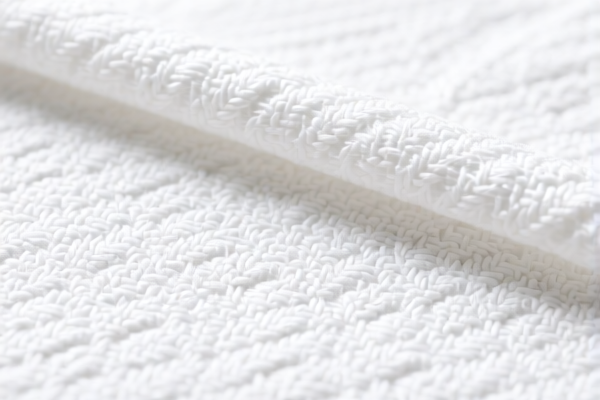
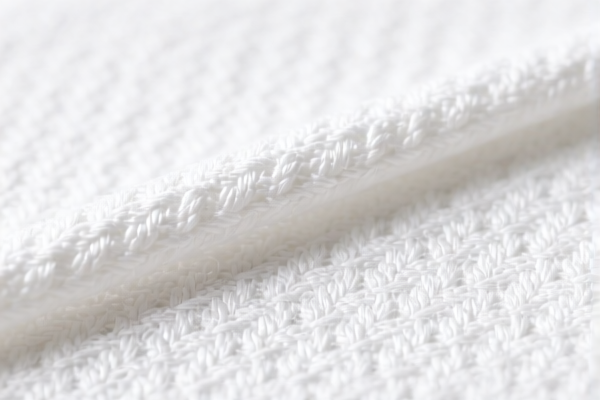
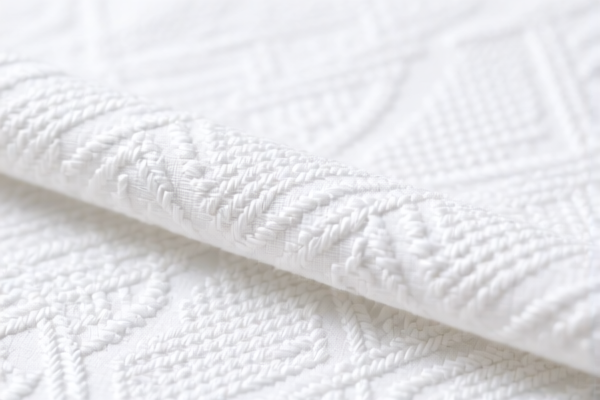
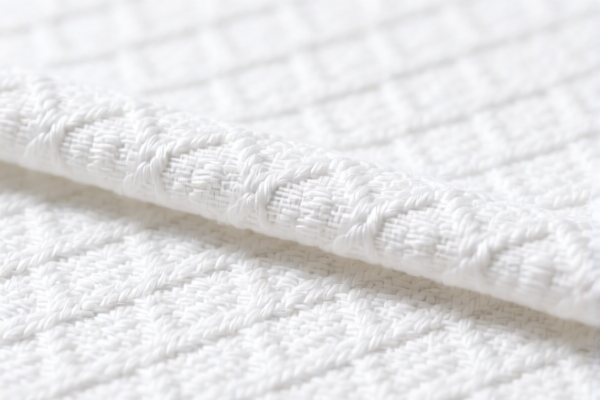
AI Analysis
🧵 Jacquard Fabric (< 1 sq. meter) – Textile Clearance Guide | 2026 HS Code & Duty Analysis
🌐 HS Code Reference & Clearance Strategy | 2026 Latest Tariff Breakdown | Professional Classification Logic
📌 I. Product Definition: What is "Jacquard Fabric"?
Jacquard fabric is not a single material but a method of weaving that creates intricate patterns, images, or textures directly into the cloth using a specialized loom (Jacquard head).
In international trade, the HS Code classification does not depend on the name "Jacquard" alone. Instead, it depends strictly on three factors: 1. Material Composition (e.g., Silk, Cotton, Synthetic Filament, Wool) 2. Form (Knitted vs. Woven – Jacquard is typically Woven) 3. End-Use (Garment, Home Textile, Industrial, etc.)
⚠️ Critical Distinction:
- If the fabric is unmade (rolls, bolt goods, or cut pieces < 1m² for sampling): It is classified under Chapter 50–55 (Textile Fabrics).
- If the fabric is made-up (cut into shapes, sewn into underwear/undergarments): It shifts to Chapter 61 (Knitted/Crocheted Articles) or Chapter 62 (Non-Knitted Articles).📝 Note on "< 1 Square Meter":
A quantity under 1 square meter is often treated as a sample or a small cut. However, for HS Code purposes, you must declare the material and weave type. The quantity affects valuation (de minimis rules) but not the HS Code logic unless it is a finished garment.
📦 II. HS Code Classification Matrix (Based on Provided Data)
Since the exact material (Silk/Cotton/Synthetic/Wool) is unknown, we map the provided <DATA> to potential classifications. The <DATA> suggests four distinct scenarios based on inference.
| HS Code | Product Category | Key Classification Logic (from ) | Est. Total Tax Rate (US) |
|---|---|---|---|
| 5407.52.20.20 | Synthetic Filament Fabric | Material Inference: Infers synthetic fiber (likely polyester/nylon). Form: Woven fabric. Use: Clothing. Logic: Matches "Woven Fabric" attribute; no conflict with synthetic filaments. |
49.9% |
| 5111.11.30.00 | Wool/Animal Hair Fabric | Material Inference: Infers wool or fine animal hair. Form: Woven. Logic: Uses "Residual/Bottom-up" category logic due to unspecified material. Matches "Woven" form. |
45.0% |
| 5208.31.60.60 | Cotton Printed Fabric | Material Inference: Infers Cotton ("Fabric" common association). Form: Woven/Printed. Logic: Matches "Printcloth" use. "Other" residual category due to missing weight/dye details. |
44.7% |
| 6107.19.90.00 | Men's/Boys' Underwear (Knitted) | Material: Textile material. Form: Jacquard (interpreted as Knitted/Crocheted structure for apparel). Use: Child/Men's Underwear (Specific End-Use Override). Note: If the <1m² piece is cut/sewn into underwear, this applies. |
23.1% |
| 6108.91.00.25 | Girls'/Women's Underwear | Material: Cotton/Fiber blend (Inferred). Form: Jacquard Fabric. Use: Girls'/Women's Underwear. Logic: Matches "Underwear" end-use. No material conflict. |
26.0% |
🔍 Key Insight:
- If you are importing raw fabric rolls (unmade), you CANNOT use 6107/6108. You must use 5407, 5111, or 5208.
- If you are importing finished underwear made from Jacquard fabric, you MUST use 6107 or 6108.
- The<DATA>mixes raw fabric codes (5xxx) and made-up garment codes (6xxx). You must determine if the item is "Fabric" or "Garment".
💰 III. 2026 Tariff Rate Breakdown (US Market)
✅ Applicable Country: United States (US)
✅ Origin: China (CN)
✅ Effective Date: Nov 10, 2025 onwards
🎯 Scenario A: Synthetic Filament Fabric (5407.52.20.20)
| Item | Detail |
|---|---|
| Base Duty | 14.9% |
| Section 301 Duty | 25.0% |
| IEEPA (122 Clause) | 10.0% |
| Total Effective Rate | 49.9% |
| De Minimis Exemption? | ❌ NO (Value likely > $800, or denied due to tariff status) |
📌 Explanation:
- High duty due to Section 301 (China-specific 25% tariff) + IEEPA 10% surcharge.
- Risk: If misclassified as a lower-duty fabric, customs may audit for underpayment.
🎯 Scenario B: Wool/Animal Hair Fabric (5111.11.30.00)
| Item | Detail |
|---|---|
| Base Duty | 10.0% |
| Section 301 Duty | 25.0% |
| IEEPA (122 Clause) | 10.0% |
| Total Effective Rate | 45.0% |
| De Minimis Exemption? | ❌ NO |
📌 Explanation:
- Slightly lower than synthetic because the base duty is lower (10% vs 14.9%).
- Note: Wool imports often face stricter sanitary/phytosanitary checks.
🎯 Scenario C: Cotton Fabric (5208.31.60.60)
| Item | Detail |
|---|---|
| Base Duty | 9.7% |
| Section 301 Duty | 25.0% |
| IEEPA (122 Clause) | 10.0% |
| Total Effective Rate | 44.7% |
| De Minimis Exemption? | ❌ NO |
📌 Explanation:
- Cotton has the lowest base duty among the fabric options.
- Critical: If the fabric is dyed/printed, ensure the description matches "Printed" to fit 5208. If plain, it may fall to a different subheading with different rates.
🎯 Scenario D: Finished Underwear (6107.19.90.00 & 6108.91.00.25)
| Item | Detail |
|---|---|
| Base Duty | 5.6% – 8.5% |
| Section 301 Duty | 7.5% (Reduced for apparel in some cases) |
| IEEPA (122 Clause) | 10.0% |
| Total Effective Rate | 23.1% – 26.0% |
| De Minimis Exemption? | ❌ NO (Section 301 often denies de minimis for China-origin apparel) |
📌 Explanation:
- Significant Savings: If the <1m² is sewn into underwear, the duty drops from ~45% to ~23-26%.
- Condition: The item must be a finished article (sewn, hemmed, labeled). If it is just a cut piece of fabric, do not use this code.
🛠️ IV. Customs Clearance Recommendations
✅ 1. Documentation Checklist
| Document | Required? | Notes |
|---|---|---|
| Commercial Invoice | ✔️ | Must specify: Material (e.g., "100% Polyester"), Weave (Jacquard), Form (Woven/Knitted), End-Use. |
| Packing List | ✔️ | Specify quantity (e.g., "1 Cut Piece, 0.5 sq. meters"). |
| Fabric Swatch/Photo | ✔️ | Highly Recommended: Photos showing the Jacquard pattern and edge finish. |
| Material Declaration | ✔️ | Explicitly state fiber content (e.g., "Polyester" vs "Cotton"). |
| Country of Origin | ✔️ | China (CN) triggers Section 301 + IEEPA. |
✅ 2. Critical Classification Decision Tree
🔄 Ask Yourself: Is the item Fabric or Garment?
🅰️ IF IT IS UNMADE FABRIC (< 1 sq. m):
- Identify Material:
- If Synthetic (Poly/Nylon) → Use 5407.52.20.20 (49.9%)
- If Wool/Animal Hair → Use 5111.11.30.00 (45.0%)
- If Cotton → Use 5208.31.60.60 (44.7%)
- Declare: "Jacquard Woven Fabric, [Material], for Clothing Use."
🅱️ IF IT IS A FINISHED GARMENT (e.g., Cut & Sewn Underwear):
- Identify Gender/Type:
- Men's/Boys' Underwear → Use 6107.19.90.00 (23.1%)
- Girls'/Women's Underwear → Use 6108.91.00.25 (26.0%)
- Declare: "Jacquard Underwear, Knitted/Crocheted, [Material]."
⚠️ WARNING: Do NOT mix codes. If you send a piece of fabric, do NOT declare it as underwear to save tax. CBP may reject the entry for misdeclaration.
✅ 3. Avoiding Common Pitfalls
| Mistake | Consequence | Solution |
|---|---|---|
| Misclassifying Fabric as Garment | Entry Rejected / Penalty | Provide clear photos showing it is uncut/unsewn. |
| Wrong Material Declaration | Duty Recalculation / Fine | Test the fabric if unsure. "Jacquard" is a weave, not a material. |
| Ignoring IEEPA 10% | Unexpected Tax Bill | Always include the 10% IEEPA surcharge in your cost model for China-origin textiles. |
| Assuming De Minimis ($800) | Package Seized | Section 301 + IEEPA often blocks de minimis for China textile products. Expect duty payment. |
🌍 V. Global Market Comparison (Textiles)
| Market | HS Code (Example) | Est. Duty | Notes |
|---|---|---|---|
| 🇺🇸 USA | 5407/6107 | 23% – 49.9% | High Section 301 + IEEPA tariffs. |
| 🇪🇺 EU | 5407/6107 | 0% – 12% | No Section 301. Standard textile duties apply. |
| 🇬🇧 UK | 5407/6107 | 0% – 12% | Post-Brexit rules similar to EU. |
| 🇨🇳 China | 5407/6107 | 5% – 10% | Import duty for fabrics into China. |
📌 Conclusion:
- The US is the most expensive market for Chinese-origin textiles due to Section 301 (25%) + IEEPA (10%).
- Savings Opportunity: If the <1m² piece can be finished into underwear (6107/6108), the duty drops significantly (~23-26% vs ~45-50%).
- Strategy: If you are importing small samples, consider the end-use. If it's for sampling the fabric, pay the higher textile duty. If it's a sample garment, use the garment code for lower duty.
📌 VI. Final Clearance Checklist
- Determine Form: Is it Fabric (5xxx) or Garment (6xxx)?
- Identify Material: Synthetic (5407), Wool (5111), Cotton (5208), or Mixed?
- Calculate Duty: Add Base + 301 (25%) + IEEPA (10%).
- Prepare Docs: Invoice, Packing List, Photo of Jacquard Pattern.
- Declare Accurately: Use precise language ("Jacquard Woven Polyester Fabric" vs "Jacquard Underwear").
🎯 Conclusion: Precision Saves Money
🎯 Key Takeaway:
🔹 "Jacquard" is a Weave, Not a Material.
🔹 "Under 1 Sq Meter" does not change the HS Code, only the valuation.
🔹 Garment Codes (6xxx) are cheaper than Fabric Codes (5xxx) for China-Origin Items.
✨ Professional Clearance Starts with Accurate Classification!
💼 Your Cost Efficiency Depends on Getting the HS Code Right!
Customer Reviews
About HS Code Classification
The Harmonized System (HS) is an internationally standardized nomenclature developed by the World Customs Organization (WCO) to classify traded products. Over 200 countries use the HS system as the basis for customs tariffs, trade statistics, and import/export regulations.
Each HS code follows a hierarchical structure:
- Chapter (2 digits) — Broad category of goods (e.g., Chapter 84: Machinery and Mechanical Appliances)
- Heading (4 digits) — More specific grouping within the chapter
- Subheading (6 digits) — Internationally standardized breakdown, used by all WCO member countries
- National subdivisions (8-10 digits) — Country-specific extensions for further classification, such as US HTSUS 10-digit codes
Correct HS code classification is essential for smooth customs clearance, accurate duty payment, and compliance with trade regulations. Misclassification can lead to customs delays, overpayment of duties, or penalties.
When importing from CN to US, the applicable tariff rates may include:
- Most-Favored-Nation (MFN) rate — The standard duty rate applied to WTO members
- General rate — Applied to countries without trade agreements
- Trade remedy duties — Additional tariffs such as Section 301 (anti-dumping), Section 232 (national security), or countervailing duties
The information provided on this page is for reference purposes only. For official classification, please consult with your local customs authority or a licensed customs broker.