Kerosene Stove
CN → US| HS Code | Tariff Rate | Origin | Destination | Doc |
|---|---|---|---|---|
| 7321120000 | 60.0% | CN | US | Official Doc |
| 7321825000 | 67.5% | CN | US | Official Doc |
| 8417100000 | 37.9% | CN | US | Official Doc |
| 8417800000 | 38.9% | CN | US | Official Doc |
Product Images
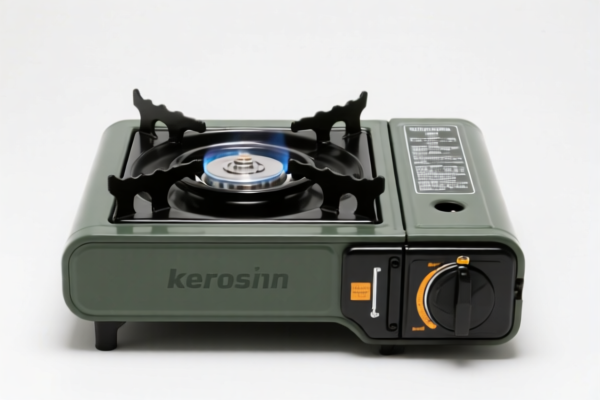
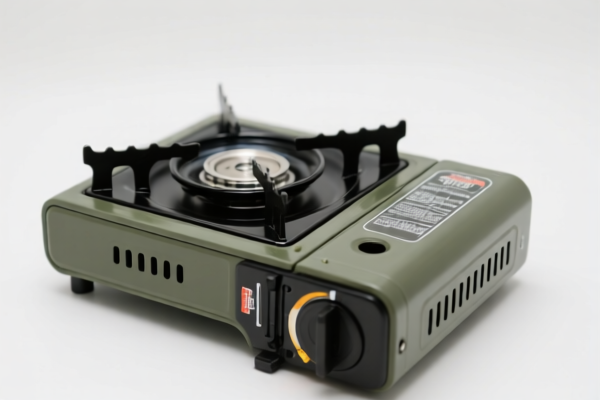
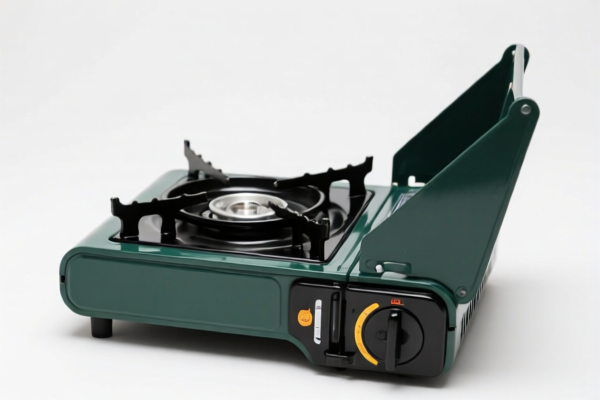
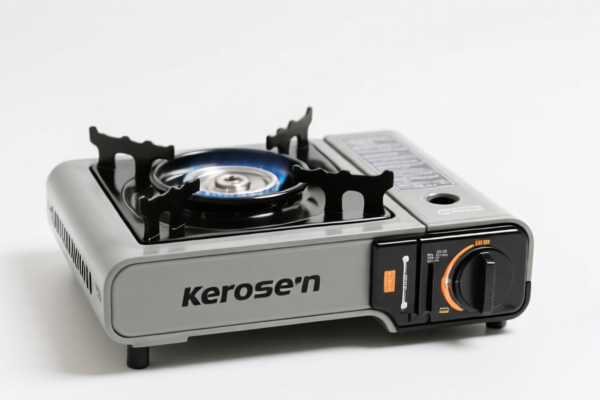
AI Analysis
🔥 Kerosene Stove (Fuel-Burning Heater)
🌐 HS Code Reference & Customs Clearance Guide | 2026 Latest Tariff Analysis | Professional Clearance Strategy
📌 I. Product Definition & Classification: Do You Really Understand "Kerosene Stove"?
A Kerosene Stove is a heating or cooking appliance that operates using liquid fuel (kerosene). In international trade, its classification depends heavily on material composition and specific intended use (e.g., household vs. industrial/lab). Misclassification can lead to severe tariff penalties due to Section 301 and Section 232 duties.
⚠️ Key Distinction:
- If made of iron/steel and designed for household heating/cooking → Likely under Chapter 73.
- If used for industrial treatment, laboratory heating, or high-temperature processing → Likely under Chapter 84.
📦 II. HS Code Classification Details (2026 Latest Tariff Authority Comparison)
| HS Code | Product Description | Application Scenario | Material/Function Logic |
|---|---|---|---|
7321.12.00.00 |
Iron or steel stoves and parts thereof, burning liquid fuel | Household kerosene heaters, portable stoves | ✅ Iron/Steel + Liquid Fuel |
7321.82.50.00 |
Other iron or steel stoves and parts thereof, burning liquid fuel | Non-standard or composite steel kerosene stoves | ✅ Iron/Steel + Liquid Fuel (General Category) |
8417.10.00.00 |
Furnaces and ovens, non-electric, for industrial use; laboratory furnaces | Industrial heating, metal treatment, lab ovens | ✅ Industrial/ Lab Use + Non-Electric |
8417.80.00.00 |
Other furnaces and ovens, non-electric; incinerators | General industrial non-electric heaters, excluding specific subheadings | ✅ Industrial/General Use + Non-Electric |
🔍 Critical Reminder:
- Chapter 73 (7321) applies if the stove is clearly iron/steel and intended for general/household use.
- Chapter 84 (8417) applies if the stove is for specialized industrial, laboratory, or heat-treatment purposes, regardless of material.
- Do not split the stove into parts if it is imported as a complete unit; declare as a whole.
💰 III. 2026 Latest Tariff Rate Breakdown (Including Surcharges & Policy Add-ons)
✅ Applicable Country: United States (US)
✅ Origin: China (CN)
✅ Effective Time: From November 10, 2025 (including subsequent imports)
🎯 1. 7321.12.00.00 —— Iron/Steel Stoves, Liquid Fuel (Household/General)
| Item | Content |
|---|---|
| Base Tariff | 0% (ad valorem) |
| USITC Additional Tariff (Section 301) | +50% (Due to Section 232 Iron/Steel Products Surcharge) |
| IEEPA Additional Tariff (Section 301) | +10% (Against Chinese/HK products, from Nov 10, 2025) |
| Total Tariff Rate | 60.0% |
| Tax Calculation | CIF Value × 60% |
| De Minimis Exemption | ❌ Not Eligible (deny_de_minimis) |
| Legal Basis Path | IEEPA:9903.01.25 → USITC:7321.12.00.00 → FOOTNOTE:232(Steel) → FOOTNOTE:301(10%) |
📌 Explanation:
- The 50% surcharge is triggered because kerosene stoves are often classified as iron/steel products under Section 232.
- The 10% IEEPA tariff is the standard Section 301 penalty on Chinese goods.
- Total 60% is a very high tariff. Strategic sourcing or pre-ruling is essential.
🎯 2. 7321.82.50.00 —— Other Iron/Steel Stoves, Liquid Fuel (General Category)
| Item | Content |
|---|---|
| Base Tariff | 0% |
| USITC Additional Tariff (Section 301) | +7.5% (Section 301 General List) |
| IEEPA Additional Tariff (Section 301) | +10% (Against Chinese/HK products) |
| Section 232 Steel Surcharge | +50% (If deemed iron/steel product) |
| Total Tariff Rate | 67.5% |
| Tax Calculation | CIF Value × 67.5% |
| De Minimis Exemption | ❌ Not Eligible |
| Legal Basis Path | IEEPA:9903.01.25 → USITC:7321.82.50.00 → FOOTNOTE:301(7.5%) → FOOTNOTE:232(50%) |
📌 Note:
- This code is a "catch-all" for iron/steel stoves not specifically listed under 7321.12.
- The 7.5% base surcharge + 10% IEEPA + 50% Steel Surcharge results in a 67.5% total.
- Even if the stove has non-steel parts, if it is primarily iron/steel, Section 232 applies.
🎯 3. 8417.10.00.00 —— Industrial/Laboratory Furnaces, Non-Electric
| Item | Content |
|---|---|
| Base Tariff | 2.9% |
| USITC Additional Tariff (Section 301) | +25% |
| IEEPA Additional Tariff (Section 301) | +10% |
| Total Tariff Rate | 37.9% |
| Tax Calculation | CIF Value × 37.9% |
| De Minimis Exemption | ❌ Not Eligible |
| Legal Basis Path | IEEPA:9903.01.25 → USITC:8417.10.00.00 → FOOTNOTE:301(25%) |
📌 Explanation:
- If the kerosene stove is used for industrial heat treatment or laboratory purposes, it falls under Chapter 84.
- No Section 232 Steel Surcharge applies here because Chapter 84 items are not typically classified as "raw steel products" for Section 232 purposes.
- Total 37.9% is significantly lower than Chapter 73 options.
🎯 4. 8417.80.00.00 —— Other Non-Electric Furnaces/Ovens
| Item | Content |
|---|---|
| Base Tariff | 3.9% |
| USITC Additional Tariff (Section 301) | +25% |
| IEEPA Additional Tariff (Section 301) | +10% |
| Total Tariff Rate | 38.9% |
| Tax Calculation | CIF Value × 38.9% |
| De Minimis Exemption | ❌ Not Eligible |
| Legal Basis Path | IEEPA:9903.01.25 → USITC:8417.80.00.00 → FOOTNOTE:301(25%) |
📌 Note:
- This is a residual category for non-electric furnaces not covered in 8417.10–8417.70.
- Similar to 8417.10, it avoids the 50% Steel Surcharge, resulting in a 38.9% total.
- Suitable for general industrial kerosene heaters that do not fit specific subheadings.
🛠️ IV. Customs Clearance Practical Advice (Battle-Tested Pitfall Guide)
✅ 1. Required Documentation Checklist (Non-Negotiable)
| Document | Must Provide | Description |
|---|---|---|
| ✅ Product Spec Sheet | ✔️ | Dimensions, fuel type, BTU output, material composition |
| ✅ Diagram/Structure | ✔️ | Clearly show combustion chamber, fuel tank, and controls |
| ✅ Product Photos (with Nameplate) | ✔️ | Show model number, brand, input parameters |
| ✅ Third-Party Test Report | ✔️ | UL, CSA, EPA, or CE certification (if applicable) |
| ✅ Commercial Invoice | ✔️ | State: "Kerosene Stove, Non-Electric, For Heating/Cooking" |
| ✅ Certificate of Origin (CO) | ✔️ | Required for origin verification and duty assessment |
| ✅ Packing List | ✔️ | Specify if parts are shipped separately or together |
✅ 2. Declaration Tactics (Key Mantras)
🔥 "Industrial vs. Household: Define Use First. Steel vs. Function: Chapter 84 Saves Money!"
| Scenario | Correct Declaration | Incorrect Practice |
|---|---|---|
| Household Kerosene Heater | 7321.12.00.00 or 7321.82.50.00 |
Misdeclare as industrial → 37.9% (but risks audit) |
| Industrial Kerosene Oven | 8417.10.00.00 or 8417.80.00.00 |
Misdeclare as household → 60–67.5% |
| Stove + Fuel Tank Shipped Separately | Declare as parts if applicable, but 整机申报 preferred for complete units | Split declaration → High duty on parts |
| Non-Iron/Steel Stove (e.g., Ceramic) | Verify Chapter 69 or 84 | Assume Chapter 73 → Incorrect classification |
✅ 3. Special Case Handling
| Situation | Handling Advice |
|---|---|
| OEM Custom Stoves | Provide client PO + design drawings to prove specific industrial use |
| Lab-Grade Kerosene Burner | Clearly state "Laboratory Equipment" → Prefer 8417.10.00.00 |
| Stove with Electric Ignition | May be classified as 8516 (Electric Heater) if electric component is dominant; consult expert |
| Military/Space Use | Apply for "Special Use" declaration; may qualify for exemptions or reduced duties |
🌍 V. Global Market Comparison (2026 Latest)
| Country/Region | Recommended HS Code | Tariff | Certification | Notes |
|---|---|---|---|---|
| 🇺🇸 USA | 8417.10.00.00 (Industrial) |
37.9% | UL/CSA | Avoid 7321 unless cost-prohibitive |
| 🇨🇳 China | 8417.10.00.00 |
5–10% | CCC (if applicable) | Lower base duty |
| 🇪🇺 EU | 8417.80.00.00 |
0–4% | CE/ErP | No Section 301/232 equivalents |
| 🇦🇺 Australia | 8417.80.00.00 |
5% | RCM | Moderate duty |
| 🇯🇵 Japan | 8417.10.00.00 |
0–5% | PSE | Low duty for industrial use |
📌 Conclusion:
- USA imposes the highest tariffs, especially on iron/steel household stoves (60–67.5%).
- Chapter 84 (Industrial/Lab) offers a significant duty savings (37.9–38.9%) by avoiding the 50% Steel Surcharge.
- Non-US markets (EU, Japan, Australia) have much lower or zero tariffs, making them more cost-effective.
📌 VI. Common Mistakes & Pitfall Guide (Lessons from Pain)
❌ Mistake 1: Declaring an industrial furnace as a household stove
👉 Consequence: Incorrect HS Code (7321 instead of 8417) → Higher risk of audit if documentation shows industrial use.
❌ Mistake 2: Ignoring Section 232 Steel Surcharge on iron/steel stoves
👉 Consequence: Unexpected 50% surcharge → Total duty jumps to 60–67.5%.
❌ Mistake 3: Failing to provide material composition proof
👉 Consequence: Customs may assume 100% iron/steel → Apply Section 232 automatically.
❌ Mistake 4: Using vague terms like "Heater" or "Stove" without specifying fuel type
👉 Consequence: Classification delay or reclassification to higher duty code.
✅ Correct Practice:
"Industrial Kerosene Furnace, Non-Electric, For Heat Treatment, Model XYZ, UL Certified, Made of Stainless Steel (Note: Verify if SS triggers different rules)"
🎯 VII. Conclusion: Precise Classification Saves Money!
🎯 Remember the Mantra:
🔹 "Industrial Use = Chapter 84 = 38% Duty"
🔹 "Household Steel = Chapter 73 = 60–67% Duty"
🔹 "Avoid Steel Surcharge by Proving Industrial/Lab Purpose"
📌 Pro Tip:
If your kerosene stove is shipped from Vietnam, Mexico, Thailand, or Malaysia, you may apply for IEEPA Exemption, reducing tariffs to 0–5%.
Recommendation: Apply for Advance Ruling from US CBP to confirm HS Code and duty rate before shipment.
📣 Immediate Action:
📞 Contact Professional Broker + Provide Product Specs + Apply for HS Code Advance Ruling
🚀 Ensure your Kerosene Stove clears customs smoothly, reduces costs, and maximizes profit!
✨ Professional Clearance Starts with Accurate Classification!
💼 Every Cent of Your Cost Deserves Precise Calculation!
Customer Reviews
About HS Code Classification
The Harmonized System (HS) is an internationally standardized nomenclature developed by the World Customs Organization (WCO) to classify traded products. Over 200 countries use the HS system as the basis for customs tariffs, trade statistics, and import/export regulations.
Each HS code follows a hierarchical structure:
- Chapter (2 digits) — Broad category of goods (e.g., Chapter 84: Machinery and Mechanical Appliances)
- Heading (4 digits) — More specific grouping within the chapter
- Subheading (6 digits) — Internationally standardized breakdown, used by all WCO member countries
- National subdivisions (8-10 digits) — Country-specific extensions for further classification, such as US HTSUS 10-digit codes
Correct HS code classification is essential for smooth customs clearance, accurate duty payment, and compliance with trade regulations. Misclassification can lead to customs delays, overpayment of duties, or penalties.
When importing from CN to US, the applicable tariff rates may include:
- Most-Favored-Nation (MFN) rate — The standard duty rate applied to WTO members
- General rate — Applied to countries without trade agreements
- Trade remedy duties — Additional tariffs such as Section 301 (anti-dumping), Section 232 (national security), or countervailing duties
The information provided on this page is for reference purposes only. For official classification, please consult with your local customs authority or a licensed customs broker.