Kitchen Rug
CN → US| HS Code | Tariff Rate | Origin | Destination | Doc |
|---|---|---|---|---|
| 6307909891 | 24.5% | CN | US | Official Doc |
| 4823908000 | 35.0% | CN | US | Official Doc |
| 4823908620 | 35.0% | CN | US | Official Doc |
| 6307908940 | 17.0% | CN | US | Official Doc |
| 3926909989 | 22.8% | CN | US | Official Doc |
Product Images
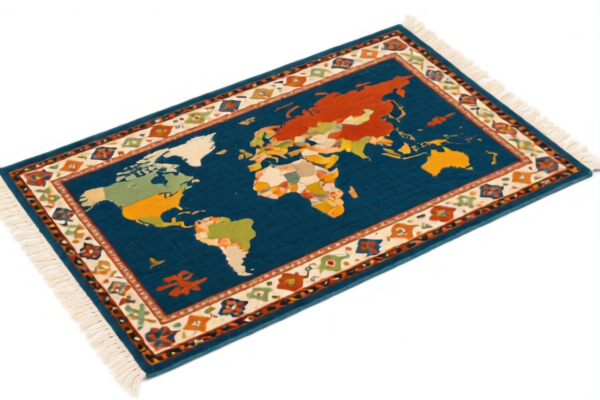
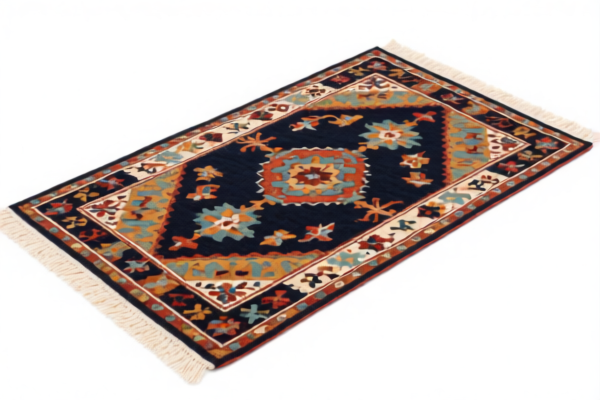
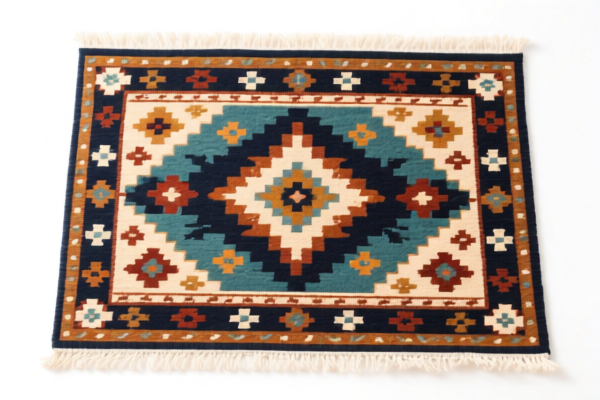

AI Analysis
🏠 Kitchen Rug (Kitchen Mat / Floor Mat)
🌐 HS Code Reference & Customs Clearance Guide | 2026 Latest Tariff Analysis | Professional Clearance Strategy
📌 I. Product Definition & Classification: Do You Really Know "Kitchen Rug"?
A kitchen rug, often referred to as a "stove pad" (炉灶垫) or anti-fatigue mat in industrial classification contexts, serves as a protective layer for kitchen floors and stoves. In international trade, its classification depends heavily on its material composition and primary function (floor covering vs. kitchen accessory).
Textile-Based Mats (6307):
Made of cotton, synthetic fibers, or blended fabrics. These are classified under "Other Made-Up Articles." They prioritize comfort and absorbency.
Plastic/Rubber/Silicone Mats (3926 or 4016):
Made of PVC, TPE, or silicone. These prioritize heat resistance, waterproofing, and durability. Often classified as "Other Plastic Articles."
Paper/Cardboard Mats (4823):
Rare for long-term use, but used as disposable heat shields or decorative liners. Classified as "Paper or Paperboard Articles."
⚠️ Key Distinction:
- If it is fabric/cloth →归入 6307.90 (Textile accessories)
- If it is plastic/rubber/silicone → 归入 3926.90 (Plastic articles)
- If it is paper/cardboard → 归入 4823.90 (Paper articles)
📦 II. HS Code Classification Details (2026 Latest Tariff Authority对照)
Based on the provided data, here are the specific HS Codes for "Kitchen Rug" (classified here as "Stove Pad/Heat Shield" variants):
| HS Code | Product Description | Material Inference | Total Tax Rate (CN→US) |
|---|---|---|---|
6307.90.98.91 |
Other Made-Up Articles | Silicone, Oil-Coated Fabric, or Textile | 24.5% |
6307.90.89.40 |
Kitchen Textile Products | Cotton or Synthetic Fiber Textile | 17.0% |
3926.90.99.89 |
Other Plastic Articles | Plastic, PVC, or Silicone | 22.8% |
4823.90.80.00 |
Paper/Cardboard Articles | Paper or Cardboard Fiber | 35.0% |
4823.90.86.20 |
Paper/Cardboard Products (Fallback) | Paper/Cardboard (Heat Shield Liner) | 35.0% |
🔍 Key Insight:
- Lowest Tax Option: If the rug is made of textile (cotton/synthetic),6307.90.89.40offers the lowest total tax at 17.0%.
- High Tax Risk: If misclassified as paper, the tax jumps to 35.0%.
- Plastic Penalty: Silicone mats fall under3926, incurring a moderate-high rate of 22.8%.
💰 III. 2026 Latest Tariff Rate Breakdown (Including Additional Taxes)
✅ Applicable Country: United States (US)
✅ Origin: China (CN)
✅ Effective Time: Post-2025 policies (Section 301 & IEEPA)
🎯 1. 6307.90.89.40 —— Kitchen Textile Products (Lowest Tax Candidate)
| Item | Content |
|---|---|
| Base Tariff | 7.0% |
| Section 301 Additional Tariff | 0.0% |
| IEEPA Additional Tariff (Section 122) | +10.0% |
| Total Tax Rate | 17.0% |
| Tax Calculation | CIF Value × 17.0% |
| De Minimis Eligibility | ❌ No (High tax rate excludes small packages from 80/15% exemption) |
| Legal Basis | Base Tariff 7% + IEEPA 10% = 17% |
📌 Explanation:
- This is the most cost-effective classification for fabric-based kitchen rugs.
- Note: Unlike some other textile items, Section 301 tariffs (typically 25%) do not apply to this specific subheading, but the IEEPA 10% does.
🎯 2. 6307.90.98.91 —— Other Made-Up Articles (Silicone/Fabric Blend)
| Item | Content |
|---|---|
| Base Tariff | 7.0% |
| Section 301 Additional Tariff | +7.5% |
| IEEPA Additional Tariff (Section 122) | +10.0% |
| Total Tax Rate | 24.5% |
| Tax Calculation | CIF Value × 24.5% |
| De Minimis Eligibility | ❌ No |
| Legal Basis | Base 7% + Section 301 7.5% + IEEPA 10% |
📌 Explanation:
- This code captures items like silicone-fabric composites.
- Warning: It incurs an additional 7.5% under Section 301, making it significantly more expensive than pure textile rugs.
🎯 3. 3926.90.99.89 —— Other Plastic Articles (Silicone/Rubber Mats)
| Item | Content |
|---|---|
| Base Tariff | 5.3% |
| Section 301 Additional Tariff | +7.5% |
| IEEPA Additional Tariff (Section 122) | +10.0% |
| Total Tax Rate | 22.8% |
| Tax Calculation | CIF Value × 22.8% |
| De Minimis Eligibility | ❌ No |
| Legal Basis | Base 5.3% + Section 301 7.5% + IEEPA 10% |
📌 Explanation:
- Silicone mats are often mistaken for rubber, but if classified as plastic, this rate applies.
- It is cheaper than textile composites (6307.98.91) but more expensive than pure textiles (6307.89.40).
🎯 4. 4823.90.80.00 / 4823.90.86.20 —— Paper/Cardboard Mats
| Item | Content |
|---|---|
| Base Tariff | 0.0% |
| Section 301 Additional Tariff | +25.0% |
| IEEPA Additional Tariff (Section 122) | +10.0% |
| Total Tax Rate | 35.0% |
| Tax Calculation | CIF Value × 35.0% |
| De Minimis Eligibility | ❌ No |
| Legal Basis | Base 0% + Section 301 25% + IEEPA 10% |
📌 Explanation:
- Highest Tax Risk! Even though the base rate is 0%, the Section 301 tariff is 25%.
- Only use this if the product is genuinely disposable paper heat shields. Using this for reusable rugs is high-risk for customs audits.
🛠️ IV. Customs Clearance Practical Advice (Pitfall Avoidance Guide)
✅ 1. Documentation Checklist (Must-Provide)
| Document | Required | Purpose |
|---|---|---|
| ✅ Product Specification | ✔️ | Must specify material (e.g., "100% Cotton" vs. "Silicone-Coated Fabric"). |
| ✅ Material Composition Report | ✔️ | Critical for distinguishing between 6307 (Textile) and 3926 (Plastic). |
| ✅ Product Photos | ✔️ | Show texture, thickness, and any labeling. |
| ✅ Commercial Invoice | ✔️ | Clearly state "Kitchen Floor Mat" or "Stove Pad," NOT just "Rug." |
| ✅ Packing List | ✔️ | Confirm no mixed materials in one box (e.g., textile rug + plastic base). |
✅ 2. Declaration Strategy (Key Mnemonics)
🔥 "Material Defines Code, Textile is King, Paper is Trap, Plastic is Middle!"
| Scenario | Correct HS Code | Incorrect Practice | Consequence |
|---|---|---|---|
| Pure Cotton/Synthetic Rug | 6307.90.89.40 |
Declaring as "Plastic" | Overpaying 5.8% (22.8% vs 17%) |
| Silicone Mat | 3926.90.99.89 |
Declaring as "Textile" | Under-declaration risk → Fine + Back Duty |
| Fabric + Silicone Blend | 6307.90.98.91 |
Declaring as "Plastic" | Paying extra 7.5% Section 301 |
| Disposable Paper Liner | 4823.90.80.00 |
Declaring as "Textile" | Fraud Risk → Seizure & Penalty |
✅ 3. Special Considerations
| Situation | Handling Advice |
|---|---|
| Mixed Material Rugs | If >50% by weight is fabric, declare under 6307. If >50% is silicone, declare under 3926. |
| Non-Slip Backing | If the backing is rubber/silicone, it does not automatically classify the whole item as plastic. Primary function determines classification. |
| Customs Audit Trigger | Sudden changes in material declarations for "Kitchen Rugs" will trigger audits. Ensure consistency. |
| De Minimis Exemption | ❌ Not Applicable. All listed HS codes for Kitchen Rugs exceed the threshold for Section 321 (de minimis) exemption due to combined tax rates >15%. |
🌍 V. Global Market Comparison (2026)
| Country/Region | Recommended HS Code | Estimated Duty (CN Origin) | Notes |
|---|---|---|---|
| 🇺🇸 USA | 6307.90.89.40 |
17.0% (Best Option) | High Section 301 impact on plastics/paper. |
| 🇨🇳 China | 6307.90.90 |
~5-10% | Low import duty for domestic sale. |
| 🇪🇺 EU | 6307.90.98 |
6.5% | No Section 301 equivalent. |
| 🇬🇧 UK | 6307.90.90 |
6.5% | Post-Brexit tariff alignment with EU. |
📌 Conclusion:
- USA is the most challenging market due to IEEPA and Section 301叠加 (stacking).
- Textile classification (6307.89.40) is the strategic winner for cost optimization.
📌 VI. Common Errors & Pitfalls (Blood & Tears Lessons)
❌ Error 1: Declaring a Silicone Mat as 6307.90.89.40 (Textile)
👉 Consequence: Customs detects silicone material → Re-classifies to 3926 → Back taxes + Penalty.
❌ Error 2: Declaring a Cotton Rug as 3926.90.99.89 (Plastic)
👉 Consequence: Overpayment of 5.8% (22.8% vs 17.0%). No penalty, but lost profit.
❌ Error 3: Using Paper Code for Reusable Mats
👉 Consequence: Customs Fraud. Paper mats are for short-term use. Reusable items must be textile or plastic. Risk of goods seizure.
❌ Error 4: Ignoring Section 122 (IEEPA)
👉 Consequence: All these codes carry a 10% IEEPA tariff. If you forget to include it in your landed cost calculation, you will lose money.
✅ Correct Practice:
"Cotton Kitchen Floor Mat, Non-Slip, 40x60cm, Model XYZ, 100% Cotton with Rubber Backing" → Declare as
6307.90.89.40.
🎯 VII. Conclusion: Professional Declaration, Cost Optimization!
🎯 Remember the Mnemonic:
🔹 "Textile First, 17% is Sweet; Plastic Second, 22.8% is Real; Paper Last, 35% is Pain!"
🔹 "Material Proof is Key, Textile Classification Saves Dollars!"
📌 Pro Tip:
If your product is a hybrid (e.g., fabric with silicone coating), consult a customs broker to determine if the primary character is textile (6307) or plastic (3926). Often, if the fabric dominates, 6307 is safer and cheaper.
📣 Immediate Action:
📞 Contact a professional customs broker + Provide material test reports + Apply for HS Code Pre-ruling (if volume is high)
🚀 Clearance Speed + Cost Efficiency + Compliance = Profit Maximization!
✨ Professional Clearance Starts with Accurate Classification!
💼 Every Cent of Cost Matters!
Customer Reviews
About HS Code Classification
The Harmonized System (HS) is an internationally standardized nomenclature developed by the World Customs Organization (WCO) to classify traded products. Over 200 countries use the HS system as the basis for customs tariffs, trade statistics, and import/export regulations.
Each HS code follows a hierarchical structure:
- Chapter (2 digits) — Broad category of goods (e.g., Chapter 84: Machinery and Mechanical Appliances)
- Heading (4 digits) — More specific grouping within the chapter
- Subheading (6 digits) — Internationally standardized breakdown, used by all WCO member countries
- National subdivisions (8-10 digits) — Country-specific extensions for further classification, such as US HTSUS 10-digit codes
Correct HS code classification is essential for smooth customs clearance, accurate duty payment, and compliance with trade regulations. Misclassification can lead to customs delays, overpayment of duties, or penalties.
When importing from CN to US, the applicable tariff rates may include:
- Most-Favored-Nation (MFN) rate — The standard duty rate applied to WTO members
- General rate — Applied to countries without trade agreements
- Trade remedy duties — Additional tariffs such as Section 301 (anti-dumping), Section 232 (national security), or countervailing duties
The information provided on this page is for reference purposes only. For official classification, please consult with your local customs authority or a licensed customs broker.